
Stories

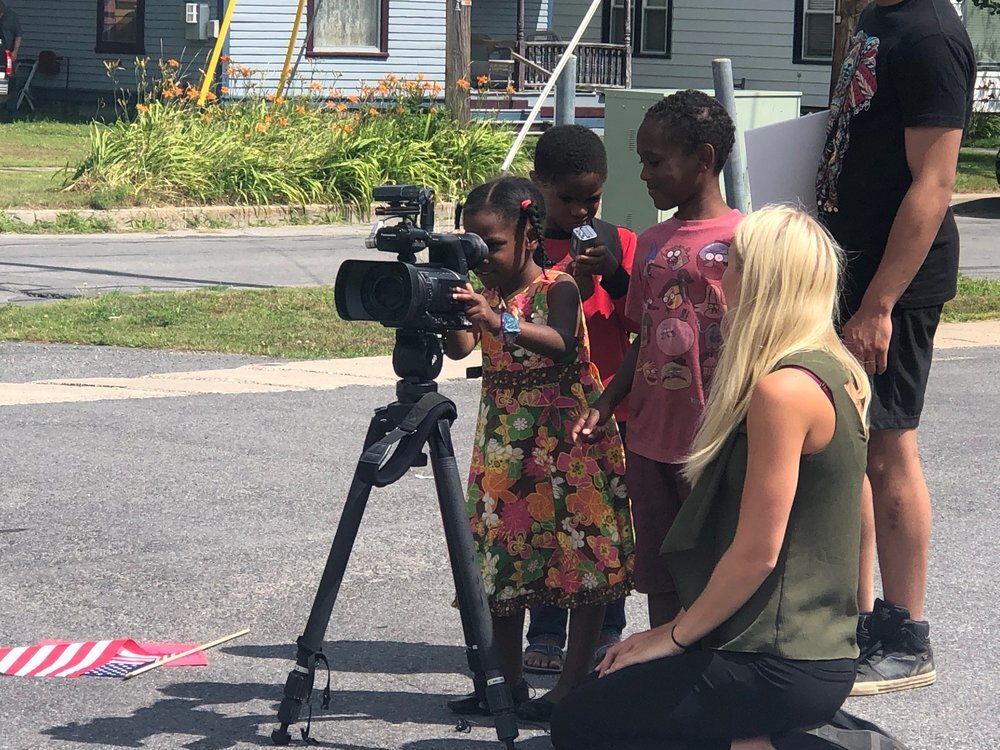
No Kings Rally Offers Mutual Aid in Northern New York
Cassandra Kunert reports from Watertown, NY, where a local rally spotlighted not only democratic participation, but also the urgent need for mutual aid.

The Art of Resistance: Scenes from the Madrid Encampment
John Collins visited the tent encampment in the Puerta del Sol and found a striking array of stickers reflecting the urgency and creativity of a growing grassroots movement.

The Everyday Struggle Against Fascism: Reading the Pavement in Madrid
A small exchange spray painted on the streets of the Spanish capital reveals far-right efforts to stoke anti-immigrant racism - and grassroots efforts to push back.

Madrid Marks Nakba Day, Mobilizes Again for Palestine
On Sunday, May 17, residents of all ages took to the streets of the Spanish capital, Madrid, to march in solidarity with the Palestinian people in their struggle against colonial domination and violence.

The Fight Against the Right on the Université Bordeaux Montaigne Campus
The death of a far-right French activist had immediate repercussions at a university where students use public space to support Palestinian liberation, gender equality, and other struggles.

El Palo: Under the Eyes of Saint Carmen
Inna Saribekyan reports from the Malaga neighborhood where the patron saint of fishermen is ever-present.

Anti-ICE Stickers and a Jericho Walk in New York City
For our Weaving the Streets series, Catherine Tedford listens to the people’s voice in the Big Apple.

Taraweeh: A Symbol of Faith and Community
Irem Tuana Ciftci reflects on her Ramadan experience in Morocco.

Beyond the Bullfights: Madrid Rises Again for Palestine
John Collins listens as the people’s voice gets louder

Riace: the Model that Challenged the Italian Integration System
A reminder of the power of solidarity

Reimagining Ski Slopes in Copenhagen
Copenhill stands tall—literally and figuratively—as a groundbreaking example of how public spaces can serve multiple purposes for different people.

Union Square’s Climate Clock: A Symbol of Climate Urgency Lost in Translation
It is a bright Saturday, the crisp air of late February stubbornly holding onto winter’s cold. Before me, Union Square Greenmarket unfolds in quiet rhythms. Usually a place of hurried crossings, the square now offers a reason to pause. Vendors line the pathways between sparse naked trees, nature reaching skyward as if trying to catch its breath amid the city’s steady hum. New Yorkers seem to find newfound fascination in sunflowers or a vintage teapot; it is a curious way of placing extraordinary importance on the seemingly unimportant. Amidst the hustle, something larger looms. A colossal clock, eighty feet wide, stands proud atop One Union Square South, overlooking the tranquil Union Square Park as its stark digital display counts down in red, pixelated numbers.

“El Arte No Es Delito”: Colombians Reclaim Their Voices on the Streets
Exploring a city as a tourist can be a vastly different experience from doing so as a local. Though I was born and raised in Neiva, Colombia, it was not until my foreign friend visited that I realized how the resistance against state violence and corruption is vividly illustrated in my hometown's public spaces, leaving no room to turn a blind eye. Her amazement at the art, phrases, and graffiti covering a small city like Neiva sparked a conversation about the country’s political landscape at the time.

The Streets That Turn Trash Into Treasure
Even a simple thing like taking a stroll around a Danish city can tell you about this country's deep commitment to combating climate change and supporting the welfare of its people. Copenhagen's approach to sustainability quickly stood out to me; even the smallest details on the streets—like the city’s trash bins—have a deeper meaning and purpose than what meets the eye.

Grab a Coffee and Meet Me At the Graveyard
One of the first places I visited during my semester in Copenhagen was not
only a beautiful park, but also a graveyard. Located in the heart of Nørrebro, this
multipurpose space—Assistens Kirkegård—is both a cemetery and a park. While the cemetery still serves its original purpose as a burial ground, it has evolved into a recreational space. For some locals, this is the area where they jog five kilometers every morning; for others, it is a place to meditate. For the busy bikers, this is the scenic street that they whizz down on their way to work in the city; and for the guides facilitating cemetery tours, this space is a source of income.

A Response to Forced Assimilation in the Hadzabe Tribe
My name is Fousani Hamidou, and I am a senior at St Lawrence University (Canton, NY, USA), majoring in Global Studies with a minor in African Studies. Last semester, I studied abroad in Kenya and had the opportunity to travel to Arusha, Tanzania, as a part of my program. We lived for a week alongside the Hadzabe tribe, one of the last surviving hunter-gathering tribes in the country. Throughout the week, we hunted hyraxes and made arrows with the Hadzabe men, and we gathered tubas (a tree root) and made beads with the Hadza women. On the last night, we all gathered with members of the tribe on a large rock by the camp to discuss their lifestyle, the Tanzanian government, education, and forced assimilation.

“The Human Tribe” from Naples to NYC
One of the most incredible aspects of street art is that it can take many forms and mean many things — from a small sticker pasted onto a trash can to graffiti found in a subway car to paste-ups adorning a fence. Being from Mexico, I have always felt strongly connected to murals and their powerful messages. Murals are big. Murals are vibrant. Murals are captivating. In this third installment, I am excited to share my journey of leaving New York City to start the second half of my off-campus year studying in Italy, and to share my experience with Jorit, an internationally known Italian urban artist.

Deconstructing Colonial Narratives in Spain
As I wheeled my luggage into the John F. Kennedy airport terminal in New York City, the air was filled with a symphony of sounds that blended the murmurs of conversations in different languages, the echoing announcements over the intercom, and the occasional distant rumble of airplane engines. My heart raced, erratic beats echoing in my chest as I waited for my plane to board. It was my first time traveling abroad as a first-generation Latina, and I was filled with excitement as I embarked on my journey to Spain. Prior to my departure, I knew that I wanted to learn more about decolonization, and I believed that Spain was the perfect place for this pursuit.

Malaga for Palestine: “The generations surge together in resistance to meet the reality of power”
I woke up this morning in Malaga with the knowledge that today was an important day in Spain: a day of nationwide demonstrations calling for an end to Israel’s genocidal assault on Gaza. At a time when European leaders continue to fail to meet their basic moral obligations vis-a-vis the Palestinian people, more than 70 Spanish cities from Alacant and Albacete to Zamora and Zaragoza were scheduled to host actions under the common banner of stopping the genocide, ending arms sales to Israel, and cutting off diplomatic relations with the apartheid state.

“Israel Kills, Europe Sponsors!”: Spaniards Mobilize for Palestine, Call Out EU Complicity
As the Israeli military continues to subject Palestinians in Gaza to a brutal siege accompanied by heavy aerial bombardment, citizens around the world are rising up to express their solidarity with Palestinians and to demand that Israel and its international supporters be held accountable. At a march held in the Spanish capital, Madrid, protesters sought to focus attention on the role of the European Union (EU) in enabling Israel’s war crimes.