
The Art of Resistance: Scenes from the Madrid Encampment

A view from the Calle Alcalá in central Madrid, approaching the tent encampment in the Puerta del Sol. (All photos: John Collins/Weave News)
The walk from the Banco de España subway station in central Madrid to the Puerta del Sol plaza is a quick 10-minute stroll down the iconic Calle Alcalá. On this day, I was on my way to visit the massive tent encampment erected by Spaniards demanding action on housing justice. Heading toward Sol, you could already hear that sound of chants emanating from the encampment, but you could also hear a string quartet on the sidewalk playing Mozart to entertain passersby.
What made the contrast all the more striking was the sight of well-to-do men and women streaming out of the glitzy Four Seasons hotel in their finest formal evening wear, many stopping to pose for photographs in the doorway. Floating down the street just a stone’s throw away from the encampment, they exuded an unmistakable and unapologetic “let them eat cake” energy.
Organizing the community
Meanwhile, among the hundreds of tents squeezed into the square known affectionately as Spain’s “Kilometer Zero,” activists were systematically organizing their emerging community. There were impromptu “streets” named for the hoped-for Third Republic, famous Spanish revolutionary figures, and 87-year-old Maricarmen Abascal, whose eviction from an apartment by a vulture fund sparked the latest round of popular outrage regarding the country’s intolerable housing crisis.

Many tents are identified with addresses associated with their “street,” such as this street named for the legendary anarchist and union leader Buenaventura Durruti (1896-1936).

These neighbors named their residences after French philosophers Gilles Deleuze and Felix Guattari.
The encampment also featured a “Gaza Plaza” and a “Plaza Intifada,” symbols of the ongoing popular support in Spain for Palestinian liberation. And in this light, as I walked through the encampment’s narrow passageways, I couldn’t help but think of time spent in Palestinian refugee camps in the West Bank and Gaza, where some paths between buildings are so narrow that you have to flatten yourself against a wall in order to allow another person to pass. I also thought of the asylum seekers and other migrants still waiting in the Spanish autonomous city of Ceuta, site of a “mass entry” of tens of thousands of migrants on July 31. Many of those still stuck in limbo in Ceuta are living in tents in what might be called Spain’s “other encampment,” offering an opportunity to build a broader analysis of the forces profiting from manufactured insecurity in the borderlands and the housing sector alike.
Some of the activists in Sol were resting in their tents, but many were busy stringing up blue tarps overhead in anticipation of the heavy rains predicted for later in the week. Others were preparing food, taking their turn as part of the self-organized cleanup brigades, making signs, and holding discussions in small groups seated on the ground.
Later that evening, we learned that the tenants’ union (the Sindicato de Inquilinas e Inquiinos de Madrid), which has played a fundamental role in organizing the growing movement for housing justice, had decided to back the two measures hastily drafted by the Spanish government in response to popular demands.The measures include steps to prevent evictions, protect tenants from arbitrary rent increases, automatically extend leases, and limit the ability of “vulture funds” to purchase residential properties. While activists, journalists, and political parties are still examining the fine print of the measures, the union reportedly concluded that it was essential to take advantage of the “window of opportunity” created by mass mobilization.
At one point, I walked past Ione Belarra, leader of the left-wing Podemos party, who was chatting informally with activists in the encampment. Just a few hours later, Podemos announced its commitment to back “the people in the streets” when the proposed measures come up for a parliamentary vote. Podemos has long been critical of the socialist-led government’s relative inaction on the housing issue and would undoubtedly prefer more robust measures against real estate speculation, but its decision in this case is entirely consistent with its longstanding alliance with grassroots movements.
The art of resistance
One of the most striking elements I observed at the tent encampment was the sheer variety of pegatinas (stickers) plastered on walls, tents, lamp posts, and other surfaces both within the protest zone and throughout the surrounding area. Some were clearly being produced in the moment by those populating the encampment, often seeking to express their own concerns and demands related to housing. Others spoke to broader anti-fascist or anti-monarchist views or to the work of specific community-based organizations.
As political stickers have long played an important role in much of the coverage provided by the Weaving the Streets series, I thought I would provide a selection of photos representing the range of pegatinas I saw in and around the encampment.
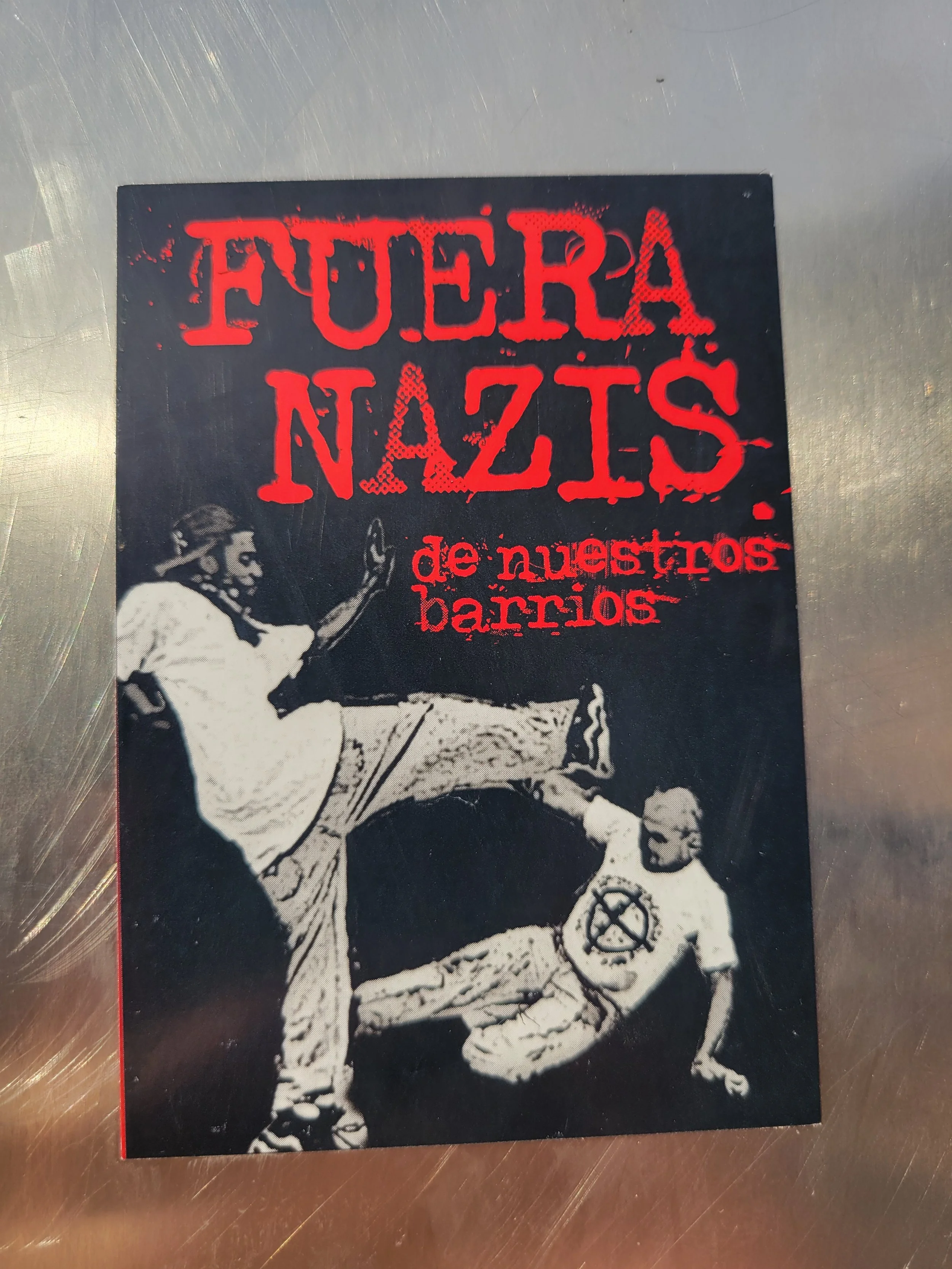
“Nazis out of our neighborhoods!”
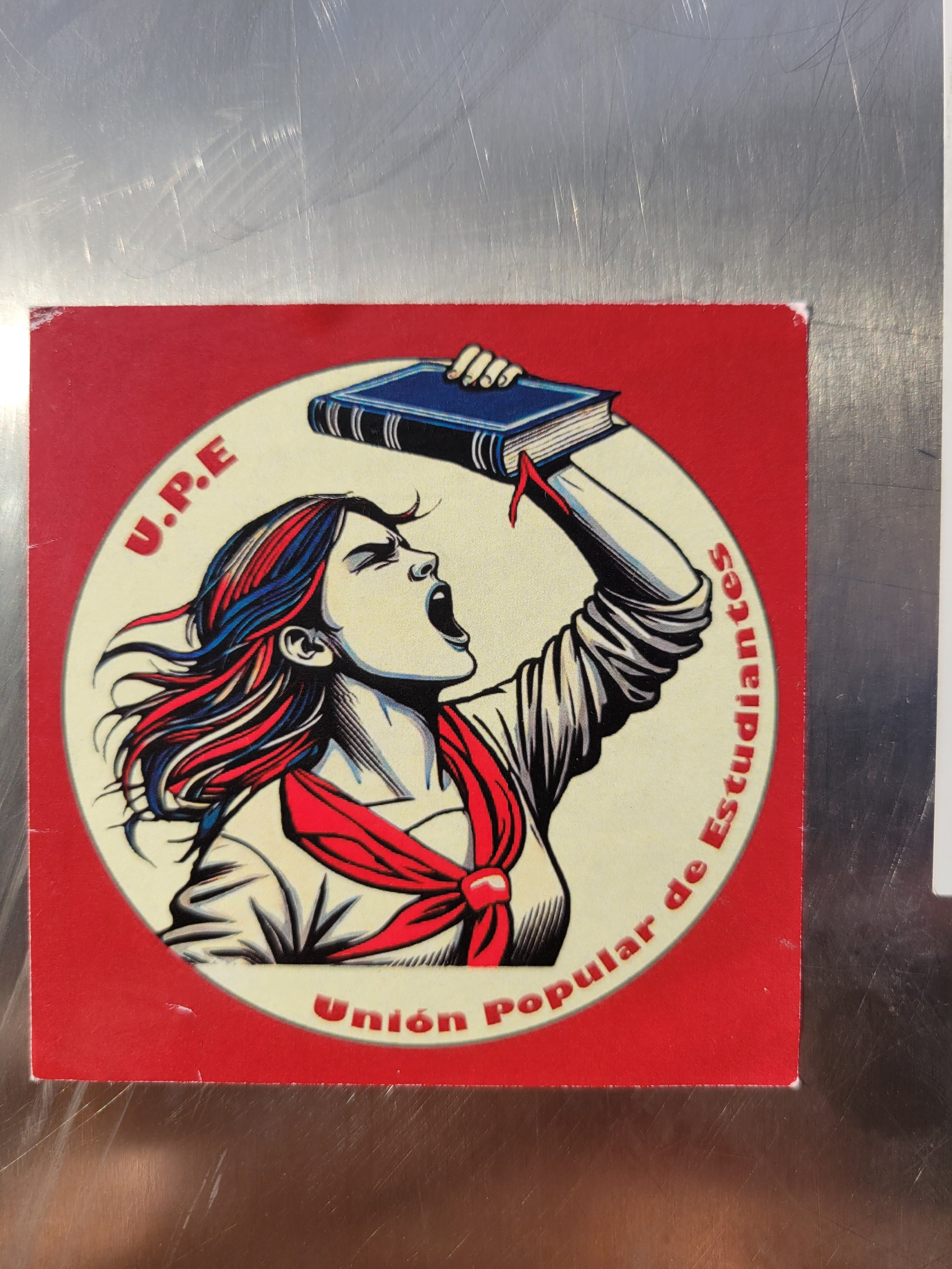
The Unión Popular de Estudiantes (UPE) is a grassroots association in the province of Toledo.
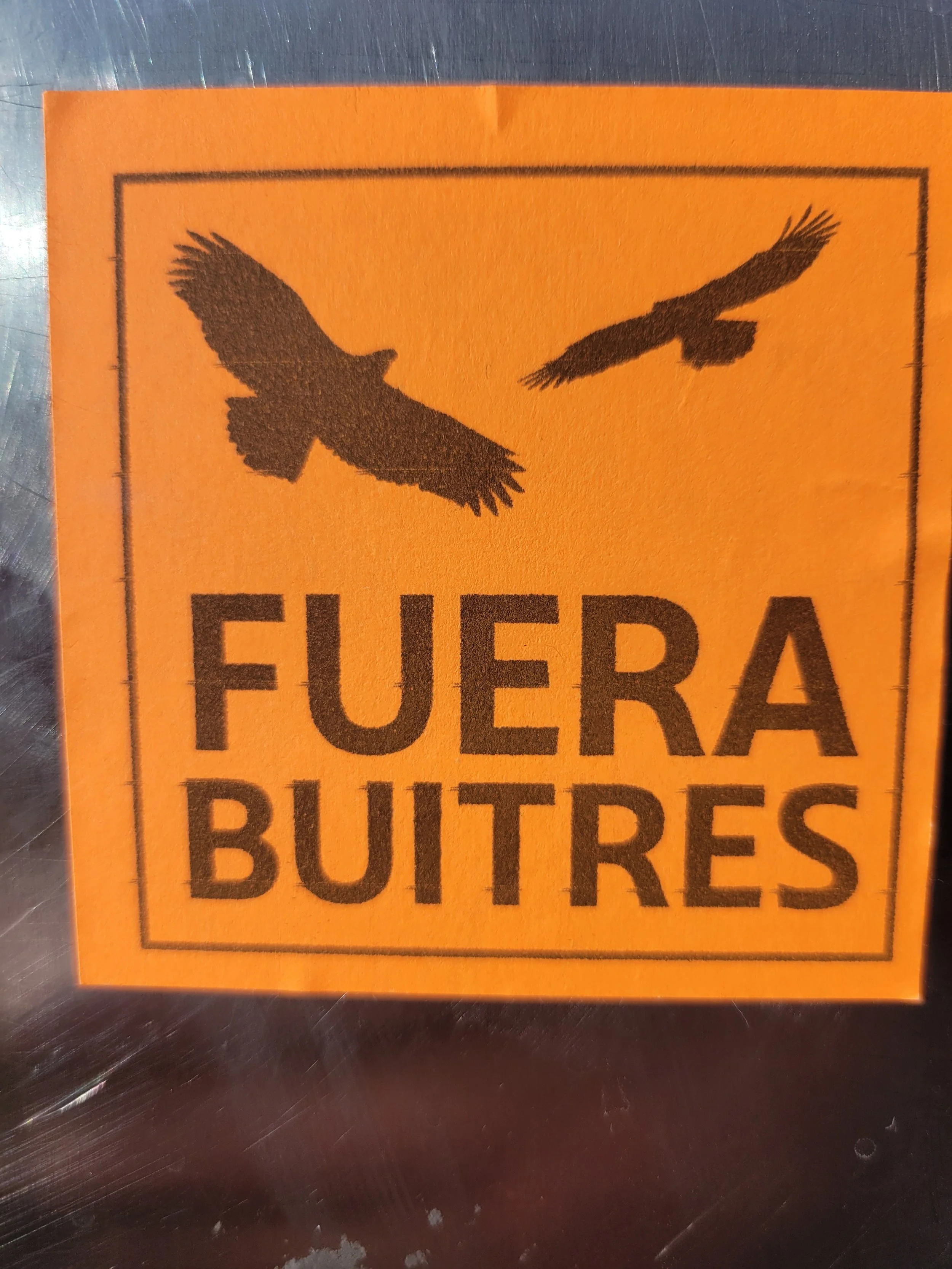
“Vultures out!”
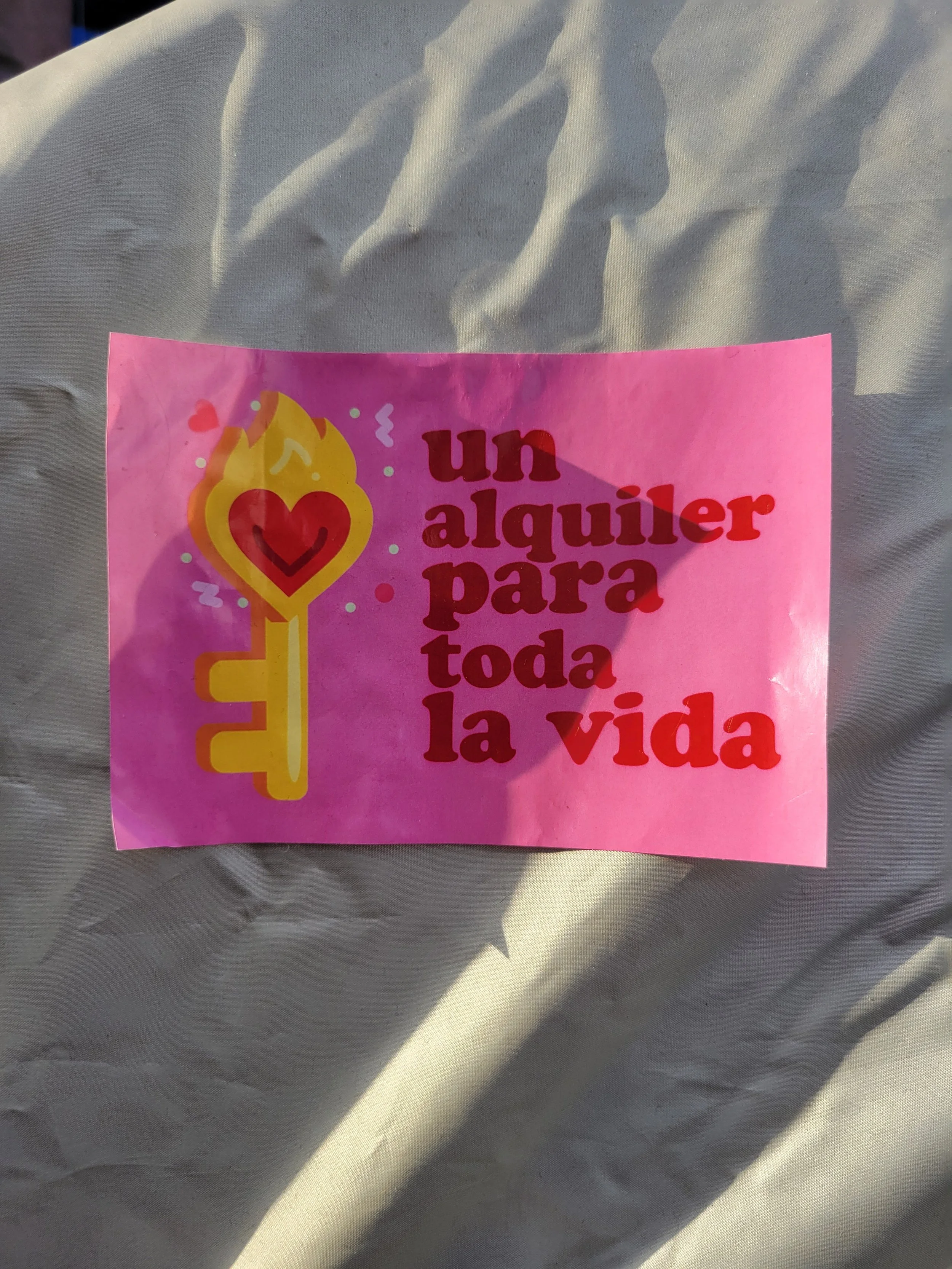
“A lifelong rental”
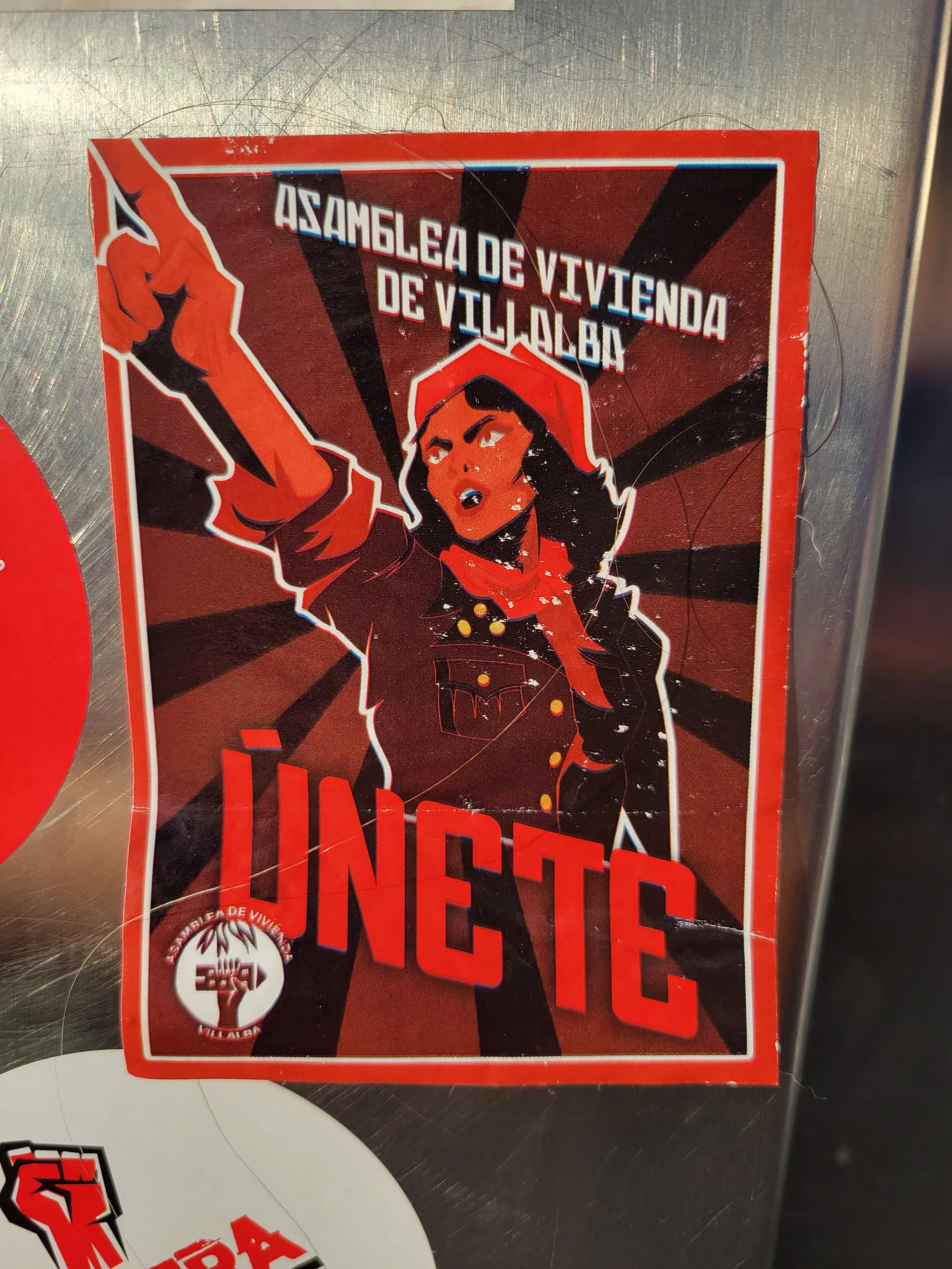
This sticker encourages people to join the Housing Assembly of Villalba, a grassroots association in a town near Madrid.
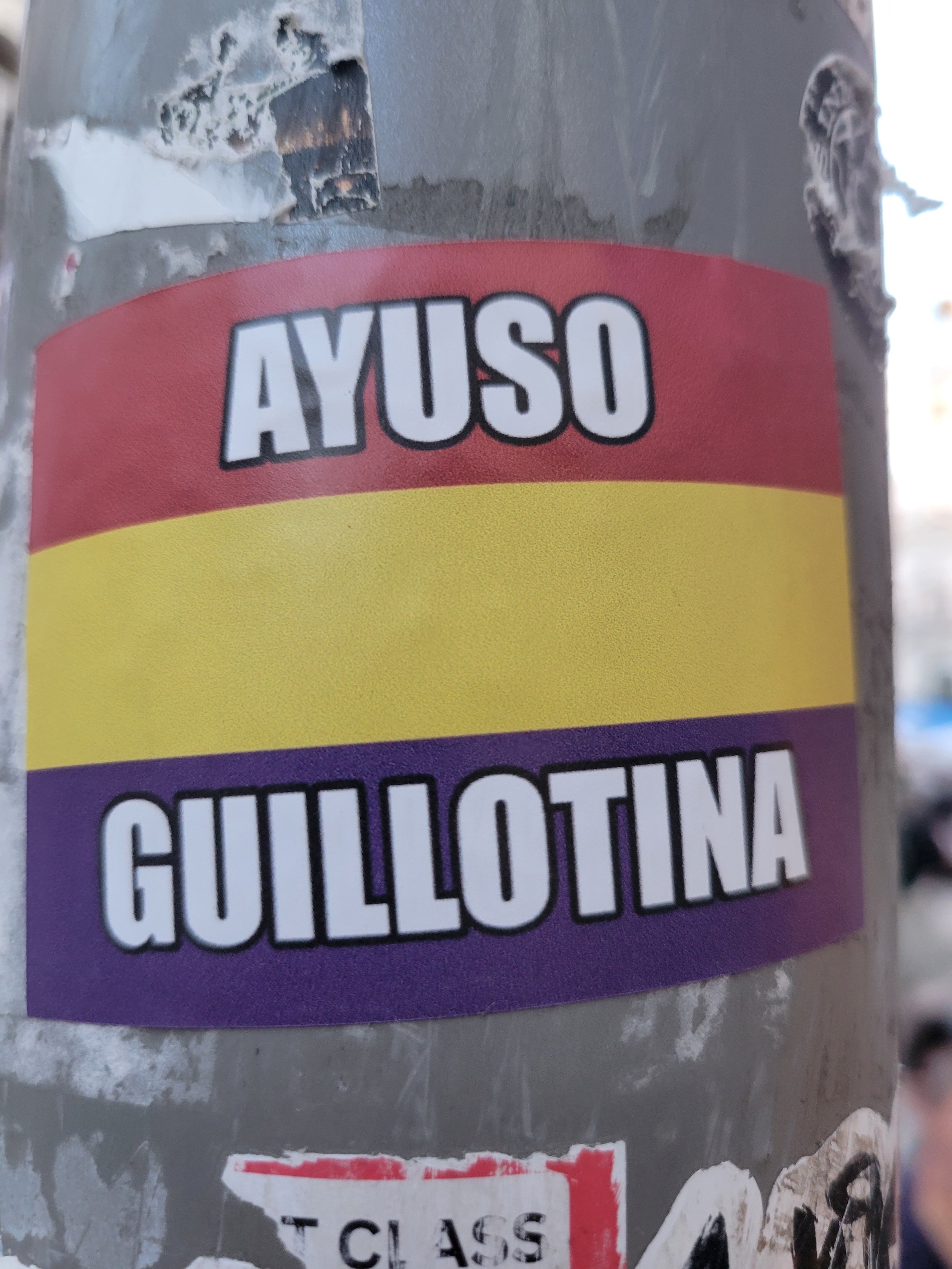
This sticker combines the flag of the Spanish Republic with a French Revolution-inspired message criticizing Isabel Diáz Ayuso, the President of the Community of Madrid, who has threatened to use force to remove protesters from the tent encampment.
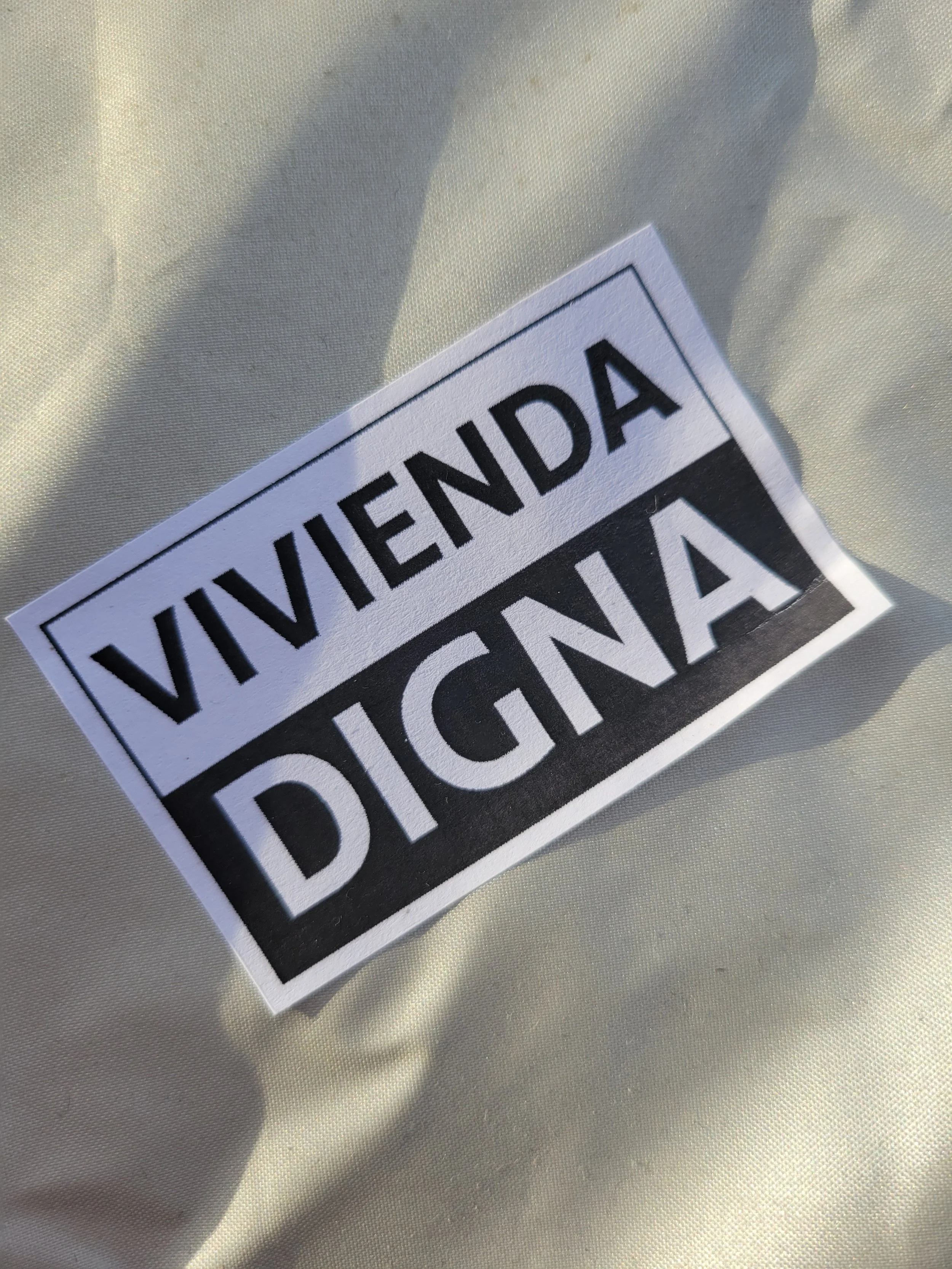
A reference to Spain’s constitution, which guarantees “decent and adequate housing” to all Spaniards.

Self-explanatory.
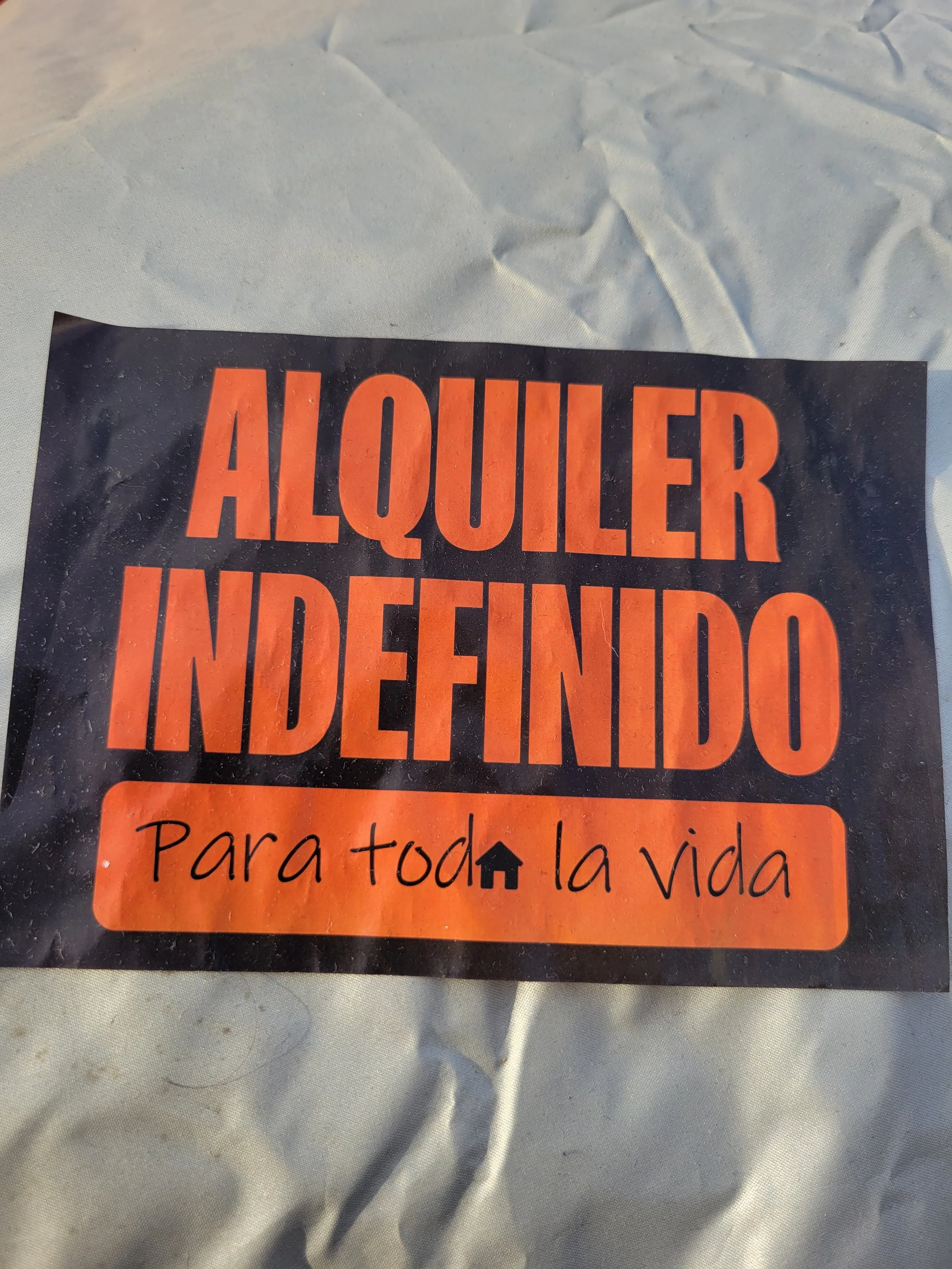
In support of indefinite-term leases for tenants.
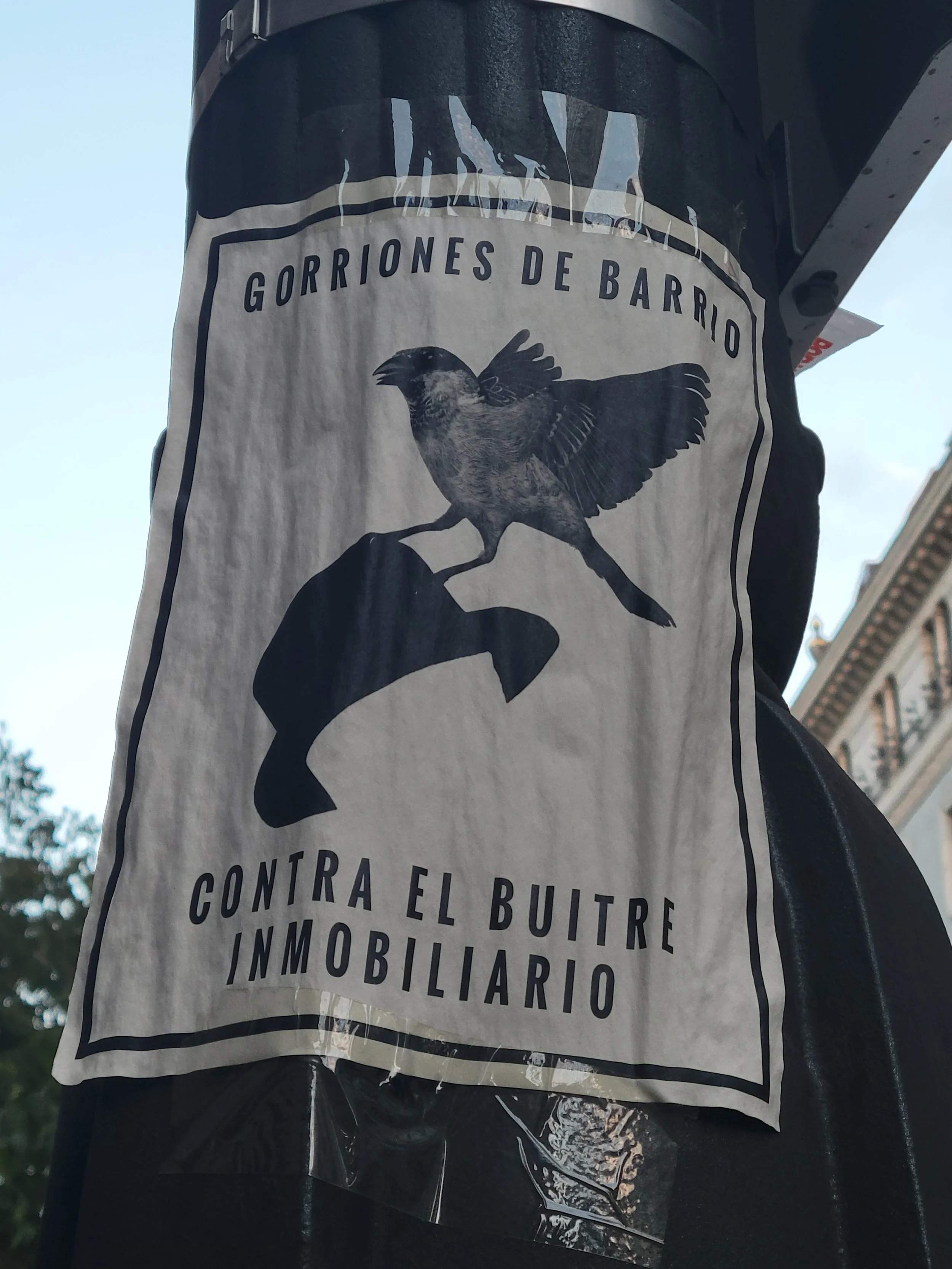
“Neighborhood sparrows against the real estate vultures”

“That’s going to happen”
What happens next?
This story continues to evolve. As of this writing, Spain’s parliament is scheduled to vote on the two measures on Friday, October 2. While a number of parties have already pledged their support and others (conservative Partido Popular and far-right Vox) have signaled their opposition, attention is currently focused on Junts, a conservative Catalan nationalist party that is part of the governing coalition. Whether they support the two measures, support one but not the other, or abstain entirely will have a key impact. Meanwhile, the housing justice movement is keeping up the pressure. Other encampments have sprung in cities throughout Spain, and activists are planning a large mobilization outside parliament on the day of the vote.
At the same time, arguing that the government’s proposed measures don’t go far enough, activists are also planning a major march to build support for a general strike. The goal of such a strike would be to push for additional steps including one that is increasingly gaining traction in Europe: the expropriation of “vulture funds” and corporate-owned housing units in order to provide more social housing and finally make Spain’s constitutional promise of “dignified housing for all” a reality.