
What’s Left in Spain: “Housing, Housing, Housing”
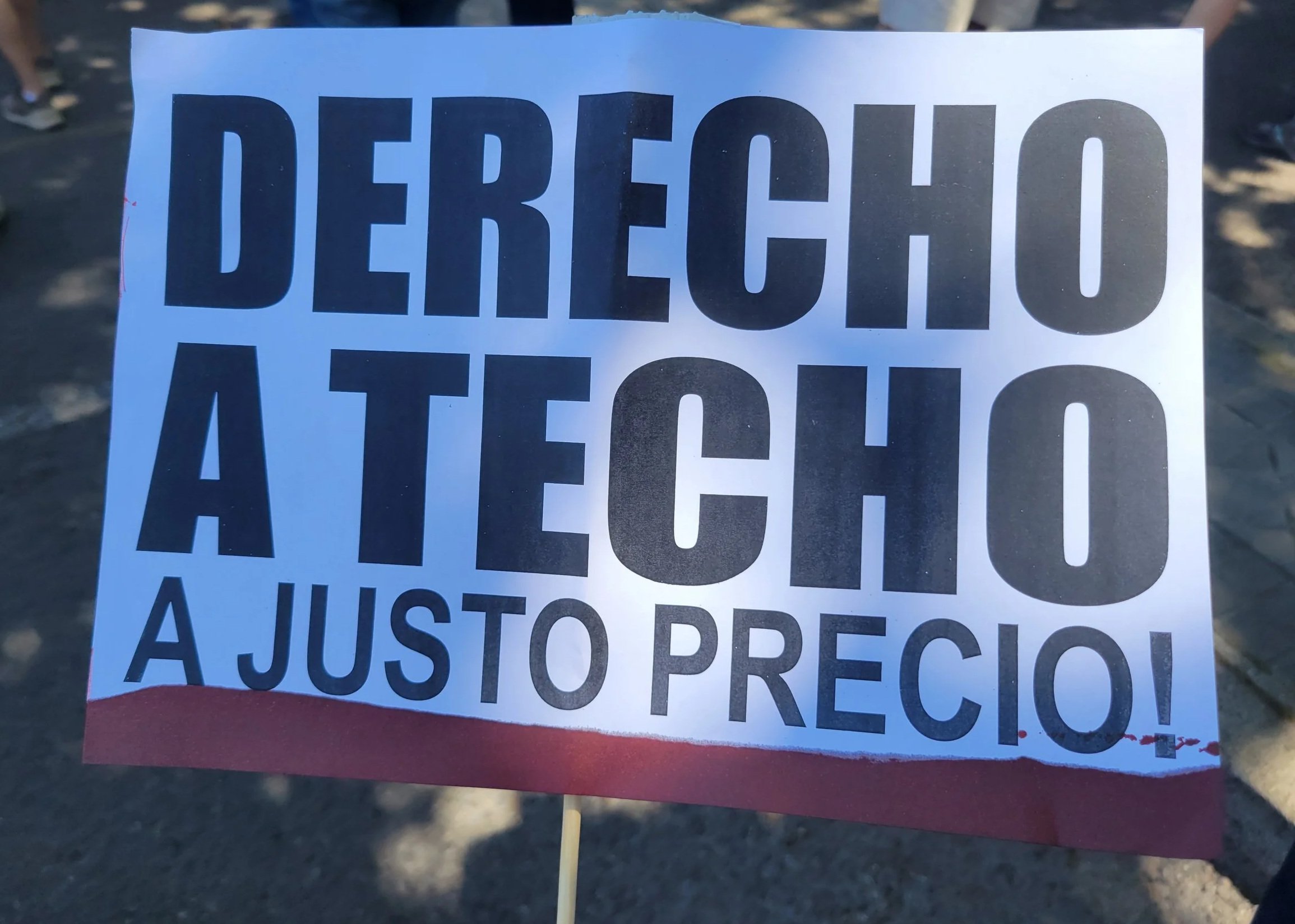
One of the most common signs and slogans seen at the MAY 24 housing march in Madrid read “Right to housing at a fair price!” (Photo: John Collins/Weave News)
While Spain’s turbulent political climate continues to generate endless headlines related to a series of alleged corruption cases involving key figures in both of the dominant political parties - the conservative Popular Party (PP) and the ruling Socialist party (PSOE) - the struggle to chart a new path for the perpetually fragmented Left goes on. Leftist parties are working to build a unified strategy in advance of national elections in 2027, and the country’s most pressing issue - a lack of affordable housing - is poised to play a key role.
Gabriel Rufián, who leads the Esquerra Republicana de Catalunya (ERC, the Republican Left of Catalonia) delegation in Spain’s parliament, has been the driving force behind recent efforts to build a united leftist strategy for stopping the rise of the far right (in the form of the surging Vox party) and maximizing the Left’s chances in the general elections. As conversations and negotiations among the Left’s many regional and national parties continue to evolve, Rufián has indicated a willingness to lead the slate that might emerge from the current dialogue.
Equally important, Rufián and others are starting to speak in more detail about the political program that such a slate could propose as an electoral platform. On numerous occasions, he has responded to questions about the political program with a simple mantra: “vivienda, vivienda, vivienda” (“housing, housing, housing”).
Importantly, Spain’s 1978 constitution, passed during the country’s democratic transition following the death of longtime dictator Francisco Franco, addresses the housing issue in clear language. Article 47 states:
“All Spaniards have the right to decent and adequate housing. Public authorities shall promote the necessary conditions and establish the relevant regulations to make this right effective, regulating land use in accordance with the general interest to prevent speculation.”
Rufián’s “housing, housing, housing” approach is built on a recognition that the promise of Article 47 has never been realized. He is also responding to and drawing on the momentum created by a growing wave of grassroots mobilization on behalf of tenants and others affected by a relatively unregulated real estate market and the soaring prices it has generated in recent years.
“Hands up! This is a robbery!”
On Sunday, May 24, a series of coordinated protest marches in Madrid, Zaragoza, and other cities inaugurated what will be several weeks of actions designed to increase the visibility of the housing crisis and intensify grassroots pressure on the political class. More than 20,000 people took to the streets of the capital to deliver a defiant message to those who profit from treating housing as an investment opportunity.
Reviving a slogan that has circulated in both protest and pop culture for years, marchers summarized their analysis of the crisis by raising their hands in unison and chanting, “¡Manos arriba! ¡Esto es un atraco!” (“Hands up! This is a robbery!”). Many carried signs simply reading, “DERECHO A TECHO,” emphasizing the idea of housing as a basic human right.
The event also reserved special scorn for real estate investors, identified by protestors in Spanish as rentistas (rentiers), especuladores (speculators), and, most colorfully, vuitres (vultures - a reference to so-called ‘vulture funds” that purchase housing and other debt at low prices in order to profit from it). Many signs featured images of vultures hovering over the ordinary people and neighborhoods on the front lines of the crisis. Implicitly referencing the proliferation of tourist apartments in the city center, one woman quoted by national broadcaster RTVE summarized the situation grimly. “The city,” she said, “feels like it’s not for us any longer.”
Anatomy of a crisis: from apartments to shared rooms
One of the large banners at the Madrid march read simply, “La vivienda nos cuesta la vida! (Housing is costing us our lives!)”. A look at existing data on income and housing prices shows that there is ample evidence to support the activists’ reading of the situation.
Shortly after the march, RTVE reported a 17 percent increase in the cost per square meter of housing throughout Spain between April 2025 and April 2026. Madrid, not surprisingly, is the most expensive city for renting. On average, an apartment of 80 square meters costs about 1840 Euros (roughly US$2136) per month to rent. This works out to 23 Euros ($26.70) per square meter, which is about nine percent higher than a year ago.
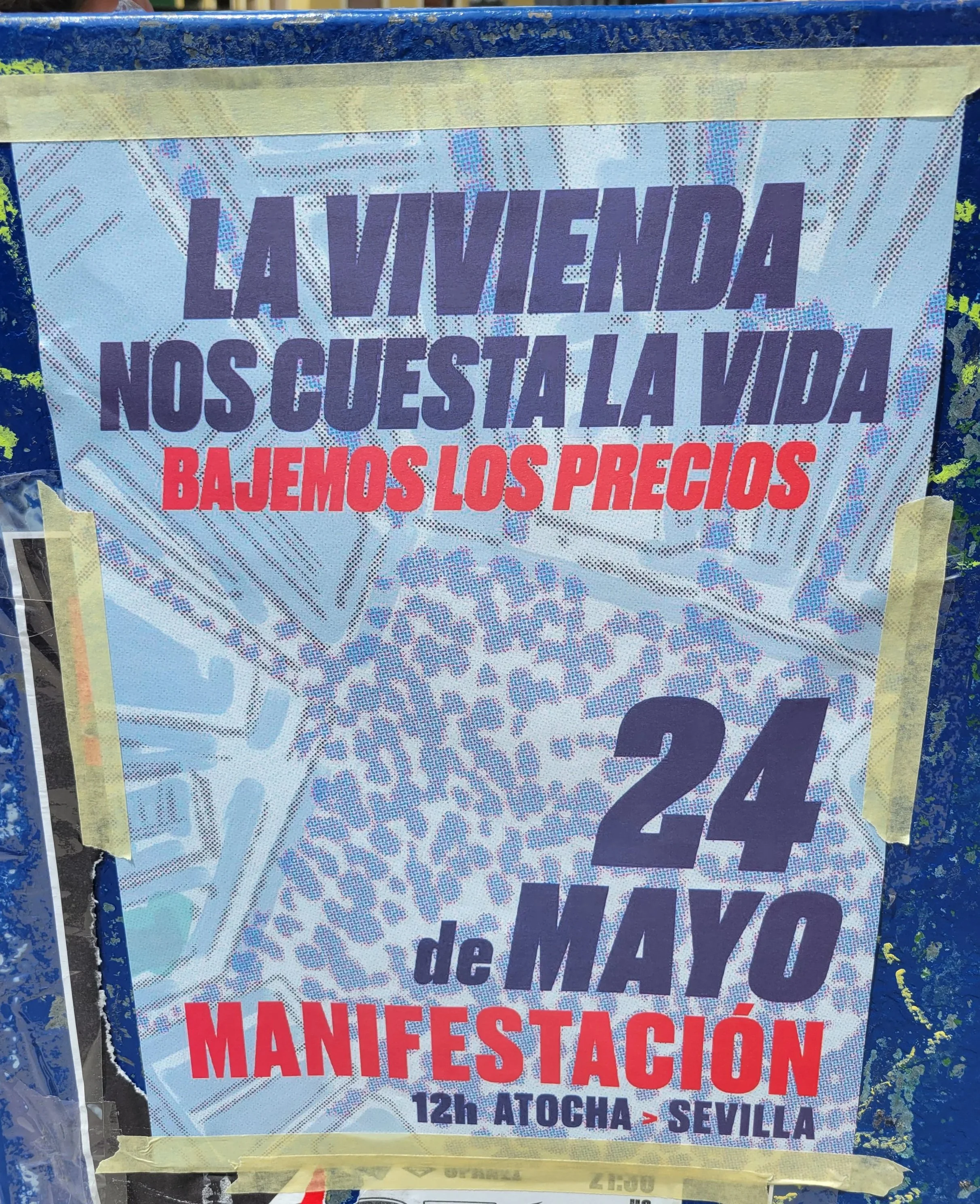
Poster promoting the housing march in Madrid. The message, “La vivienda nos cuesta la vida! (Housing is costing us our lives!),” featured prominently in signs and chants at the march. (Photo: John Collins/Weave News)
What this means is that in Madrid, a significant portion of the population is now entirely priced out of the possibility of buying an apartment. While Spain has traditionally had high levels of home ownership when compared with many other countries in Europe, those numbers have slipped considerably during the past two decades. Today, even the traditional alternative of renting an apartment is often out of reach. Consequently, many people, especially younger people working precarious jobs, have turned in recent years to the option of renting rooms.
The current offerings in Idealista, the online platform widely used for buying, selling, and renting housing units, reflect this shift. As of this writing, there were roughly 12,000 full rental units (typically apartments, condos, and fully detached houses) available in the Madrid metropolitan area, but there were nearly 10,000 rooms available for rent, often in units that have been divided into four, five, six, or even as many as ten rooms.
Even rooms for rent, however, are showing the same inflationary trends as full rental units. In major cities like Madrid and Barcelona, where gentrification and the proliferation of short-term tourist rentals affect the housing market most intensely, rooms in shared apartments often rent for an average of around 700 Euros ($812) a month. This has led to yet another troubling trend: more people being forced to pay for shared rooms, including rooms where it is necessary to take turns sleeping.
“Disobedience is a legitimate tool”
As these realities continue to intensify, Spaniards are responding in a variety of ways, from traditional labor organization to creative expression and direct action.
One of the driving forces behind the current wave of protests is the Sindicato de Inquilinas de Madrid (Madrid Tenants’ Union), which has been on the front lines of many recent struggles to organize and defend tenants in the city. Their website emphasizes a number of goals, including immediate price controls on rental units, expropriation of housing units currently owned by “vulture” funds, recuperation of units that have been turned into tourist apartments, and concrete measures to protect tenants from eviction.
Speaking at the Madrid march, union spokesperson Alicia del Rio insisted that in the face of the current crisis, “disobedience is the only way to change things and is a legitimate tool” against the power of the rentiers who turn a “basic right” into an opportunity for profit. “The laws protect speculation,” she argued, “instead of protecting life.”
This perspective permeated the streets on the day of the protest, where marchers shook their apartment keys in the air to project an image of unity. Many, including the union activists who carried a large banner, advocated for moving toward a rent strike or even a general strike as a way to ramp up the pressure.
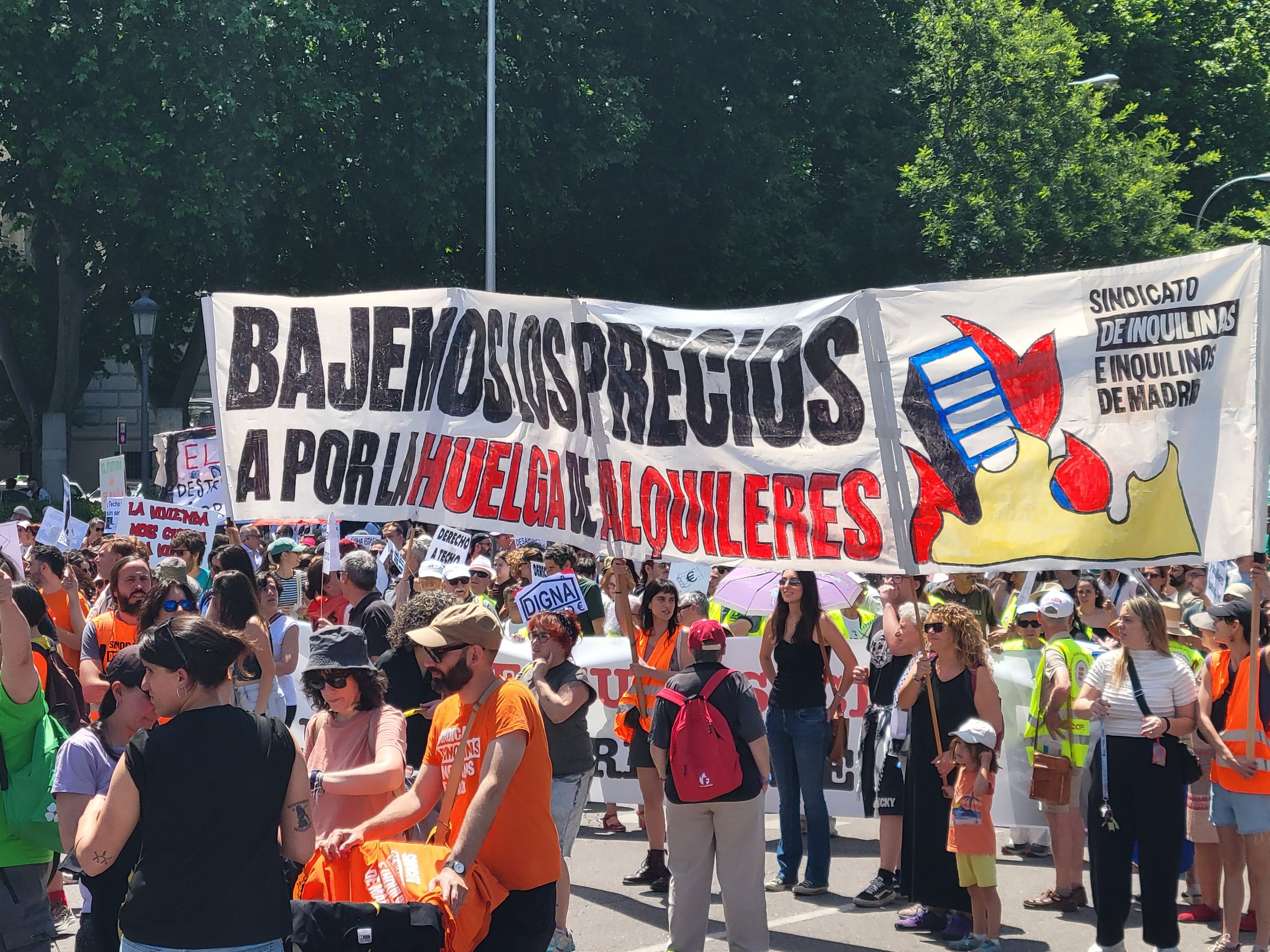
A banner representing the Madrid Tenants’ Union at the May 25 march for housing justice. (Photo: John Collins/Weave News)
Meanwhile, just a few days before the march, a group of poets in Madrid marked the publication of Poemas Habitables, a new anthology released by La Imprenta, with a public reading in the street in front of the publisher’s small bookshop in the bohemian – and rapidly gentrifying - neighborhood of Malasaña.
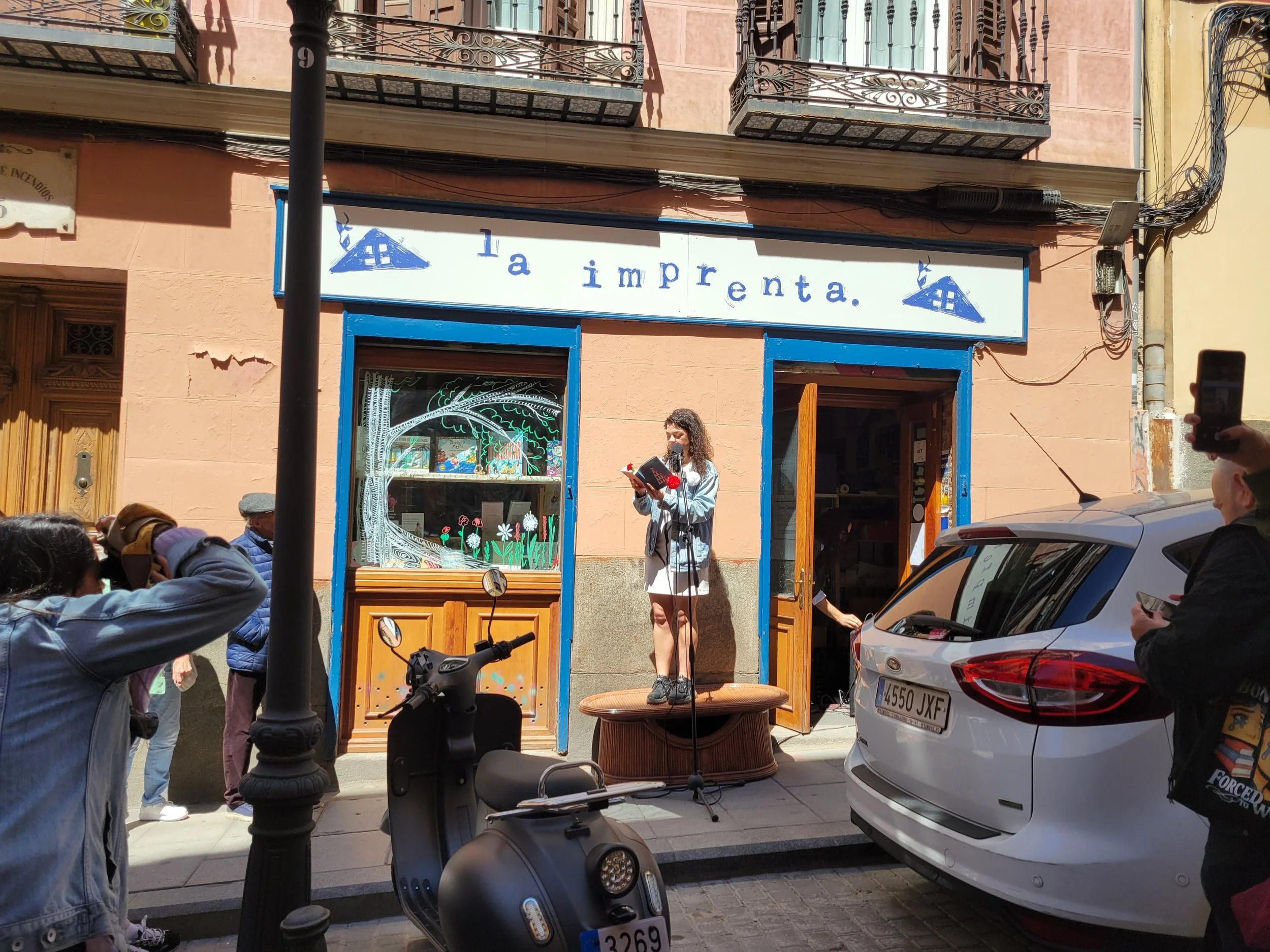
Poet and editor Edurne Batanero reads from the new anthology Poemas Habitables outside the La Imprenta bookshop in Madrid. (Photo: Marina Llorente)
According to editor Edurne Batanero, the book project brought together 95 poets, young and old, from all parts of Spain, unified by the desire to bear poetic witness to the realities of the housing crisis. “It’s important to have not only articles about what’s happening, but also films, novels, poetry,” she reflected at the event. “That way, when all of this changes, we’ll be able to recall what it was like.”
Madrid is not the only place that is seeing new community-based efforts to respond to the effects of the housing crisis. Spanish independent news outlet El Saltorecently reported on a grassroots initiative In the northern city of Santiago de Compostela, where a group of residents recently launched the city’s only squatter community, a self-managed social center called A Miñoca. Organizers say the space builds community power while taking power away from real estate speculators such as the building’s owner, who reportedly wants to demolish it in order to create new tourist apartments.
An economist’s perspective
To dig deeper into the housing crisis, I reached out to Daniel Vila, a Madrid-based economist who is often interviewed by Spanish media outlets for his expertise on housing issues. He observed that for the most part, housing policy “has not been a priority” during the post-Franco years. Up until 2018, he said, the PP and PSOE “essentially shared the view that the issue of housing access should be resolved by market forces.” As a result, the national governments typically sought to pass legislation that would enable private capital to have a free hand in promoting development.
In recent years, the PSOE-led coalition government, under pressure from its coalition partner Sumar, has made housing access a higher priority, passing a new housing law and other measures designed to alleviate the crisis. But regional and municipal governments have a significant amount of autonomy in Spain, leading to uneven implementation of such measures. Catalonia, for example, has been much more proactive in addressing the crisis through steps such as a gradual phase-out of short-term rentals (STRs). By contrast, says Vila, “a lack of Constitutional loyalty” in the conservative-dominated Community of Madrid resulted in the regional government simply refusing to apply the country’s new housing law.
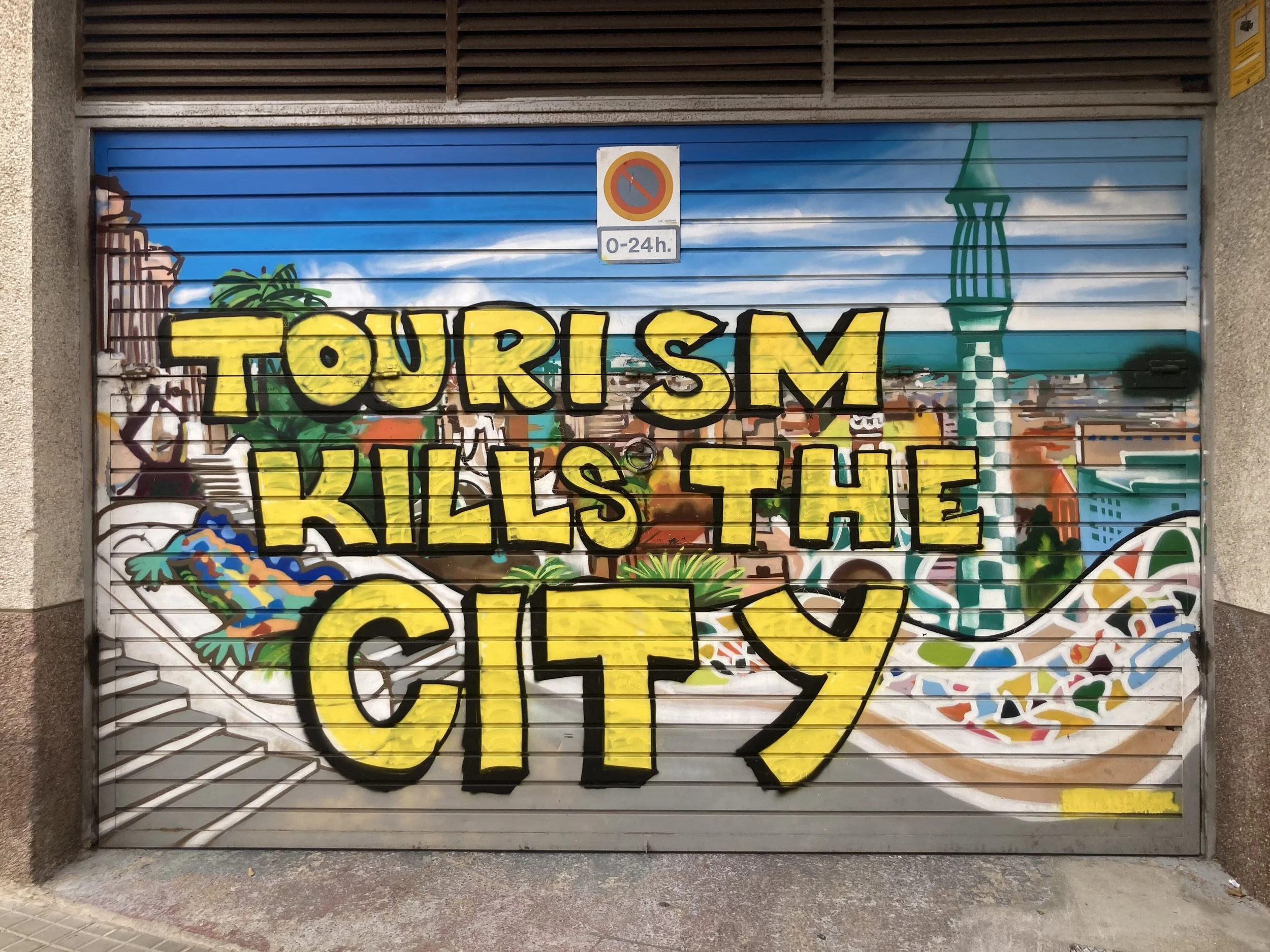
Street art in Barcelona, one of the cities in Europe where there has been a strong backlash against overtourism, including its impact on the availability of housing for local residents. (Photo: Mattsjc, CC BY 4.0, via Wikimedia Commons)
In this sense, according to Vila, “the political and ideological dispute between the major parties has taken precedence over addressing the housing crisis.” He views this stalemate as demonstrating “the inability of the political class to define a short, medium, and long-term strategy that addresses multiple solutions by restoring the public sector as a relevant actor in Spain.” All of this, he added, has generated “a social perception of chaos and inactivity in public housing policies.”
An opportunity for the Left?
As Rufián and others continue to work on the question of how the Left can craft a winning electoral strategy, the housing issue looms large. In January 2026, the country’s most respected polling organization found that 42.6 percent of Spaniards identified access to housing as “the country’s main problem.” In this sense, Rufián’s “housing, housing, housing” message is responding directly to the concerns of the working class that would form the base of any successful coalition bringing together regional and national parties located to the left of the PSOE.
When asked what the Left might have to offer on the housing issue, economist Vila said the key is recognizing that the Left represents a wide spectrum of groups who may approach the housing issue from distinct perspectives. These include not only grassroots forces that prioritize the interests of tenants, but also middle class families that own their apartment and groups whose interests are bound up with the history of urban development in Spain.
While the challenges of building and maintaining a coalition among these groups are considerable, Vila insists it is the only way to overcome the “decades of inaction” on the part of the political class. Moreover, he sees a hopeful sign that can serve as a starting point: “a growing consensus among all those left-wing groups that solving the housing problem requires isolating the behavior of speculative investment funds.”
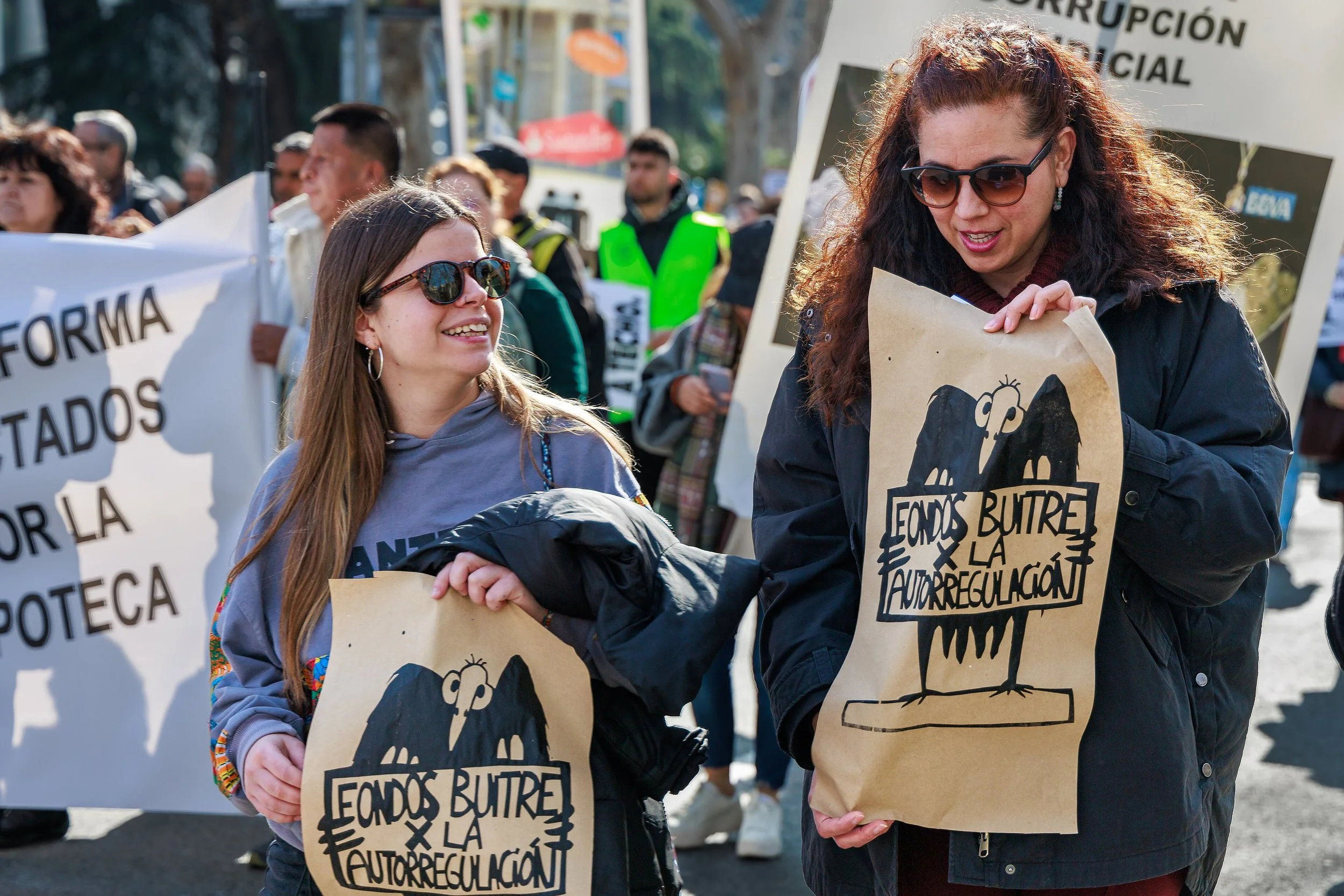
Two protesters at the 'Demonstration for Dignified Housing' march in Madrid on February 9, 2025. Their signs express opposition to predatory investment funds and demand stricter regulations to protect affordable housing. (Photo: Barcex, CC BY-SA 4.0, via Wikimedia Commons)
Whether a focus on the real estate “vultures” can help mobilize voters behind a hypothetical Left coalition in the lead-up to the 2027 elections remains to be seen. Given the ongoing media circus surrounding the charges and counter-charges leveled by the two major parties, it may be difficult for leftist parties and movements to situate bread and butter issues at the center of the public debate - and to keep them there through what promises to be a bruising electoral campaign. At the same time, as the recent march in Madrid made clear, the housing issue is not going away.
Marina Llorente contributed to the reporting for this article.