
Global Indigenous Peoples News Bulletin #16 (May 2026)

This bulletin devoted to Global Indigenous Peoples News, part of the Glocal Exchange project of Weave News, seeks to highlight some of the current issues from Indigenous communities in different parts of the world. The focus of the bulletin is aligned with the overall purpose of the Glocal Exchange project, which examines globalization through its impact from the perspective of local communities. It also supports the Weave News mission to “investigate and report about contemporary issues that are either underreported by establishment and other corporate media or reported in a way that excludes essential context, perspectives, and voices.” These are “issues that have a strong justice component and that reveal connections across communities, borders, struggles, and experiences.”
Threats to Indigenous peoples
A new report published by the U.S.-based Indigenous rights advocacy group Amazon Watch details how crime and militarization pose an existential threat to Indigenous territories across the Amazon Basin. Analyzing seven case studies in Colombia, Ecuador, Peru, Brazil and Venezuela, the report “describes how illicit activities and state repression are transforming the ways of life and cultural habits of Indigenous peoples, as well as undermining their self-determination and collective rights.” Further, according to Mongabay:
“The report finds that Indigenous groups are being harmed by restricted access to crucial natural resources, and are suffering health consequences from mining pollution. They’re also being impacted by compromised state and community governance systems. Criminal presence in Indigenous territories has led to displacement, environmental degradation, mercury contamination from mining, food insecurity and other threats.”
For example, Indigenous Peoples in Voluntary Isolation and Initial Contact (PIACI, in Spanish) living in a proposed 16 million hectare protected territory along Brazil and Peru border in western Amazon are imminently threatened by oil and gas field exploration and expansion, mining, logging, fishing, construction of highways, drug trafficking, and other organized crimes, both legal and illegal. A new report co-authored by Earth Insight in partnership with Indigenous organizations in Peru and Brazil warns that industrial encroachment and weak legal protections are placing PIACI at growing risk across the transboundary forest corridor.
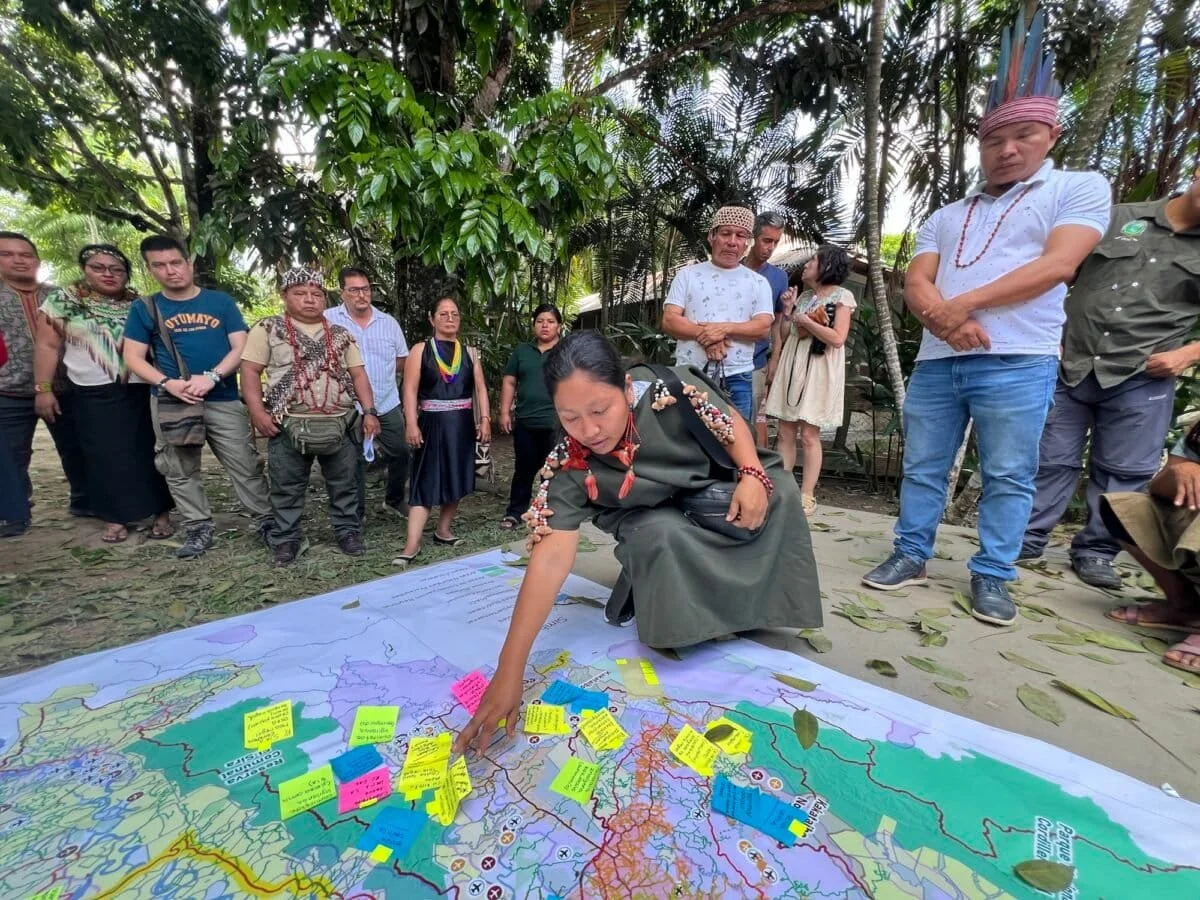
According to a new report from the advocacy group Amazon Watch, the best security strategy in Indigenous territories is respect for their rights and self-determination, and the participation of the communities. (Image courtesy of Amazon Watch via Mongabay)
“The report calls on Peru and Brazil to formally recognize and jointly protect the transboundary corridor, cancel overlapping industrial concessions and strengthen enforcement against illegal logging and criminal activity,” details IC Magazine. “It also urges governments and international conservation organizations to recognize Indigenous territorial governance as central to protecting both biodiversity and isolated peoples.”
In the case of Indigenous environmental human rights defenders (IEHRDs), a September 2025 report by Global Witness shows that across Latin America, they face disproportionate levels of violence for protecting land, water, and territory. “Of the 146 environmental defenders killed or disappeared in 2024, approximately one-third were Indigenous,” notes the Kennedy Human Rights Center. “This overrepresentation reveals the structural risks faced by Indigenous Peoples at the forefront of environmental defense.”
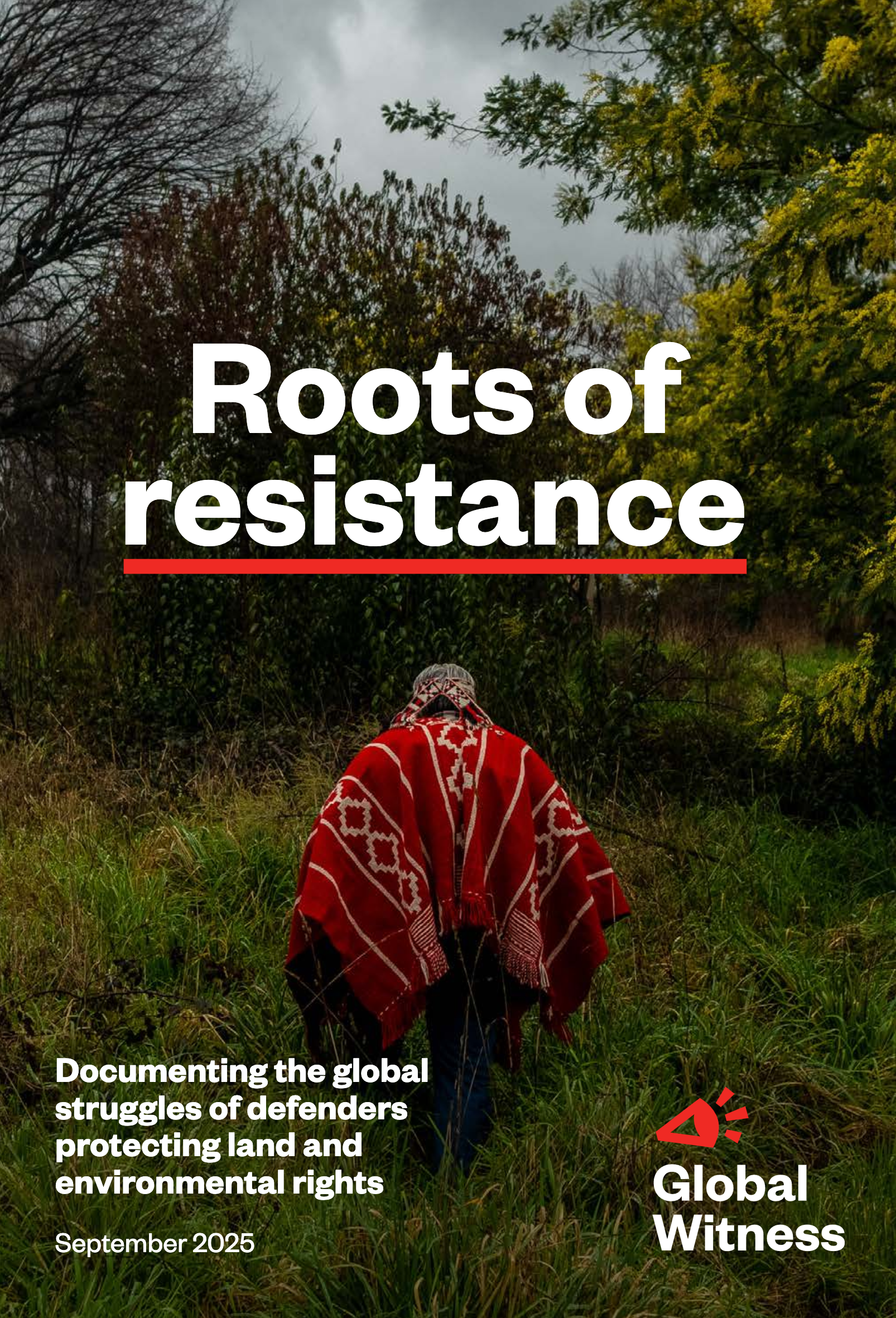
The cover of a September 2025 report by Global Witness.
They argue that States need to decide on protective measures for IEHRDs in consultation with Indigenous communities,a practice that is often not followed. Further, they propose, “formal recognition does not equal protection. Instead, it is the first step to rethink the colonial origins of the extractivist system that perpetuates power imbalances, thereby weakening safeguards at the regional and local levels.”
One noteworthy example comes from Brazil. Some 27 years after the existence of one of the Amazon’s most vulnerable nomadic hunter-gatherer communities was confirmed, the Brazilian government has begun demarcating the Pardo River Kawahiva Indigenous territory, giving greater protection to the uncontacted people. This demarcation of 410,000 hectares of territory is intended to protect the Amazonian community from farming, illegal mining and logging.
Dialogue following the UNPFII
Meanwhile, Anita Hofschneider writes that Indigenous peoples bear the brunt of climate change — but get almost none of the money to fight it as billion-dollar climate funds impose barriers against Indigenous peoples accessing them. United Nations Secretary-General António Guterres told the recent UN Permanent Forum on Indigenous Issues (UNPFII) that “From the Amazon to Australia, and Africa to the Arctic, you are the great guardians of nature, a living library of biodiversity conservation, and champions of climate action.” Despite this, Hofschneider points out, “Multi-billion-dollar financial institutions set up to address the climate crisis have largely failed to deliver money to Indigenous communities, or even track whether they’re benefiting.”
(For more on discussions that took place at the UNPFII, see the April 2026 edition of this Bulletin.)
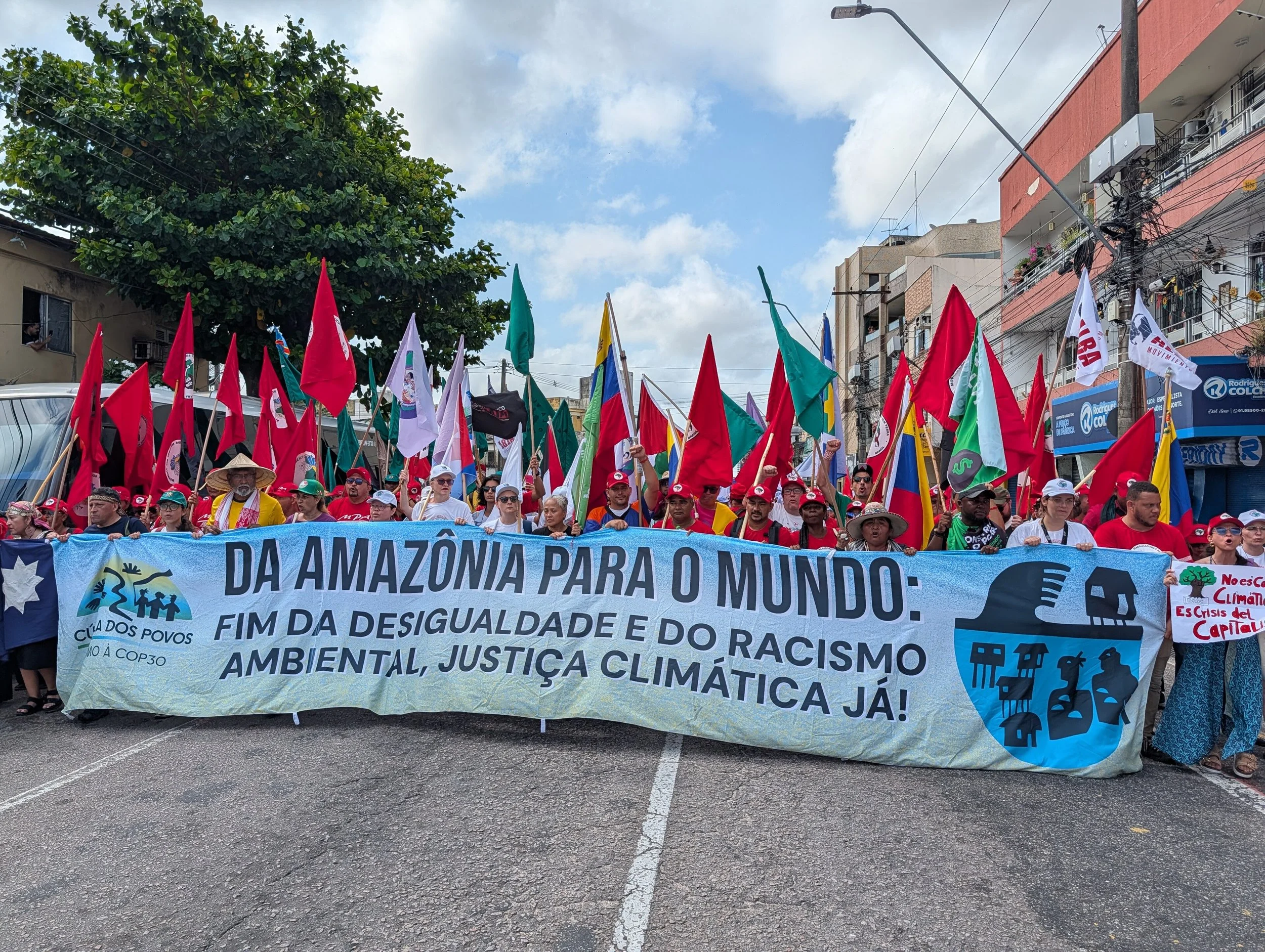
Protests in Belem near the COP30 venue in November 2025. (Photo: Xuthoria, CC BY-SA 4.0, via Wikimedia Commons)
Writing in Grist, Hofschneider also reports that a new “Systemic Assessment” report by a group of current and former members of the UNPFII underscores the limitations of the Forum. She points out that while the Forum makes recommendations on behalf of Indigenous peoples to U.N. agencies and member states, it has been hamstrung by funding cuts and the willingness of other U.N. agencies and global leaders to listen.
The “Systemic Assessment” report states that “While UNPFII has succeeded in establishing itself as a visible and legitimate global platform, questions remain regarding its ability to translate dialogue, recommendations, and knowledge production into tangible outcomes for Indigenous peoples on the ground. The proliferation of recommendations has not been matched by corresponding mechanisms for implementation, follow-up, and accountability.” Discussions about how to make the Forum more effective will continue at the 2027 gathering and focus on global progress on the United Nations Declaration on the Rights of Indigenous Peoples.
Other recent publications
The 40th edition of the annual report, The Indigenous World, was launched at the UNPFII in April. The 87 articles in this edition, written by 129 volunteer authors, document developments Indigenous Peoples have experienced throughout 2025 and include a special focus on peace and security.
In addition, a new publication by the Washington-based Native Action Network (NAN) highlights Native women leaders from across the United States. Titled Enduring Spirit: Native American Women Leading the Way, the book profiles 23 influential Native women serving in leadership roles across Indian Country who have shaped communities across generations as elected officials, grassroots organizers, cultural knowledge keepers, educators, artists, advocates, and mothers.
