
Global Indigenous Peoples News Bulletin #15 (April 2026)

This bulletin devoted to Global Indigenous Peoples News, part of the Glocal Exchange project of Weave News, seeks to highlight some of the current issues from Indigenous communities in different parts of the world. The focus of the bulletin is aligned with the overall purpose of the Glocal Exchange project, which examines globalization through its impact from the perspective of local communities. It also supports the Weave News mission to “investigate and report about contemporary issues that are either underreported by establishment and other corporate media or reported in a way that excludes essential context, perspectives, and voices.” These are “issues that have a strong justice component and that reveal connections across communities, borders, struggles, and experiences.”
UNPFII 2026: a holistic focus on Indigenous health
The 2026 session of the United Nations Permanent Forum on Indigenous Issues (UNPFII) brought together more than 1,000 participants, including Indigenous Peoples as well as representatives of Member States, United Nations entities, and academia. This year’s theme focused on ensuring the health of Indigenous Peoples, including in the context of conflict, highlighting the interconnectedness of their health with their territories, cultures and ecosystems, as well as the impacts of climate change.
“Indigenous peoples already face health inequities from colonialism and climate change,” reports Grist in a story published in partnership with the Indigenous News Alliance, “and these harms are compounded by armed conflicts and militarization that risk ecological degradation and further displacement of Indigenous peoples from their lands.” Aimee Gabay, writing in Mongabay, provides further details:
“Armed conflicts disproportionately affect Indigenous peoples, as they are frequently driven by competition over natural resources. This leads to the displacement of Indigenous peoples from ancestral lands and territories, the erosion of social and cultural cohesion, resource exploitation and disruptions to agricultural livelihoods, leading to intergenerational health crises. As a public health solution, advocates at the forum pushed for the World Health Organization and member states to focus their attention on land tenure and ecosystem stewardship.”
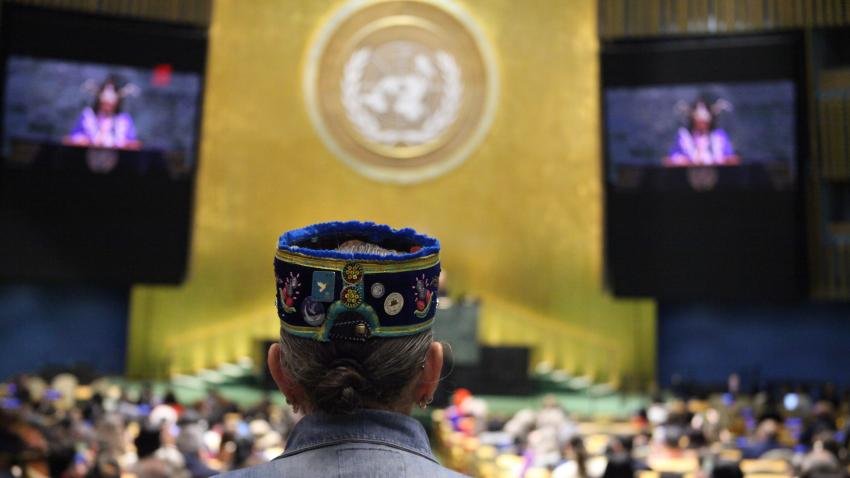
At the 2026 UNPFII session. (Photo: UN DESA/Jennifer Kim)
Mongabay also highlighted key findings of a recent study of former permanent forum member Geoffrey Roth, descendant of the Standing Rock Sioux Tribe. “By focusing on Indigenous health as separate from territories, waters, food systems and culture,” the article notes, “Roth said global health efforts have failed to address the structural drivers of health problems Indigenous peoples face, such as land dispossession, environmental degradation, cultural disruption and the erosion of Indigenous governance.”
Climate urgency
The ongoing climate crisis was another key focus of this year’s Permanent Forum.
In a February report on nomadic peoples, experts warned that rigid state borders and exclusionary “fortress conservation” models are affecting the traditional mobility of pastoralists, hunter-gatherers, and seafarers.
Another issue discussed by the Indigenous leaders was how to enforce global climate court rulings. During the last year, an advisory opinion from the International Court of Justice (ICJ) and a ruling from the Inter-American Court on Human Rights called on governments “to be accountable for the impacts of climate change, to reduce fossil fuel emissions and to incorporate Indigenous knowledge into climate policies.”
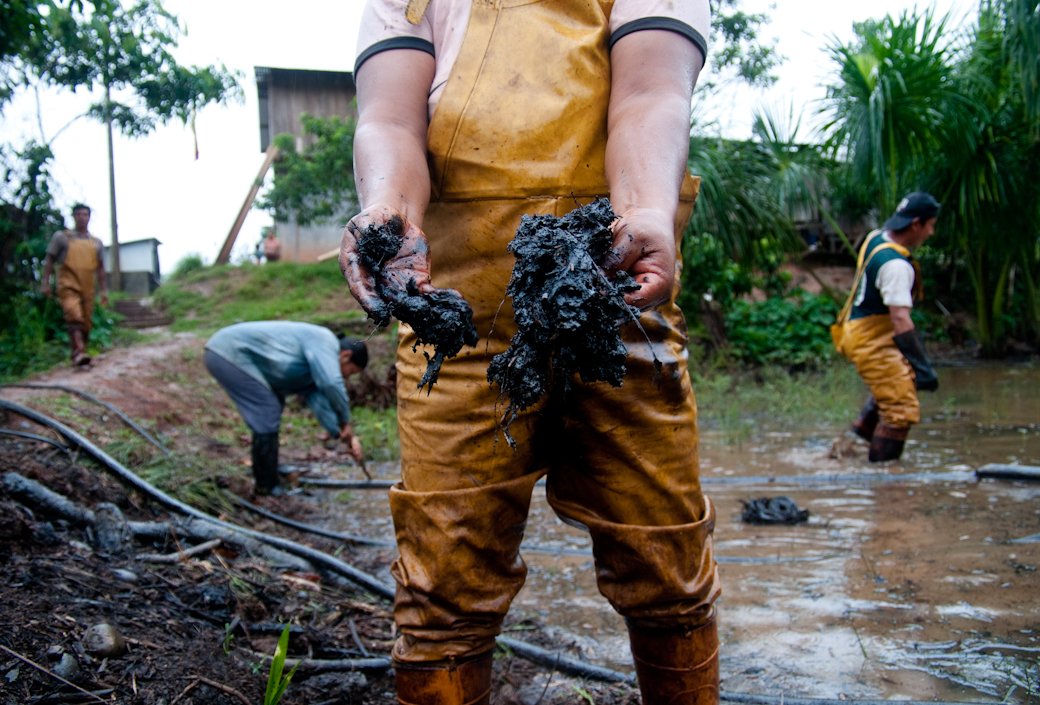
Maria Aguinda, the lead plaintiff in the Aguinda v. Chevron lawsuit, shows some of the crude oil that is still contaminating the Ecuadorian Amazon, 35 years after it was spilled. (Image: Amazon Watch via Mongabay)
Indigenous representatives, however, question the feasibility of implementing and enforcing such rulings. “These advisory opinions are not symbolic, they are instruments of power. They can and must be used to strengthen Indigenous Peoples’ advocacy at every level,” said Luisa Castañeda-Quintana, executive director of the advocacy group Land is Life. “But to do so, Indigenous Peoples must claim them, integrate them into the rights narratives, and take them into every space where their futures are being decided.”
AI and data centers
Lydia Jennings, citizen of the Pascua Yaqui Tribe (Yoeme) and Huichol (Wixáritari), an assistant professor of environmental studies at Dartmouth College involved in advocacy for Indigenous data sovereignty (ensuring communities retain the right to own and control their own data), said that artificial intelligence (AI) can be an opportunity for tribes, noting some might be interested in hosting data centers or using AI to help with language preservation or synthesizing information. At the same time, “she remains wary of how much Indigenous data AI systems may be co-opting without consent, as well as the severe risks that massive data centers pose to tribal lands and water resources.”
There is also strong Indigenous opposition to data centers. Honor the Earth, an Indigenous-led environmental justice organization, is tracking over 100 proposed data center projects on tribal and rural lands. The organization's executive director, Oglala Lakota and Northern Cheyenne activist Krystal Two Bulls, said that the AI industry’s data center boom is the latest chapter in a long history of environmental racism and resource exploitation in vulnerable Native communities. Among the many impacts of what she calls a “modern-day iteration” of “settler colonialism” are noise pollution, cancers and respiratory illnesses, water depletion, energy grid overload, and even “ecological collapse.”
Human rights: calls for accountability
Meanwhile, threats against Indigenous leaders and human rights defenders are increasing worldwide. Reports indicate that in 2023 alone, “31 percent of human rights defenders killed worldwide were Indigenous or working on Indigenous rights, despite making up only 5 percent of the global population.” Grist describes “a growing crisis of criminalization, with human rights groups warning that legal systems are increasingly being weaponized to suppress resistance on ancestral lands.” Amid reports of “reprisals including intimidation, threats, killings and enforced disappearance,” the UNPFII reiterated its call “to urge States to take the necessary steps to ensure the rights, protection and safety of Indigenous leaders and human rights defenders.”
Another UNPFII session focused on reviewing the Committee on the Elimination of Discrimination against Women (CEDAW) 2022 Recommendation No. 39, which is the only form of international law dedicated to protecting the rights of Indigenous women and girls. “Despite that landmark status,” writes Michael Cugley, “Indigenous women at the U.N. repeatedly highlighted the lack of implementation and ongoing threats they face. Beyond physical violence, the recommendation outlines how systemic barriers restrict access to fundamental rights.”
Indigenous peacebuilding
On April 25–26, 2026, more than 150 Indigenous peacebuilders, elders, spiritual leaders, mediators, women leaders and youth from 80 countries gathered in New York City for The Second Global Summit on Indigenous Peacebuilding.
During the gathering, the Global Network of Indigenous Peacebuilders, Mediators and Negotiators was launched with the aim of “engaging governments, corporations and conflict actors in dialogue and mediation processes.” Organizers also “call[ed] on the United Nations and governments worldwide to declare 2027–2037 as the International Decade on Indigenous Peacebuilding, alongside the creation of a Peace Caucus at the United Nations.”
According to the Manipur Women Gun Survivors Network (MWGSN), additional initiatives included “the launch of the Indigenous Mothers’ March for Peace, Healing and Global Unity, a global movement led by Indigenous women that will travel worldwide over the next two years, and a collective call to reduce armed conflicts by 50 percent through prevention, dialogue and Indigenous-led peace processes.”
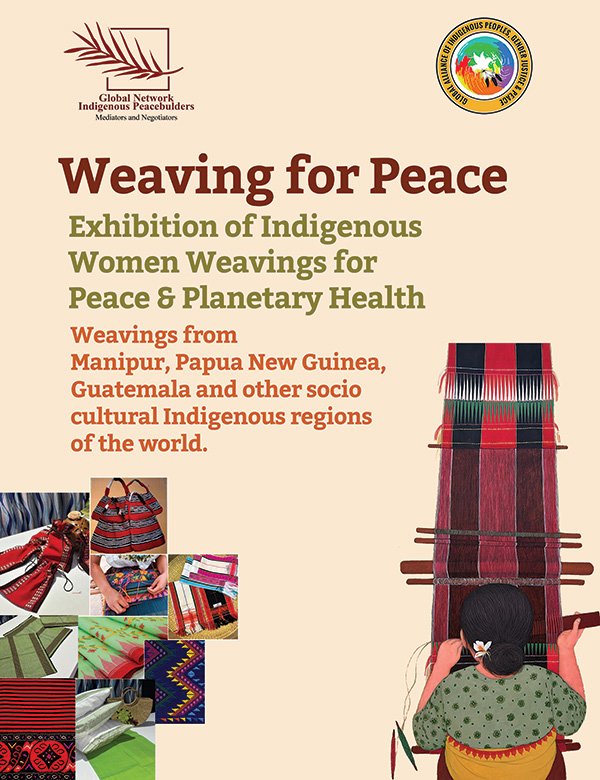
Poster celebrating the “Weaving Peace” exhibition held at the Second Global Summit on Indigenous Peacebuilding. (Image: Indigenous Peacebuilders Network)
The gathering also recognized 100 Indigenous peacebuilders for their contributions to peace and humanity. An exhibition called “Weaving Peace: Healing Lives” was held alongside the two-day Summit. “As the international community searches for pathways beyond war and division,” the MWGSN statement concludes, “the summit seeks to highlight Indigenous knowledge systems as vital to building a more just, peaceful and sustainable future.”
Indigenous mobilization in Brazil
In Brazil, despite the fact that demarcation of Indigenous lands has recorded important progress in recent years, Indigenous protesters marched to the capital, Brasilia, on April 7 to demand the government expedite recognition of their ancestral lands. The Articulation of Brazilian Indigenous People (APIB) notes that “a hundred Indigenous territories are awaiting the formal sign-off of government recognition.”
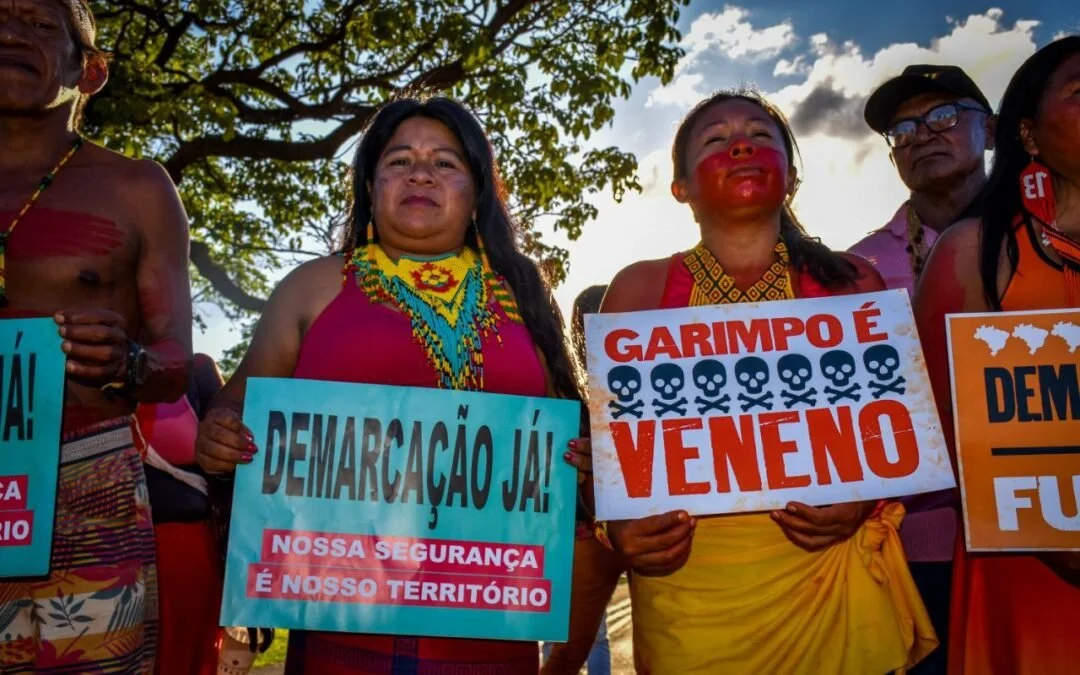
The Free Land Camp is the largest mobilization of Indigenous peoples in Brazil. (Image: APIB)
A report from Telesur English provides additional context for the Indigenous mobilizations in Brazil:
“The Indigenous movement insists that full territorial rights are fundamental to guaranteeing physical and cultural survival. Many communities still face invasions, illegal mining, and violence linked to land disputes. Successful demarcation strengthens Indigenous stewardship of ecosystems critical for carbon sequestration and biodiversity conservation. It also challenges models of development based solely on extractivism and agribusiness expansion, offering alternative visions of sustainable territorial management rooted in ancestral knowledge. The struggle for land remains inseparable from the defense of cultural identity, environmental integrity, and social justice.”
Recognizing Indigenous knowledge
During NASA's Artemis II mission to the Moon, Canadian astronaut Jeremy Hansen’s flight suit carried the wisdom of the Seven Grandfather Teachings on a patch designed for him by Anishinaabe artist Henry Guimond of Sagkeeng First Nation in Manitoba.
Minnesota Public Radio highlights the perspective of Dennis Jones, an Anishinaabe elder from Nigigoonsiminikaaning First Nation in Ontario who’s known by his Anishinaabe name Pebaamibines. “I thought the trip to the moon, the Seven Grandfather Teachings, all of this is to open up the eyes of the world that Indigenous people have this knowledge that’s going to help — help us from polluting Mother Earth, help us from self-destructing,” said Pebaamibines.
Protecting Indigenous peoples living in voluntary isolation in Peru
Finally, the Inter-American Commission on Human Rights (IACHR) has ordered the Peruvian state “to protect the Kakataibo people living in voluntary isolation in the Kakataibo Indigenous Reserve.” The significance of this decision extends beyond human rights protection. “The Kakataibo Indigenous Reserve safeguards a vast area of Amazon rainforest that plays a vital role in stabilizing regional climate systems, protecting extraordinary biodiversity, and maintaining carbon storage at landscape scale,” argues Amazon Watch in a March 31 campaign update. “As deforestation linked to illegal economies continues to advance, protecting the reserve is essential not only for the survival of isolated Kakataibo families, but also for defending one of the Amazon’s most critical climate frontlines.”
