
“Organize the Anger” or “Organize Hope”? The Argentine Left After Milei
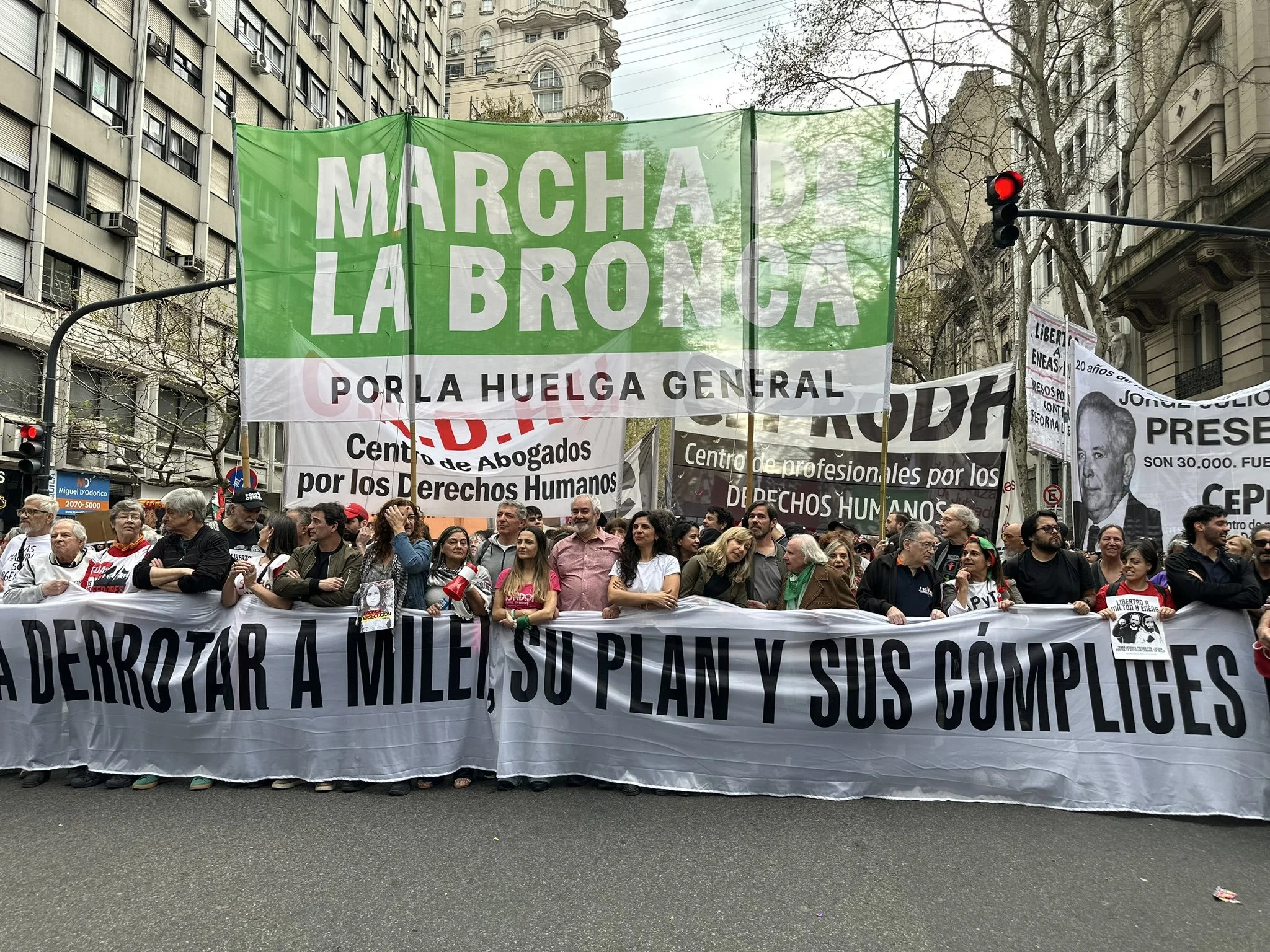
A scene from the Marcha de la Bronca in Buenos Aires on September 19. (Photo: MST activists)
“Lo que faltaba era una convocatoria para agrupar las distintas luchas que todos los días se dan pero aisladas y eso es lo que hemos logrado entre todos” (“What was missing was a call to unite the various struggles that take place every day—albeit in isolation—and that is what we have achieved together”).
With this sentence, Alejandro Bodart, a leader of one of the parties that organized the Marcha de la Bronca (March of Anger) in Buenos Aires, Argentina, summed up what the mobilization was about. On September 19, around 70,000 people gathered at Plaza de Mayo (May Plaza) for a march highlighting conflicts that had been unfolding separately, from hospitals and universities to other sectors affected by the policies of Javier Milei, the country’s right-wing president.
Getting to that square required weeks of meetings, organizing, and discussions among groups that share many demands but do not always act together. The mobilization also took place amid a division within the opposition to the government. Progressive sectors rejected the call, and the main progressive force in the opposition organized an event called “Organizar la Esperanza” (Organizing Hope) that same afternoon.
Two words, Anger and Hope, chosen for two mobilizations held on the same day, against the same government, say a great deal about a tension running through the Argentine left. What should be done with the dissatisfaction that exists now? How can struggles that emerge separately be turned into a force capable of staying organized, while at the same time building a political alternative for the future?
Anger as a starting point
Since Milei took office in December 2023, attacks on rights have affected every area of life: pensions, public universities, the environment, healthcare. In a 2024 interview with the US outlet The Free Press, Milei himself summed up his project: “I am the one who destroys the state from within. It is like being infiltrated into enemy ranks.”
As a result, anger has become part of the everyday experience of living under this government. It appears with every new attack, as living conditions worsen, and in the feeling that there is always something else to defend and something else to lose.
This kind of anger can lead in different directions. It can fuel the organization of existing struggles and the attempt to get different sectors to act together. But it can also turn into electoral expectations, into the hope that a change of government can put an end to what is happening.
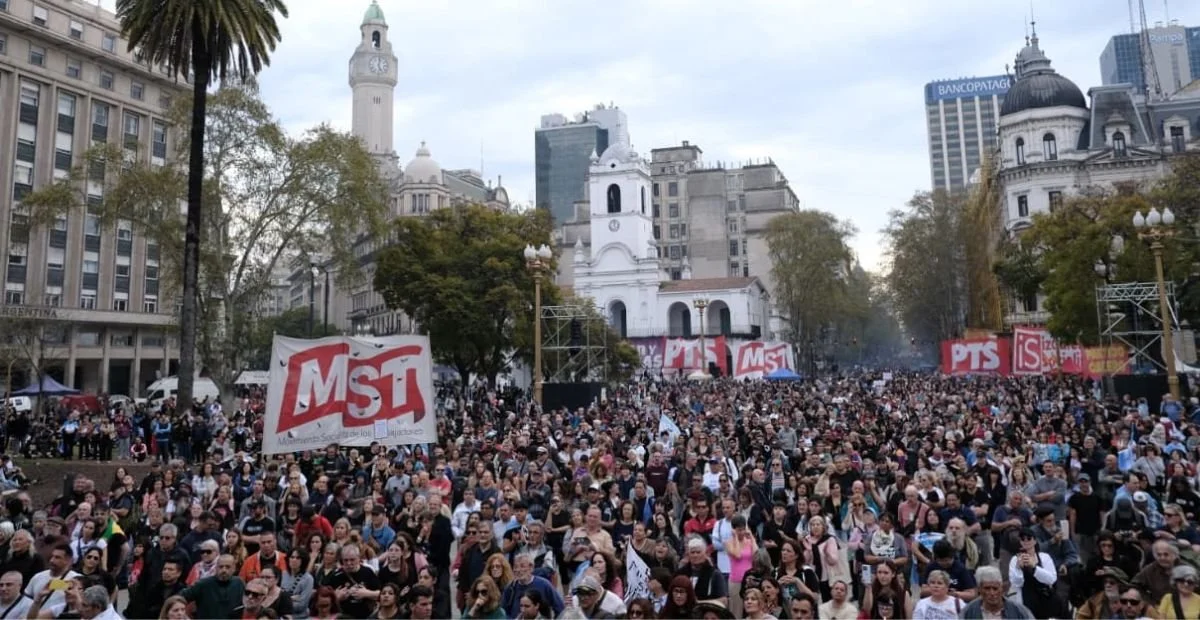
A scene from the Marcha de la Bronca. (Photo: Pedro Pallero)
The difference became particularly clear on September 19. While the Marcha de la Bronca was arriving at Plaza de Mayo, the Organizar la Esperanza event was bringing its own militants together. The latter event was organized by the Movimiento Derecho al Futuro, the political space led by Axel Kicillof, governor of the province of Buenos Aires and a possible presidential candidate in 2027.
One mobilization started from what is happening now and from the struggles that already exist. The other placed the construction of a political alternative for the future at the center, raising the question of when the expectation of future change begins to determine what to do in the present. Or rather, what not to do.
The risk of hope
“Well, you know, we need hope. We can’t do anything without optimism.”
Angela Davis is right to insist on the need for hope. After a defeat, a strike that failed to achieve its goal, or a demand that remains unanswered, some sense of possibility has to exist for people to organize again.
But hope takes on a different meaning when it becomes focused entirely on a future moment. For the progressive opposition in Argentina, the prospect of defeating Milei at the ballot box in 2027 has become the central focus, along with the possibility of beginning to roll back some of his government’s measures. Meanwhile, it is the left that is organizing and mobilizing in the streets.
The risk is turning the coming months into a period of simply waiting for that moment.
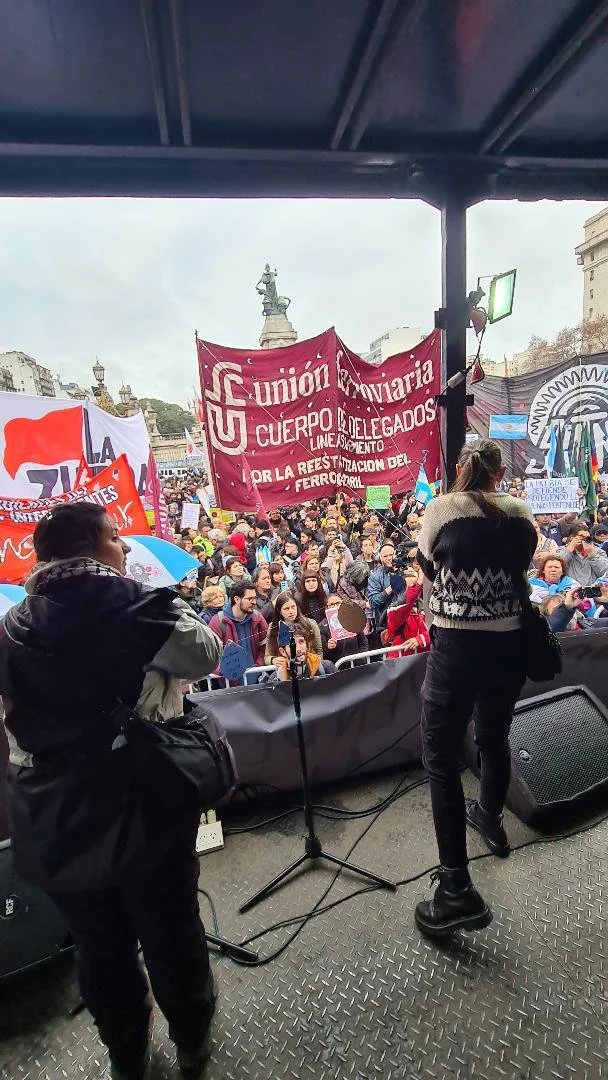
A scene from the Marcha de la Bronca. (Photo: MST activists)
This tension creates what I see as an artificial separation between electoral politics and what happens in the streets. A strike or march can come to be seen as a problem for a campaign, an unnecessary source of friction, or bad publicity for the opposition. Everything starts revolving around waiting for and preparing for that specific future moment, while attacks on rights continue regardless of the electoral calendar.
This is where hope can lose its ability to get people moving. Waiting for change in the future is different from believing that change can be built through what we do now.
We do not need less hope. What we need is hope that does not take us away from the present.
When mobilization moves to another terrain
An example of this tension between anger and hope is what happened in Chile in 2019 and the years that followed. In October 2019, millions of people took to the streets against an increase in the Santiago Metro fare. Within days, the mobilization had expanded to include demands around the cost of living, pensions, healthcare, education, and inequality. On October 25, more than one million people marched in the capital, Santiago.
Pressure from the streets opened up a political struggle that was much broader than the issue that had sparked the protests. In 2020, 78.27% of voters approved a plebiscite on drafting a new Constitution, which would be the first to be written by an Assembly elected by popular vote.
Riding the progressive wave, Gabriel Boric was elected president in 2021. It was the first vote count in another country that I followed with anticipation and apprehension.
When the time came to vote on the new constitutional text, however, the political struggle was already taking place on different ground. The 2019 mobilization had opened up a political possibility, but the next stage involved a national campaign around the text. There was a strong campaign of disinformation about what would be included in the new constitution. In September 2022, the proposal was rejected by 61.86% of the vote.
The result does not erase what happened in the streets in 2019, but it shows that opening up a political struggle and sustaining an organized force through the stages that follow are completely different things. When mobilization moves onto different ground, the relationships built along the way need to find a way to continue.
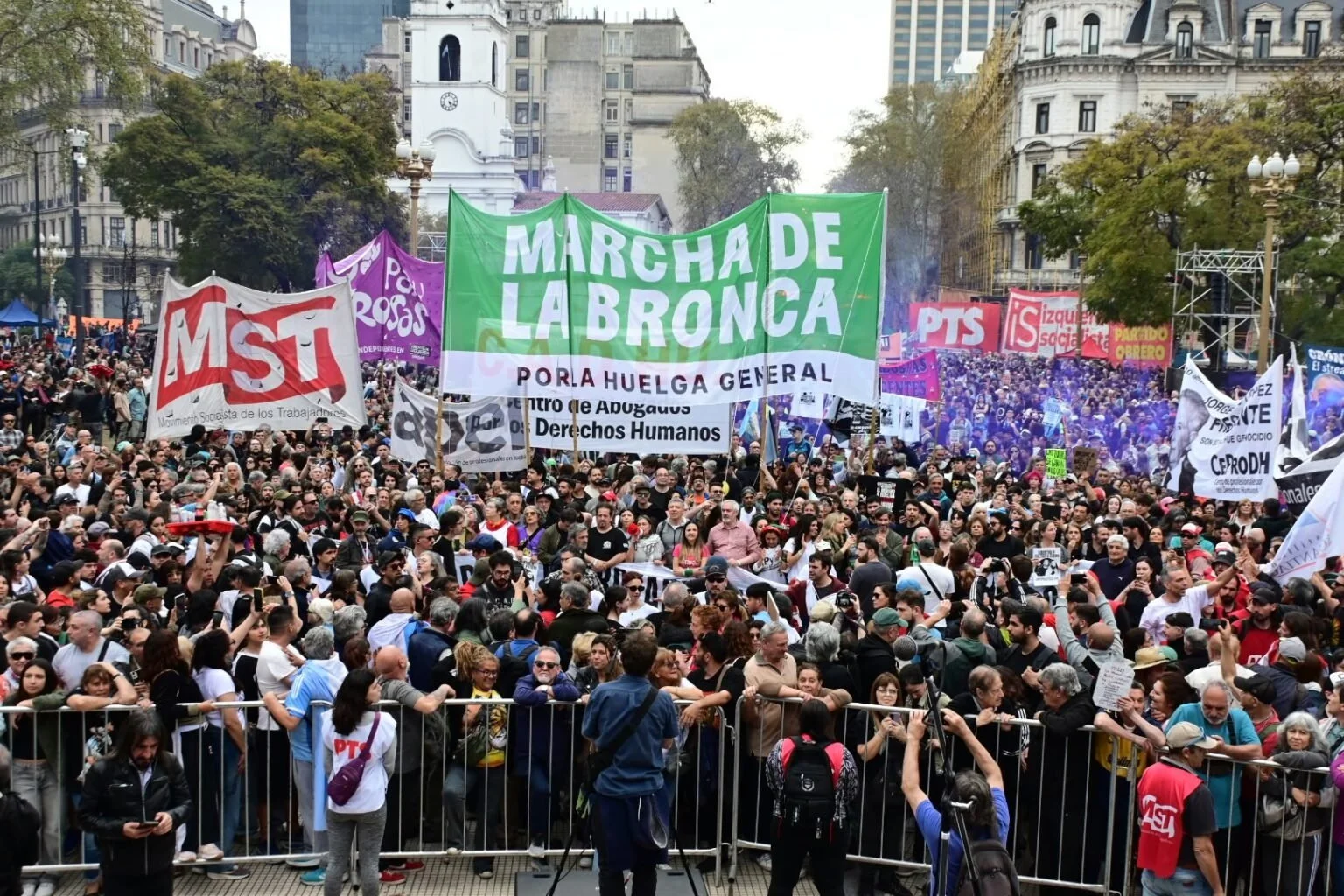
A scene from the Marcha de la Bronca. (Photo: Marcos Sierras)
It is precisely this continuity that the left has been trying to weave in Argentina. I use the word weave because it is necessary to create a fabric that connects each of these parallel struggles, from the Garrahan Children’s Hospital, the largest children's hospital in the country which was threatened with defunding by the national government, to the retirees who protest every Wednesday in front of Congress, to the teachers facing increasingly difficult working conditions.
When we look again at the Marcha de la Bronca, we can see that this is beginning to happen.
After Plaza de Mayo
In preparing for the Marcha de la Bronca, the question of unity emerged in a very concrete way. After the demonstration, that process continued on another level. At the assembly held by our organization in the following days, we assessed the outcome of the march, discussed what had worked and what difficulties had emerged in organizing the mobilization, and began discussing the next steps.
The small group gathered at the headquarters of a revolutionary left-wing party on a Friday afternoon may seem tiny compared with a march of 70,000 people, but this is precisely the kind of work that determines whether a mobilization remains limited to the day it took place or becomes part of a more lasting struggle.
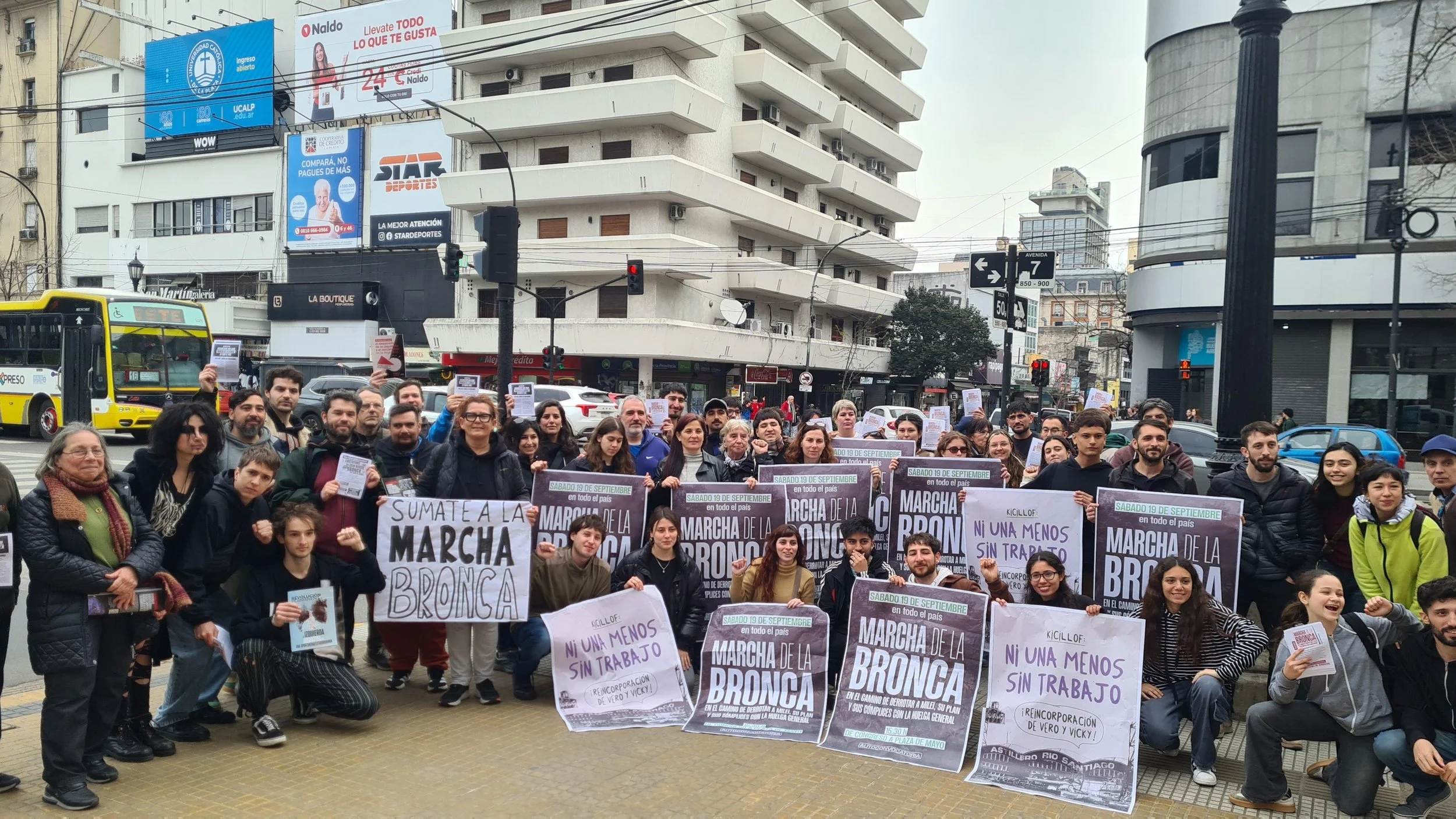
Members of the Movimiento Socialista de los Trabajadores at the Marcha de la Bronca. (Photo: MST activists)
At the same time as each sector returns to its own conflicts and discussions, the ties built during the mobilization need to be preserved, and new forms of joint action need to be found. Since the march, new actions have already been announced, including a mobilization outside Congress to demand more funding for public services.
The question, then, is no longer how many people we can bring to a square on a given day, although that is extremely important. It is what we do with that force when the square empties, when each attack by the government, new or old, once again demands attention. More and more, people are talking about 2027, the importance of “voting well,” and possible alliances among the most prominent political leaders.
It is at this point that the dispute between organizing anger and organizing hope stops being a question of words and becomes a question of political practice.