The Fight Against the Right on the Université Bordeaux Montaigne Campus
There is constant activism on the Université Bordeaux Montaigne (UBM) Campus in Bordeaux, France. It is not uncommon to see students protesting on my walk to class or to have the walls covered in political posters to the point where you can’t see the paint underneath. In particular, one topic prominently occupies students’ minds these days: Palestine. In recent weeks, however, the campus has also seen evidence of clashing viewpoints fueled by far-right politics.
My name is Lauren Bate, and I’m an American student currently studying for the spring semester at the UBM, where I am taking all my classes alongside French students and participating in campus life. During my first week on campus, I was honestly stunned to see the amount of activism taking place, especially compared to what I am used to seeing on campuses in the US, and it was interesting to see what issues students were advocating for.
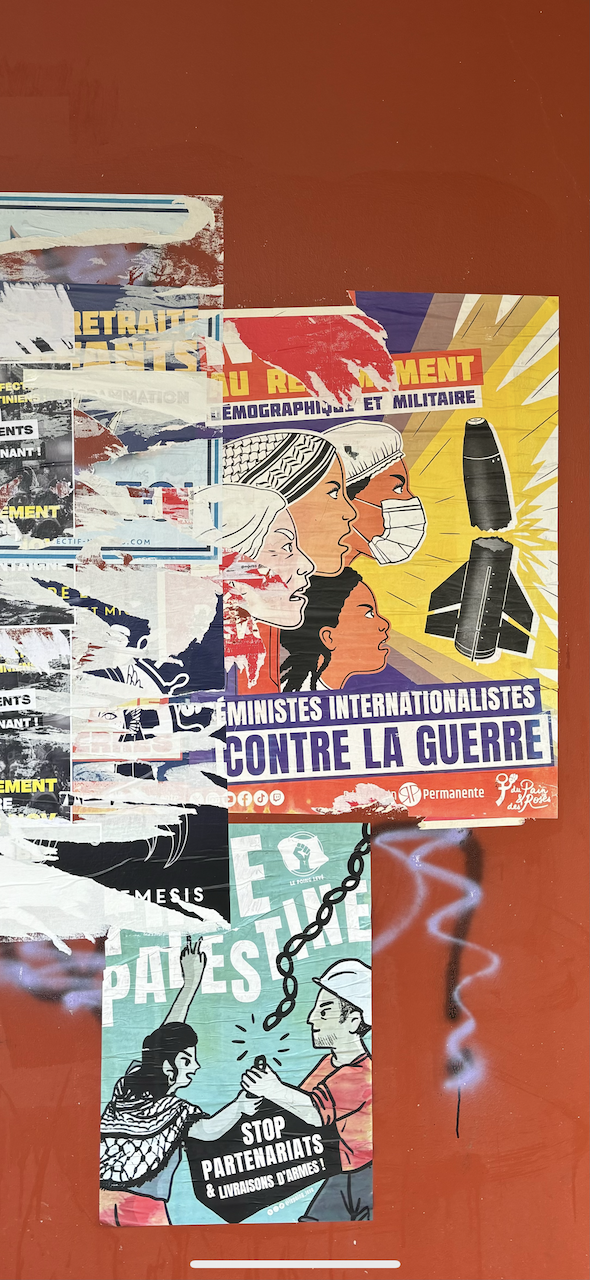
Free Palestine posters on the UBM campus. (All photos courtesy of the author)
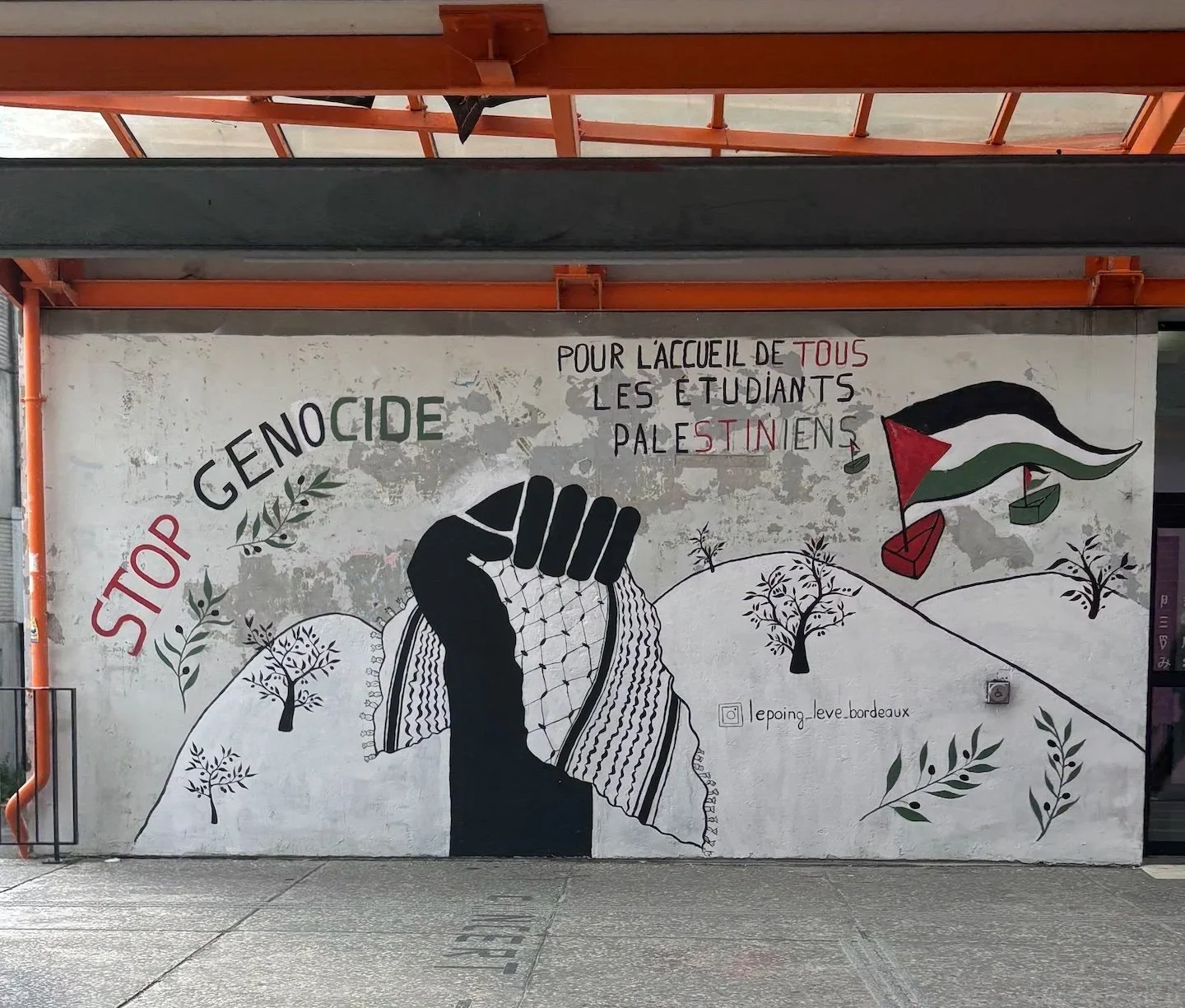
Original pro-Palestine mural on the UBM campus.
The campus is constantly changing, and there are always new posters, graffiti, etc. However, one of the constant features has been a mural in support of the Palestinian students who are hosted by UBM. The artwork on the wall near our student center features a fist holding the keffiyeh, a typical symbol used for Palestine support, and “Stop Genocide” is written in English. Located in a very high traffic area, the mural sends the message that this is a cause students are proud to support.
When returning from our winter break in February, I assumed the mural would remain unchanged as it had throughout the previous months. However, what I saw was not what I expected in the slightest. While campus was quiet and the recent death of far-right activist Quentin Daranque was fresh, some of his supporters took the opportunity to engage in a campaign of vandalism targeting many of the messages filling public spaces.
The pro-Palestine mural in particular was heavily defaced. Notably, the phrase “Stop Genocide” was crossed out and replaced with the French word “JAMAIS,” which means “never.”When trying to understand why one person’s death caused such a movement across France that spread onto my own campus, I had to look into what had created this political storm and why the extreme right had decided to rally behind this figure.
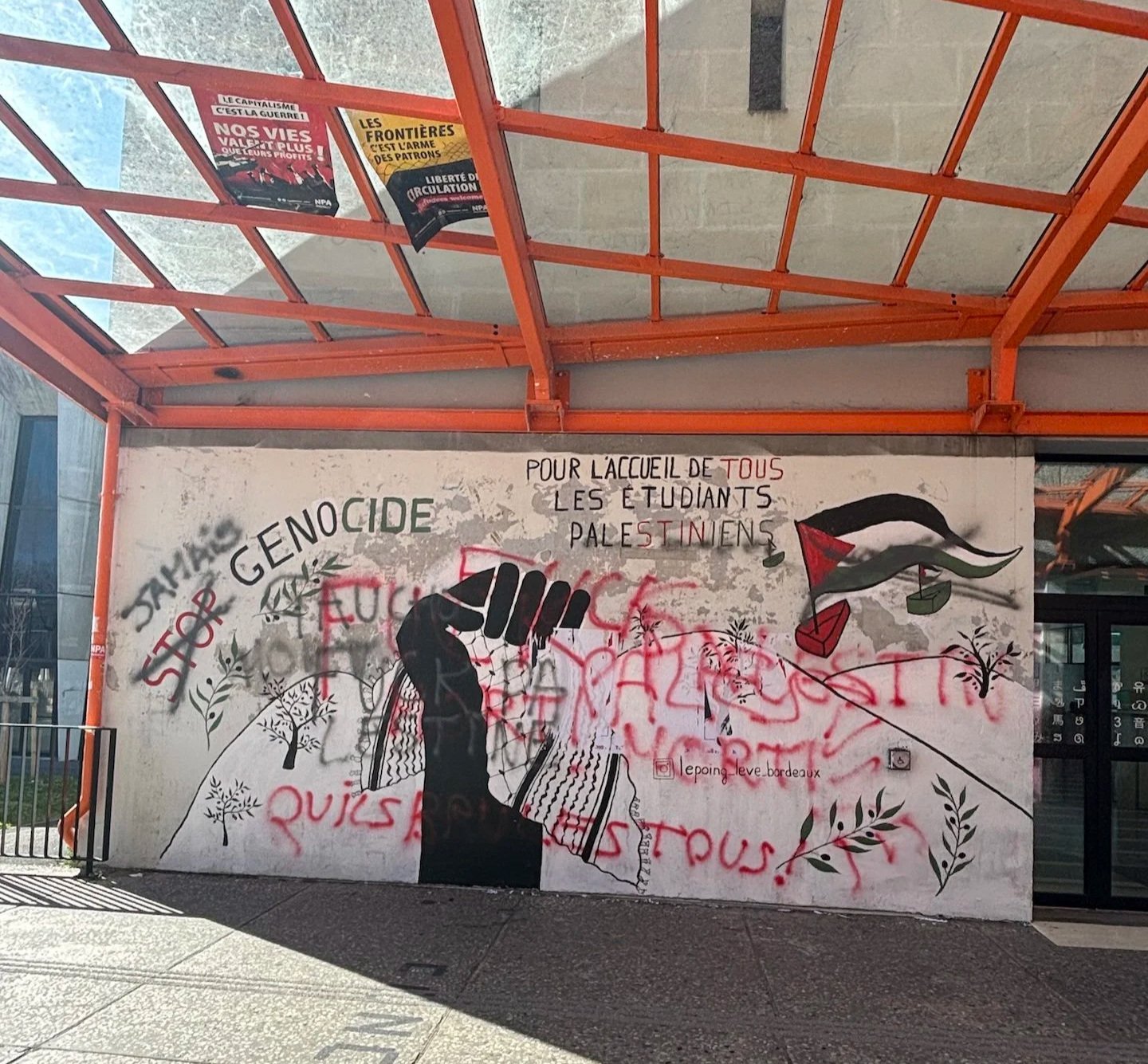
Defaced pro-Palestine mural.
Quentin Daranque, a student at Lyon-II University, was in a street fight on February 12, 2026, which resulted in his death two days later. As a devout Catholic, Daranque was mainly known for his advocacy for the idea of “self-defense” in France. Self-defense in France is legal under Article 122-5 of the Criminal Code and supports the use of proportional force to defend oneself when under attack. Since his death, Daranque has been perceived as a far-right party ambassador for the younger generation in France. The main party that represents the extreme right in France is the Rassemblement National (National Rally), but Darangque was not an official party member. Nevertheless, since his death, I’ve found that on my own campus and across France as a whole, far-right parties like Rassemblement National have propped him up as a martyr. I believe that there are at least two main reasons for this process of martyrdom.
First, the Catholic roots of Daranque’s messages have allowed him to cultivate an image of devoutness and charity that is easily mourned. In an article published by Le Monde following his death, one of his friends described Daranque as "a normal young man who had reconnected with his roots. Who loved his country, his people, his civilization, his religion. Quentin belongs to legend.”
Second, Daranque’s death occurred at a protest against the far-left party La France insoumise (France Unbowed). The correlation between his death and left-party politics has devolved this event into a highly charged left versus right issue, with Daranque as the face of the conflict.
Evidence of anti-left sentiments became apparent to me as I walked through campus post-vandalism. Not only were most pro-Palestine materials ripped down or painted over, but any other mention of leftist ideas was also defaced with death threats and violent messages. A mural that advocates for feminism and gender equality on campus was completely covered, ironically, by the call for justice over the name of one man: Quentin.
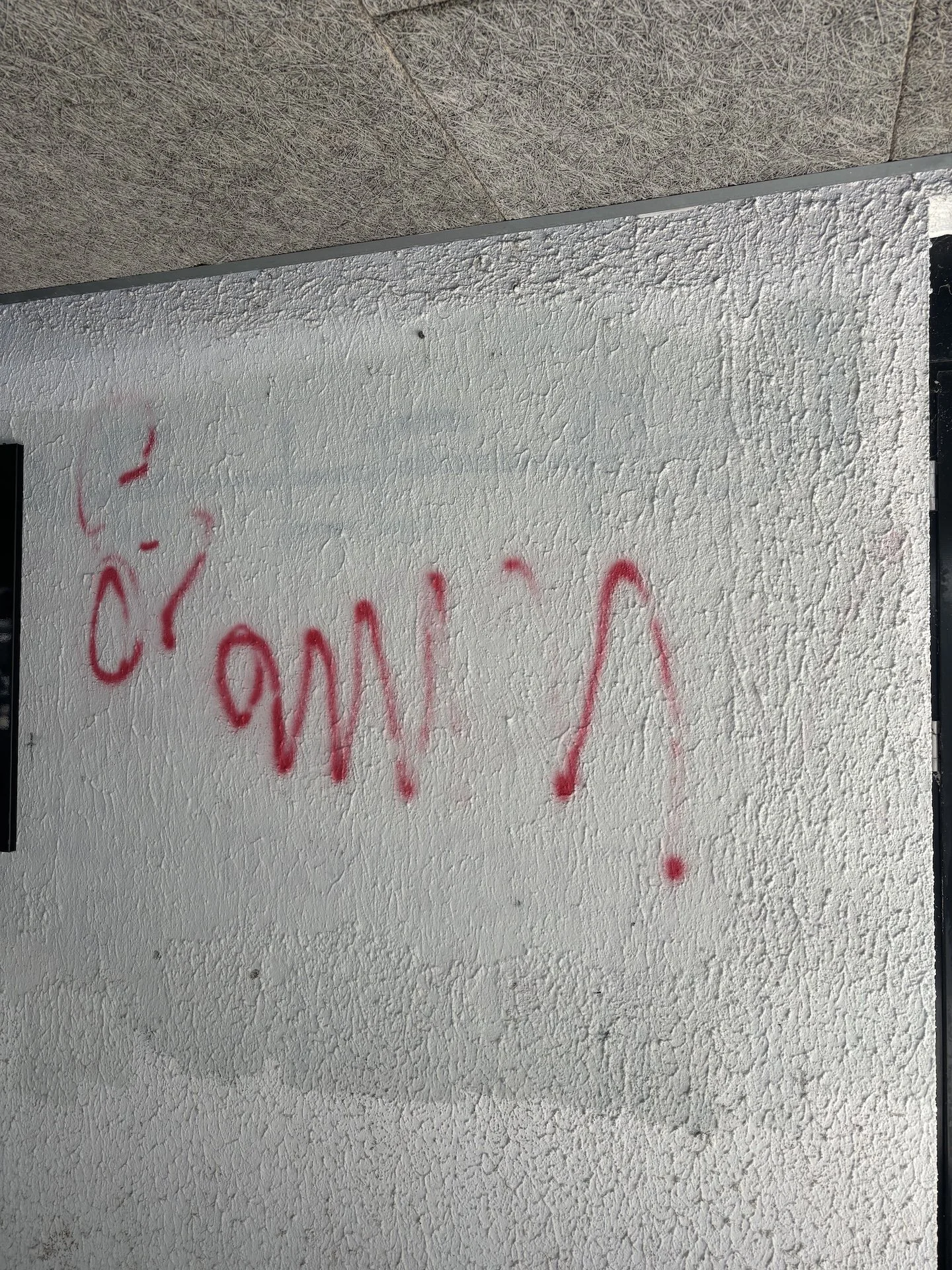
Remnants of violent messages.
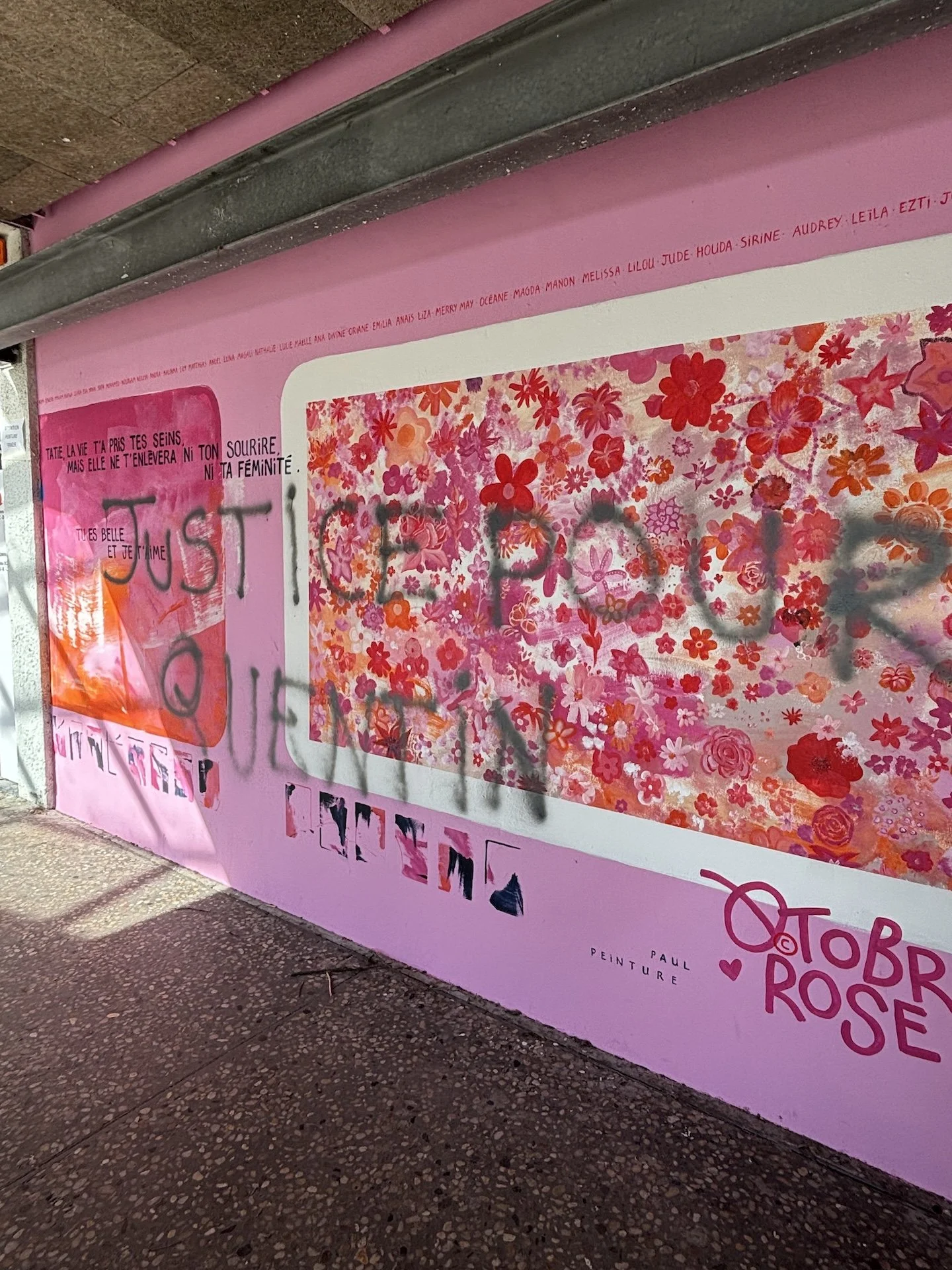
Defaced feminism mural.
Like many returning students, I was shocked by the extent of damage and how violent the written messages were. However, the administrative message we received in response to these events was what surprised me the most. I opened my inbox to find an email from our university president, Alexandre Peraud. Not only did he denounce the events that took place as those of “major gravity,” but he also stated how UBM has a history of the struggle against fascism and that fascist views are in “contradiction with the research and teaching missions that underpin the university institution.” He finished the message by calling directly upon students “to remain united around the values that unite us: academic freedom, respect for people and property, and the primacy of reasoned debate.”
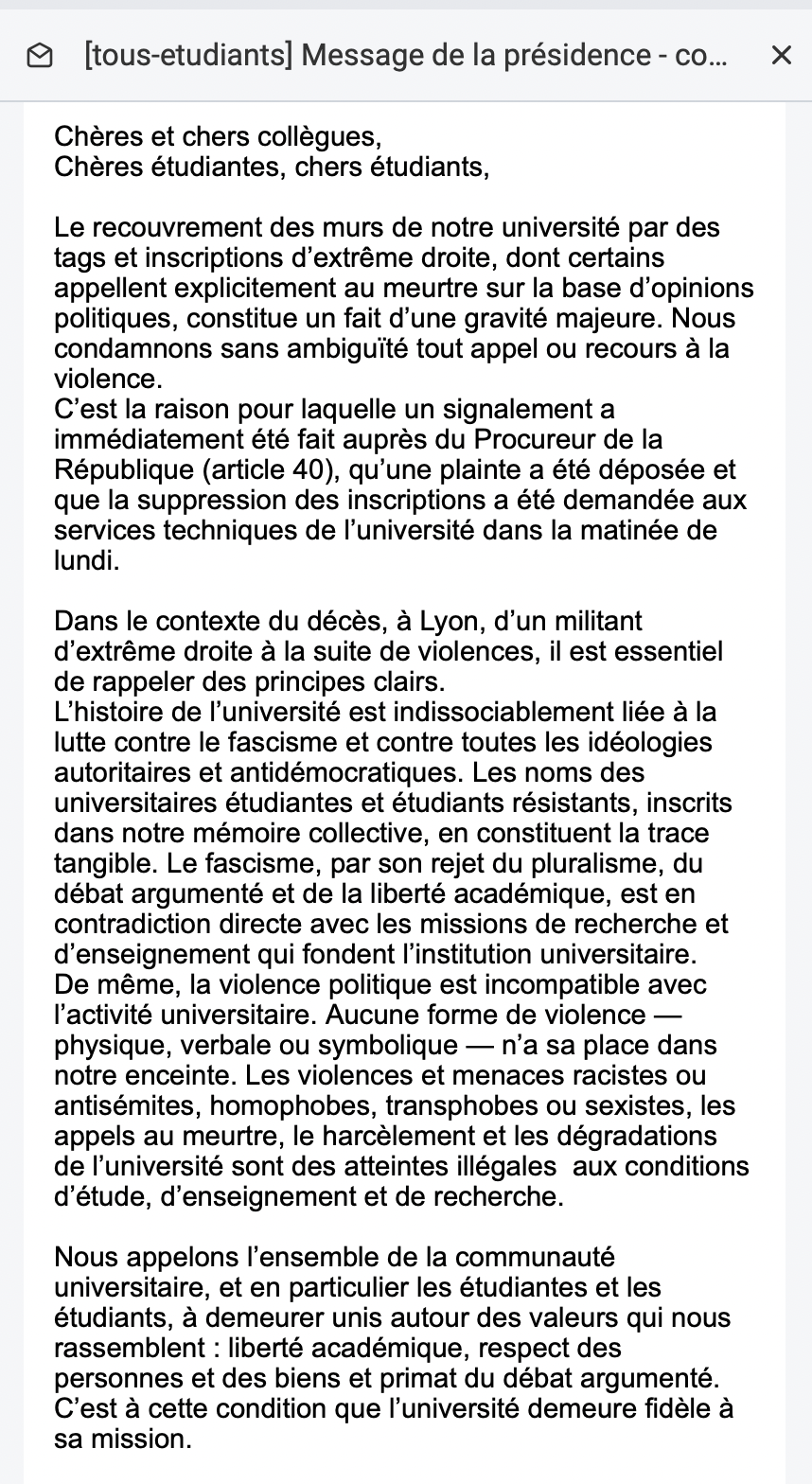
Email from the President of the UBM.
On my first day back on campus, I was able to see the effects of this call to action. As I passed by the defaced murals on my way to morning lectures, I watched students stop and observe the messages rather than ignoring or shying away from them. While many of the offensive messages on UBM walls had already been painted over, the ones on the murals remained. To me, it felt that the administration wanted these messages to be seen and processed by students, encouraging us to get involved and educate ourselves.
By the time I was headed to lunch, I watched as students began to paint over the messages and start again. A protest for Palestine took place at the same time, drawing attention away from the far-right messages and back to the true cause that students choose to rally around on campus. Watching UBM students reclaim their campus at such speed felt like the defining aspect of their activism.
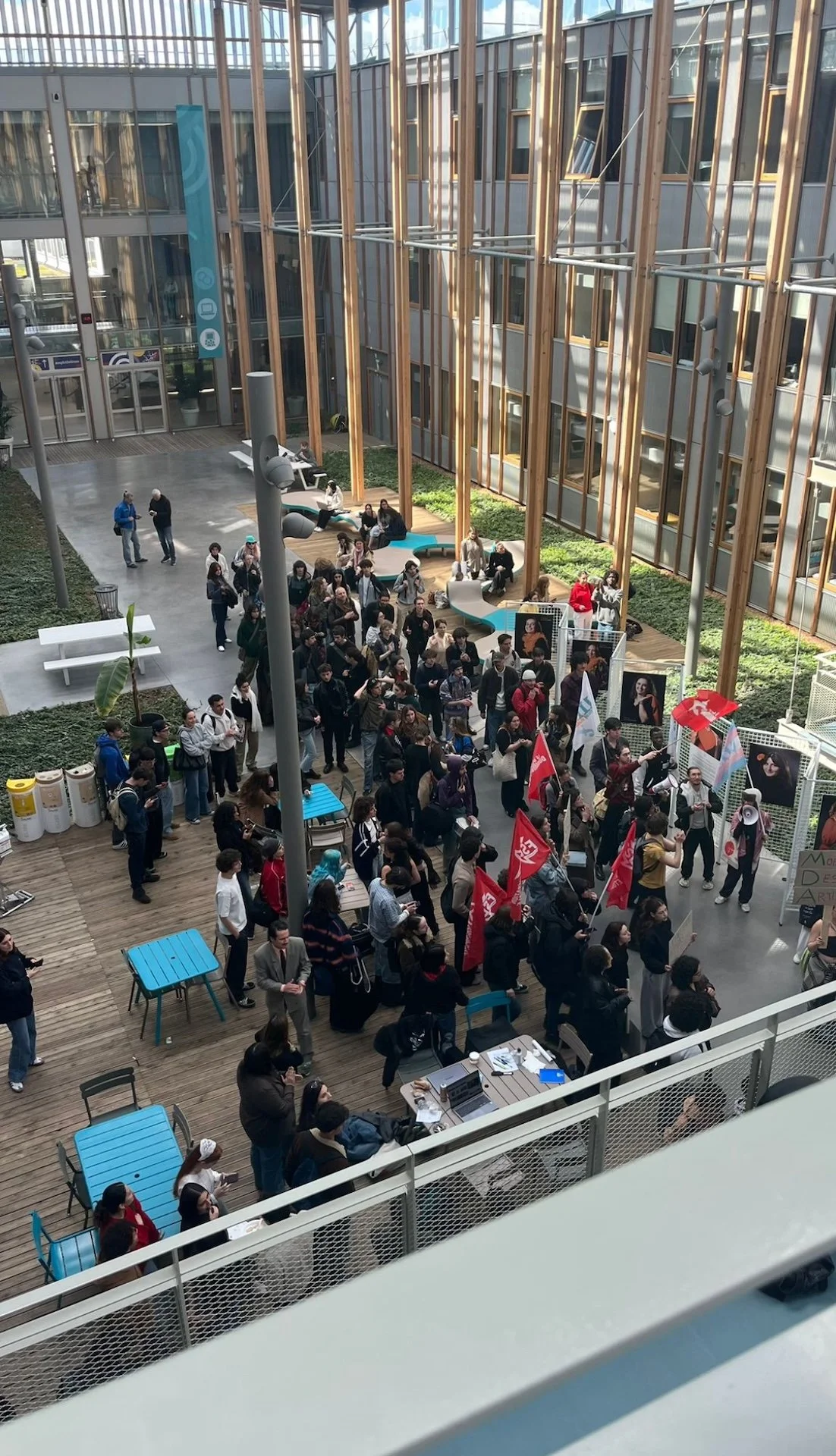
A recent student action at the UBM campus in support of Palestine.