
El Palo: Under the Eyes of Saint Carmen
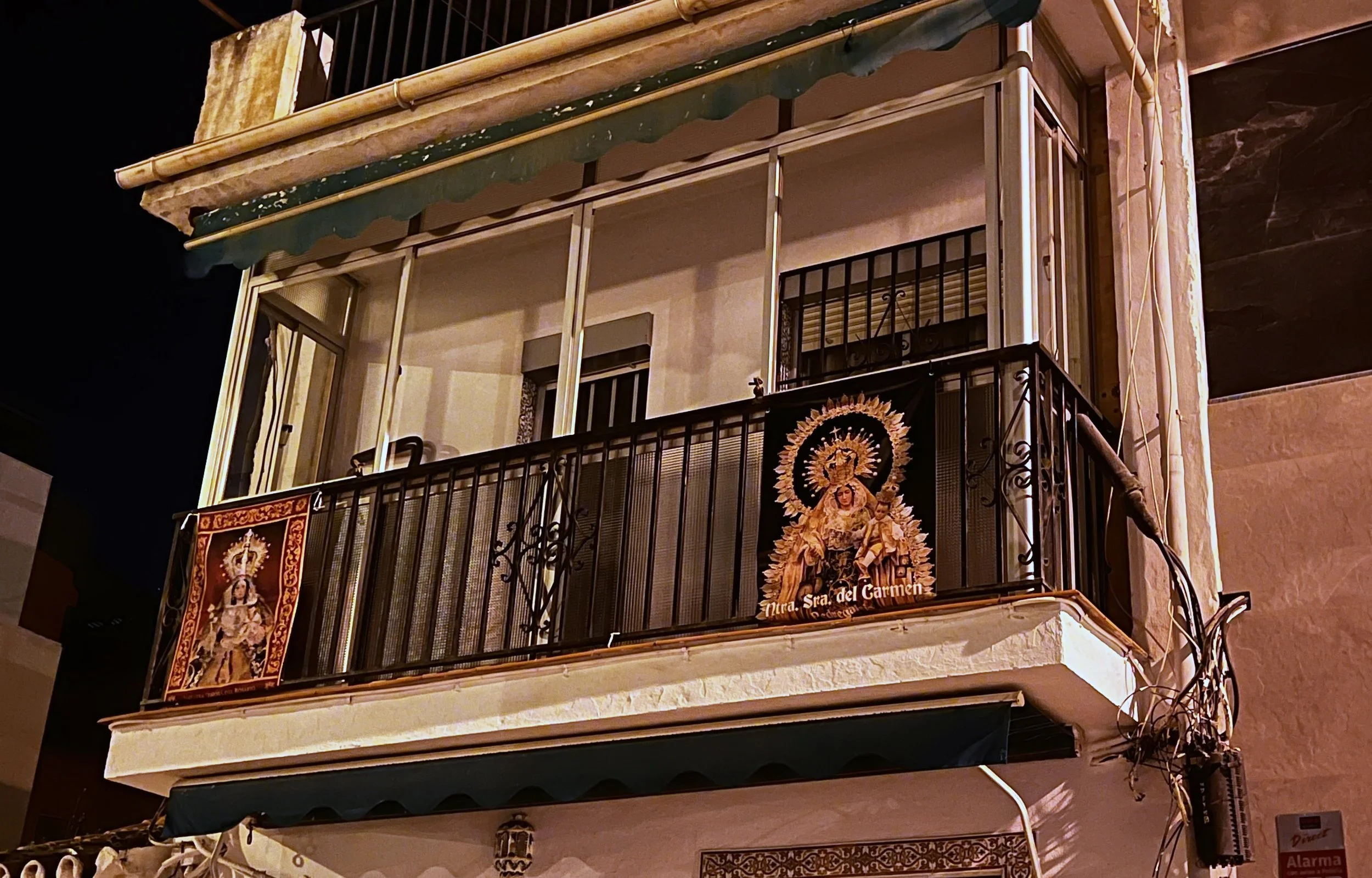
A balcony from El Palo. (Photo: Inna Saribekyan)
One evening while I was studying in Málaga, Spain, with other students from my university during my semester abroad, I decided to go for a walk. There was nothing special about that night — no set plan, no destination in mind. I just felt like wandering, taking in the sounds of the waves and the warm air of the city. My classmates and I were staying in El Palo, a quiet neighbourhood by the sea, known for its fishing traditions. During the day, it felt like a postcard — there were fishermen grilling sardines on the beach, children playing barefoot on the sand, and old men sitting outside cafés watching life pass by. But at night, the streets took on a different charm.
That evening, it felt like my feet already knew where they were going to take me. As I started walking, I stumbled upon a narrow street that felt like something straight out of a children’s book. The buildings were small and colourful, the street was filled with a dimming orange light, delicate balconies and windows framing glimpses of cozy living rooms. As I passed by the homes, some doors were wide open, revealing warmly lit kitchens where families gathered. I noticed people cooking together in the kitchens, and I overheard their daily conversations. In a few cases, neighbours stood outside chatting as if time didn’t exist. The street felt alive, but not in a busy or overwhelming way, and not because it was full of people; it had a simple, quiet charm that made me feel at home even in a place I’d never been before.
Then, something caught my eye. A poster.
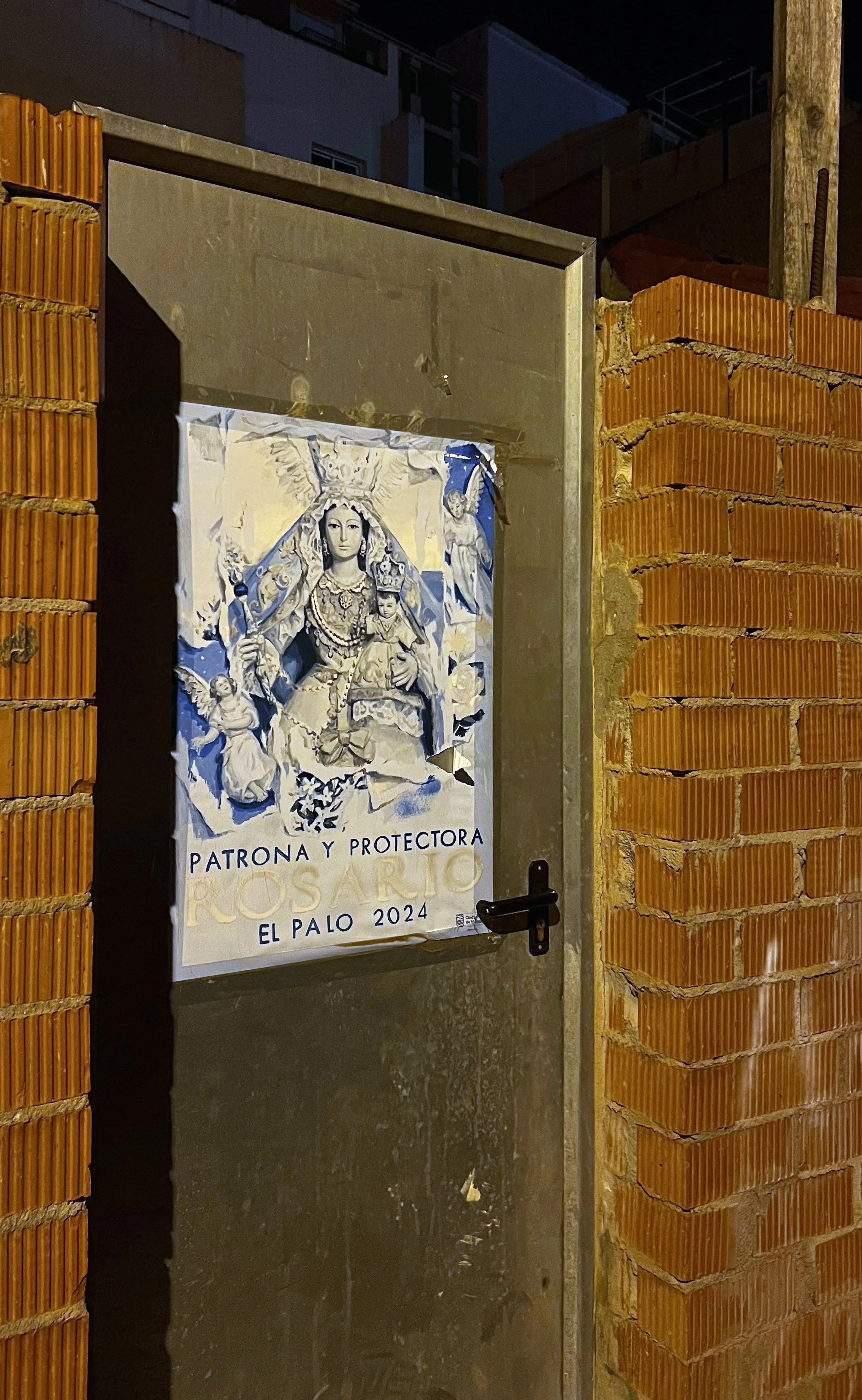
Commemorative poster in El Palo. (Photo: Inna Saribekyan)
At first, I barely noticed it — a picture of a woman in long robes holding a child. But as I kept walking, I saw another. And another. The more I looked, the more I found. They were everywhere — pinned on doors, hanging above windows, placed on walls. The same woman, the same image, over and over again. I had no idea why, but I couldn’t shake the feeling that there was something significant about the posters. It was clear to me it was an image of a Saint, but I had never seen her before. That night, when I returned home, I told my host mom about my “discovery.” She smiled, almost amused by my curiosity. “Oh, that’s Saint Carmen,” she said. “Like me — Carmen.” She went on to explain that Saint Carmen, or la Virgen del Carmen, is the patroness of fishermen who watches over and protects those at sea. That’s why almost every house in El Palo has her image — she’s their protector, their guardian.
I was fascinated. The posters seamlessly blended into the life of the neighbourhood, and I returned to those streets, night after night, learning their twists and turns by heart.
Saint Carmen and the celebration of faith and the sea
In Spain, Saint Carmen is revered in coastal communities like Málaga, where fishing has long been a way of life. According to my host mother, she has been honoured there since the 18th century, when fishermen and their families sought her protection before setting sail. Today, the residents of El Palo still cherish her image as a representation of security, direction, and faith.

Saint Carmen, patron saint of Cuevas de San Marcos, Malaga. (Photo: urigue3, CC BY-SA 4.0, via Wikimedia Commons)
The Fiesta de la Virgen del Carmen, one of the most significant occasions each year for the residents of El Palo, is celebrated on July 16th. A statue of Saint Carmen is carried in a large procession through the streets and then loaded onto a boat and transported to sea. As the whole village gathers to witness her departure, fishermen in traditional attire join her at sea. The smell of flowers and salt, prayers, and music fill the air. The sky is illuminated by fireworks, and for a single night, the water is transformed into a hallowed area that magically combines tradition and religion.
El Palo and its posters
For many decades, El Palo has been a fishing community that, in contrast to Málaga's busy tourist districts, has maintained its originality and distinct cultural identity. The water is the centre of life here. Fishermen arrive to bring in their catch early in the morning, and by midday, fresh sardines are being grilled over open flames at restaurants along the shore. Families have resided here for generations, and customs are handed down like priceless relics. Because of her close ties to the water, Saint Carmen is frequently depicted in homes; she is a silent but constant protector of the neighbourhood.
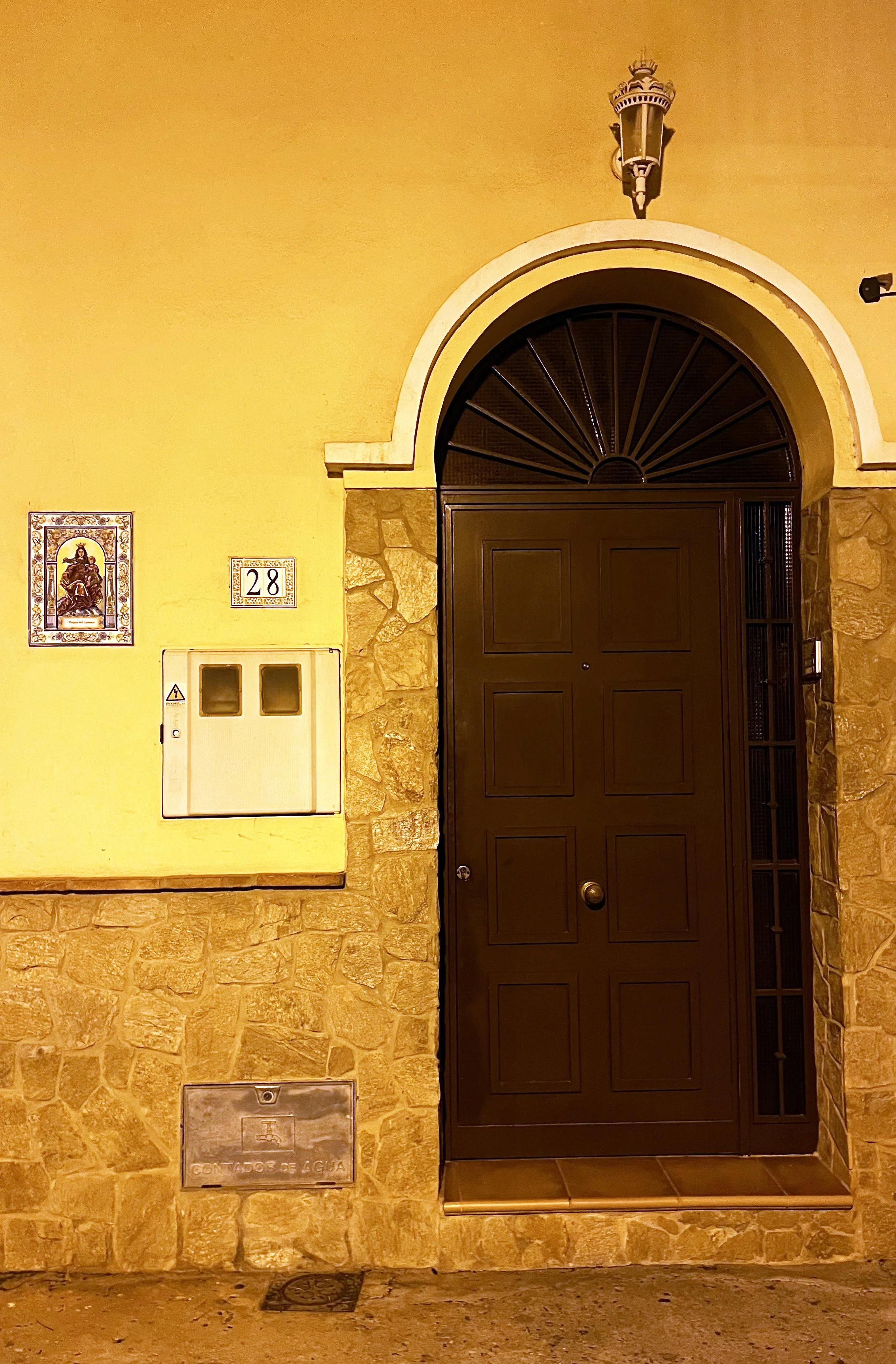
On the streets of El Palo. (Photo: Inna Saribekyan)
The Saint Carmen posters have profound significance in the El Palo community. Most of them depict her in flowing robes holding the infant Jesus. Some depict her function as the guardian of those at sea by including a ship or waves. Others have petitions and inscriptions requesting her favours. These minor nuances, at first easy to miss, turn each image into a silent reminder that someone is always keeping watch over the residents of El Palo.
El Palo has stayed with me in a way few places ever have. Maybe it’s the warmth of the people, the rhythm of life by the sea, or the quiet presence of Saint Carmen watching over everything. There was something special about the way El Palo’s community lived — with doors open, laughter spilling onto the streets, and an unspoken sense of community. One night, as I paused to check my phone, a woman approached me with concern in her eyes. “¿Necesitas ayuda?” she asked, “Do you need help?” It was such a small gesture, but it demonstrated the way this community watches over one another the same way Saint Carmen watches over their fishermen, as if the whole village is part of the same extended family. If I am lucky, someday I will experience again the magic of those narrow streets, those open doors, and the quiet, watchful eyes of Saint Carmen.