
The Everyday Struggle Against Fascism: Reading the Pavement in Madrid
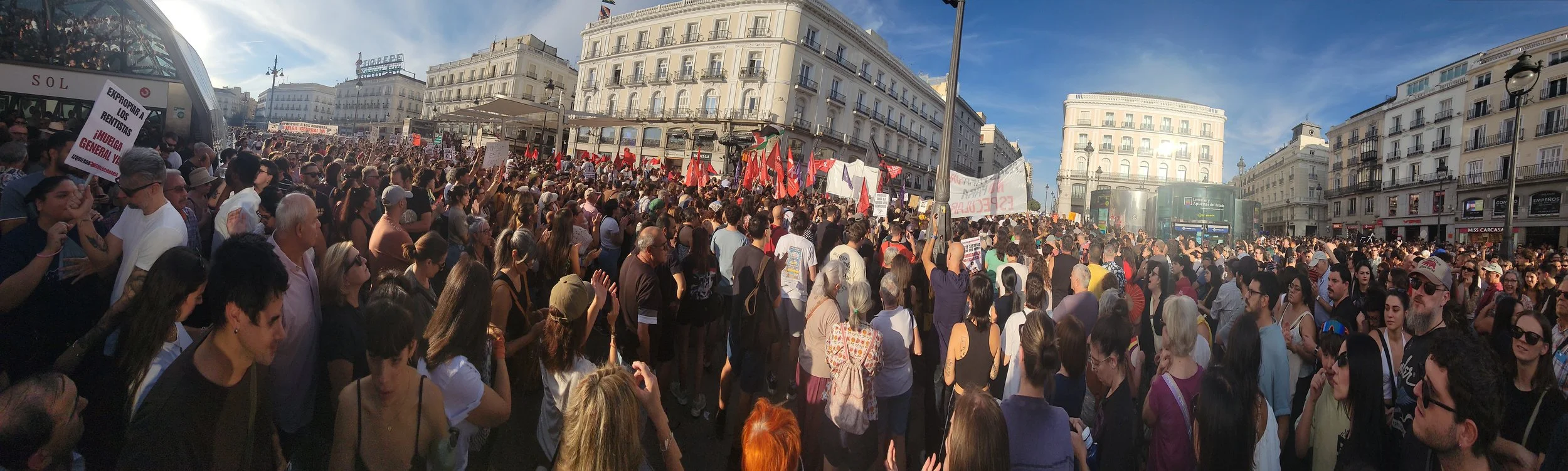
Thousands of Spaniards gather in the Puerto del Sol square on September 26 to demand action against evictions and real estate speculation. (Photo: John Collins/Weave News)
Nearly a century after a brutal civil war that continues to cast its shadow over the country and the world, Spain remains on the cutting edge of the struggle against fascism. Sometimes this struggle spills onto front pages and social media feeds, as when activists occupying Madrid’s central square (the Puerta del Sol) to demand housing justice mobilized in an instant to chase out Vito Quiles, a prominent far-right influencer.
But the struggle against fascism in Spain is also a quiet, ongoing struggle that plays out in a thousand other ways. As I’ve learned over the years, keeping an eye out for ephemeral messages on sidewalks, city walls, lamp posts, and other public spaces can help reveal these everyday dynamics and what they tell us about the local and global forces colliding in this important corner of Europe.
“Remigration” and a swastika
After recently moving to a new apartment in the eastern Madrid neighborhood of Las Rosas, I went out for a morning walk. The news in Spain was still dominated by the July 31 mass entry of roughly 80,000 asylum seekers and other migrants into the Spanish autonomous city of Ceuta on the North African coast. As I headed north along a dedicated biking/walking path toward the home stadium of the Atlético de Madrid football club, I saw that someone had spray painted a message on the pavement. The message consisted of the word “remigración” (“remigration”), the letters “SBC,” and a swastika.
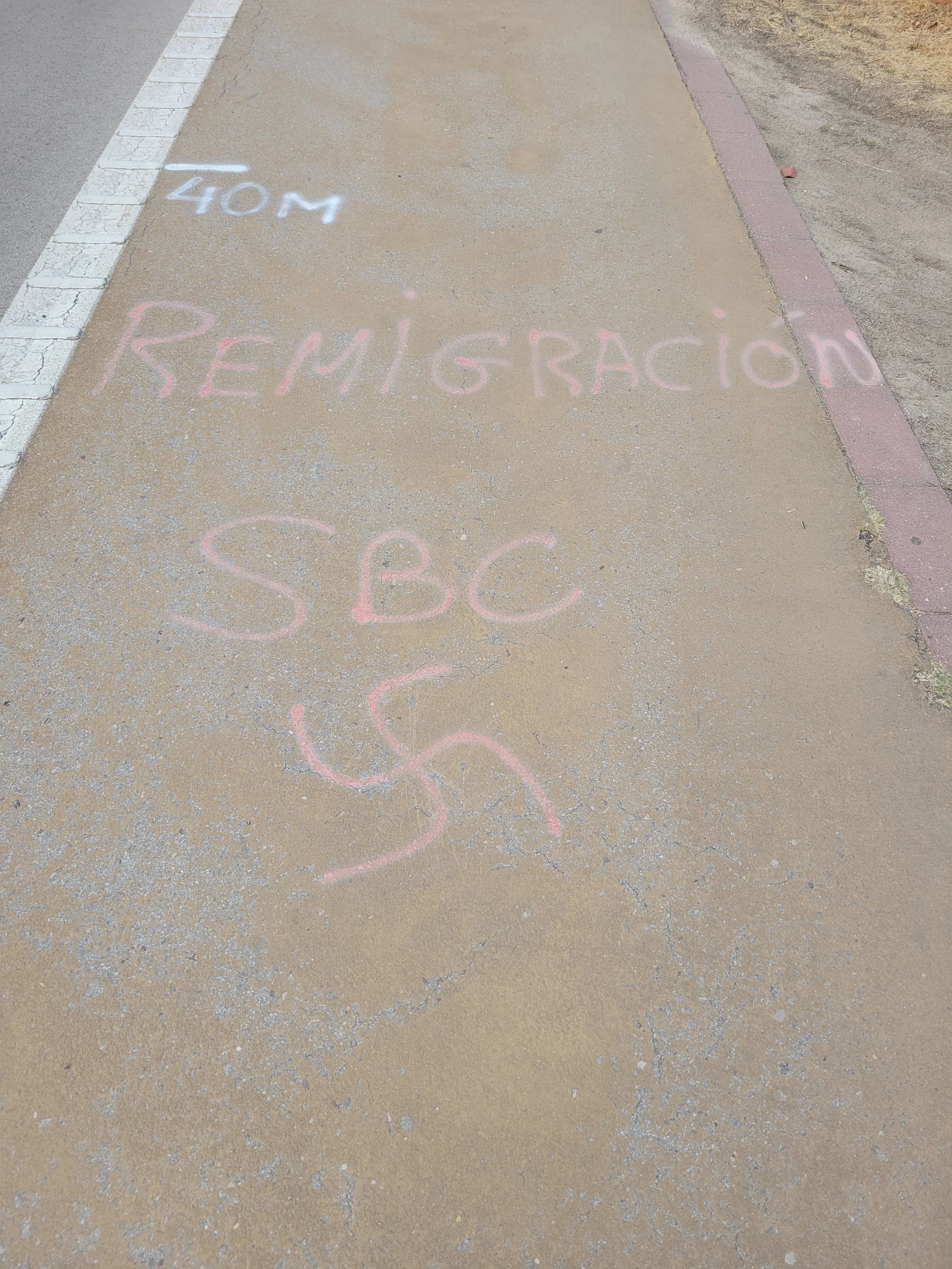
The original message that was spray painted on the pavement in the Madrid neighborhood of Las Rosas. (Photo: John Collins/Weave News)
I had questions. I knew that “remigration” was a vicious euphemism used by the far right to signal support for mass expulsion of immigrants - part of the broader so-called “Great Replacement” discourse built on the claim that immigrants, especially Muslims, are seeking to take over the West. But what about SBC? Were those the initials of some far-right group? And what about the swastika? Was the message meant to signal Nazi sympathies, or the opposite - to accuse anti-immigrant forces of being Nazis?
It didn’t take long to figure out the SBC part. The acronym stands for Schengen Borders Code, which is the EU legislation governing the control of external and internal borders. This made sense in the context of the message on the pavement. Much of the ongoing political firestorm in Spain over the Ceuta incident has taken the form of debates about border security, “territorial integrity,” and the possible role of external actors in “weaponizing” migrants against Spain.
I was still left with two ways of interpreting the message itself, though. Was it saying “We are neo-Nazis, we support mass expulsion, and we think the SBC should be enforced in a more draconian way”? Or was it saying “Anyone who advocates for ‘remigration’ and is obsessed with the SBC is a Nazi”?
The anti-fascist response
As often happens, it was the subsequent dialogue among the people carrying the spray cans that provided the answers.
A couple of days later, I walked the same route (now my standard morning exercise routine). And on the same path, near the first message, I saw a second one painted in blue. In this case, however, someone else had already painted over it with what I immediately recognized as an anti-fascist response.
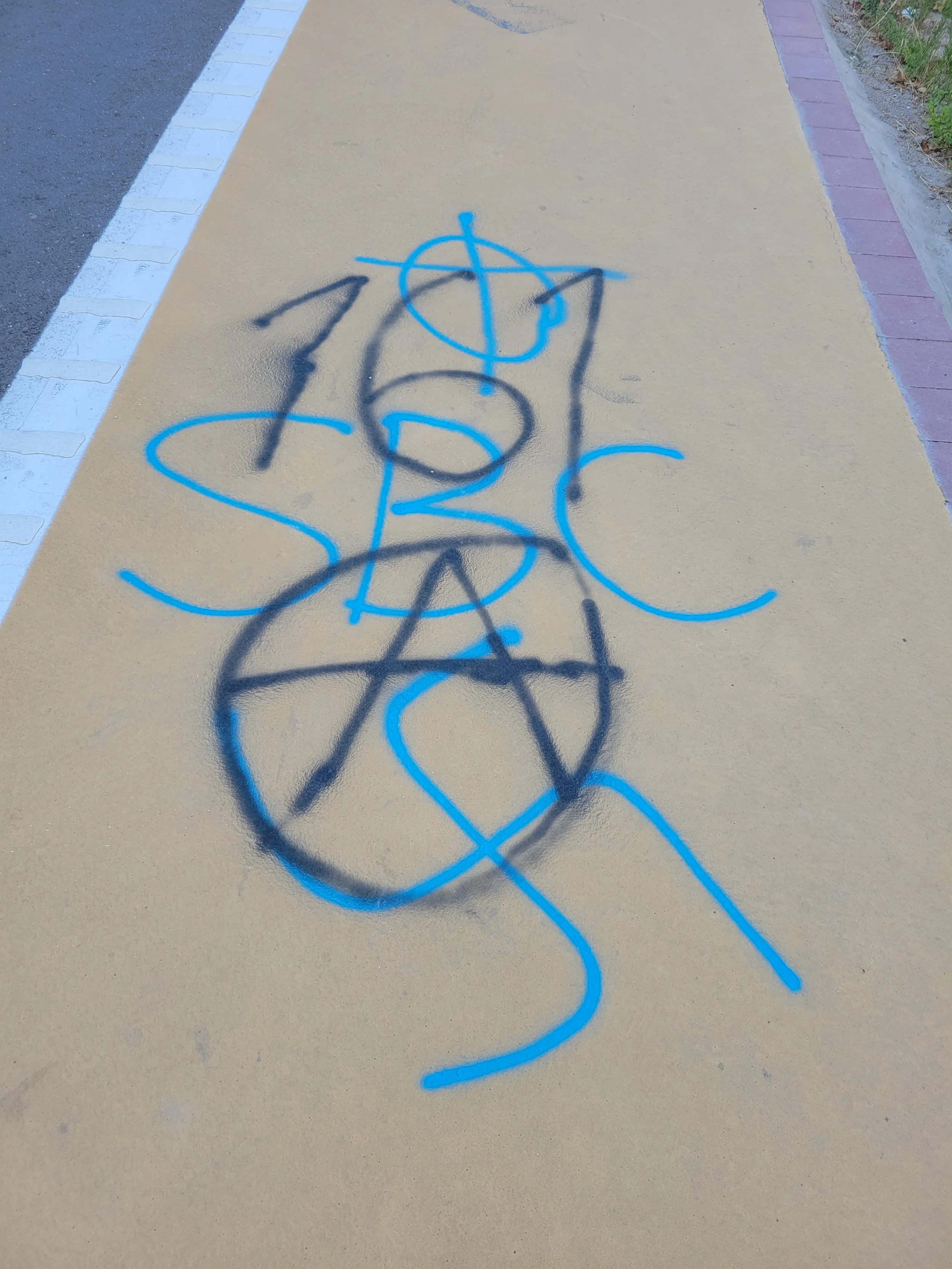
A second message in the same area with anti-fascist symbols painted over it. (Photo: John Collins/Weave News)
All of this provided confirmation that fascist and anti-fascist groups are active in the neighborhood - hardly surprising given that these kinds of symbols are commonly found in public spaces in many countries. But the brief “dialogue” I saw sprayed on the pavement of my walking path was also a reminder that the far right in Spain is actively working to foment racism and xenophobia at a time when tensions over immigration in Europe are especially high.
Equally important, the swift response of local activists to the “remigration” message was a reminder that Spain is a country with a living, breathing tradition of anti-fascist resistance.
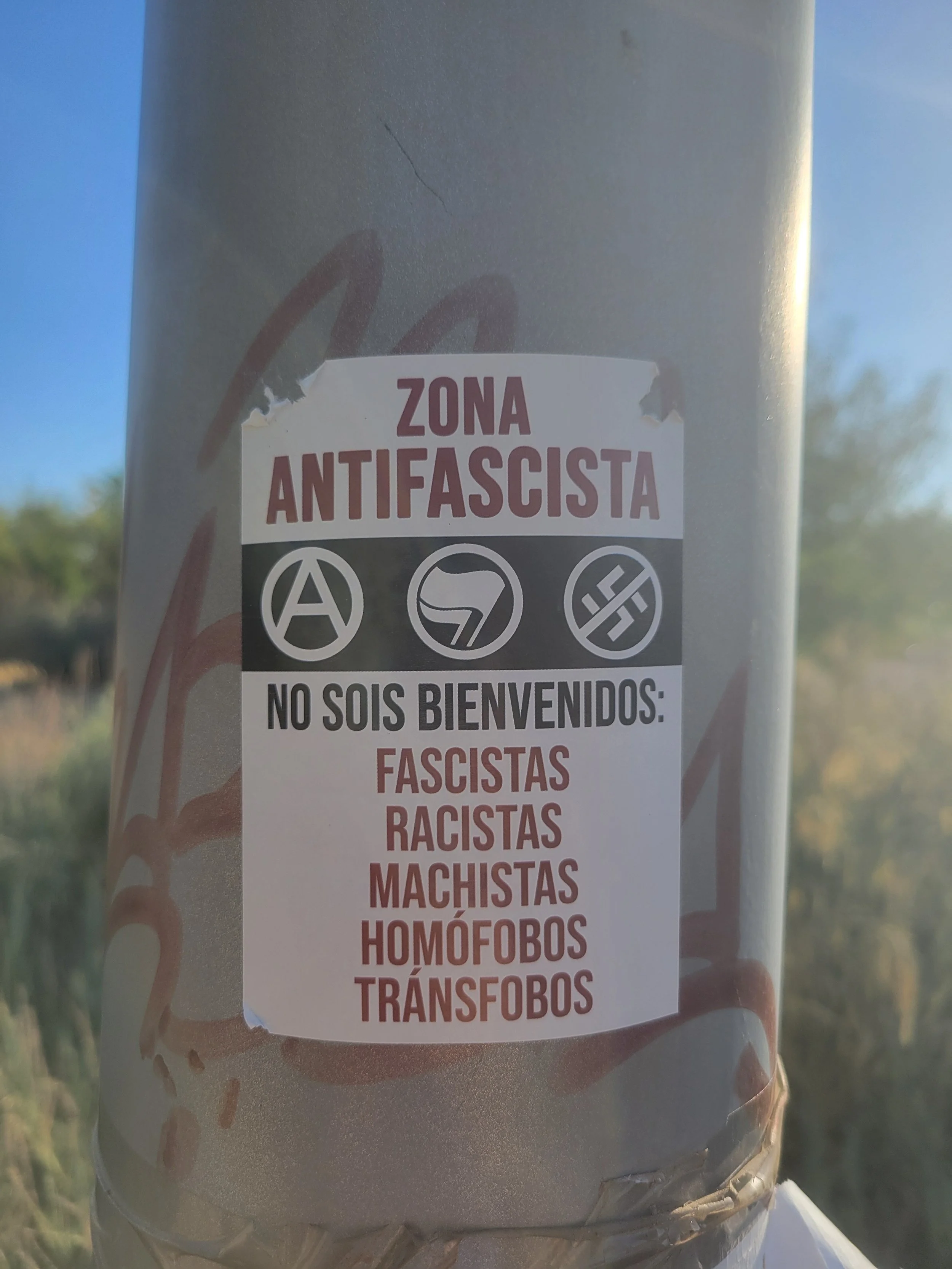
Anti-fascist sticker on a lamppost in the Madrid neighborhood of Las Rosas. (Photo: John Collins/Weave News)
Unmasking the real “invaders”
In the current context, those operating within this proud anti-fascist tradition are fully aware of how fascist movements often work hand in glove with both the forces of state repression and the machinery of capitalist exploitation. Regarding the former, it did not go unnoticed that when participants in the tent encampment in the Puerto del Sol chased Vito Quiles and his “security detail” away with chants of “fascists out of our neighborhoods” (echoing the popular demand that real estate speculators also be chased out of the city), Madrid police officers quickly allowed Quiles to exit the area in one of their vehicles.
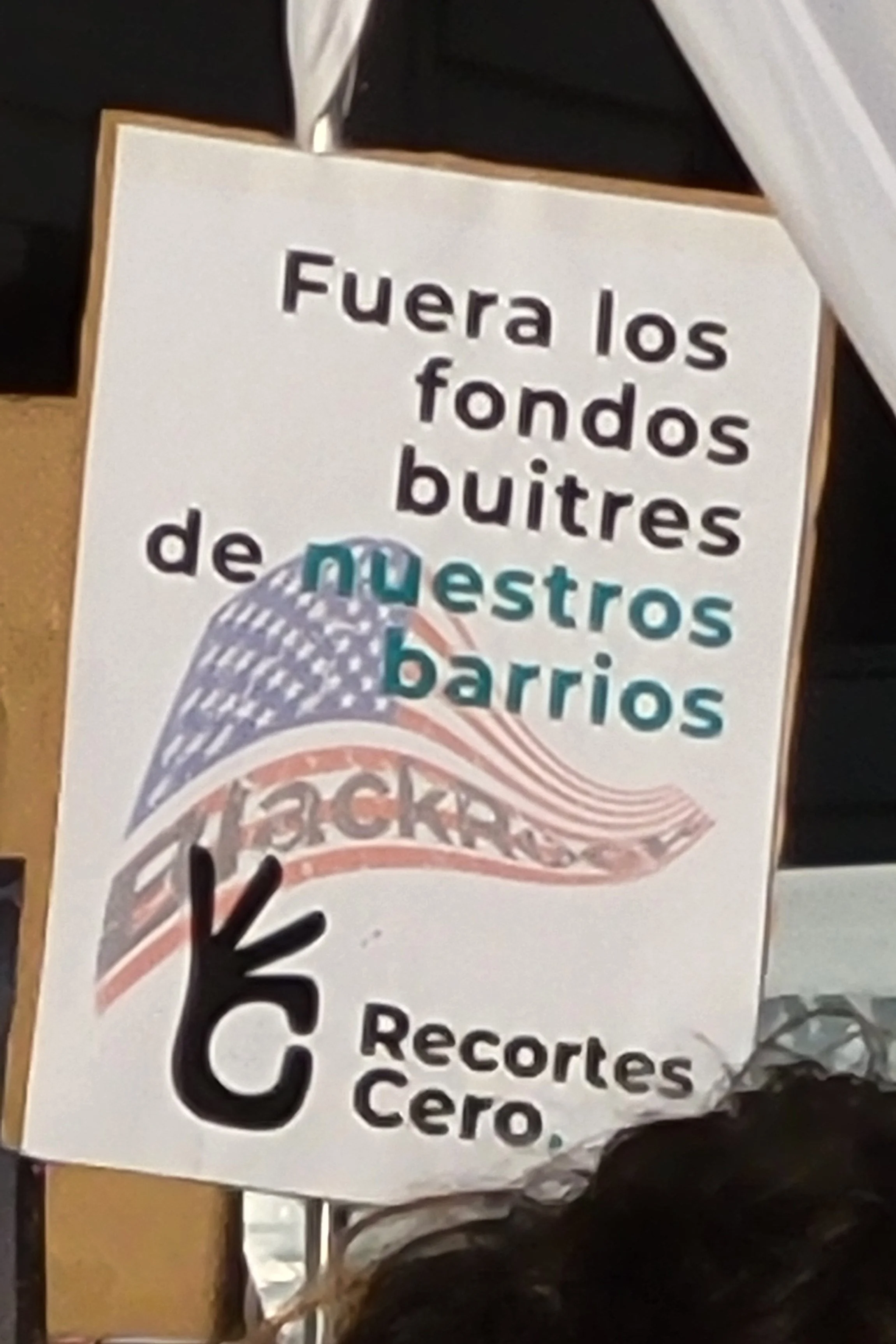
At a Madrid march that immediately preceded the tent encampment for housing justice, one sign read, “Vulture funds out of our neighborhoods!” (Photo: John Collins/Weave News)
Regarding the latter, the sound of anti-fascist chants at a mass action devoted to affordable housing reflected a growing popular understanding of how the racism of the far right functions, in part, to divide the working class and deflect attention away from issues of class domination.
Witness, for example, the immediate decision of right-wing politicians, influencers, and news outlets to label the mass entry of migrants into Ceuta as an “invasion” calling for a military response - while also using their platforms to undermine any and all momentum toward housing justice in the country.
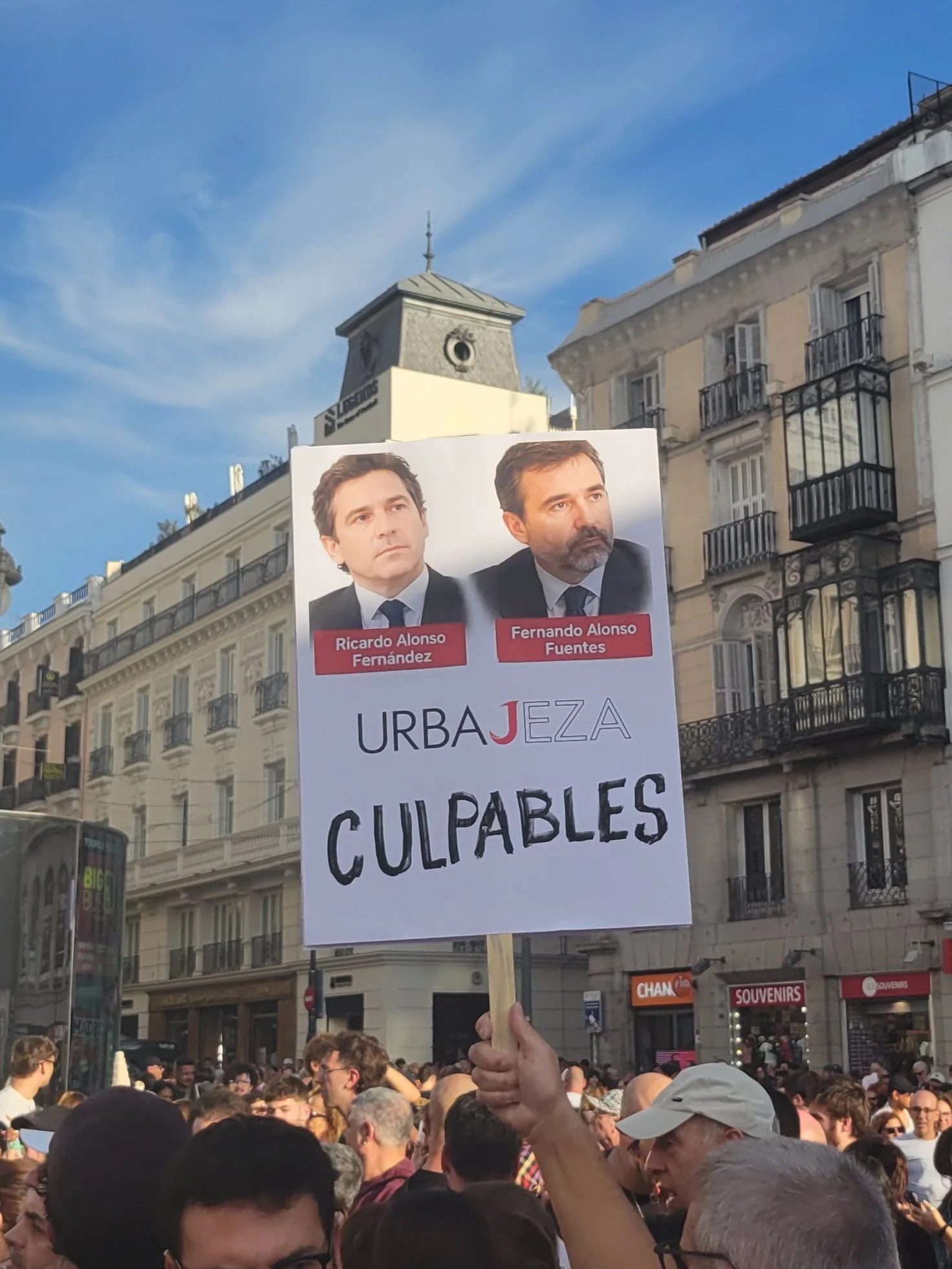
Also at the recent march for housing justice, another sign explicitly identified two executives of the company that purchased the building where 87-year-old Maricarmen Abascal lived and drastically raised her rent. Her eventual eviction sparked the latest wave of popular indignation at the country’s housing affordability crisis. (Photo: John Collins/Weave News)
Just today, however, public broadcaster RTVE reported that activists at the encampment had already crafted a clever response to the “invasion” discourse. Referring to the “vulture funds” and other real estate speculators who have been buying up housing units by the hundreds of thousands and turning affordable housing for working people into a distant memory, the activists chanted, “Los inversores son los invasores!” (“The investors are the invaders!”).