
Targeting the Press: How Legal Harassment, Violence and Financial Pressure Silence Journalists
Across political systems, repression is no longer defined primarily by visible crackdowns. Instead, it increasingly operates through law, procedure, and administrative control. Courts remain open. Legislation is formally passed. Hearings are scheduled. Yet civic space narrows. Defending the Defenders: The Global Rise of Legalized Repression is a three-part series examining 1) how repression has been legalized; 2) how journalism is being suffocated without formal bans; and 3) how defenders continue to resist within - and against - the legal systems used to constrain them. (Image courtesy of CIVICUS)
In October 2022, investigative journalist Maria Ressa walked once again into a courtroom in Manila.
The charge — cyber libel — was linked to an article published years earlier by Rappler, the newsroom she co-founded. It was only one of several legal cases filed against Ressa and Rappler over the past decade, ranging from accusations linked to tax law to questions about foreign ownership and online speech.
The newsroom itself was never formally shut down. Rappler continued publishing investigations as its journalists carried on reporting.
But the pressure never stopped.
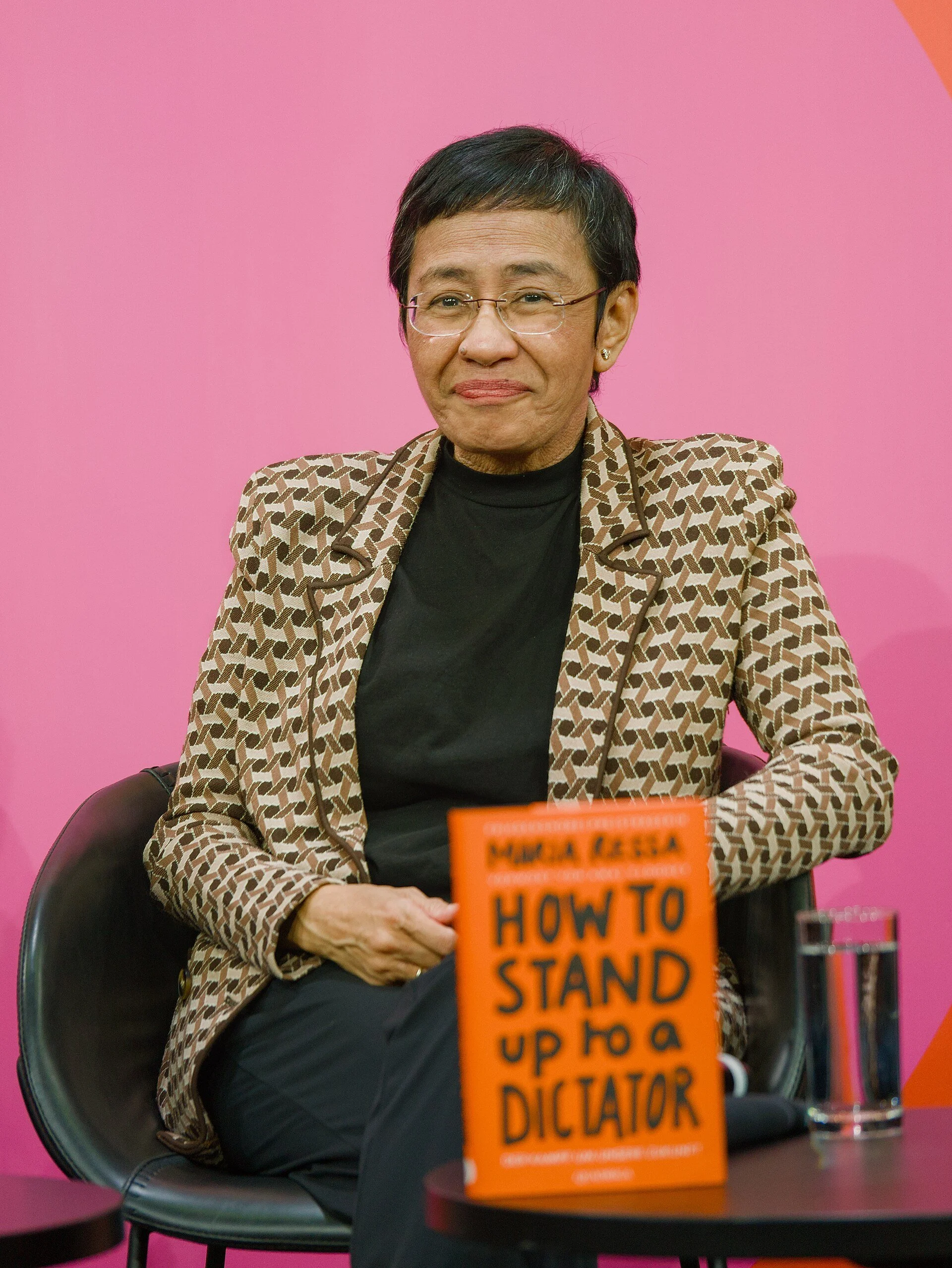
Maria Ressa at the book fair Frankfurt 2025. (Photo: Jaramo81, CC BY 4.0, via Wikimedia Commons)
Ressa, who was awarded the Nobel Peace Prize in 2021, has often described the erosion of press freedom as “death by a thousand cuts” — a slow process in which journalism is weakened through overlapping legal, political and economic pressures.
Her experience reflects a broader transformation in how journalism is constrained worldwide.
For decades, attacks on journalism were most visible when governments shut down newspapers, jailed reporters or blocked websites outright.
Today, the landscape looks different.
Across many countries, newsrooms remain open and articles continue to appear online. Courts still function, and legal procedures remain formally intact. Yet the environment surrounding journalism has become progressively more hostile, shaped by overlapping pressures — legal harassment, economic vulnerability and physical threats — that make investigative reporting increasingly difficult to sustain.
At the November 2025 International Civil Society Week conference in Bangkok, Yasir Khan, Editor-in-Chief of Context at the Thomson Reuters Foundation, warned that these pressures rarely emerge all at once.
“Public service journalism is a key ingredient in building such ecosystems,” Khan told participants, referring to the role of independent media in sustaining democratic societies. “People don’t notice free speech until it’s gone.”
Together, these forces create a quieter form of repression — one in which journalism is not always banned, but increasingly constrained. By the time the consequences become visible, the damage has often already been done.
Violence without accountability
Even as repression increasingly takes quieter forms, violence against journalists persists. According to monitoring by UNESCO, attacks on journalists — from physical violence to legal harassment — have become an enduring part of the global media environment. Since 2006, more than 1,800 reporters have been killed, with recent years marked by sharp spikes in violence in conflict zones.
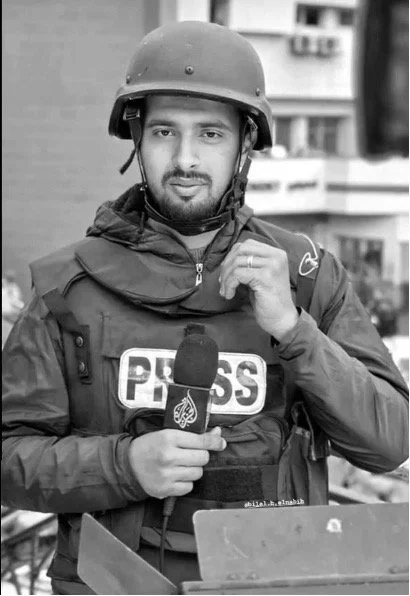
Photojournalist Ismail al-Ghoul reporting for Al Jazeera News in Gaza, 2024. He and cameraman Rami al-Rifi were killed in an Israeli airstrike in Gaza on July 31, 2024. (Photo: al-Ghoul's Instagram page via We Are Not Numbers)
In Gaza, Israel’s sustained assault has made the territory the deadliest in the world for media workers. Of the at least 129 journalists and media workers killed globally in 2025, the Committee to Protect Journalists reports that the majority of them were Palestinians killed by Israeli forces.
Elsewhere, reporters investigating corruption, environmental crime or abuses of power continue to face intimidation, assault and, in some cases, assassination. These attacks frequently target journalists working at the intersection of politics, business and organized crime — where reporting poses the greatest risk to powerful interests. In most of these cases, no one has been held accountable.
“Impunity is the operative word here,” Khan said during a discussion on threats facing journalists.
As Andrew Firmin, Editor-in-Chief of the CIVICUS Monitor, observed, detention and intimidation are now among the most widespread tactics used against civic actors globally, with journalists increasingly exposed to the same patterns of arrest, disruption and pressure faced by protesters and human rights defenders.
For journalists working on sensitive investigations, the implications are clear. When attacks go unpunished, violence becomes more than a crime against an individual reporter — it becomes a signal to others that exposing powerful actors carries serious risks.
The effects ripple through newsrooms long before a story is published. Editors weigh the dangers of assigning investigations into politically sensitive topics. Freelancers, often working without institutional protection, must calculate whether pursuing a lead is worth the personal cost. Sources reconsider whether speaking to journalists could expose them to retaliation.
In this way, violence operates not only through physical harm but through the climate of fear it creates — shaping editorial decisions, narrowing coverage and discouraging scrutiny of those in power.
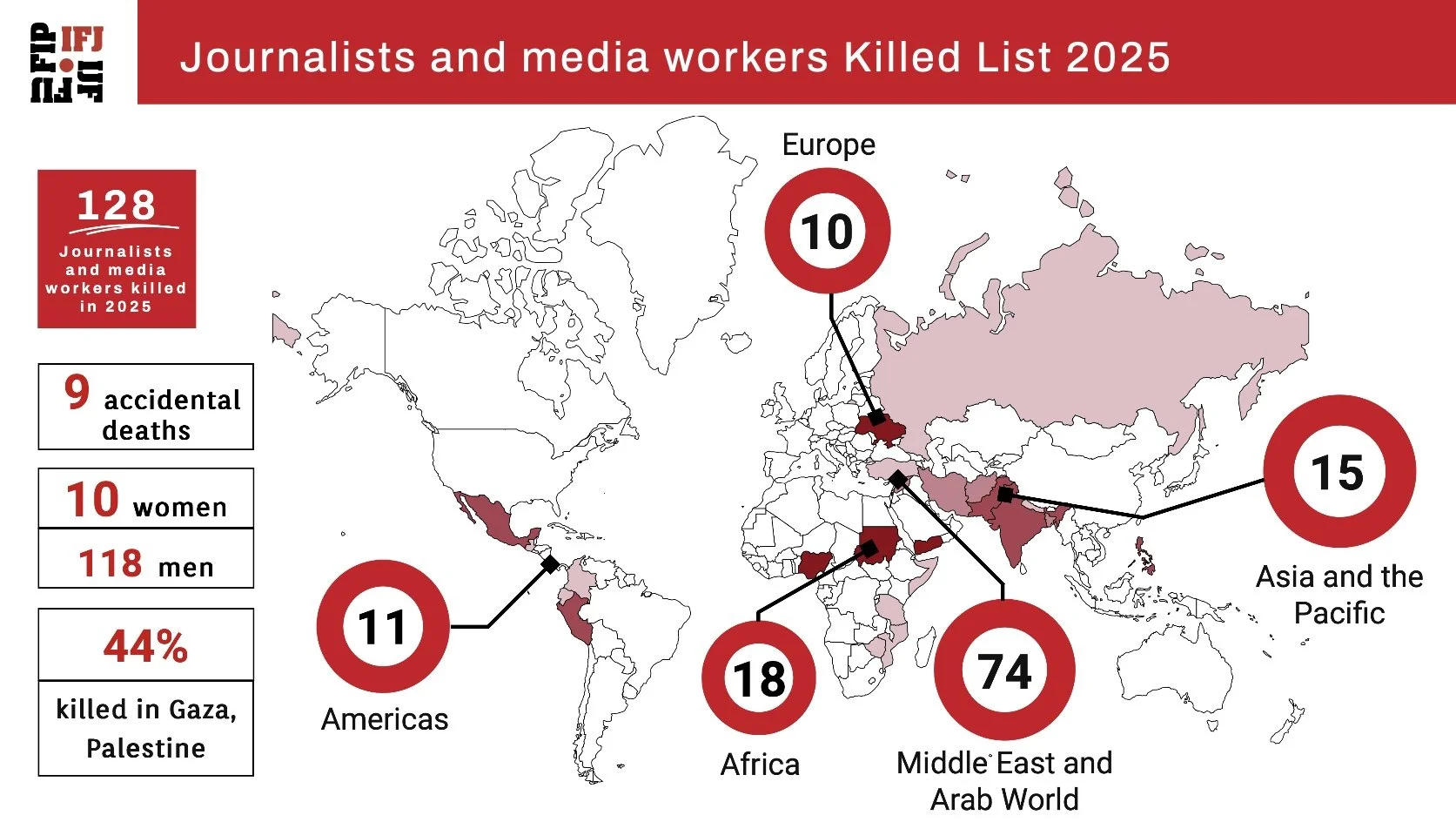
The International Federation of Journalists published an annual list of journalists and media workers killed around the world. (Image: IFJ)
Yet physical attacks represent only one layer of the pressure journalists now face.
Increasingly, the threats confronting the profession unfold through legal systems, financial pressure and regulatory frameworks.
Law as a tool of exhaustion
Across many countries, defamation lawsuits, cybercrime charges and national security legislation have become powerful tools for silencing critical reporting. Rather than shutting down newspapers outright, authorities and powerful actors can rely on legal procedures that appear legitimate on paper while placing enormous pressure on journalists and independent media outlets.
Researchers monitoring civic freedoms describe this tactic as judicial harassment — the strategic use of legal systems to intimidate and exhaust critics.
As Firmin highlighted, these developments reflect a broader global pattern in which governments impose restrictions through legal frameworks — including NGO laws and “foreign agents” legislation — that are often presented as necessary regulation but function in practice as punitive tools against critical voices
Monitoring groups have documented hundreds of cases of judicial harassment targeting activists, journalists and human rights defenders, often accompanied by arrests, detention and restrictions on freedoms such as expression and peaceful assembly.
This pattern is particularly visible in the growing use of lawsuits known in many contexts as Strategic Lawsuits Against Public Participation (SLAPPs), which are frequently filed by powerful individuals or corporations seeking to deter scrutiny.
According to human rights and anti-corruption activist Jana Morgan, these lawsuits increasingly function less as legitimate legal disputes than as mechanisms of intimidation designed to exhaust critics financially, emotionally and professionally. “SLAPP suits are often more effective than overt repression because they weaponize ordinary legal processes while maintaining the appearance of legitimacy,” she explains. Even weak claims can drain time, money and attention, creating what she describes as a broader “chilling effect” that encourages self-censorship long before a final ruling is reached.
In Malta, for example, investigative journalist Daphne Caruana Galizia faced more than 40 defamation lawsuits at the time of her assassination in 2017, many filed by powerful political and business figures in response to her reporting on corruption. The cases continued even after her death, highlighting how legal pressure can be used not only to target individual journalists but to intimidate entire newsrooms.
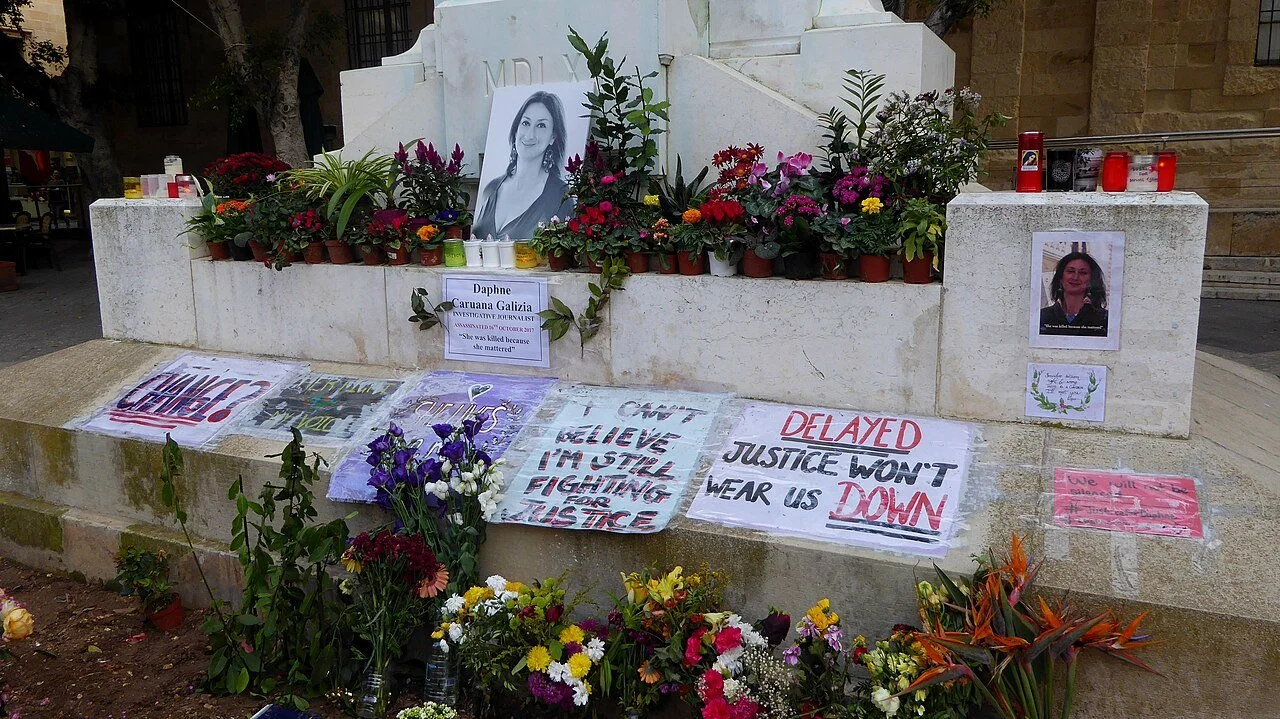
Memorial to murdered investigative journalist Daphne Caruana Galizia at the foot of the Great Siege Monument in Valletta, Malta. (Photo: Ethan Doyle White, CC BY-SA 4.0, via Wikimedia Commons)
For journalists, these cases can stretch across years.
“Protection is about more than bodyguards,” Khan noted during the discussion in Bangkok. Legal protection, he argued, has become one of the most critical safeguards for journalists facing defamation lawsuits and other legal threats.
In many situations, the goal of such cases is not necessarily to secure a conviction. Instead, the process itself becomes the punishment. Court hearings multiply. Lawyers must be hired. Journalists spend months or years navigating investigations and legal proceedings rather than pursuing new reporting.
Press freedom experts warn that such lawsuits are increasingly used as tools of intimidation. David Kaye, former United Nations Special Rapporteur on freedom of opinion and expression, has argued in his work on global free speech that legal and regulatory pressure can undermine journalists even without formal censorship.
For smaller newsrooms and freelance reporters, even a single lawsuit can threaten their survival, as the rising cost of investigative journalism increasingly exceeds what independent outlets can sustain.
When civic space shrinks, journalism follows
The legal pressures affecting journalists rarely occur in isolation.
Across many countries, the same laws used to prosecute activists and protest leaders are increasingly used to monitor, detain or prosecute journalists covering those movements. Restrictions on demonstrations, national security legislation and anti-terror laws can create an environment in which reporting itself becomes risky.
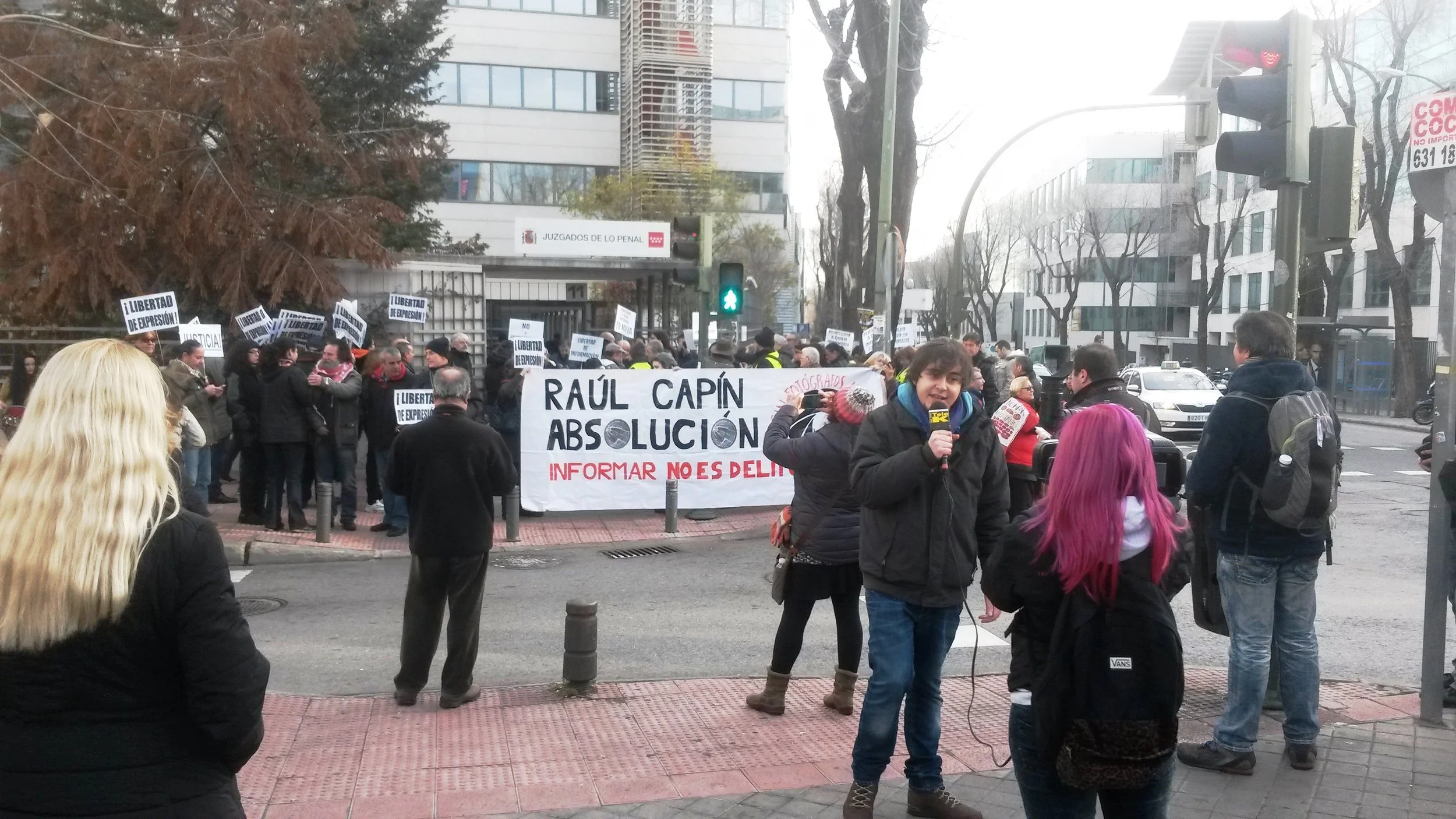
Grassroots journalists from TeleK Television in Madrid (foreground) reporting outside the 2016 trial of Spanish photojournalist Raúl Capín. Charged with impeding the work of police while covering a 2013 protest action in the city, Capín was eventually fined 1,260 Euros by the Spanish court. (Photo: John Collins/Weave News)
Firmin notes that repression now operates on parallel tracks, combining restrictions on organisations with direct pressure on individuals, including detention and intimidation — a pattern that increasingly affects journalists alongside activists.
According to Gina Romero, United Nations Special Rapporteur on the rights to freedom of peaceful assembly and association, governments worldwide are increasingly adopting restrictive legislation and criminalisation tactics to curb dissent, often targeting activists, journalists and civil society leaders simultaneously.
These measures frequently operate alongside broader campaigns to delegitimise civil society actors, framing journalists and activists as security threats rather than watchdogs. “We are in a defining moment,” warned Patricia Lerner, Special Advisor at Greenpeace International. “Around the world, a growing authoritarian force is weaponizing activists.”
Environmental movements have become a particular target, especially in regions where conflicts over land, resources and climate policy intersect with political and economic interests. Morgan notes that SLAPP suits are particularly common in sectors threatening major financial interests — especially oil, gas, mining, agribusiness and extractive industries — where corporations often rely on defamation, conspiracy or racketeering-style claims to burden critics with years of costly litigation.In Mexico, for example, journalist Roberto Toledo was shot dead in 2022 while reporting in a region marked by violence linked to illegal logging and organized crime, underscoring the risks faced by those covering environmental and resource-related issues .
In the same year, in Brazil, British journalist Dom Phillips and Indigenous expert Bruno Pereira were killed in the Amazon while documenting illegal fishing and environmental destruction. The case drew international attention to the risks faced by those investigating extractive activities in remote regions.
More broadly, as groups such as Global Witness have documented, Latin America remains one of the most dangerous regions in the world for environmental defenders and those reporting on land and resource conflicts. These cases illustrate how environmental reporting often exposes overlapping networks of political power, corporate interests and criminal groups — making those who investigate them particularly vulnerable.
In short, when civic space narrows, the space for journalism narrows with it.
The economics of silence
In addition to legal pressure, economic vulnerability has become another powerful constraint on independent reporting.
Across the media industry, shrinking advertising revenues, declining public funding and the collapse of traditional business models have left many news organizations financially fragile. The digital transformation of the news ecosystem has disrupted traditional revenue streams, forcing outlets to compete with global technology platforms for advertising and audience attention. For smaller independent media, the margin between survival and closure can be thin.
Khan warned that this economic pressure has made journalists particularly vulnerable.
“Inside newsrooms, the impact is often subtle but real. Editors rethink risky investigations. Freelancers weigh the personal cost of difficult stories. Smaller outlets must decide whether they can withstand the legal and financial consequences of publishing sensitive reporting. Journalism continues, but some stories never reach the public — a corruption investigation that never begins, an environmental report left unfinished, a source who ultimately decides the risks are too high.”
“The economic fragility of our industry basically renders us defenseless,” he said, noting that financial instability can weaken the independence and operational capacity of newsrooms.
Freelancers face even greater risks. Increasingly responsible for frontline reporting around the world, many work without insurance, legal support or stable contracts. As news organizations reduce staff positions and rely more heavily on freelance contributors, journalists are often sent to cover conflicts, protests or environmental crises with limited institutional protection. According to the International Federation of Journalists, more than half of journalists globally now work under freelance or otherwise insecure conditions.
Khan described colleagues covering conflict zones and war fronts while being paid only a small fee per article, sometimes waiting months before receiving payment.
This precariousness makes journalists more exposed not only to physical danger but also to legal and financial intimidation. A single lawsuit, regulatory fine or withdrawal of funding can threaten the survival of small independent outlets.
Economic pressure therefore becomes a form of indirect censorship. Journalism is not formally banned. Instead, the financial conditions necessary to sustain investigative reporting gradually erode.
Defending the right to report
Together, these pressures reshape journalism without always shutting it down. Violence sends a warning. Legal battles drain resources. Financial fragility limits what newsrooms can afford to pursue.
Inside newsrooms, the impact is often subtle but real. Editors rethink risky investigations. Freelancers weigh the personal cost of difficult stories. Smaller outlets must decide whether they can withstand the legal and financial consequences of publishing sensitive reporting.
Journalism continues, but some stories never reach the public — a corruption investigation that never begins, an environmental report left unfinished, a source who ultimately decides the risks are too high.
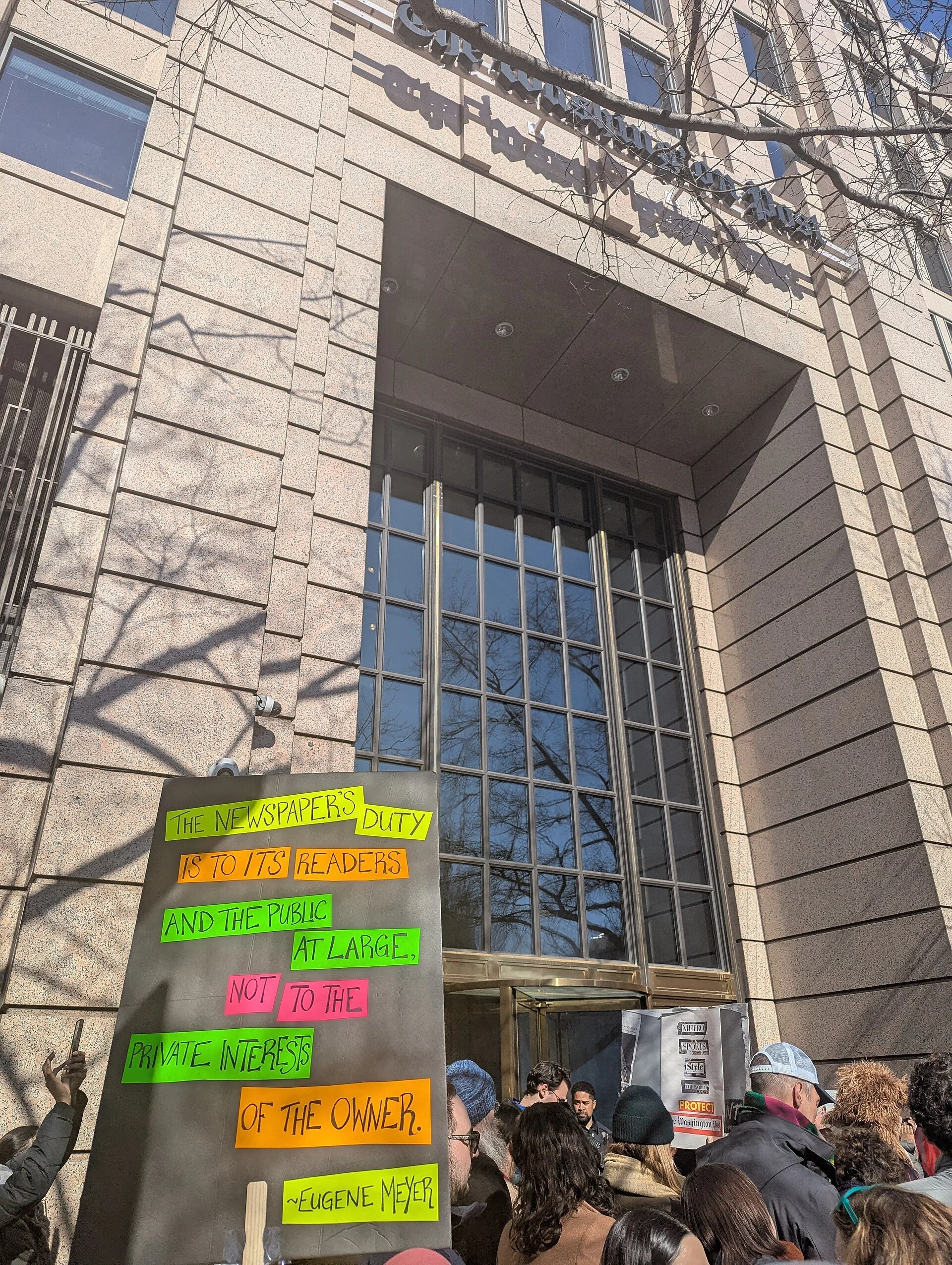
Rally to support journalists fired by The Washington Post in February 2026. (Photo: Sdkb, CC BY-SA 4.0 <https://creativecommons.org/licenses/by-sa/4.0>, via Wikimedia Commons)
As Ressa often reminds audiences when speaking about the role of journalism in democratic societies, “Without facts, you can’t have truth. Without truth, you can’t have trust.” Despite years of legal challenges, reporters at the newsroom she founded continue investigating corruption, disinformation and abuses of power.
The same determination can be seen far beyond the Philippines. Across the world, journalists continue to report — collaborating across borders, sharing resources and building networks of support to defend their work. Morgan argues that stronger anti-SLAPP protections, alongside legal support networks and cross-border solidarity among journalists and civil society groups, have become increasingly important as judicial harassment expands globally.
With this in mind, the future of independent journalism may depend not only on the courage of individual reporters, but on journalists standing together to defend the right to report. What is emerging is not only resistance, but a growing collective effort to protect the conditions that allow independent journalism to endure across borders.