Oil Spill Fuels Ecocide in the Gulf of Mexico
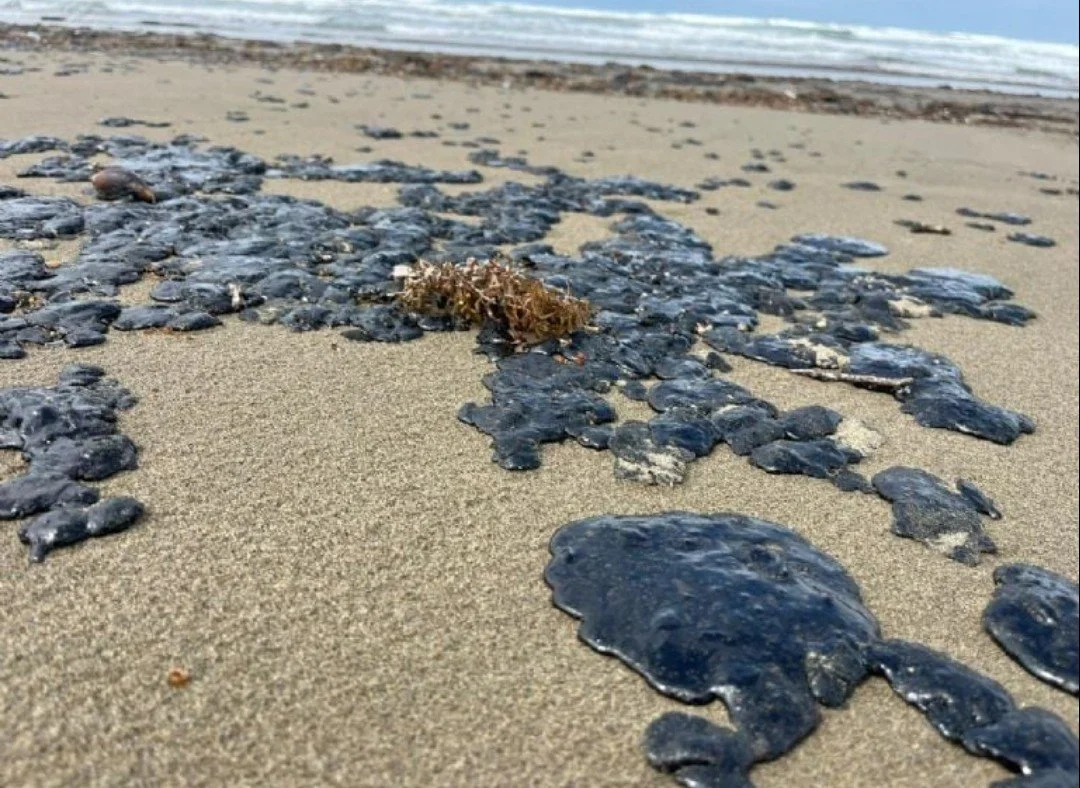
Photo credits: to community members and media in Mexico for showing the truth through these images.
This article was translated by Mary Magro. Lea la versión original en español aquí.
A particularly serious form of violence exists that is rarely named: a form harming Nature, reducing Nature to figures, technical reports and carefully drafted communications. The recent oil spill in the Gulf of Mexico, visibly impacting the coasts of Veracruz and Tabasco, is a compelling example of this violence but, above all, of the institutional normalization that allows it. If this spill has not yet been recognized as an ecocide, it is simply because evidence continues to be withheld.
We are not facing an isolated accident. What happened follows a known logic: deteriorated infrastructure, insufficient supervision and a government reaction more concerned with managing the narrative than with stemming the damage.
Signs of the spill began to be recorded between February 6 and 8, 2026. It was not the State that gave the alert, but satellite images and external technical observations. For 69 days, the source was denied or attributed to "natural leaks" and "private vessels", thus the crude oil expanded without a clear recognition of its origin. It was not until mid-April when it was conclusively acknowledged that the leak came from Petróleos Mexicanos (PEMEX) facilities in the Campeche Sound, near the Akal-C platform.
That period—more than two months—is not a minor detail. It is the period in which oil advanced, dispersed, penetrated ecosystems and altered biological dynamics whose recovery, in many cases, is uncertain or simply impossible. And although the initial impact was focused on Veracruz and Tabasco, the spill has similarly reached the coasts of Campeche and Tamaulipas.
When the reality became unconcealable, the oil spill and damage had already spread over more than 630 kilometers of coastline. It was not a specific stain, but rather a regional impact that affected dozens of coastal sites and at least seven protected natural areas. More than 90 tons of waste were collected, a figure that, far from measuring the disaster, barely reflects the visible fragment of a much deeper problem.
Oil not only defiles beaches, it suffocates life. The spill has put the Southwest Gulf Reef Corridor, a marine biodiversity sanctuary, at risk. Among the most serious damages are reports that the nesting sites of the Hawksbill Turtle, a critically endangered species, have been contaminated. Those lagoon systems, such as Laguna del Ostión in Veracruz and various mangroves, have been invaded by crude oil, altering the chemistry of the water and killing microscopic organisms that sustain the food chain. Fish, turtles and birds covered in oil have also been documented, in addition to the interruption of reproductive cycles of commercial species such as bass, shrimp and clams.
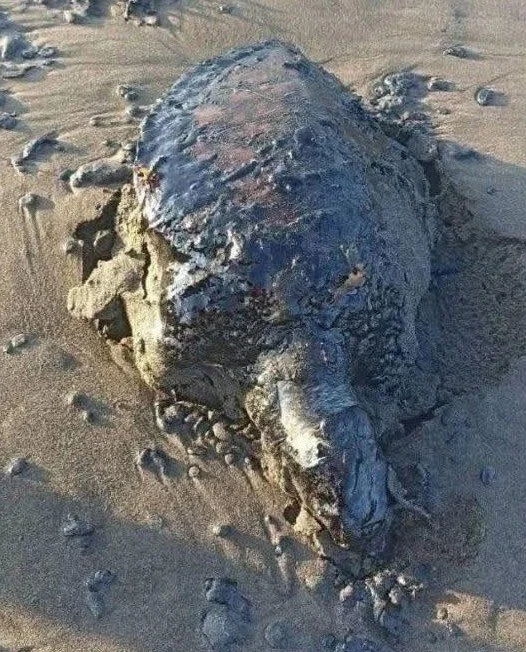
In essence, crude oil has seeped into sediments, altered water chemistry, impacted microscopic organisms, and disrupted entire food chains. Its impact is not always immediate or spectacular, but it is persistent. It is known that in areas such as lagoon systems and wetlands, the effects can last for years, even decades.
Faced with this emergency, the institutional response has been, at best, insufficient, at worst, openly negligent. For weeks, contradictory versions were proposed: that the origin was natural, that it was caused by private vessels, that the impact was minimal. Even when pollution was already evident, the beaches were declared safe.
It's not just misinformation, it's a strategy. Minimizing the problem reduces political pressure, dilutes responsibilities and allows the prototype that caused the damage to remain intact. In the face of the collusion of the authorities, a coalition of 17 organizations—including Greenpeace Mexico, the Mexican Center for Environmental Law (CEMDA) and the Mexican Alliance against Fracking—was responsible for providing the scientific and satellite evidence necessary to refute the official account of President Claudia Sheinbaum in March that "it was not PEMEX", that the investigation implicated a private ship or "natural hydrocarbon emanations" in Cantarell. Only after being presented with the credibility of the evidence did she finally admit the responsibility of PEMEX, limiting her actions to the dismissal of various officials. The governor of Veracruz, Rocío Nahle, has minimized the impact on Veracruz beaches, prioritizing the protection of tourism and maintaining the political narrative regarding the environmental emergency.
The battle has also reached the courts. Civil organizations have filed lawsuits against PEMEX and the environmental authorities for their failure to contain the spill and their lack of transparency. In response, federal judges have granted provisional stays forcing the government to carry out independent monitoring in order to stop misinformation and carry out immediate restorative actions in the affected protected natural areas.
But this strategy, which is also a governmental position, is deeply problematic from an ecocentric perspective. The Gulf of Mexico is not a resource: the Gulf of Mexico is a living, complex, interdependent system. Each spill does not merely entail an economic loss or an industrial incident: it is a breakdown in life sustain cycles.
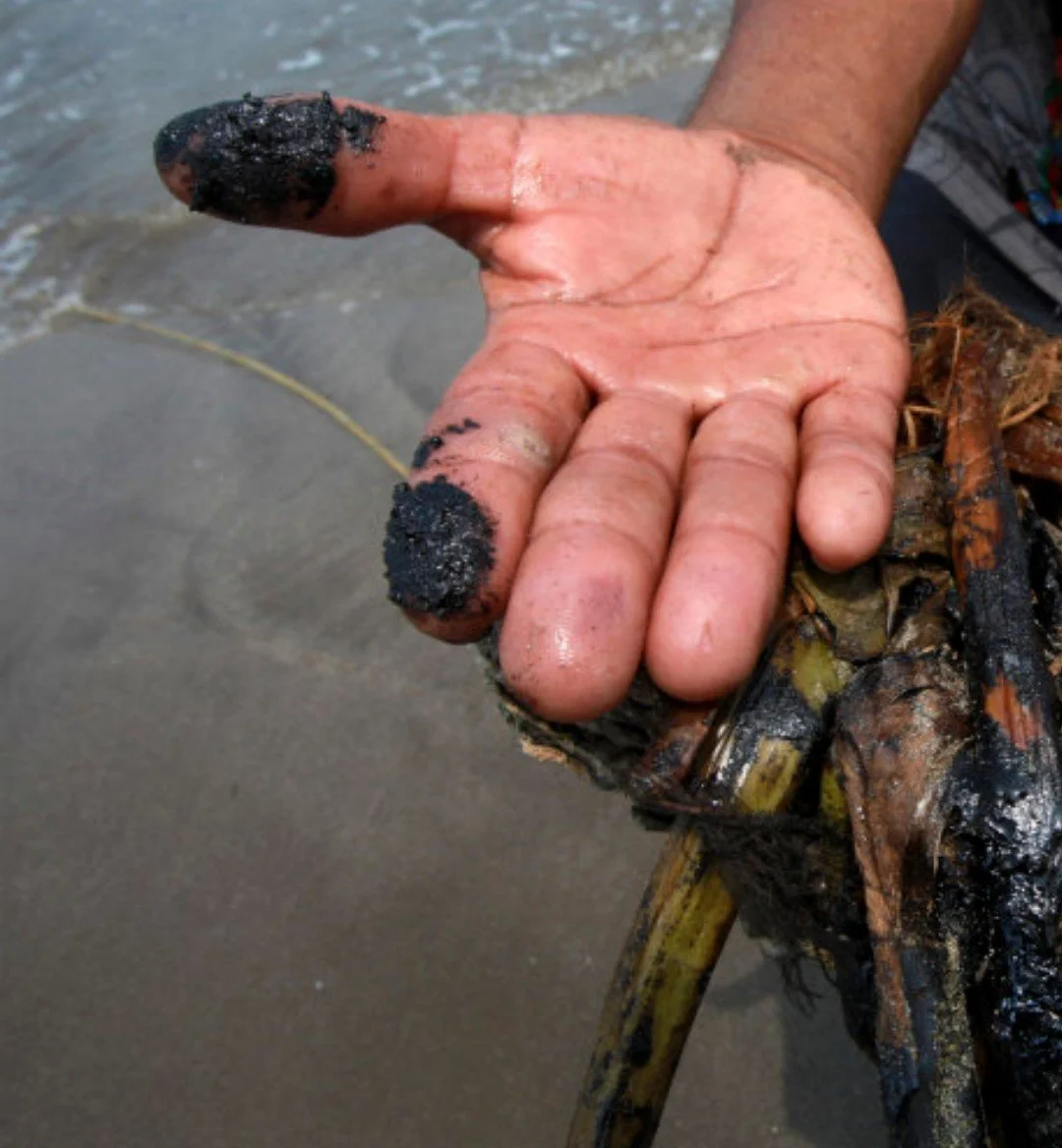
The affected biodiversity does not appear in these communications. Much less interrupted reproductive cycles, or the displaced or depleted species. The human communities are also excluded. The fishing communities depending on these ecosystems were the first to warn and the last to be heard. Currently more than 14,000 fishermen from these communities have been left totally vulnerable. In the middle of the Lent season, communities have lost their nets due to the contamination of the water and have been forced to suspend their fishing, receiving economic support considered insufficient compared to the magnitude of the damage to their long-term livelihoods.
That is why it is so difficult to speak about incompetence as if it were a specific failure. What this spill demonstrates is something far more structural: a system where prevention is secondary, transparency is optional, and Nature is dispensable. A spill that began in February and was recognized in April cannot merely be seen as a mistake; it is a way of operating.
The questions we have to ask ourselves are: What type of relationship with the natural environment do we want to have as a civil society? How much governmental destruction of Nature are we going to continue to tolerate? And the most important: What can we do to create the solution? As long as the energy model in Mexico continues to prioritize extraction without guaranteeing concrete conditions of ecological security, these events will not be exceptional; they will be inevitable. Perhaps that is the most distressing point of all. The problem is not simply the spill; it is the certainty that it will happen again due to the government's refusal to protect life, placing its own interests above everything and everyone else.
We must demand transparency, demand public and prompt reports on the state of PEMEX's infrastructure. We must support legal proceedings reinforcing citizen protections, ensuring that justice demands comprehensive remediation, wide-ranging citizen monitoring, continual documentation and circulation of findings in the region to break the information barriers. We must demand a change in prototype, from fossil to clean energies, sustaining both marine and terrestrial species and ecosystems.
This oil spill is already being considered a new ecocide with damage that currently is incalculable. Due to marine currents, it is presently impossible to approximate how far the pollution will spread. It is vital to continue making our voices heard as the Council of Nature Guardians, demanding that the government conscientiously repair the damage done. We must demand that they assume their legitimate responsibility to protect us as citizens and to protect Nature.
Sources:
Derrame en el Golfo de México se ocultó; comenzó en febrero en un ducto de Pemex, Crónica.
El Gobierno admite ahora que el derrame se originó en instalaciones de Pemex, El País.
Derrame de petróleo en el Golfo de México de 2026, Wikipedia.
Derrame Pemex 2026: Sancionan a funcionarios tras fuga masiva, MVS Noticias.
Tras 69 días de mentiras, Pemex admite que derrame fue su culpa, Etcétera.
Petróleo asfixia manglares y fauna marina en el Golfo, Leviatán.
Derrame de petróleo en el Golfo y su impacto ambiental, Barriozona Magazine.
Derrame en ducto de Pemex se estima en 82,000 barriles, Expansión.