
Imminent Ecosystem Collapse Demands a Food System Transition

Part of the seed and plant libraries at Slowfood OHMG Communities in Pangasinan, Philippines. (Photo: Elmer Centeno Guevarra, CC BY-SA 4.0, via Wikimedia Commons)
Ecosystems across the globe critical to global food supply could begin to fail from as early as 2030 threatening global food security, provoking greater state intervention in supply chains and sparking conflict over food and water, details a report compiled by the UK Joint Intelligence Committee and released by the UK government in late January.
The report warns six ecosystem regions including the Amazon rainforest and the Himalayas are on pathways towards collapse, threatening access to food not only in the UK but globally, as the long supply chains and deep food interdependencies inherent to the current global food system face increased exposure and disruption. This system is both highly vulnerable in climate breakdown, but also one of its main drivers, causing major biodiversity loss and greenhouse gas emissions across the globe.
In addition to its unsustainability, the current global food system fails to provide access to sufficient nutrition for much of the world’s population. The imminence of ecosystem collapse requires an immediate transition to more localised food systems that are adaptable and resilient. By centering the autonomy of local producers, food sovereignty is a growing global movement inspiring such transitions and building sustainable food production from the ground up.
A failing global food system
Since the 1970s, a growing agribusiness food system built on international markets and economies of scale has woven a deeply unequal web of interdependency between countries that has scattered traditional nodes of food production and consumption and disconnected billions from local systems of food production. Only a single country in the world in 2025, Guyana, produces all the food it needs independently to satisfy a healthy diet for its people.
Production in this system is increasingly organised according to the logic of maximised profit and controlled predominantly by a small group of global corporations. A 2020 report by the International Land Coalition found that just one percent of the world’s farms control more than 70 percent of global farmland. Four companies today control 56 percent of the global seed market, limiting producer autonomy by making food production dependent on annual purchases of privately owned seeds modified for high, single, yields.
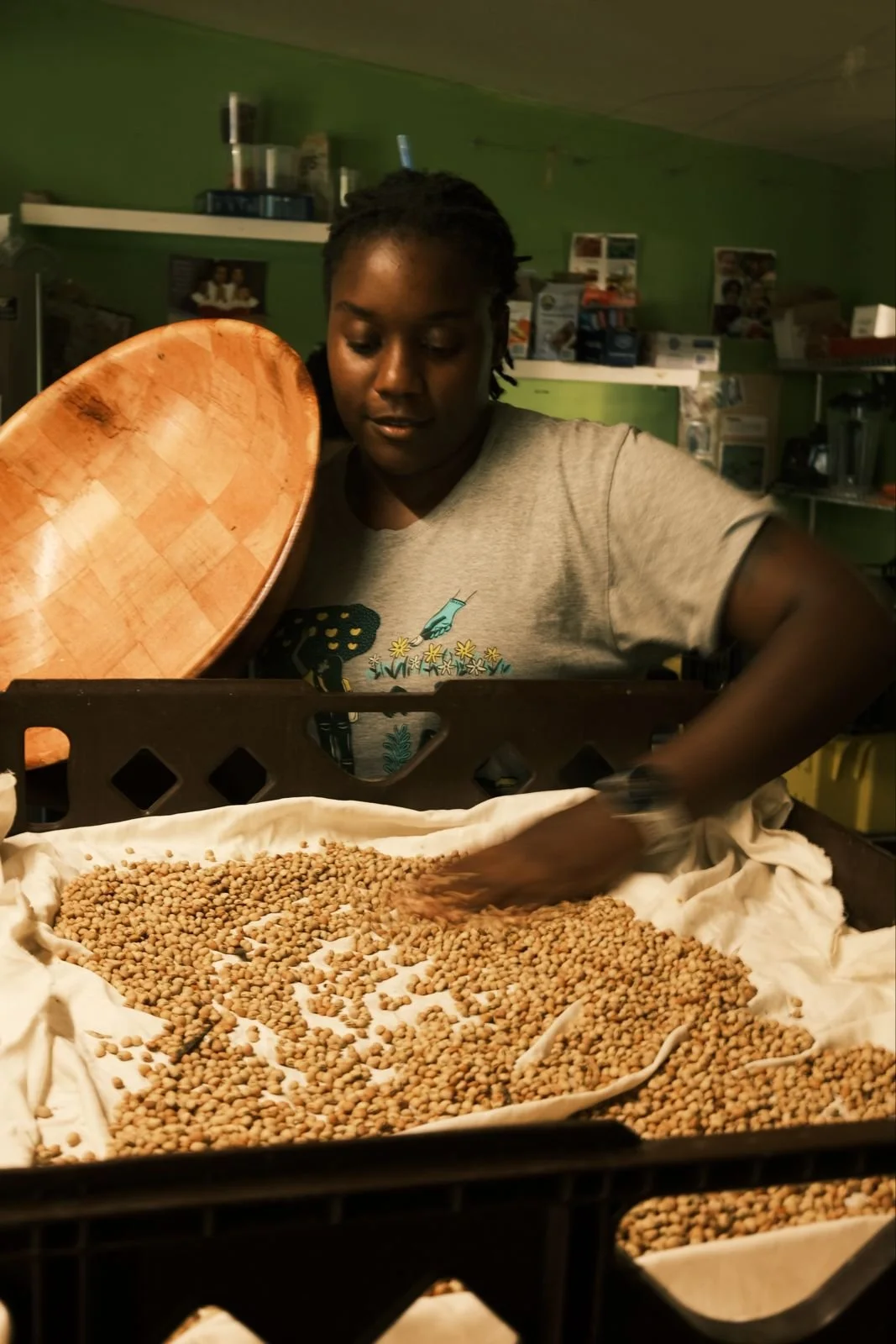
Farmer at The Sankofa Community Farm at Bartram’s Garden in Philadelphia. (Photo: Randa Toko)
Mass production and globalised supply chains have made food cheaper than ever in urbanised, industrialised societies, freeing up money and time for consumers and supporting massive population growth over the lasthalf century. According to a 2022study published in Nature, this turn towards the mass production of foods for international markets has made nutritional diets affordable to almost all income levels in industrialised societies.
But on the flip side of this coin, the exploitative economies of scale levied by large scale agribusiness is pricing producers out of local markets, forcing indigenous and peasant communities off their lands, and restricting access to locally grown food destined primarily for export. Cheap foods produced for the world market squeeze out traditional, local food systems, especially in the Global South, with highly processed and refined foods made for long shelf lives. Comparatively low in nutritional value, these ultra-processed foods are creating processed-food dependencies and provoking a rise in diet-related obesity and diseases, whilst leaving much of the world’s populationinadequately nourished.
A 2025 review in Frontiers for Science placed this profit-led food system at the heart of these health issues, encouraging high intake and poor health at the expense of the environment. The current system accounts for up to 80 percent of global biodiversity loss and deforestation, as well as around 30 percent of total greenhouse gas emissions when combining ancillary industries like transportation, packaging, industrial production and waste management. Even if emissions ended today, current food systems could still push global temperatures beyond the 2C threshold set by the 2015 Paris Agreement.
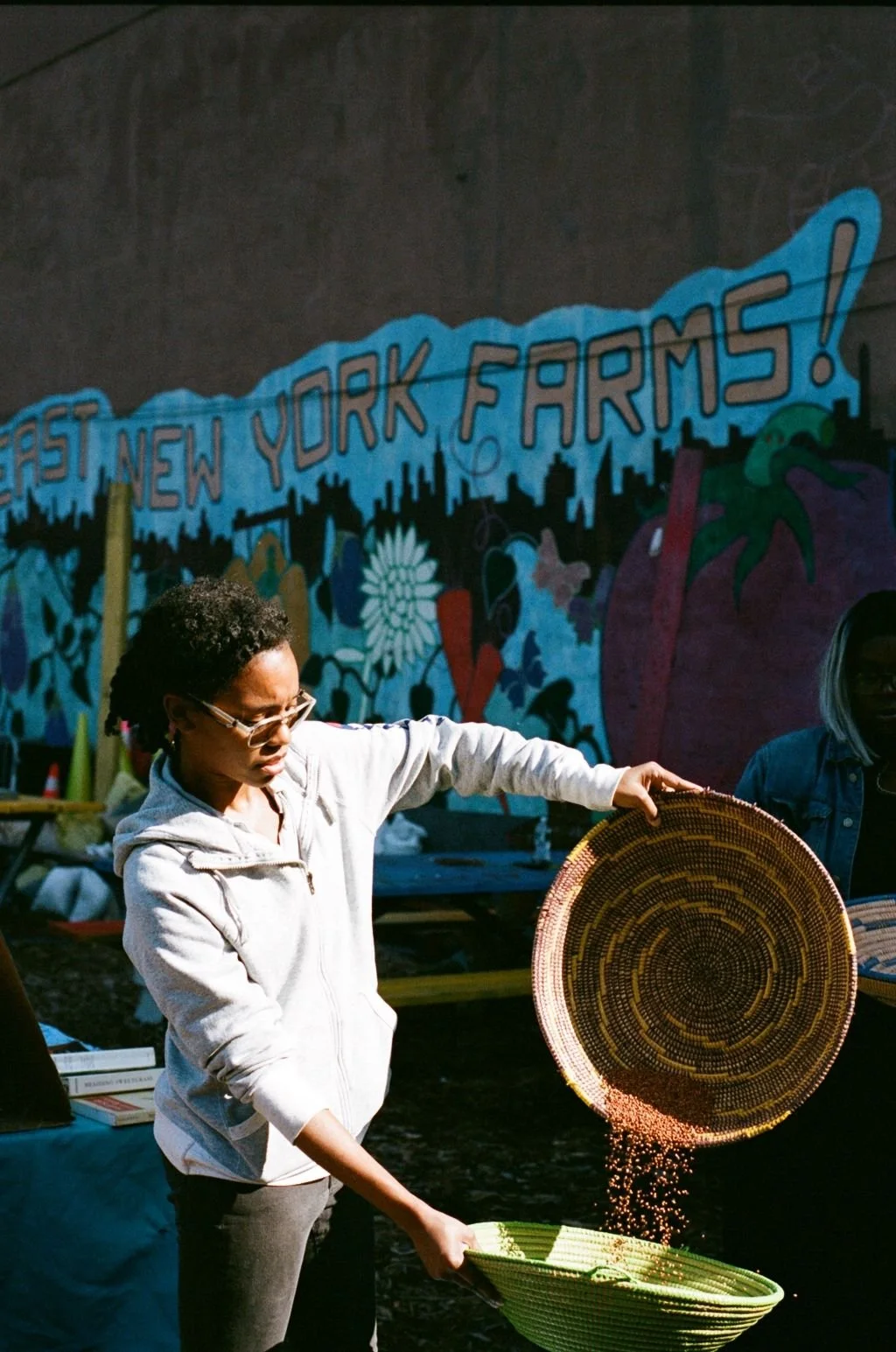
Community event at East New York Farm in Brooklyn, NY. (Photo: Randa Toko)
There’s a growing awareness of the central role of the current food system in climate breakdown, with the COP28 United Nations Climate Change Conference establishing for the first time in 2023 food systems as key factors within climate change adaptation and mitigation responses, and highlighting the importance of food system transitions for global food security. Among these bureaucratic shifts however, a grassroots movement towards food sovereignty is already working to generate just and sustainable food systems, starting with producers.
Towards food sovereignty
Randa Toko, coordinator of the GAIA Foundation’s seed sovereignty programme in Southern England, says: “Unlike food security which mainly focuses on securing enough food, food sovereignty addresses the bigger questions of who controls the land, water, seed and agricultural policy and the quality of all of these things.”
By establishing concepts of autonomy and food rights as foundations to any fair food system, ‘food sovereignty’ seeks to build new systems from the ground up that are designed and controlled by food producers, allowing people to define their own models of food production, distribution and consumption. It’s a holistic approach, rooted in humanity and justice, that refuses to isolate food as a commodity and instead understands it as the basis of social life.
Seeds are at the heart of this system change; when patented and hybridised, they are vehicles through which agriculture is controlled, expanding genetically modified, single yield crops designed to perform well in a uniform environment. Toko says: “food sovereignty is the right for people like farmers, agricultural workers and indigenous people to save, exchange, and cultivate seeds that are adapted to their environments. This strengthens the resilience to climate change, protects biodiversity and reduces dependence on corporate control”.
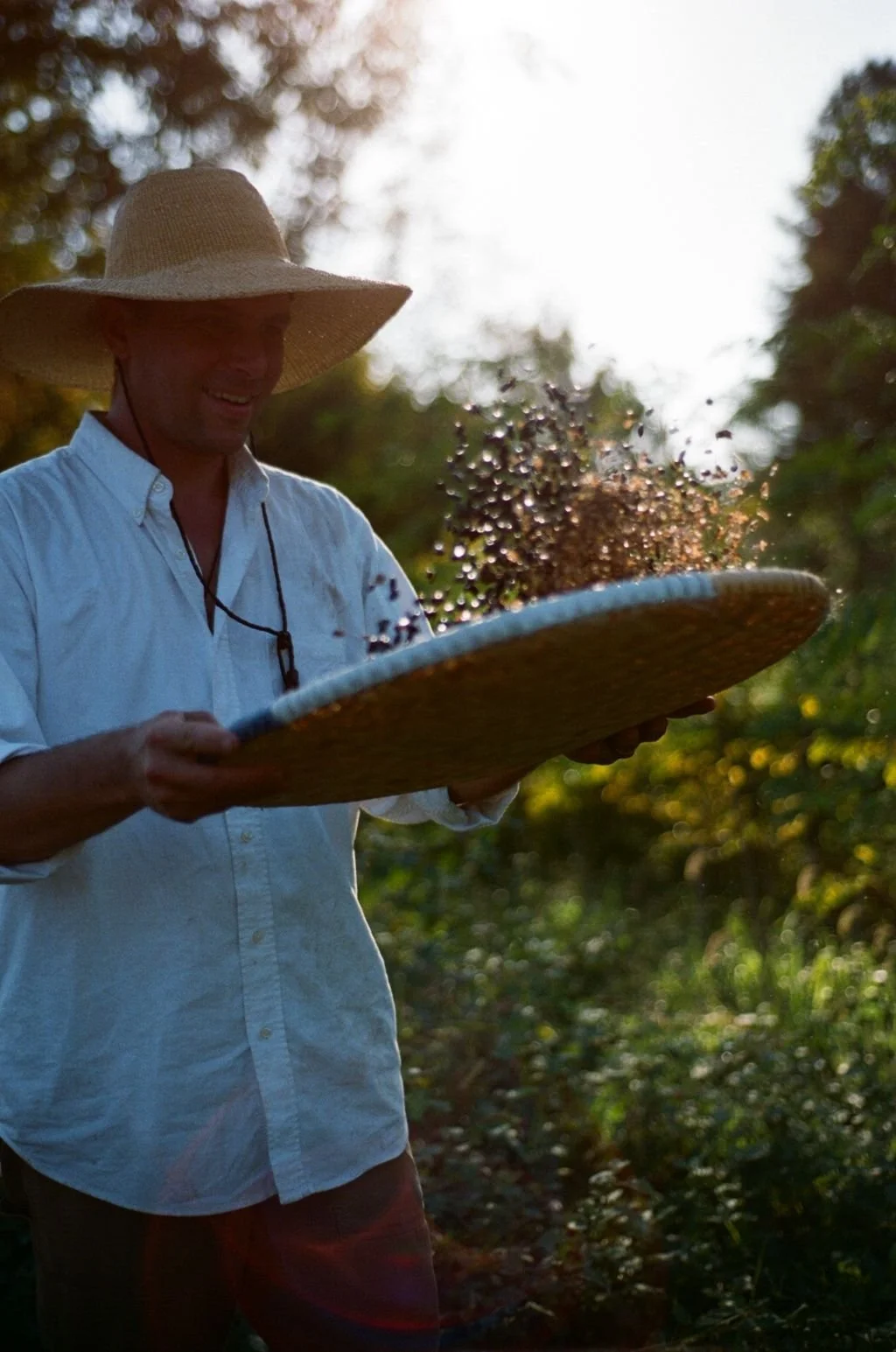
Owen from TrueLove Seeds winnowing seeds. (Photo: Randa Toko)
Toko’s organisation works on the producer side to ensure farmers can save and grow their own seeds rather than purchasing from corporations. Organisations like the Agroecology Foundation have focused on the role of consumers, supporting initiatives in Lebanon and across Africa to establish direct relationships between producers and consumers through education, community-run retail spaces, local farmers markets and urban fairs. In the UK, community supported agriculture (CSA) schemes seek to mitigate the costs and risks of agriculture for small farms by connecting customers as direct farm funders through seasonal and annual subscriptions that return regular fresh produce.
The holistic approach of the food sovereignty movement understands agrobiodiversity as inherent to sustainable food production, rather than an obstacle to mass production. Genetic diversity allows for the withstanding of climate challenges, as well as providing the basis for a vast and rich cultural variety of foods, recipes and seasonal celebrations. In this way, food sovereign systems are inherently more secure because food production is made adaptable to changing environmental conditions rather than dependent on large yields of single crops vulnerable to environmental change and fluctuating international markets.
Six core principles seek to guide the construction of sovereign food systems: providing food for people; valuing food providers; localising food systems; centring local control; building knowledge and skills; and working with nature. Toko says people stand to gain much more than just greater food security through these localised systems: “a transition to sovereign food systems would lead to stronger local economies, improved public health, increased climate resilience, cultural revitalisation and community empowerment. People would have better access to more nutritious, not just calorific food. They would have more dignity and agency”.
The looming reality of widespread ecological collapse outlined in the UK government report demands comprehensive solutions to food production in a world of deep uncertainty and rapid change. Food sovereignty shows that this response does not necessitate a frantic securitisation of global supply chains but creates an opportunity to localise and rehumanise food systems with food producers at the centre.