

October 15, on the way to the demonstration. A delivery worker passes by, complaining that we were obstructing traffic. (All photos courtesy of the author.)
“¡Vayan a laburar, vagos de mierda!” (“Go get a job, you lazy bastards!”)
You hear this kind of thing at almost every left-wing demonstration in Argentina. It’s usually shouted by delivery workers on their motorcycles or bicycles, or by ride-hailing drivers passing by the protests. Often, these demonstrations demand that the government take measures that could improve the living conditions of the very workers who are insulting the activists.
These gig economy workers ride by, shout insults, and go on their way, making conversation or debate impossible. But the repetition of this scene raises a question that the Argentine left must address: Why do so many workers who face precarious working conditions and economic insecurity not see themselves represented in the organizations fighting for labor rights?
There are exceptions, of course. On October 22, during a demonstration in La Plata calling for better working conditions for teachers, I spoke with a delivery person carrying the backpack typical of delivery platforms. She told me she was also a teacher, but needed to make deliveries because her salary in education wasn’t enough to pay the bills. Her experience shows that the boundaries between different occupational categories are less rigid than they might seem, but this reality isn’t always reflected in the organizational structures of the left.
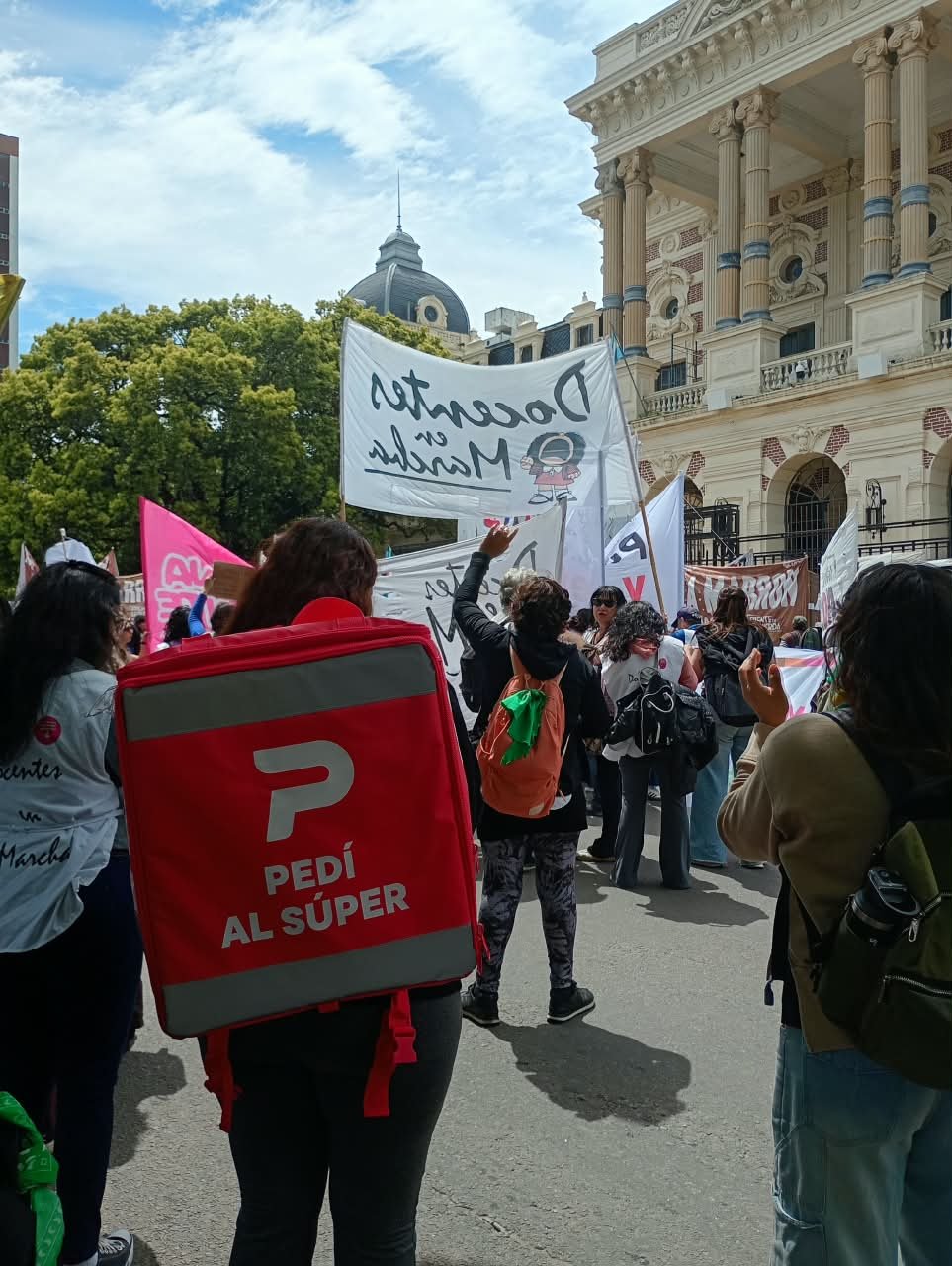
Delivery worker and teacher.
So, the problem isn’t just that these precarious workers don’t participate in the demonstrations, or that they oppose them so viscerally. The main issue is that a significant portion of them view activists who defend labor rights as adversaries, rather than as people fighting for demands that are, after all, their own as well.
The Left needs to update its model of the worker
The industrial worker, seen as the producer of goods and as someone capable of bringing about change through collective organizing and strikes, continues to occupy a central place in the imagination of many left-wing activists. This type of worker still exists in Argentina, including at factories such as Astillero Río Santiago, a shipyard located in the province of Buenos Aires that builds and repairs vessels, as well as other metal-mechanical structures.
However, in recent decades, much of the world’s industrial production has shifted to Asia (especially China and India), leaving activities such as product assembly, packaging, and distribution to other countries. This is the case with Xiaomi in Tierra del Fuego, Argentina’s southernmost province, where devices are assembled locally. At the same time, the import and sale of products manufactured in China and other countries are becoming increasingly lucrative businesses for local entrepreneurs, whether these operations are legal or not.
This global reorganization of production has profoundly changed the composition of the workforce in countries that have undergone deindustrialization. In Argentina, as in other countries, industrial employment and formal wage labor no longer represent the experience of the entire working class, and a growing portion of the workforce depends on informal activities, self-employment, and digital platforms to secure their income.
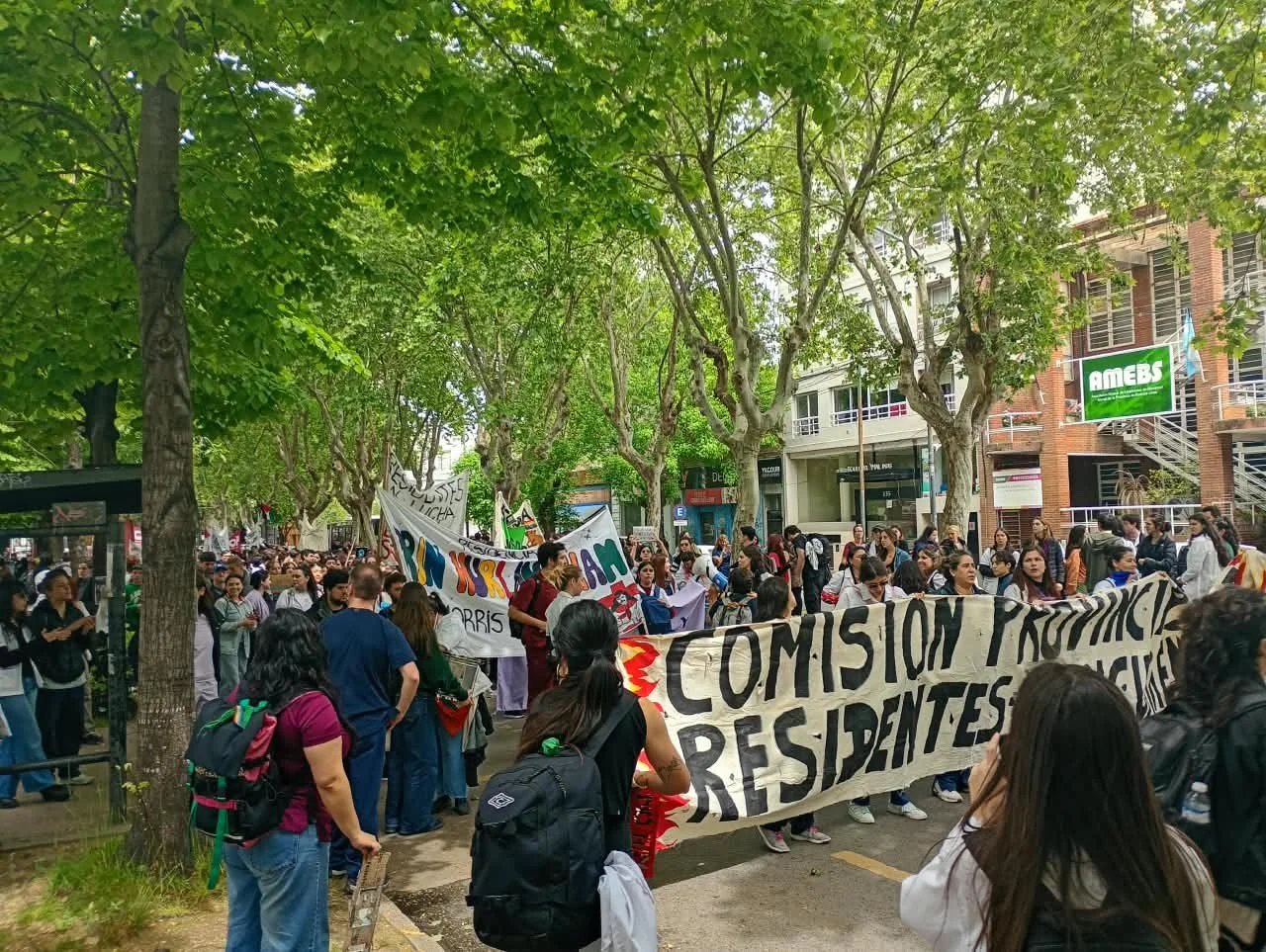
At the start of the October 22 demonstration.
To get a sense of the scale of the problem, a 2026 survey conducted by National Institute of Statistics and Censuses (INDEC) showed that 80 percent of new jobs created were informal, while about 45 percent of the country’s total workforce was in this situation. Within this group of registered workers, about 40 percent are union members. This percentage, however, is an estimate, as there are no centralized, up-to-date figures on union membership in the country. Still, given the relative historical stability of this rate, it is reasonable to assume that the current proportion is close to that level.
Thus, although the proportion of registered workers who are union members remains relatively stable, the increase in layoffs in this sector and the resulting expansion of informal employment tend to significantly reduce the total number of workers affiliated with unions in the country.
Although these changes are not new and have worsened since Javier Milei took office, the bulk of left-wing parties’ campaigns target unionized workers, whether they are factory workers, public-sector employees, or private-sector workers. The language and proposals almost always presuppose forms of organization that exclude informal, precarious, and platform workers.
Workers who can’t afford to stop working
Protesting is a constitutional right in Argentina, but not everyone has the same opportunity to exercise it. A formally employed worker can rely on their union and a range of protections that make it easier, or even possible at all, to participate in strikes and demonstrations. But for a delivery worker, going a few hours without work means losing pay, and a demonstration that blocks a street can pose an immediate threat to their very survival.
This helps explain why many of these workers do not participate in left-wing protests.
Even so, the difficulty of participating does not fully explain all the hostility visible on the streets and online. Many walk by shouting insults at those who are protesting, even when they agree with the demands, such as greater investment in public health and education. To understand this reaction, it is necessary to consider not only working conditions but also the way these workers interpret their own position in society.
Entrepreneurship, meritocracy, and isolation
One notable feature of delivery workers and other self-employed workers is their identification with the discourse of entrepreneurship and meritocracy, widely promoted by the right. Many do not see themselves as part of the working class, but rather as individuals responsible for their own success, whose income depends primarily on effort, ability, and personal choices.
According to this perspective, since each person is responsible for finding their own path, collective organization no longer matters. The demands of other workers may seem intrusive to those who believe they should be able to improve their own circumstances. This perception doesn't appear out of nowhere. The marketing of gig economy platforms itself uses language that reinforces this idea, while influential social media personalities spread the ideal of the “self-made” person.
Platform work reinforces this perception by describing its “partners” as independent workers who can choose when to log into the app and how much time to devote to the activity. For those who have experienced unemployment, the struggle to find another job, and the small daily humiliations that workers face in low-wage jobs, seeing oneself as an entrepreneur and master of one’s own destiny holds great appeal.
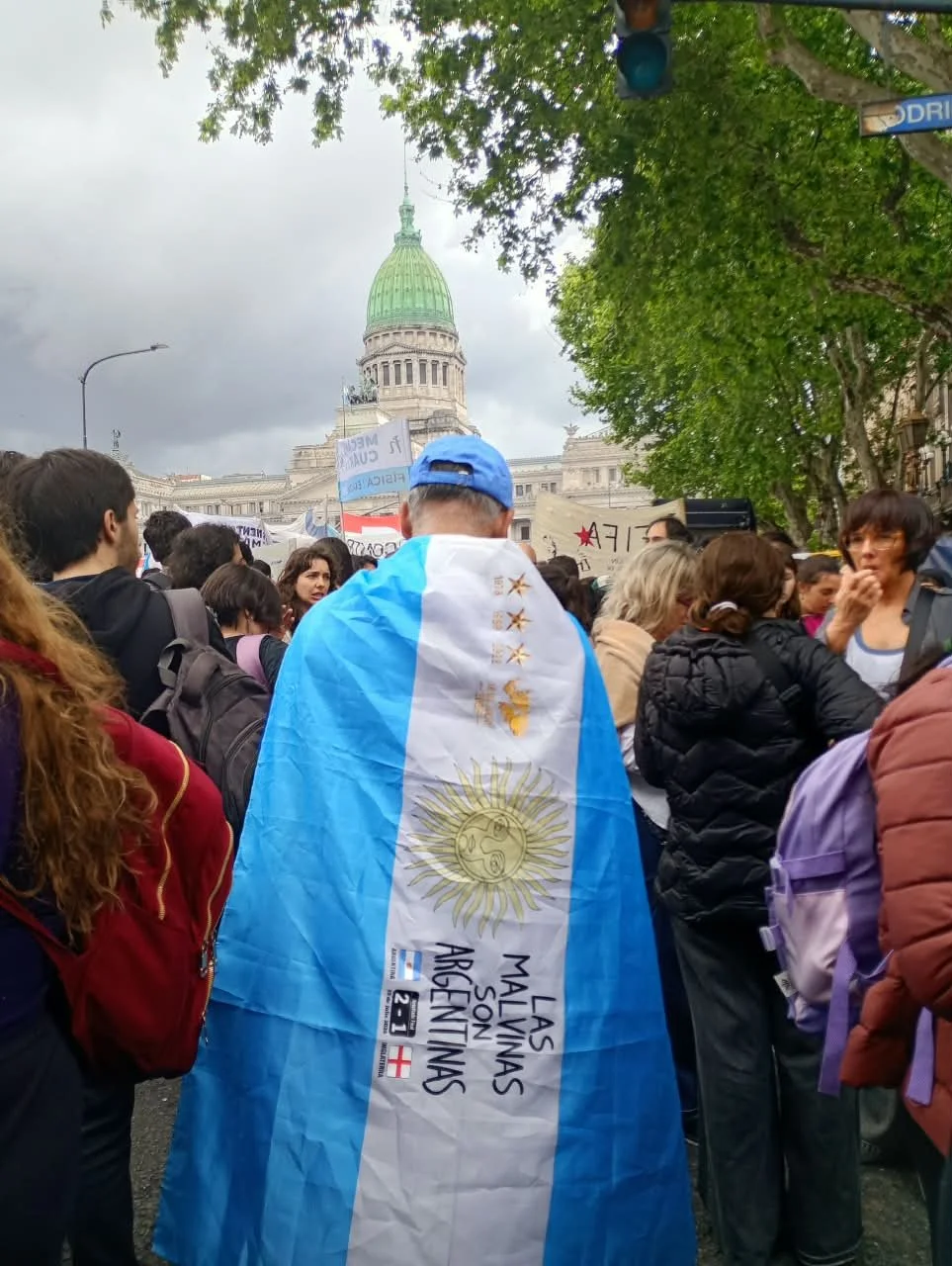
At an October 15 demonstration.
In practice, however, their autonomy is limited by demand, compensation criteria, company rules, and the need to work enough to cover their expenses. The image of the entrepreneur coexists with a reality of economic dependence and little or no social protection.
This model also contributes to isolation. Unlike workers who share a workspace and can build daily relationships of solidarity, many delivery workers spend their days working alone, competing for opportunities to earn money, and depending on ratings or conditions set by the platforms. Problems are experienced individually, and solutions also tend to be sought individually.
Understanding these dynamics is essential to grasping why economic insecurity does not automatically lead to class consciousness, just as sharing a common material condition does not guarantee that people will identify politically with one another.
This does not mean that all delivery workers think the same way or that working for platforms determines their political positions. The delivery worker I spoke with at the October 22 demonstration illustrates precisely how different work experiences can coexist in the life of a single person. But, with the exception of situations like this one, it is impossible not to notice the often hostile distance between platform workers and left-wing movements.
Religion and prosperity
There is yet another important factor that may go unnoticed: religion, specifically the Pentecostal and Neo-Pentecostal Christian denominations. Pentecostalism arrived in Latin America in three waves, with the third wave classified by some scholars as Neo-Pentecostal.
The growth of evangelical churches, especially neo-Pentecostal ones, has amplified the influence of discourses that link faith, individual effort, and material prosperity. Prosperity theology, in particular, presents economic success as an achievable goal through faith, discipline, and personal initiative.
This view converges with neoliberal logic, which attributes responsibility for one’s success or failure to the individual. For informal and platform workers, who are subject to economic instability, the promise of individual prosperity may represent a prospect for upward mobility amid precarious conditions. The figure of the Christian entrepreneur, capable of transforming their own reality through effort and faith, resembles the self-made person promoted by capitalist culture.
This convergence poses a challenge for the left, which seeks to build a collective consciousness among workers whose experiences and expectations may be strongly linked to individual responsibility and success.
A challenge for the Argentine left
The Argentine left has a long history of union organizing and popular mobilization, which has intensified with the advance of austerity and the dismantling of the state under the Milei administration. But this tradition of struggle does not eliminate the need to rethink how to organize those who do not identify with existing forms of political and union representation. This is especially true given the support some workers have given to a government that has so far only worsened their living conditions.

At the October 15 demonstration, shortly before police started using tear gas against protesters.
It is not enough to simply assert that the interests of delivery workers are the same as those of workers participating in a protest. Crucially, these workers are excluded from labor rights, and the lack of formal employment alternatives is precisely what leads many of them to take these jobs.
Nor is it enough to attribute this disconnect solely to the ideological influence of the right. The meritocratic and entrepreneurial discourse finds fertile ground in a reality where many people must solve urgent problems on their own, without relying on guarantees or safety nets. A person accepts precarious, informal work because they cannot find a formal job with guaranteed rights. It is the erosion of the labor safety net that creates this scenario, not the other way around.
But there is no single formula for organizing this growing segment of the working class. We must take into account the work schedules, income, and specific conditions of these workers, as well as develop demands that address their needs. It also means recognizing that the defense of labor rights cannot be limited to formally registered and unionized employees. It must include those who work without protection, switch jobs frequently, and do not find a space for participation within existing organizations.
The scene of a delivery worker shouting at a protest may seem like just another episode of hostility on the streets. But it reflects a deeper political problem that needs to be addressed urgently.