
This bulletin devoted to Global Indigenous Peoples News, part of the Glocal Exchange project of Weave News, seeks to highlight some of the current issues from Indigenous communities in different parts of the world. The focus of the bulletin is aligned with the overall purpose of the Glocal Exchange project, which examines globalization through its impact from the perspective of local communities. It also supports the Weave News mission to “investigate and report about contemporary issues that are either underreported by establishment and other corporate media or reported in a way that excludes essential context, perspectives, and voices.” These are “issues that have a strong justice component and that reveal connections across communities, borders, struggles, and experiences.”
Victories and recognitions for Indigenous peoples
Governments meeting at the 13th Conference of the Parties to the United Nations Convention against Transnational Organized Crime (UNTOC COP13) “have approved a landmark resolution to begin negotiations on a new international protocol targeting environmental crimes, including illegal mining, trafficking in gold and other precious metals, wildlife and timber trafficking, and waste trafficking.” According to Amazon Watch, “The resolution explicitly recognizes the important role of Indigenous Peoples and local communities in combating crimes that affect the environment and related corruption, marking a significant step toward acknowledging their contributions to international efforts against organized crime.”
More than a dozen Indigenous representatives from Peru, Brazil, Colombia and Ecuador participated in the October 19-23 U.N. conference on transnational organized crime. They represented Indigenous Peoples directly resisting illegal gold mining, logging, and drug trafficking fueled by global markets. Raphael Hoetmer, Western Amazon Program Director at Amazon Watch, said organized crime and illicit economies have become major threats to the Amazon, Indigenous peoples and the global climate.
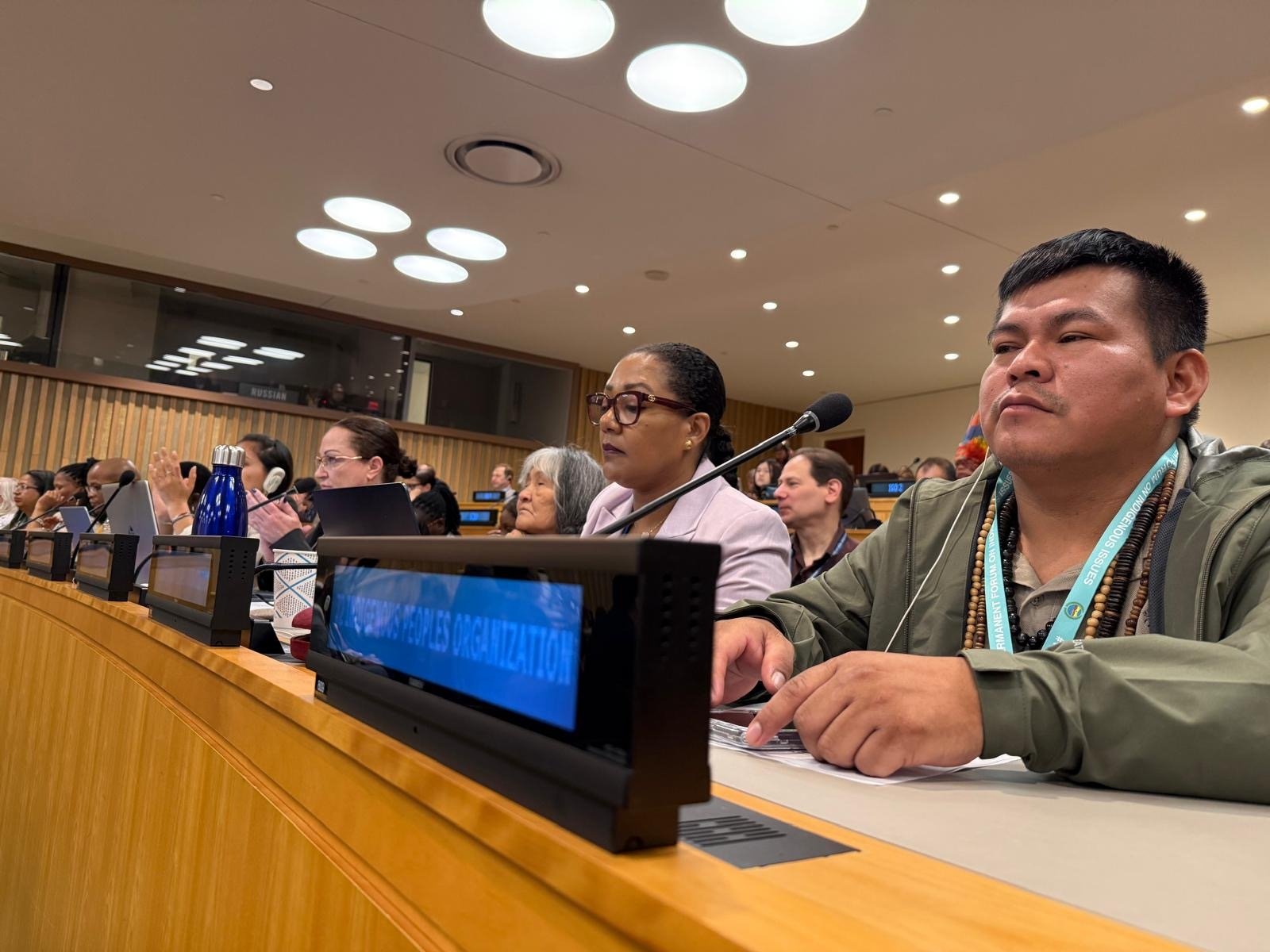
Photo: Amazon Watch
According to environmental and human rights group Global Witness, at least 105 land and environmental defenders were killed in Latin America in 2025, accounting for 85 percent of the 124 killings documented worldwide. “Research highlighted by Amazon Underworld shows that criminal organizations or armed groups operate in 67 percent of municipalities across six Amazonian countries, while multiple criminal organizations contest control in 32 percent of Indigenous territories,” writes Amazon Watch. “The consequences reach far beyond South America. These networks are dismantling Indigenous territorial governance and driving deforestation and biodiversity loss in the most protected areas of the Earth’s biggest rainforest.”
Meanwhile, Indigenous communities defending the Amazon’s Xingu River have won a significant victory in their decade-long fight against Canadian mining company Belo Sun: “On October 19, Brazil’s Supreme Court reinstated the suspension of Belo Sun’s installation license, delivering a significant setback to plans for one of the country’s largest open-pit gold mines. Indigenous Peoples and allied organizations insist that authorities must not restore the permit while violations of territorial protections and consultation rights persist.”
Also in October, the International Union for Conservation of Nature (IUCN) recognized Indigenous leaders from Brazil, Peru, the Democratic Republic of Congo, The Gambia, Indonesia and Thailand as the first Indigenous Peoples Ambassadors for Primary Forests. The announcement came at a ceremony held during the seventeenth meeting of the Conference of the Parties to the Convention on Biological Diversity (CBD COP17) in Yerevan, Armenia. The six leaders were honored “for their outstanding work to keep ancient forests standing amid growing threats from large-scale agriculture, illegal mining, logging, drug trafficking and more.”
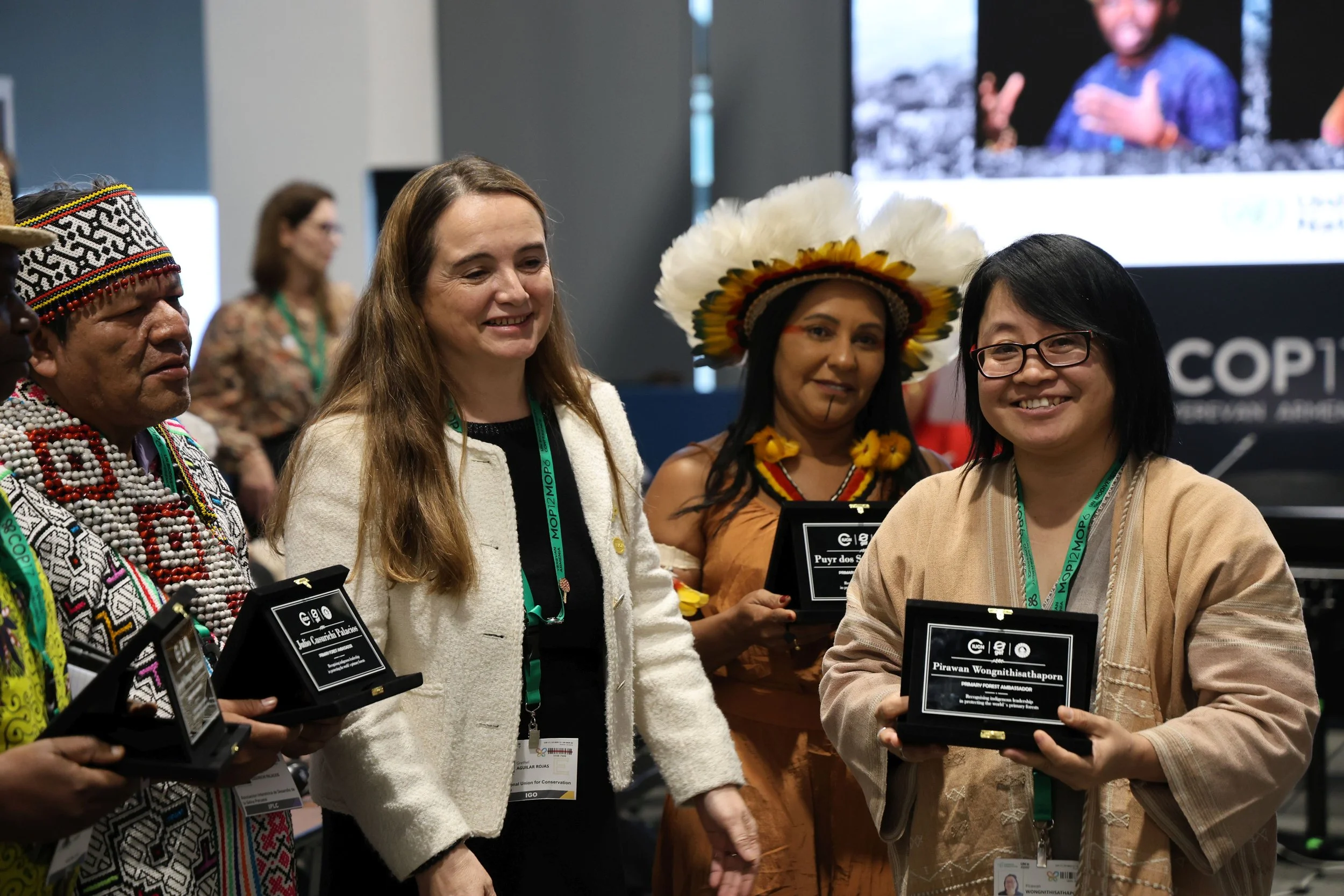
IUCN Director General, Dr. Grethel Aguilar, and Indigenous leaders at the Indigenous Peoples Ambassadors for Primary Forests Awards Ceremony. (Photo: IUCN)
In a press release, the IUCN emphasized the importance of supporting those on the front lines of defending forests: “The world’s 1.18 billion hectares of primary forests are among the most biodiverse and ecologically valuable ecosystems on Earth. Yet, primary forests, especially in tropical regions, face mounting losses due to deforestation, land conversion, infrastructure development and unsustainable resource extraction. Indigenous knowledge systems, governance institutions and stewardship practices have contributed to maintaining forests across generations. Indigenous Peoples, however, are not always adequately recognized or represented in decisions affecting forests and biodiversity.”
Indigenous Peoples Day
The Indigenous Peoples Day recognized on the second Monday in October is “a day of celebration, protest and reclaiming history”. The Associated Press notes that in recent years, the day has been marked by “protests against memorials to [Christopher] Columbus, for environmental justice, for the return of Indigenous lands and to raise awareness about missing and murdered Indigenous women.” Also, this day “acknowledges the painful history of wrongs and atrocities that many European explorers inflicted on Tribal Nations and Indigenous communities,” as President Biden wrote in the Indigenous Peoples’ Day proclamation.
