Global Indigenous Peoples News Bulletin #19 (August 2026)

This bulletin devoted to Global Indigenous Peoples News, part of the Glocal Exchange project of Weave News, seeks to highlight some of the current issues from Indigenous communities in different parts of the world. The focus of the bulletin is aligned with the overall purpose of the Glocal Exchange project, which examines globalization through its impact from the perspective of local communities. It also supports the Weave News mission to “investigate and report about contemporary issues that are either underreported by establishment and other corporate media or reported in a way that excludes essential context, perspectives, and voices.” These are “issues that have a strong justice component and that reveal connections across communities, borders, struggles, and experiences.”
Indigenous land issues
In June and July, Brazil’s Indigenous agency FUNAI marked borders of the Rio Pardo Kawahiva Indigenous Territory, home to the Kawahiva, an isolated Indigenous group in the Amazon. The government agency confirmed the presence of the Indigenous group in 1999 and began demarcating its territory in 2001. “The territory has been invaded by land-grabbers and loggers, causing deforestation,” writes Shanna Hanbury. “Historically, the Kawahiva territory was intermittently protected via temporary land protection orders, which faced opposition from logging companies.” Hanbury adds that the physical process of marking the territory “is the penultimate step to full legal recognition. The only thing remaining is for President Luiz Inácio Lula da Silva to sign a decree formally creating the Indigenous territory.”
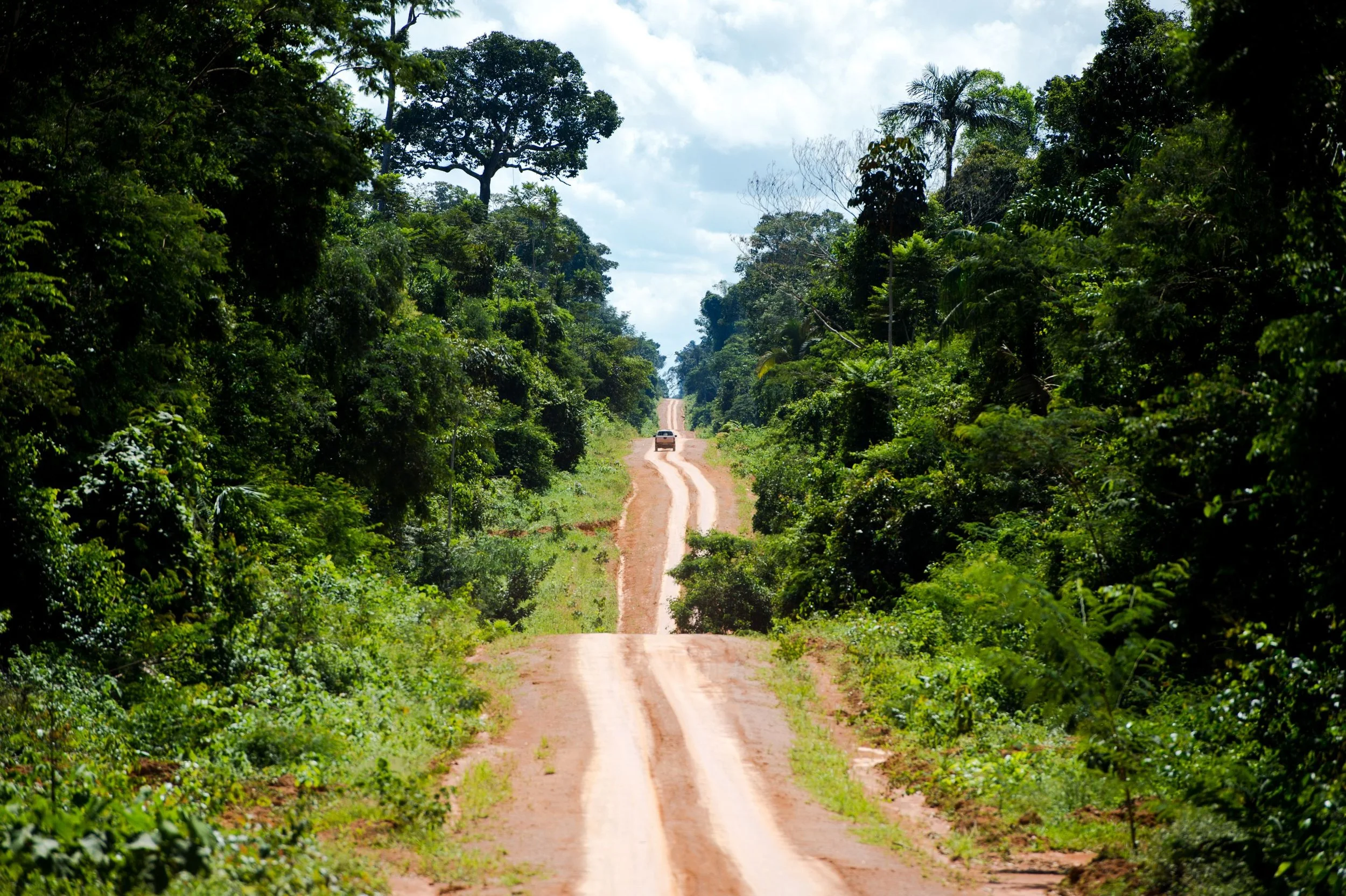
Colniza (Mato Grosso) - Road leading to the district of Guariba and marking the boundary of the Kawahiva do Rio Pardo Indigenous Territory. (Photo: Marcelo Camargo/Agência Brasil, CC BY 3.0 BR, via Wikimedia Commons)
As an Amazon Watch report found, criminal networks or armed groups operate in 67 per cent of Amazonian municipalities and compete for territorial control in nearly a third of them. Indigenous leaders have brought the Amazon’s organized crime crisis to the UN in New York, demanding a meaningful role in fighting illegal mining, logging, and trafficking. “Indigenous Peoples…absorb risk from criminal networks and from anti-crime operations that too often treat them as suspects,” reports Raphael Hoetmer. “Real security in the Amazon will come only when governments and international institutions build it with Indigenous Peoples, not around them.”
Meanwhile, Prachathai’s Sheikh Mehzabin Chitra, in an article shared by Global Voices, spotlights a transboundary pollution crisis that is increasing in northern Thailand. For communities living along the banks of the Kok River, which originates in Myanmar, the river provides drinking water, irrigation, fisheries, transportation, and cultural identity. Currently, however, many residents fear that these are under threat from heavy metal contamination linked to mining operations upstream in Myanmar.
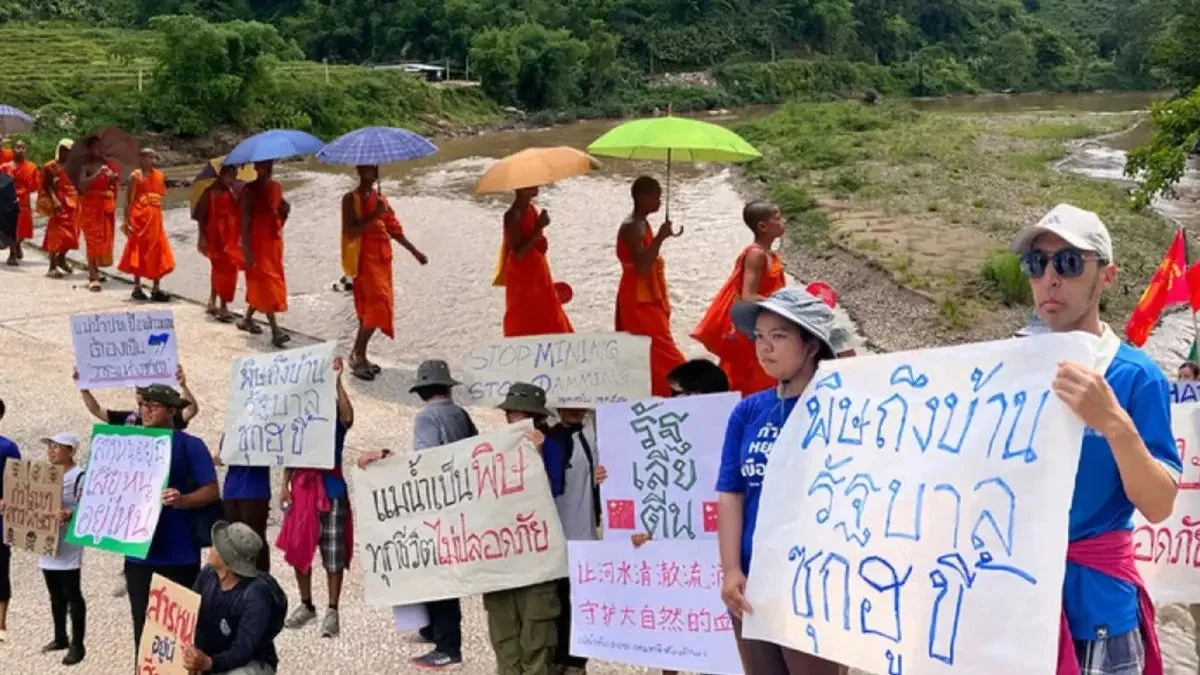
Communities demand action as Kok River contamination remains unresolved. (Photo: Prachatai via Global Voices)
“For Indigenous communities in northern Thailand, protecting the Kok River is inseparable from protecting their lands, livelihoods, and cultural heritage,” writes Chitra. The Peace Walk is one the largest demonstrations calling for accountability over pollution affecting the Kok, Sai, Ruak, and Mekong rivers. Participants in the Kok River Peace Walk, held in July, called for “stronger recognition of Indigenous land rights, meaningful community participation in environmental decision-making, transparent environmental monitoring, and greater protection for environmental defenders.”
Recognition of Indigenous peoples
The Siraya tribe has reclaimed its Indigenous status in Taiwan, where an executive decree recognized them as Taiwan’s 17th Indigenous group on July 30 following passage of the Plains Indigenous Peoples Status Act in October 2025. According to author Oiwan Lam, “Their culture and language almost vanished as a result of more than three centuries of forced assimilation, first under the Qing dynasty, followed by Japanese imperial rule, and then military dictatorship under the Kuomintang (KMT) of the Republic of China (ROC).” Lam notes that a number of other groups in Taiwan (Kavalan, Ketagalan, Taokas, Pazeh, Papora, Babuza, Hoanya, and Makatau) are also seeking official recognition of their Indigenous status.
Indigenous peoples and AI
As reported in last month’s GIPN Bulletin, the rise of artificial intelligence (AI) technologies represents a complex set of challenges and opportunities for Indigenous peoples. A new report from the SIRGE Coalition argues that the rapid and unevenly regulated development and global adoption of AI and other digital technologies “creates multiple layers of risk for Indigenous Peoples, from mineral extraction and water depletion to concerns involving Indigenous Data Sovereignty, intellectual property, surveillance, and exclusion from decision-making.” The authors, Bryan Bixcul (Maya-Tz’utujil) and Nalori Chakma (Chakma), emphasize that it is essential to look at “not only the infrastructure that supports [technology], but also how the technology is reshaping mineral exploration, access to land, and control over Indigenous Peoples’ data.”
Indigenous movements are challenging the demand for so-called ‘critical minerals’ brought about by the energy transition, AI and Big Tech, and the defense sector. As political scientist Thea Riofrancos discusses in her book, Extraction, Indigenous resistance against ‘green extractivism’ reveals the ongoing impact of colonial relations. “Indigenous leadership,” argues Tsering Lama, “provides practical blueprints for post-extractive societies founded on care, ecological balance and generational/collective well-being.”
International Day of the World’s Indigenous Peoples
Spotlighting the theme of “Honouring Indigenous Midwives: Safeguarding Life and Well-being,” this year’s International Day of the World’s Indigenous Peoples was celebrated on August 9. According to a UN statement, “Honouring Indigenous midwives is an opportunity to recognize their role as knowledge holders and caregivers, reaffirm the enduring value of Indigenous knowledge systems in safeguarding life, and advance culturally appropriate approaches to well-being for future generations.”
At the same time, the statement cautions, “the practice of Indigenous midwifery remains impacted by structural barriers and discrimination that undermine the recognition of Indigenous knowledge systems within formal health frameworks and limit access to culturally appropriate care.”
Indigenous languages
Out of around 135 Indigenous languages in the Philippines, 40 are now considered endangered because of “social, cultural, and political factors” affecting their preservation, use, and development. The Komisyon sa Wikang Filipino (KWF) is focusing on saving many of the country’s Indigenous languages from disappearing by working with local governments to establish centers where “expert speakers of endangered languages” are trained to teach their languages to younger generations.
