
Global Indigenous Peoples News Bulletin #18 (July 2026)

This bulletin devoted to Global Indigenous Peoples News, part of the Glocal Exchange project of Weave News, seeks to highlight some of the current issues from Indigenous communities in different parts of the world. The focus of the bulletin is aligned with the overall purpose of the Glocal Exchange project, which examines globalization through its impact from the perspective of local communities. It also supports the Weave News mission to “investigate and report about contemporary issues that are either underreported by establishment and other corporate media or reported in a way that excludes essential context, perspectives, and voices.” These are “issues that have a strong justice component and that reveal connections across communities, borders, struggles, and experiences.”
Indigenous Peoples and AI
When addressing the concern that artificial intelligence (AI) will become another extractive force that ‘takes’ Indigenous Knowledges without consent, credit or return, researchers at the University of Melbourne observe that “The same AI that can help revive endangered languages can also deepen historical injustice. The difference comes down to whether Indigenous Knowledges are built in from the start”. Indigenous Knowledge, they argue, must be “ethically embedded, properly recognized and genuinely valued as part of this process. AI can be a tool to preserve knowledge for community benefit and to design solutions that address Indigenous-identified challenges.”
Another study published this year in the journal AI and Ethics provides a framework for integrating Indigenous knowledge and values into AI governance and examines how these ethical principles can translate to practical requirements for AI projects. “Indigenous ecological knowledge embodies collective responsibility and could provide an ethical basis for questioning whether the scale of a proposed AI model is justifiable given its environmental cost,” the authors note, “prioritizing ecological integrity over unbounded technological expansion.”
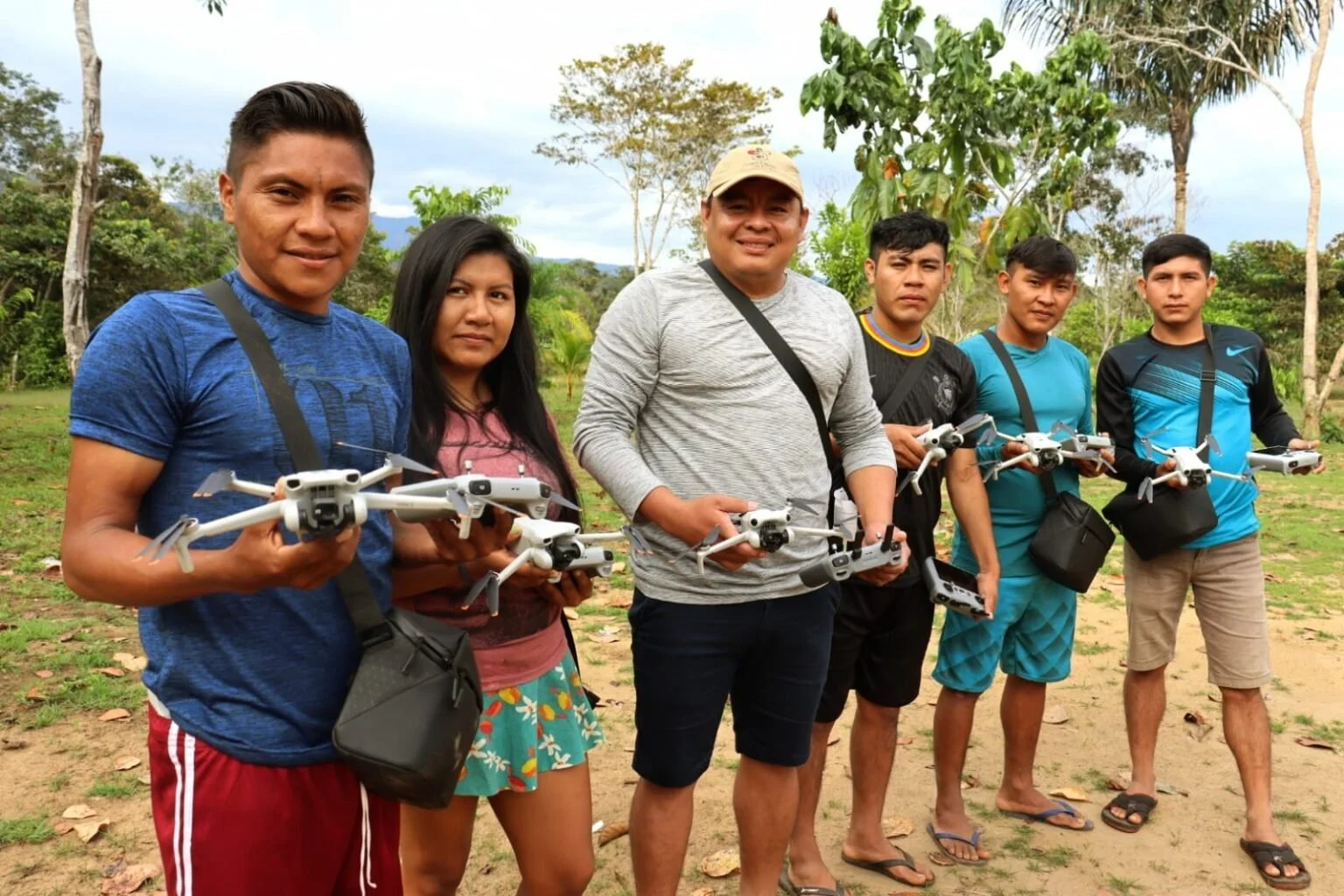
Equipped with drones and other technologies, young people from the Yanomami Indigenous Territory actively monitor their territory, which has faced a serious humanitarian and environmental crisis due to illegal gold and cassiterite mining. (Photo: Evilene Paixão/HAY via Mongabay)
Another issue is related to data centers, the infrastructure that powers AI technology. At a recent meeting of the U.N. Expert Mechanism on the Rights of Indigenous Peoples (EMRIP), Indigenous advocates called for AI to be developed in ways that align with Indigenous rights and priorities and said that “policies to ensure that AI does not harvest Indigenous knowledge without consent are of equal importance to protections for Indigenous lands and waters.” They argued that the infrastructure could create opportunities for Indigenous people so long as it complies with the principles of free, prior and informed consent (FPIC) and meaningful participation.
The importance of self-determination
When asking who decides if and how AI is used, Mayan activists from Chiapas emphasize that self-determination should be the priority. The activists spoke during a workshop on “Artificial intelligence, accountability, and Indigenous self-determination” organized by Rising Voices (Global Voices) during April and May 2026 within the framework of the Mayan Languages Digital Activism Summit in San Cristóbal de las Casas, Chiapas.
The participants concluded that “Artificial intelligence (AI) literacy and peer-learning are important tools to highlight and strengthen Indigenous self-determination and to support Indigenous communities in informed decision-making regarding the use and application of AI in their contexts.”
Ongoing dialogue at the U.N.
Meanwhile, the July 2026 EMRIP meeting in Geneva focused on intersecting issues, including militarization, climate change, extractive industries, biodiversity decline, and digital transformation. Artificial intelligence (AI) has emerged as a new threat that has led to a push for data sovereignty and stronger protections against technologies being developed without free, prior, and informed consent.
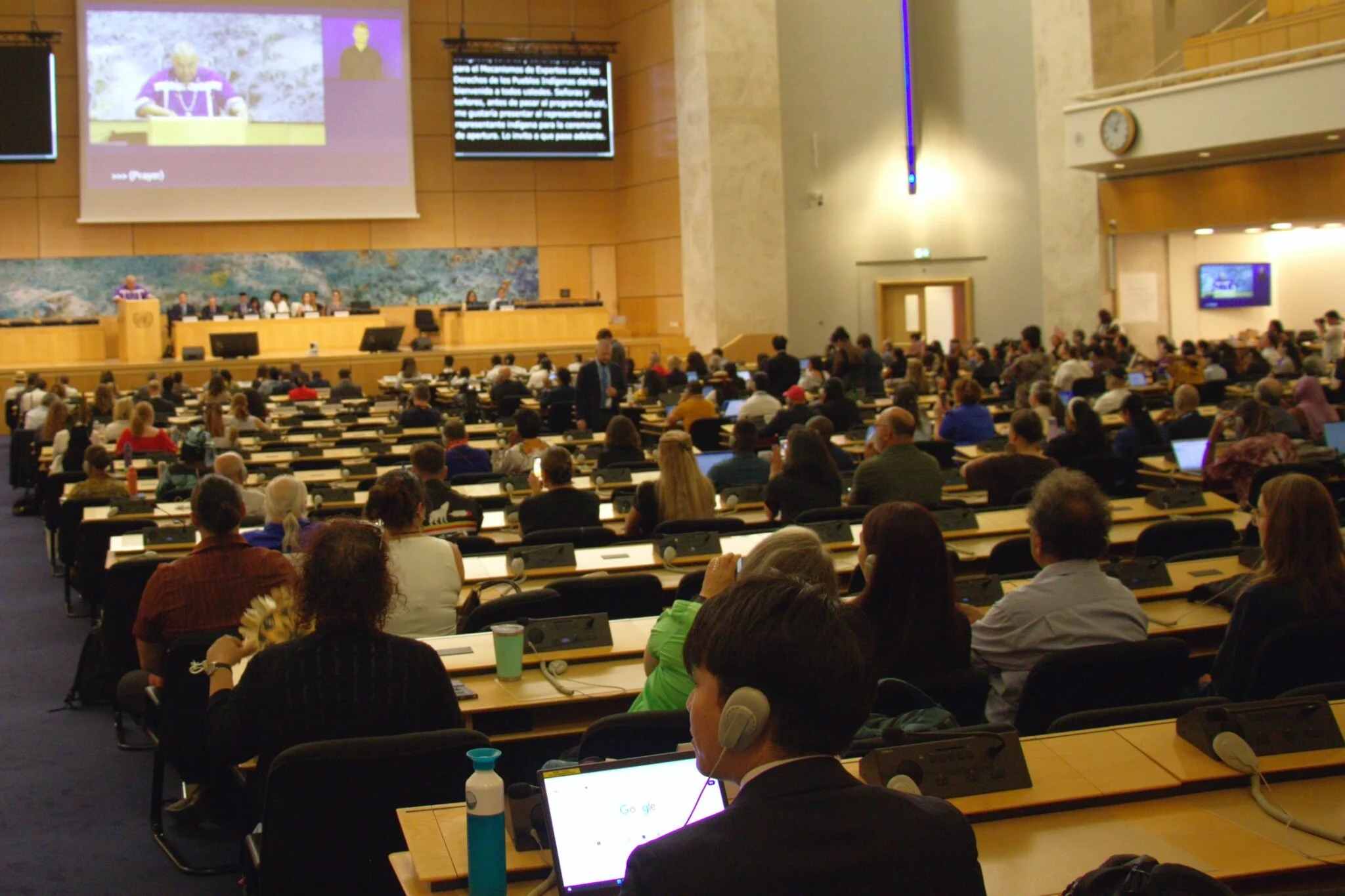
An Elder leads a prayer to open the meetings of the UN Expert Mechanism on the Rights of Indigenous Peoples in Geneva on Monday. (Photo: Dionne Phillips via IndigiNews)
According to a report from Grist and the Indigenous News Alliance, participants at the EMRIP meeting emphasized that “Indigenous communities continue to experience structural forms of conflict through state corruption, dispossession of their lands, and attacks on their self-determination” and to confront the legacy of conflict that “includes militarization, occupation, forced displacement and structural violence linked to colonization, resource extraction, and political repression.” The report also notes that “EMRIP, which advises the U.N. Human Rights Council,” is seeking to protect “Indigenous rights before, during, and after conflict, while recognizing Indigenous peoples not only as communities affected by that violence, but as rights holders and participants in its prevention, reconciliation, and subsequent peace-building.”
In addition to pushing specific policy recommendations on conflict, AI, and other key issues, Indigenous advocates also continue their decades-long demand for better representation at the U.N. and greater say in international negotiations and decision-making.
