
Sowing, Healing, and Caring: Ascensión Velasco’s Threads of Life
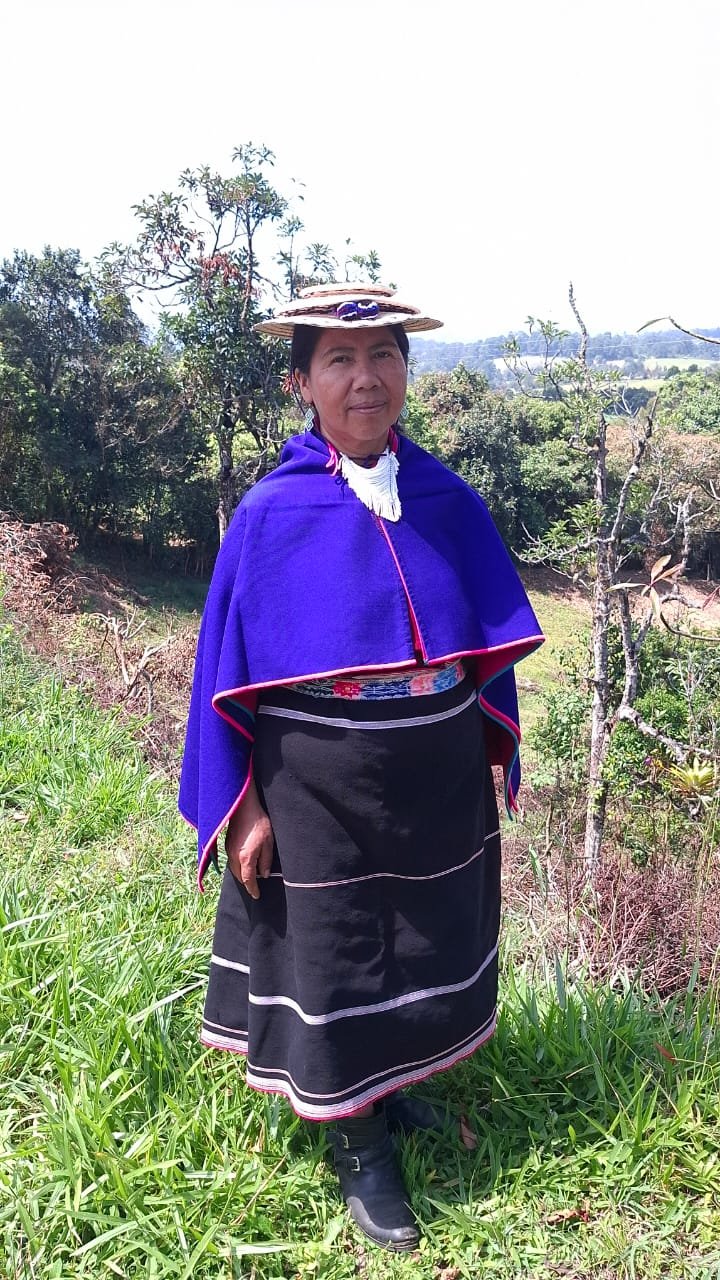
Photos courtesy of Juan Manuel Tombe Velasco (son of Mama Ascensión).
There are women who do more than simply walk upon the earth: they listen to it, feel it, and learn from it. Ascensión Velasco Montano, a Misak woman from Cauca, has woven her life out of seeds, medicinal plants, and the wisdom inherited from her elders, reminding us that Mother Earth—known in her native Namtrik language as PIRƟPE NAMUI USRI—is not a resource, but family with whom to build a relationship of respect and reciprocity. Her story is a tapestry of memory, care, and resistance: she is a woman who sows food, safeguards ancestral knowledge, and nurtures a profound bond with the life that surrounds her.
Among the Misak people, the title mama—spelled without an accent mark—is given to women who serve, or have served, in positions of authority, such as alguacilas (ancestral authorities), secretaries, zonal mayors, vice-governors, or governors of the territory or resguardos (indigenous reserves) of the Misak people. Mama Ascensión Velasco Montano is a short woman with a huge heart, hailing from the Guambía reserve in the municipality of Silvia (Cauca). She is 57 years old and has two children and a grandson who brings joy to her days. At the age of 43, she was elected by her community to serve as governor of the Misak people. Since then, she has contributed with her experience to various initiatives involving women and the community; this work has provided valuable lessons but have also required her to "unlearn"—an even greater challenge.
Between seeds, territory, and memory: the journey of a Misak woman
Until last year, she was involved in various activities through the Indigenous Authorities of the Southwest (AISO)—particularly regarding Indigenous healthcare—which allowed her to learn a great deal from traditional midwives and healers about transforming plants into natural remedies. Currently, she focuses on agriculture, cultivating coffee and other staple crops as part of a cooperative alongside her life partner, with whom she has lived for 30 years without a church wedding, having chosen instead to establish their own family agreements based on the long-held decision that their ancestral practices did not include involvement with Catholic or Evangelical churches.
At this time, she lives in the municipality of Cajibío due to a lack of land within the Guambía reservation. She is a member of the Ancestral Authority of the Kurak Chak Guambiano Indigenous Council—whose name signifies "hot land" and "flat land"—which was established in 2000 from the reservation of the same name. She arrived there in 2004, leaving behind in Silvia (Cauca) the lands belonging to her grandparents and parents located near the Piendamó Macho (male) and Ñimbe Hembra (female) lagoons, for the Misak people who are called people of the water.
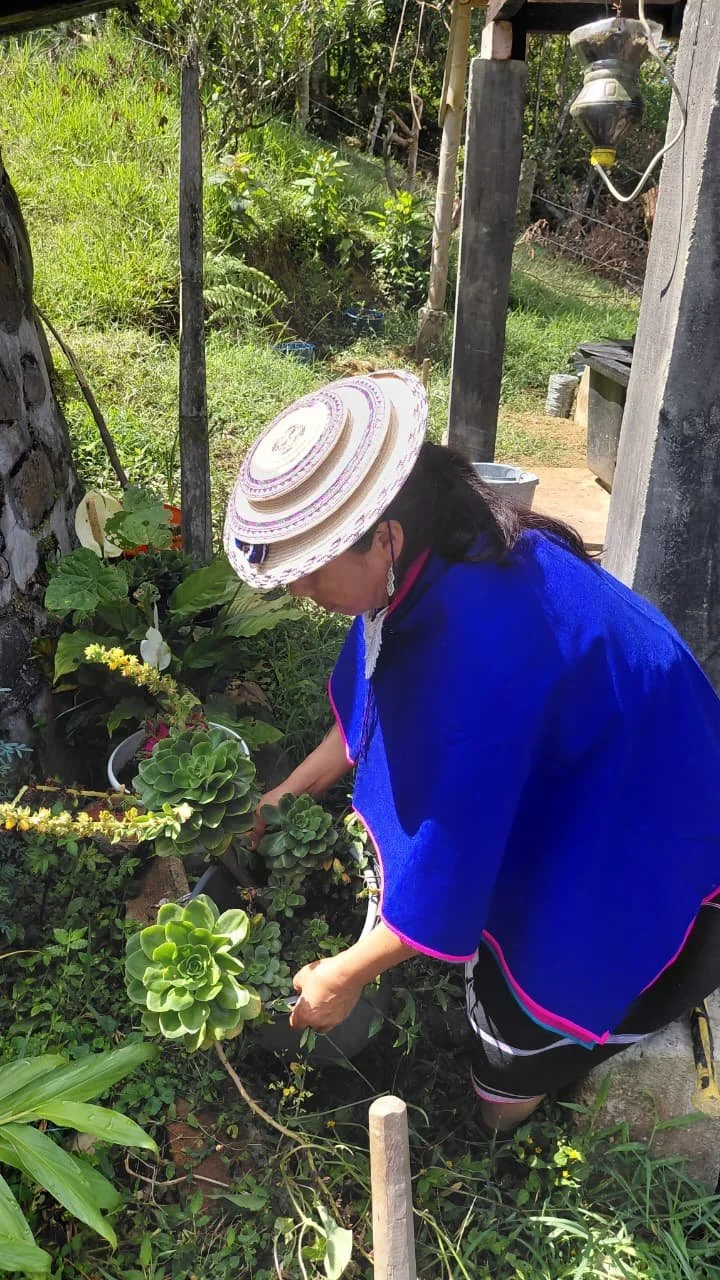
She served as a health promoter starting in 1994, and through this role, she learned a great deal about both Western and traditional medicine. This knowledge has aided her efforts to care for Mother Earth—a duty she was taught to uphold from childhood, even though humans have sometimes failed in this regard. Examples of such failures include the cultivation of poppies, which destroys families, and the use of glyphosate fumigation by the government, which largely wiped out garlic and onion crops in the highlands of the Guambía reservation.
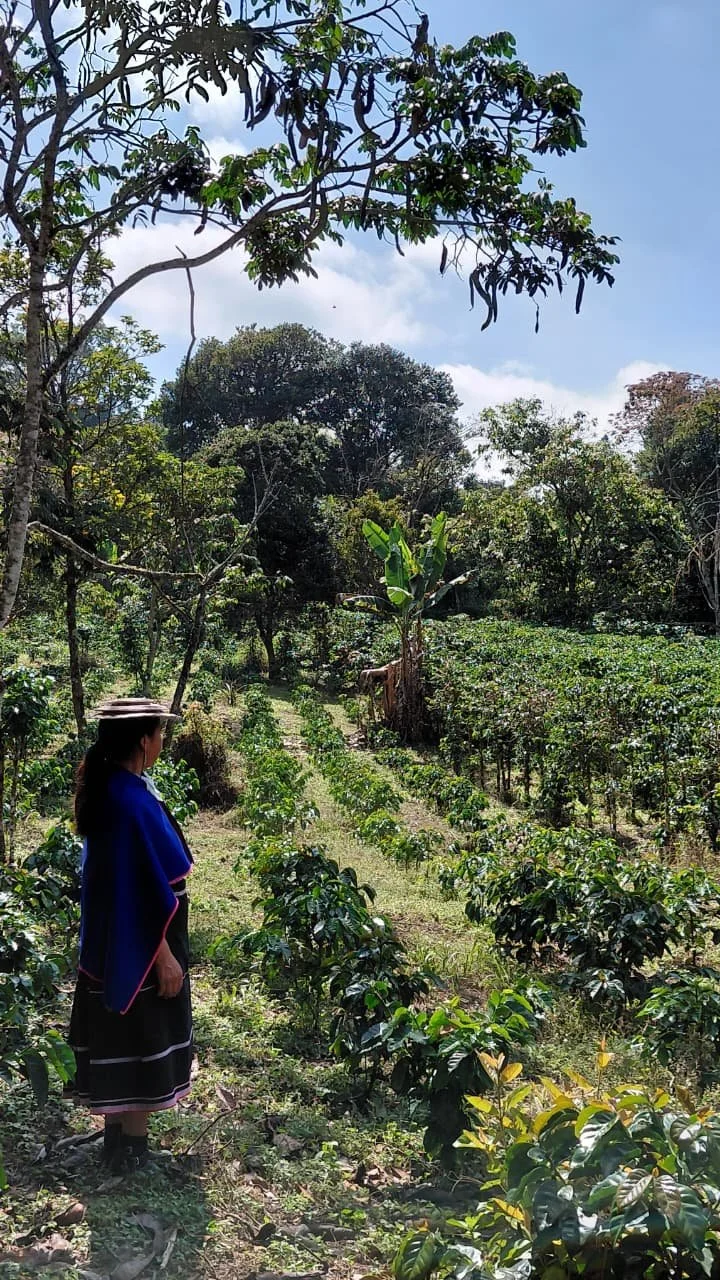
Her current activities include coffee cultivation, tending to vegetable gardens, and practicing traditional medicine. She is also a member of the Association of Women Coffee Growers of Cauca. Socio-economic considerations shape how she defends the legacy of her ancestors as well as that of the community's elders—both men and women—over the age of 70. This has led her to ensure that crops and the land remain free from chemical contamination. To achieve this, they learn from elders who understand lunar cycles—knowing when to plant and harvest—and who remind them of the importance of organic fertilizers and fungicides.
The traditional healers taught her to speak with plants and to ask for permission when using them for medicine, nutrition, or spiritual harmonization, because “plants are alive; they listen to us and feel, and—most importantly—they provide us with the energy needed for every life process. This is where we speak of being in balance and harmony with oneself, with others, and with the natural environment,” she emphasizes.
When plants listen: the medicine of reciprocity
For the Misak people, rituals are of profound importance. The term in their language for the rituals marking a young woman's first menstruation and a young man's entry into adolescence is IMPIPABƟ. According to her grandmother, these baths serve to prevent bodily odors and ward off illness, ultimately fostering harmony. Ancestral knowledge and heritage are passed down to the next generation with the guidance of elders—known in the Namtrik language as shures and shuras—who are the keepers of the territory's wisdom.
Work and roles are shared by men and women, reflecting a sense of complementarity. The burden of work previously fell more heavily on women, but the situation has gradually shifted toward a shared responsibility. “We hope these changes continue to strengthen, for the well-being of the couple and the family within the Misak community,” says Ascensión.
That is why, when she had her first period, she was given nutritious foods such as toasted capio corn, boiled potatoes, and boiled eggs. During those four days, she was made to sit on a straw mattress—in a spot prepared by a midwife, her maternal grandmother—so she would not suffer from cramps. Roses were also placed on her face, and she had to receive the smoke from burning straw and blow it out, “My grandmother told me this was to ensure I wouldn't develop spots on my face,” she explains.
She was bathed with medicinal plants to foster personal and spiritual growth, helping her become a healthy woman and a leader. During those days of introspection, she wove four small bags. “They bathed me with the plant known as wañutsi in Namtrik—or rendidora in Spanish—so that when I served food at a minga a type of collective work, no one would go without a meal; that is what my grandmother used to say,” Velasco recalls.
She was taught that during those days, she should not walk among the onion, potato, and garlic crops—as it was considered harmful to them—but rather stay at home and weave. She also learned from the elders that if a pregnant woman walks through the potato and onion fields, her energy causes the death of the slugs that sever the crops' stems and leaves.
Mama Ascensión explains that, starting from the time spent in the womb, there is deep respect for nature and a need to live in harmony and pursue a spiritual life. For this reason, when a baby is born, the placenta is buried in the center of the main room, in the courtyard or around the house. This fosters a stronger bond between the children and their family. Furthermore, as many women give birth in hospitals—part of a broader effort to assert their own cultural practices—work is underway to ensure that Western medicine takes these indigenous traditions into account.
Mother Earth is also part of that family, for everything possesses its own spirituality, and it is important to be in harmony with all things. To ensure survival in harmony, spiritual elders and wise healers speak of three realms: a) the celestial realm, linked to the cosmos and the cosmogony of the Misak people; b) the Earth, linked to territory and territoriality; and c) the subsoil, linked to minerals. Within this holistic framework of three worlds, there exists a spiritual relationship of harmony and balance with the various stages of the Misak life cycle.
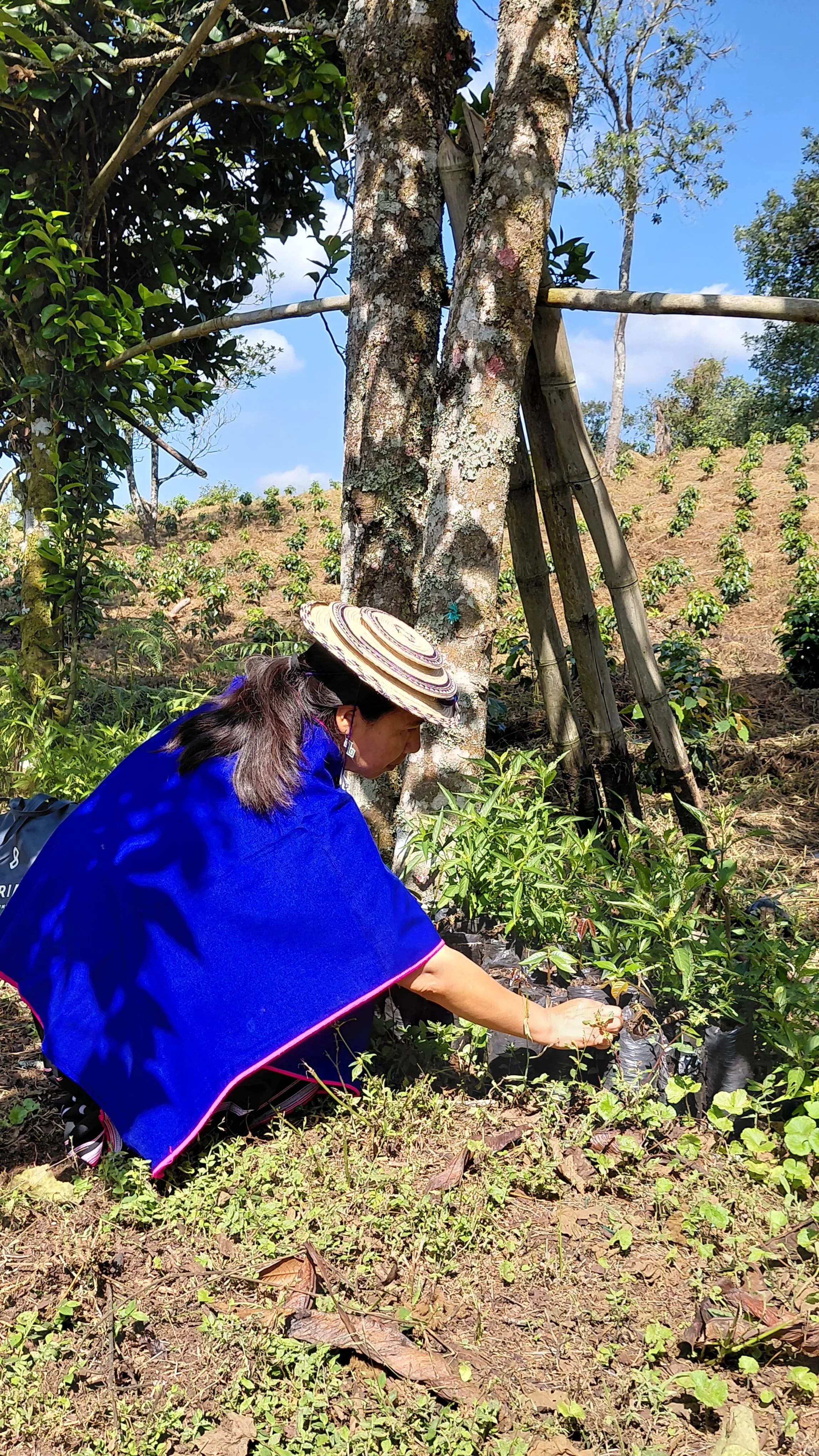
Reciprocity between non-human and human life is crucial. Therefore, the transmission of knowledge to children and adolescents—both in and out of school—is key to reclaiming the land through Indigenous thought and traditional medicines, and to learning how to transform plants into soaps, capsules, creams, and syrups, thereby returning to personal health and traditional practices that respect and care for Mother Earth.
For her, it is crucial that the authorities continue to foster the preservation of the identity, culture, and worldview of the Misak people, and—starting from the hearth, or nakchak in their language—continue to strengthen the worldview underpinning the Misak people's own processes among present and future generations.
The story of Mamá Ascensión Velasco Montano reminds us that defending Mother Earth does not always begin in courtrooms, speeches, or major political decisions; often, it starts with a seed kept by a grandmother, a healing plant, a word passed down by elders, and a woman who understands that caring for life means to protect the bonds that connect us to it. Her journey embodies the living memory of a people who do not view the land as property, but rather as a relative with whom one converses, offers thanks, and learns. Ascensión’s voice carries an ancestral teaching: Mother Earth does not need to be conquered or protected as something external, but rather recognized as part of the family of life. For when we remember that we belong to her, caring ceases to be an obligation and becomes an act of love, respect, and reciprocity.