
Global Indigenous Peoples News Bulletin #17 (June 2026)

This bulletin devoted to Global Indigenous Peoples News, part of the Glocal Exchange project of Weave News, seeks to highlight some of the current issues from Indigenous communities in different parts of the world. The focus of the bulletin is aligned with the overall purpose of the Glocal Exchange project, which examines globalization through its impact from the perspective of local communities. It also supports the Weave News mission to “investigate and report about contemporary issues that are either underreported by establishment and other corporate media or reported in a way that excludes essential context, perspectives, and voices.” These are “issues that have a strong justice component and that reveal connections across communities, borders, struggles, and experiences.”
Indigenous peoples and climate change
A new report from Conservation International shows that Indigenous cultural practices are a climate solution, as “traditional knowledge, community protocol, and Indigenous culture play a direct role in protecting forests, wildlife, and the environment.” But while Indigenous lands are recognized as crucial for climate mitigation and resilience, a recent Grist article notes that “this recognition has not always translated into space for Indigenous leaders in climate negotiations, access to climate resilience funding, or enforcement of human rights standards.”
Scientific reports have demonstrated how the climate crisis has changed historical environmental patterns, making rainy seasons unpredictable and affecting agriculture and community survival. Colombia’s Wayuu are responding to this reality by bringing together dreams and science.
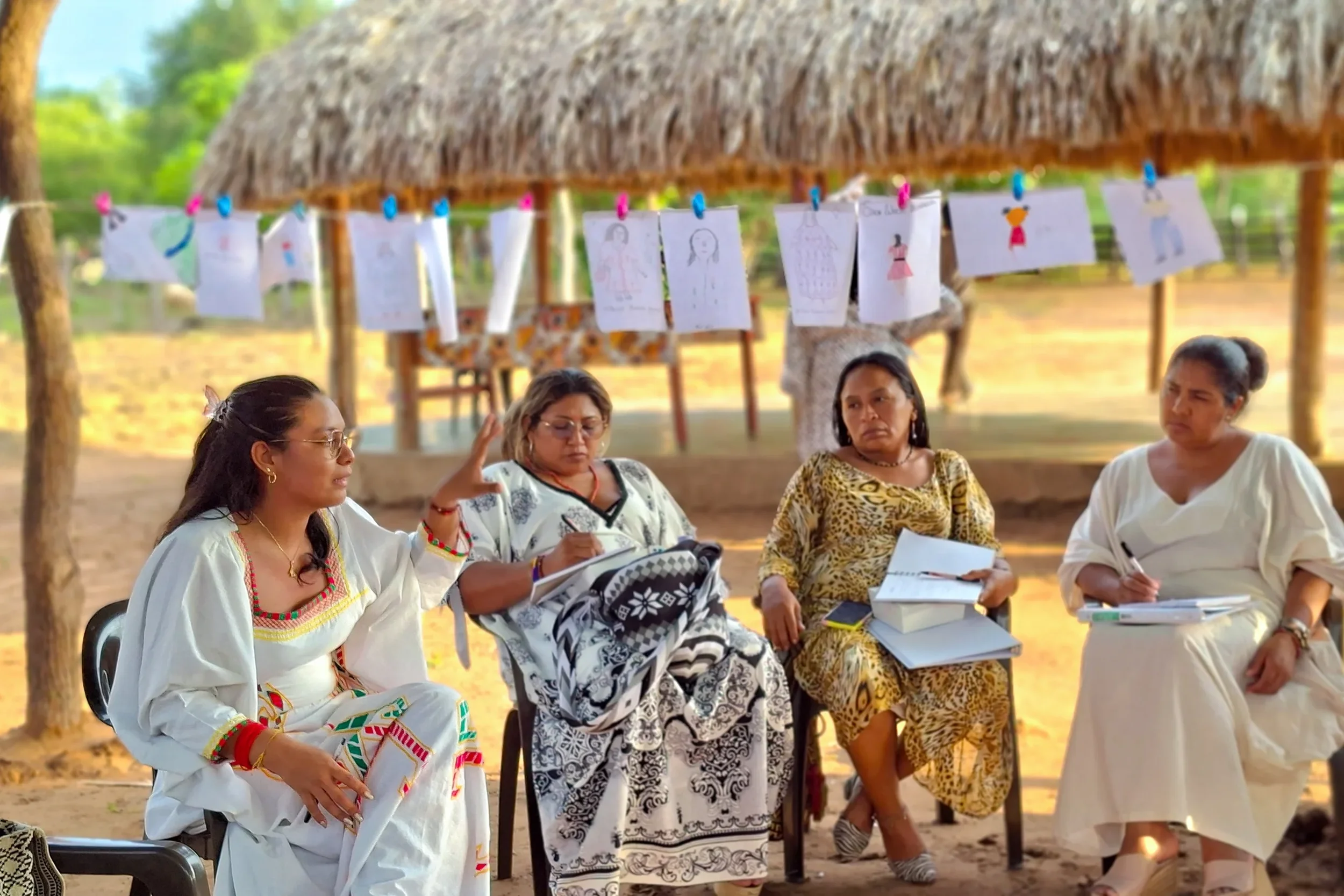
Wayuu women sharing experiences at a meeting. The Wayuu are working with scientists to preserve their ancestral knowledge of the climate (Image: Yelver Florez Wayuu Epieyuu via Dialogue Earth)
Communities have begun to work in coordination with Wayuu and non-Wayuu professionals from biology, agronomy, agroecology and environmental conservation to combine scientific tools for seed conservation and reproduction with ancestral knowledge of the territory’s climatic and spiritual cycles. “The goal is not only to protect crops but also to preserve the spiritual memory of the territory,” writes Luzbeidy Monterrosa Atencio for Dialogue Earth. “The climate crisis is not only drying up or destroying the harvests. It is also severing an ancestral bond between people, seeds, dreams and the land.”
Since 2000, glaciers around the world have lost five percent of their ice. While this trend is caused by warming, in many alpine regions people view the retreat of glaciers as a reflection of their own actions, according to a paper published in Nature Climate Change. In Peru, the loss of glaciers takes a spiritual toll on Indigenous peoples as “changing mountain landscapes and disappearing glaciers are not just physical consequences of climate change but also endanger the deep connection of people with their environment.”
Extractivism and Indigenous lands
According to some estimates, Indigenous peoples protect as much as 80 percent of the biodiversity that remains on earth. “Untapped natural resources on Indigenous lands,” write Jhanisse Vaca Daza and Anjan Sundaram, “are coveted by governments, companies, and criminal groups, placing these communities on the frontlines of the global environmental war.” The main lesson from the Latin American environmental frontline is that when governments fail to defend Indigenous land rights and national reserves and fail to regulate extractive industries and prosecute criminals, ecosystems are left vulnerable to exploitation.
Indigenous communities are at the forefront of impacts from extractive industries, particularly in Latin America and the Caribbean. According to a recent piece by Adam Termote, a 2023 study showed that the region “has the highest proportion globally – 73 percent – of transition minerals projects located on or near Indigenous peoples’ lands.” Human rights networks and academic studies, writes Termote, have emphasized “a systemic crisis in which corporate and political interests utilize armed groups to intimidate and displace communal landowners (‘ejidatarios’), allowing corporations to bypass community resistance to secure land for extractive projects.”
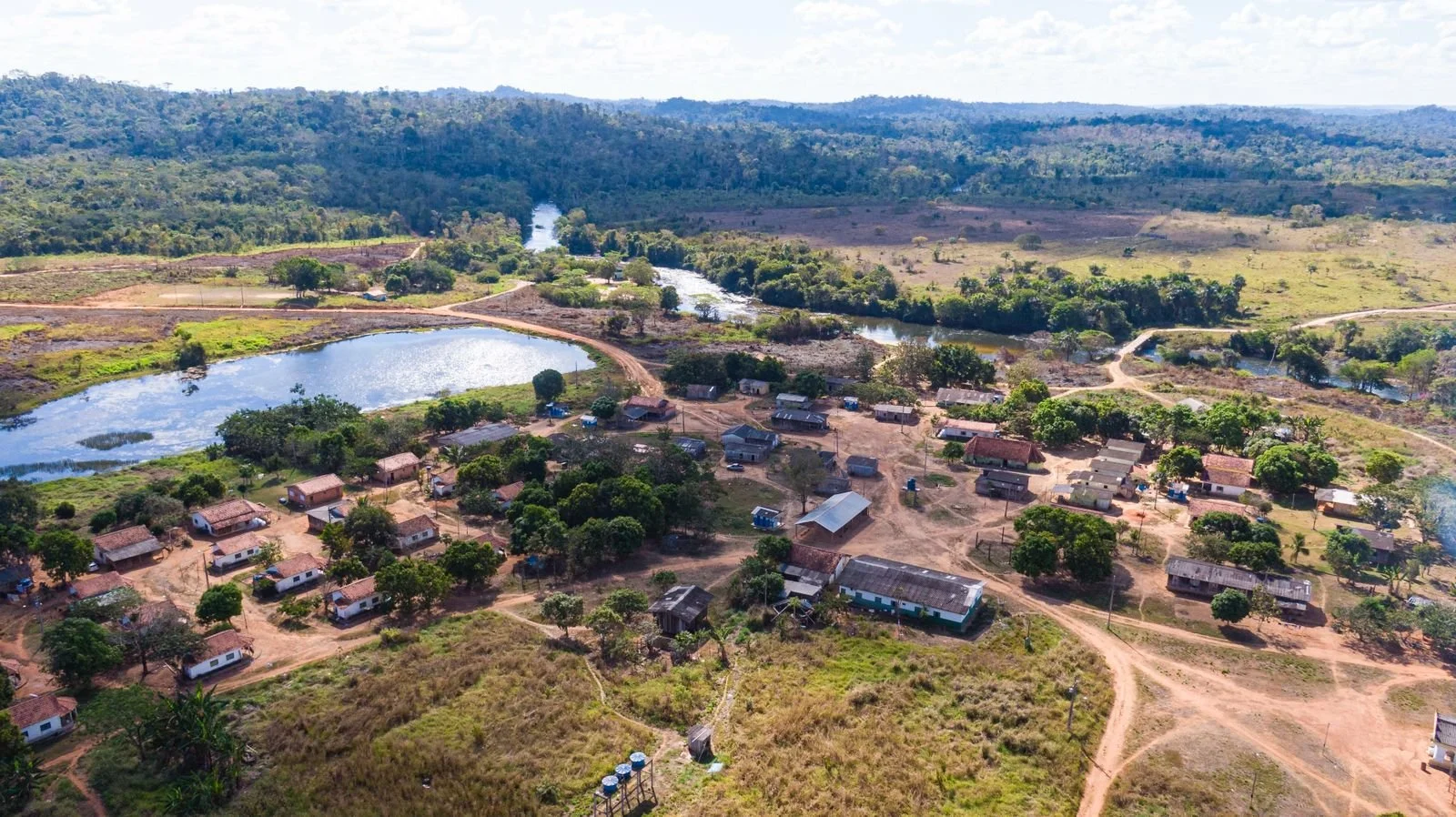
One of several Cinta Larga settlements in the Roosevelt Indigenous Reserve, a 2.7-million-hectare (6.6-million-acre) territory in the southwestern Brazilian Amazon. (Photo: Gilmar Cinta Larga / Patjamaaj via Mongabay)
Termote also reports that in Mexico, the EU-Mexico Modernized Global Agreement (MGA), signed at a summit in Mexico City on May 22, 2026, aims to “expand trade between the partners by removing barriers from the previous trade framework,” while falling short of “establishing safeguards for Free, Prior and Informed Consent (FPIC) before extractive and industrial projects are launched by European companies on Indigenous lands,” leaving Indigenous communities “exposed to environmental destruction and violence in the rush for development and critical minerals in Mexico.”
Meanwhile, Human Rights Watch reports that in Ecuador, “oil extraction in Block 43 continues to generate environmental pollution, resulting in disease exposure and displacement for the Tagaeri-Taromenane and Waorani peoples.” According to Lena Abara, referencing a 2026 United Nations report, “the protection of Indigenous lands and people should be prioritized by state officials worldwide as the effort to protect land and resource rights offers security for historically exploited groups and fights the current climate crisis.”
Another recent report covered by Earth Insight shows that Indigenous Peoples in Voluntary Isolation and Initial Contact (PIACI) in Peru and Brazil’s Yavarí-Tapiche Territorial Corridor are under threat by oil and gas expansion, proposed highways and illegal mining. The report recommends that “governments provide logistical and security support to dismantle criminal networks, such as illegal mining and drug trafficking, and expand Indigenous monitoring stations. It also highlights the importance of strengthening Indigenous governance systems, in addition to the need for investments in Indigenous-led economies and enabling infrastructure, such as electricity and digital connectivity.”

Deep-sea mining affects underwater ecosystems, climate and the food chain. Photo: The Quantum Record)
The challenges facing Indigenous groups in this context are not limited to one region. As governments and corporations race to secure minerals needed for the global energy transition, Indigenous peoples across the Pacific are some of the most important voices changing the future of seabed mining. “From Kanak leaders in New Caledonia to Māori communities in Aotearoa,” writes John Ahni Schertow, “Indigenous nations are also increasingly framing the issue as one of sovereignty and self-determination, arguing that the oceans are not merely repositories of minerals but living cultural landscapes that sustain communities, identities and ways of life.”
In Indonesia, rainforest activist and leader Bustar-Maitar argues that in order to save the rainforest, Indigenous people must be empowered as they have a lot to teach the world about how to respect nature by taking from it only what you need: “One of the most important lessons that everybody should understand is the word 'enough'.”
Native Americans and the 250th anniversary of the U.S.
According to the U.S. Census Bureau, the population of Native Americans (with 575 tribes with inherent sovereignty recognized by the U.S.) is currently under seven million people — only two percent of the nation’s population. Native Americans continue to face land disputes and some of the highest poverty rates in the country. In this context, ABC News reports that “with America’s 250th birthday come mixed emotions rooted in pain, pride and even patriotism.”
As the U.S. marks 250 years since the signing of the Declaration of Independence, Native American leaders are reflecting on how interwoven Native and Indigenous history is with American history, while also being aware of the needs of tribal communities today. According to Patina Park, chief operating officer at North American Traditional Indigenous Food Systems, it is important to emphasize the wide range of contributions Native Americans have made to the country, rather than providing “a one-sided view of all trauma or invisibility and erasure.”
