
When Repression Wears a Suit: How Law Became the World’s Most Powerful Weapon Against Dissent

Across political systems, repression is no longer defined primarily by visible crackdowns. Instead, it increasingly operates through law, procedure, and administrative control. Courts remain open. Legislation is formally passed. Hearings are scheduled. Yet civic space narrows. Defending the Defenders: The Global Rise of Legalized Repression is a three-part series examining 1) how repression has been legalized; 2) how journalism is being suffocated without formal bans; and 3) how defenders continue to resist within - and against - the legal systems used to constrain them. (Image courtesy of CIVICUS.)
The hearing lasted less than an hour.
In August 2021, Thai student activist Parit “Penguin” Chiwarak was brought before a provincial court after his role in the youth-led pro-democracy movement. There were no journalists inside. His lawyer had limited time with the case file. Bail was denied again. The decision arrived quickly, with little explanation — the kind of ruling that doesn’t need spectacle to do damage.
Outside the courtroom, the repression wasn’t theatrical. It was administrative: dates, documents, denials — a calendar built to wear someone down.
“The violence is bureaucratic. It is digital. It is psychological,” says Gina Romero, United Nations Special Rapporteur on the rights to freedom of peaceful assembly and of association, during an interview with a Weave News reporter. Increasingly, she explains, repression operates less through visible force and more through systems designed to exhaust, isolate, and deter.
Chiwarak’s case is not only about Thailand. It reflects a broader global shift: dissent is increasingly being managed through law, not only through police.
Across political systems — democratic, hybrid, authoritarian — governments have learned that they do not always need to ban movements outright or shutter newsrooms. They can narrow civic space through vague legislation, selective enforcement, and prolonged legal processes, all while maintaining the outward appearance of legality. Courts remain open. Laws are passed through formal procedures. Hearings are held. And yet civic freedoms quietly contract.
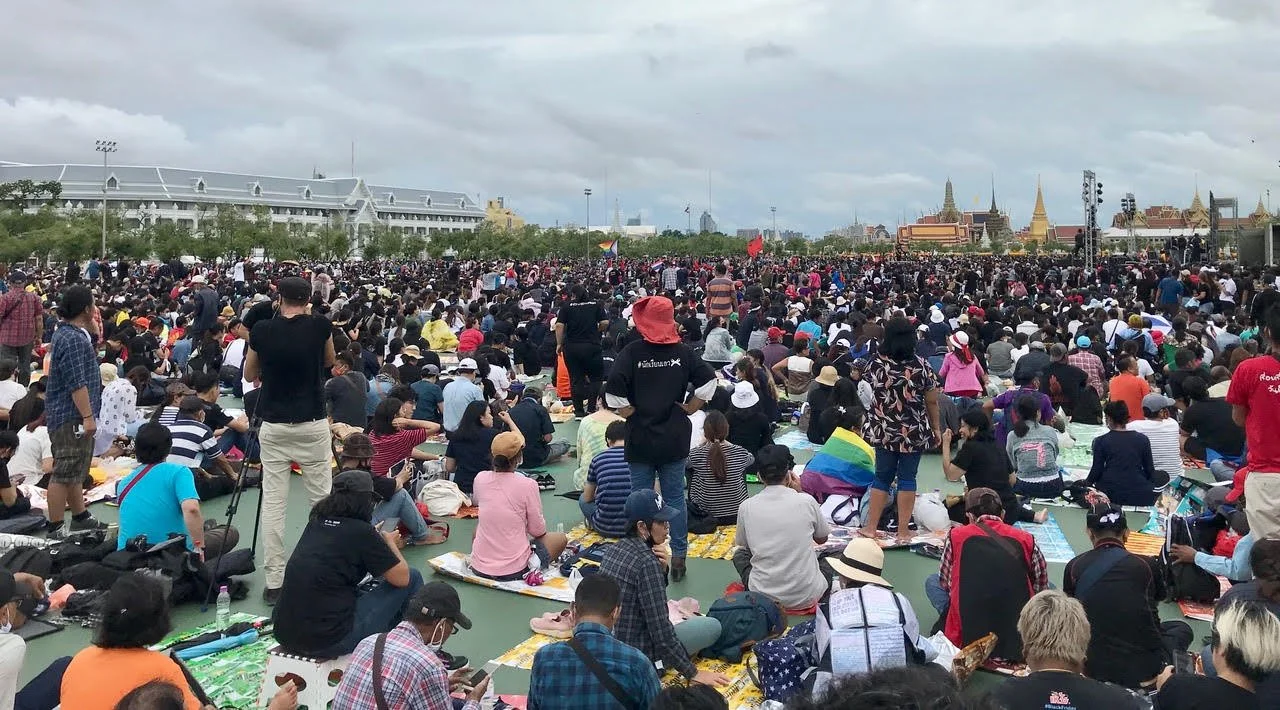
Demonstrators gathered at Sanam Luang, Thailand, on September 19, 2020 as part of nationwide protests for greater democracy. (Photo: Milktea2020, CC BY-SA 4.0, via Wikimedia Commons)
A global narrowing of civic space
The shift is visible in global monitoring data, though its meaning lies less in the numbers than in the pattern they reveal.
According to People Power Under Attack 2025, the flagship report of the global civil society alliance CIVICUS, 83 countries are now classified as places where civic freedoms are routinely denied, up from 67 in 2020. Over the same five-year period, the share of the global population living in countries rated “open” has declined significantly, indicating a contraction in environments where protest, organising, and independent reporting can operate without legal exposure.
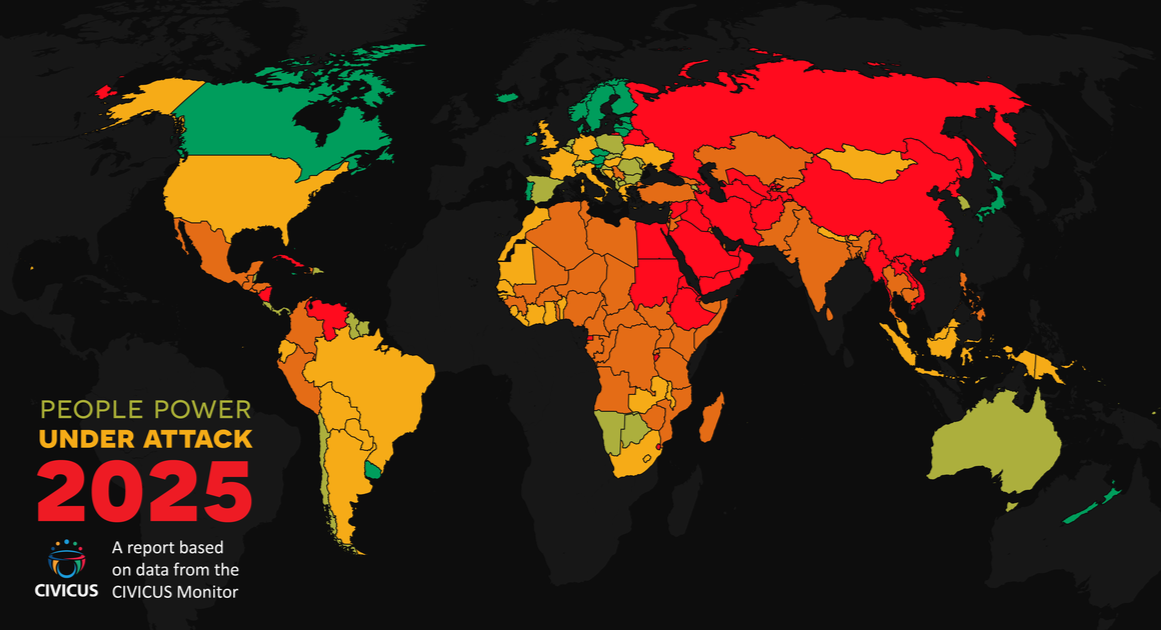
Cover image from People Power Under Attack 2025 (CIVICUS Monitor, December 2025).
Andrew Firmin, Editor-in-Chief of CIVICUS Monitor, points to a “deterioration of civic space” in recent years, adding that “more countries are going into worse ratings as the years go on.”
“It is not the collapse of democracy we are witnessing,” says Marco de Ponte, Chief Executive Officer of Hivos, an international organisation supporting civil society and democratic participation worldwide. “It is its manipulation through legal instruments.”
That manipulation operates through statutory revision and procedural expansion. Governments have broadened national security provisions, extended cybercrime legislation to encompass online speech, and amended public order frameworks to increase executive discretion. In 2025, detention remained one of the most frequently documented responses to protest globally, with authorities detaining demonstrators in at least 82 countries — a tactic highlighted as the most prevalent violation of civic freedoms by the CIVICUS Monitor.
Crucially, this trend cuts across regime types. As Firmin explains, “even when countries are more established democracies, they’re chipping away — particularly around protest rights.” He identifies a convergence between democratic and authoritarian contexts in the restriction of civic space.
The cumulative effect is a measurable reduction in the conditions under which civic actors can operate without sustained legal risk.
Thailand’s legal pressure system
In Bangkok, the shift from isolated prosecutions to sustained legal pressure is visible in the caseload of Thai Lawyers for Human Rights (TLHR), a legal aid organisation representing individuals charged in political cases. Before the youth-led protests erupted in mid-2020, political prosecutions were more sporadic and far lower in volume than in the years that followed. After demonstrations demanding constitutional reform began, the numbers rose sharply. According to TLHR’s monitoring, nearly two thousand people have faced prosecution in connection with political expression and assembly between July 2020 and mid-2023— a surge that marked a decisive shift in how dissent was handled by the courts.
As of 2025, many of those cases remained ongoing. Court hearings continue to be scheduled months apart. Defendants must appear repeatedly. Legal teams move from one courtroom to another daily.
“Legal repression may be designed to exhaust. It may stretch hearings across years and turn procedure into punishment. But it also reveals itself through repetition, through record, through the steady presence of those unwilling to disappear quietly. The courtroom may be used to contain dissent. It can also become the place where its endurance is recorded — and where the meaning of justice is argued, line by line, against the narrowing of power.”
At the centre of many prosecutions is Section 112 of Thailand’s Criminal Code, the lèse-majesté provision, which carries prison sentences of three to fifteen years per charge. The severity of the punishment is significant. But practitioners argue that the broader impact lies in how the law operates procedurally.
Complaints under Section 112 can be initiated by private citizens, not only by state authorities. Once filed, police are obligated to investigate. In cases involving online speech — posts on Facebook, comments shared across platforms — jurisdiction is flexible. A complaint can be submitted in any province where the content is accessed. Defendants may therefore face proceedings far from their home regions, requiring repeated travel, increased legal costs, and prolonged disruption to employment and family life.
Pre-trial detention has been used in politically sensitive cases, and bail applications have frequently been contested. Even when defendants are released, proceedings often stretch over years.
“Our lawyers are in court every single day,” one Thai human rights attorney said during a public discussion during the International Civic Society Week 2025 in Bangkok, describing not a single high-profile trial but the accumulated weight of ongoing cases.
The system does not rely solely on convictions to produce impact. The volume of parallel prosecutions absorbs time, finances, and organisational capacity. Movements redirect resources toward legal defence. Activists calculate risk not only in terms of potential imprisonment, but in terms of sustained procedural exposure.
In that sense, the courtroom functions not only as a site of judgment, but as a durable instrument of political management.
The architecture of deterrence
Romero describes the pattern not as a series of isolated abuses, but as a system that reinforces itself — one increasingly visible across regions and political systems.
Judicial harassment rarely stands alone. It often overlaps with arbitrary detention, repeated denial of bail, restricted access to legal counsel, and hearings closed to the public. In some jurisdictions, activists are detained before formal charges are presented. In others, trials move forward quickly but without meaningful safeguards — defence lawyers are given limited time to review evidence, or proceedings are conducted with limited transparency.
This tightening operates on multiple fronts simultaneously. On one side, governments impose increasing legal restrictions on organisations through regulatory frameworks and NGO laws. On the other, repression becomes more individualised: an “attempt to increase the cost of activism for individuals” through detention, intimidation, and violence, as Firmin describes.
According to the CIVICUS Monitor’s 2025 global findings, legal and judicial harassment — including detention, prosecution, and other court-based restrictions — remains one of the most frequently documented tactics used against human rights defenders worldwide. Such measures often occur alongside broader restrictions on freedom of expression and peaceful assembly, reinforcing how legal processes are used not in isolation but as part of a wider pattern of civic space contraction. The impact cannot be measured solely in convictions.
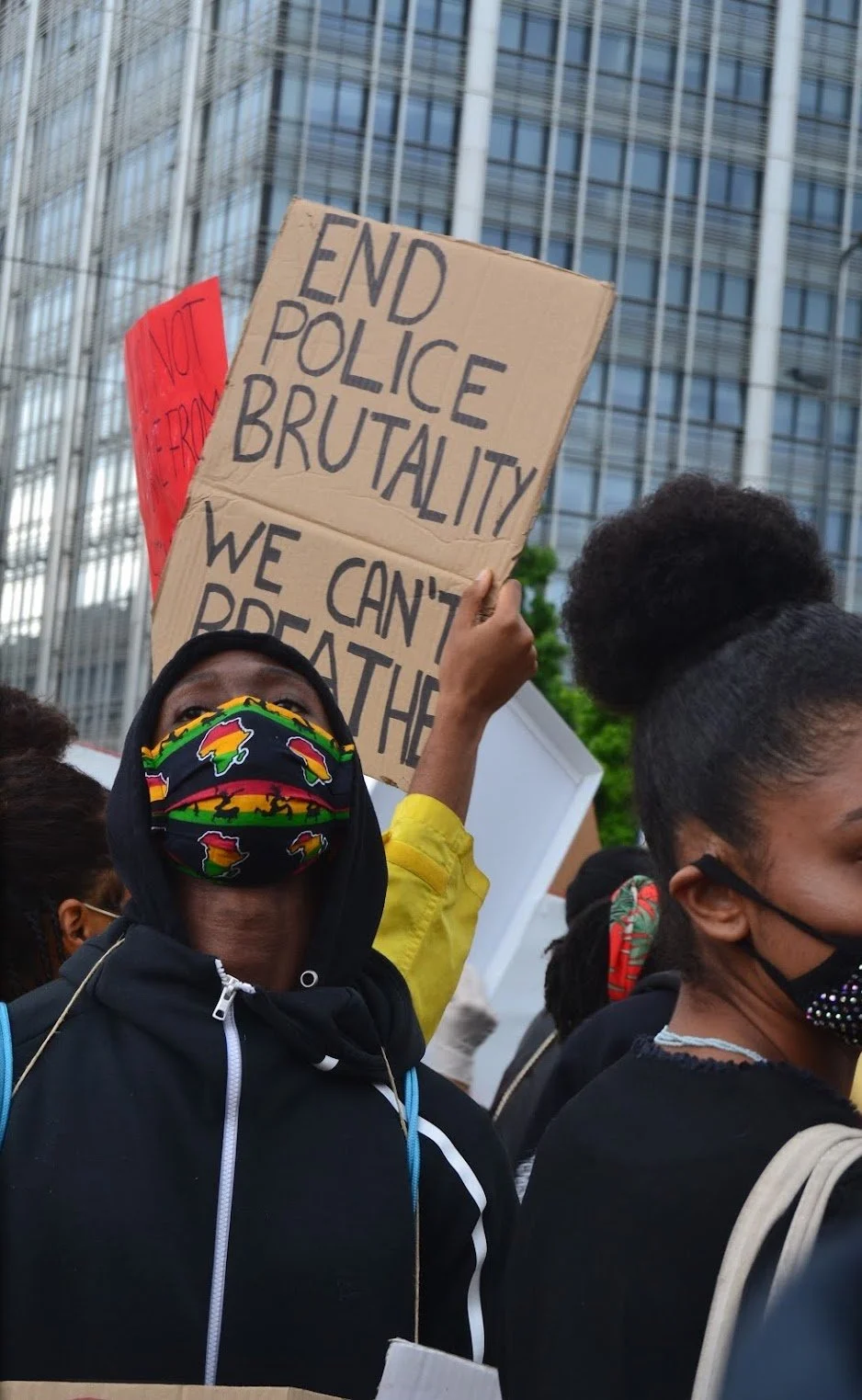
Participants gather during a June 2021 Black Lives Matter protest in Milan, Italy, reflecting the global resonance of movements against systemic injustice. (Photo: Gaia Guatri)
When criminal provisions are broadly drafted and enforcement remains discretionary, uncertainty becomes a regulatory instrument. Laws on national security, cybercrime, public order, or counter-terrorism are often written with elastic definitions that allow authorities wide interpretative scope. The result is a climate in which activists cannot reliably predict which speech will trigger investigation. Organisations increasingly redirect funds toward legal defence and compliance. Protest organisers consult attorneys before announcing demonstrations. Journalists assess legal exposure alongside editorial merit.
The pattern is visible beyond Southeast Asia. In Europe, new public order laws have expanded penalties for acts of civil disobedience. Spain’s controversial 2015 Ley Mordaza (“Gag Law”), for instance, imposed heavy administrative fines for unauthorized protests and for photographing police officers in certain contexts, measures widely criticised for discouraging both protest and journalistic oversight. In Latin America, legal proceedings frequently accompany the detention of protesters. In Australia, environmental defenders have faced novel criminal charges tied to non-violent direct action. While political contexts differ, the underlying method converges: law is deployed not only to punish after the fact, but to regulate participation in advance.
Romero argues that the power of this approach lies in its preventive effect. When the cost of participation becomes unpredictable — financially, legally, and psychologically — individuals adjust their behaviour before the state needs to intervene directly.
Freedom of expression, peaceful assembly, and association are not always revoked through formal bans. Instead, they are narrowed through procedural exposure: investigations that linger, charges filed across multiple jurisdictions, and hearings that extend over years. In addition, according to UNESCO, roughly 85% of killings of journalists worldwide remain unpunished, reinforcing a broader climate in which legal vulnerability and physical risk coexist rather than operate separately.
Because these measures operate within functioning legal systems, they are more difficult to contest. Governments point to statutes, judges, and due process. International observers see courtrooms and written rulings. What receives less attention is the cumulative burden placed on those navigating prolonged legal uncertainty — and the chilling effect on those observing from the outside.
The deterrent effect is often achieved long before a final judgment is issued. It unfolds in the waiting: in hearings scheduled months apart, in bail applications repeatedly contested, in investigations that remain open without resolution. Over time, the legal process itself becomes the punishment.
The quiet endurance of resistance
For Chiwarak, the August 2021 hearing was not decisive. It was procedural — one date among many. Charges linked to speeches delivered months earlier continued moving through the courts. Bail applications were filed, denied, contested. The calendar filled.
The ruling lasted minutes. The consequences extended across years.
This is the logic of legal containment: not always to secure a single dramatic conviction, but to bind dissent to process. Court appearances become recurring obligations. Legal defence becomes routine expenditure. Time — often overlooked in political analysis — becomes a central instrument of control.
Yet legal repression, for all its administrative efficiency, has structural limits. It depends on the continued functioning of institutions that can also be used to scrutinise it. It produces documentation. It generates transcripts. It leaves decisions that can be appealed, criticised, or cited in international forums.
Lawyers continue to appear in courtrooms despite the volume of cases. Civil society organisations compile data across provinces and jurisdictions, transforming individual hearings into patterns. International mechanisms — from UN Special Rapporteurs to global monitoring networks — examine those patterns and frame them not as isolated prosecutions, but as systemic trends.
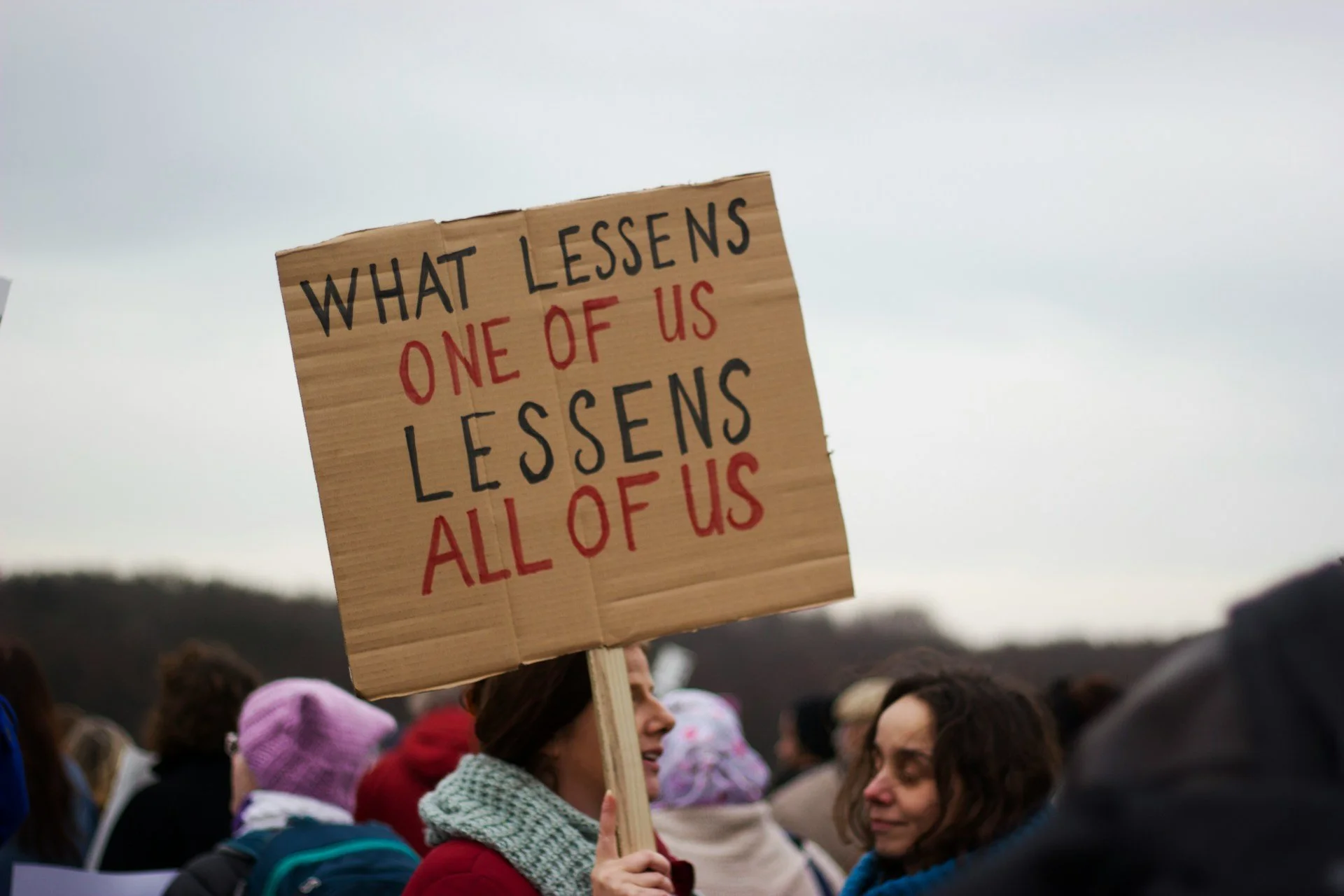
Photo: Michelle Henderson on Unsplash.
For those working inside this system, persistence is not rhetorical. It is practical.
“We need to hold the line,” one Thai human rights lawyer said when asked why his organisation continues to litigate cases under Section 112. “We need to keep telling people that it's something that we can talk about.” The risk, he acknowledged, is real. “But it’s a risk that our organization is very much happy to assume.”
That insistence — on appearing in court, on documenting proceedings, on continuing to speak — does not erase the imbalance of power. It does not shorten sentences or guarantee reform. But it prevents silence from becoming permanent.
Legal repression may be designed to exhaust. It may stretch hearings across years and turn procedure into punishment. But it also reveals itself through repetition, through record, through the steady presence of those unwilling to disappear quietly.
The courtroom may be used to contain dissent. It can also become the place where its endurance is recorded — and where the meaning of justice is argued, line by line, against the narrowing of power.