
Who Cares: The Activities of Daily Living for Consumers and Care Workers
The Who Cares series investigates structural issues and developments in the political economy of care in New York State and how people on the ground are living and responding to these realities. Series artwork by Marisa Zarczynski.
'A charming waitress at the Sheridan Family Restaurant in Amherst, New York, placed the final plate of a small feast on the table, asking if there was anything else with which she could help. Tai and Haydee Peraza were giggling to themselves, gossiping benignly about a client they knew in common – they’re both home care workers in western New York.
As the waitress paused, both Tai and Haydee stopped smiling at each other and beamed brightly at the waitress. “No, everything is perfect,” said Haydee.
“¿Quieres algo más, mami? (Do you want anything else, mami?)” she asked Maria M. Lord, her mother and client.
“No, Haydee,” replied Maria with a short smile, cutting into her strawberry and cream covered waffle.
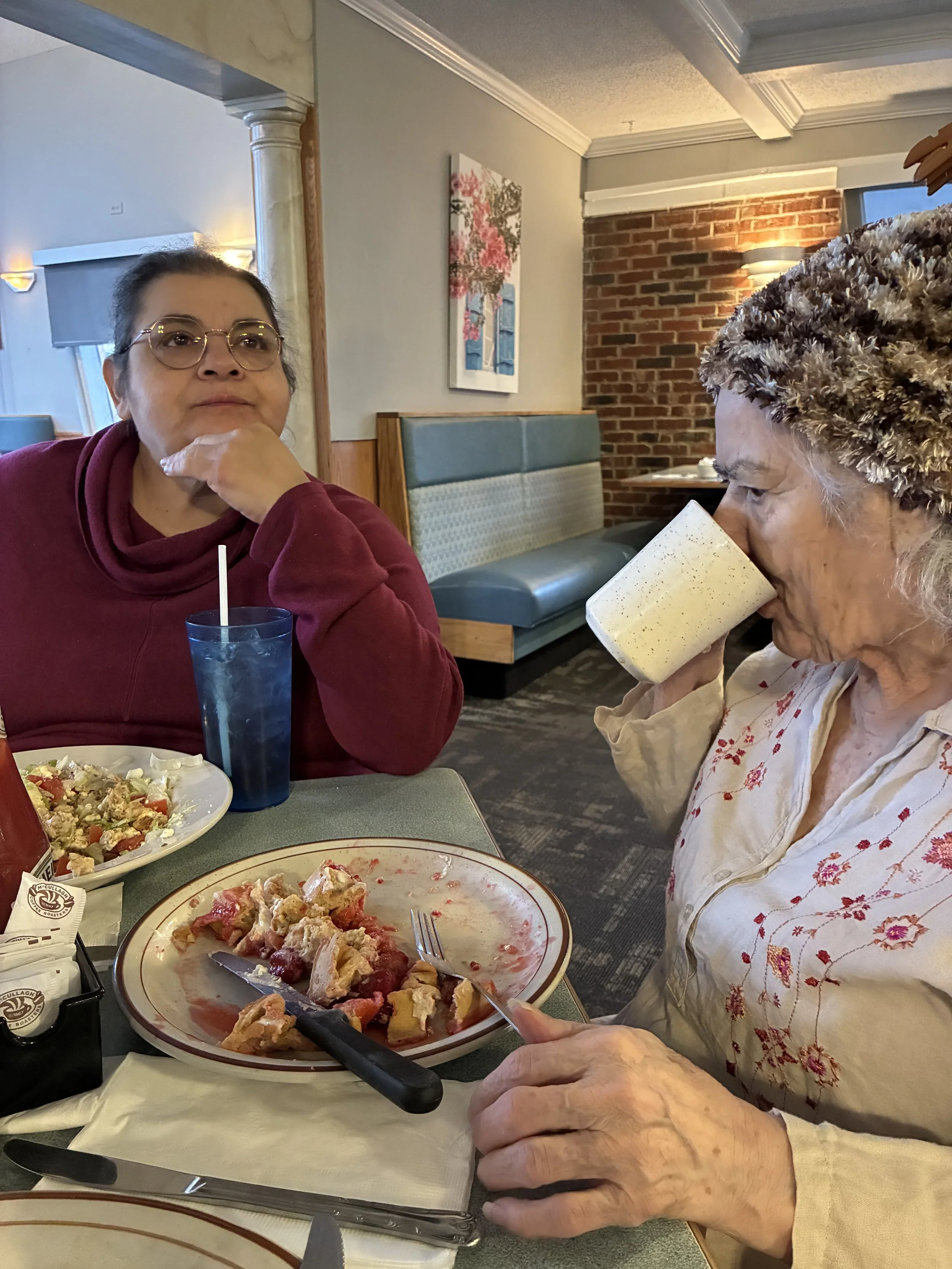
Haydee Peraza with Maria M. Lord. (Photo: Steve Peraza)
The morning sun had begun to shine through the restaurant window, a rare sight at dawn in late March. The temperature outside was below freezing, also commonplace in early spring. But inside, the warmth of love and care kept smiles on the faces of these three family members immersed in the local care economy.
Ensuring that care consumers receive warm food is just one of the “activities of daily living” for which personal care aids like Haydee are responsible in the Consumer Directed Personal Assistance Program (CDPAP), which gives consumers the opportunity to select their care workers. And she was on the clock, providing care for her elderly mother, who lives with dementia and who receives home health care from her daughter at a home they share.
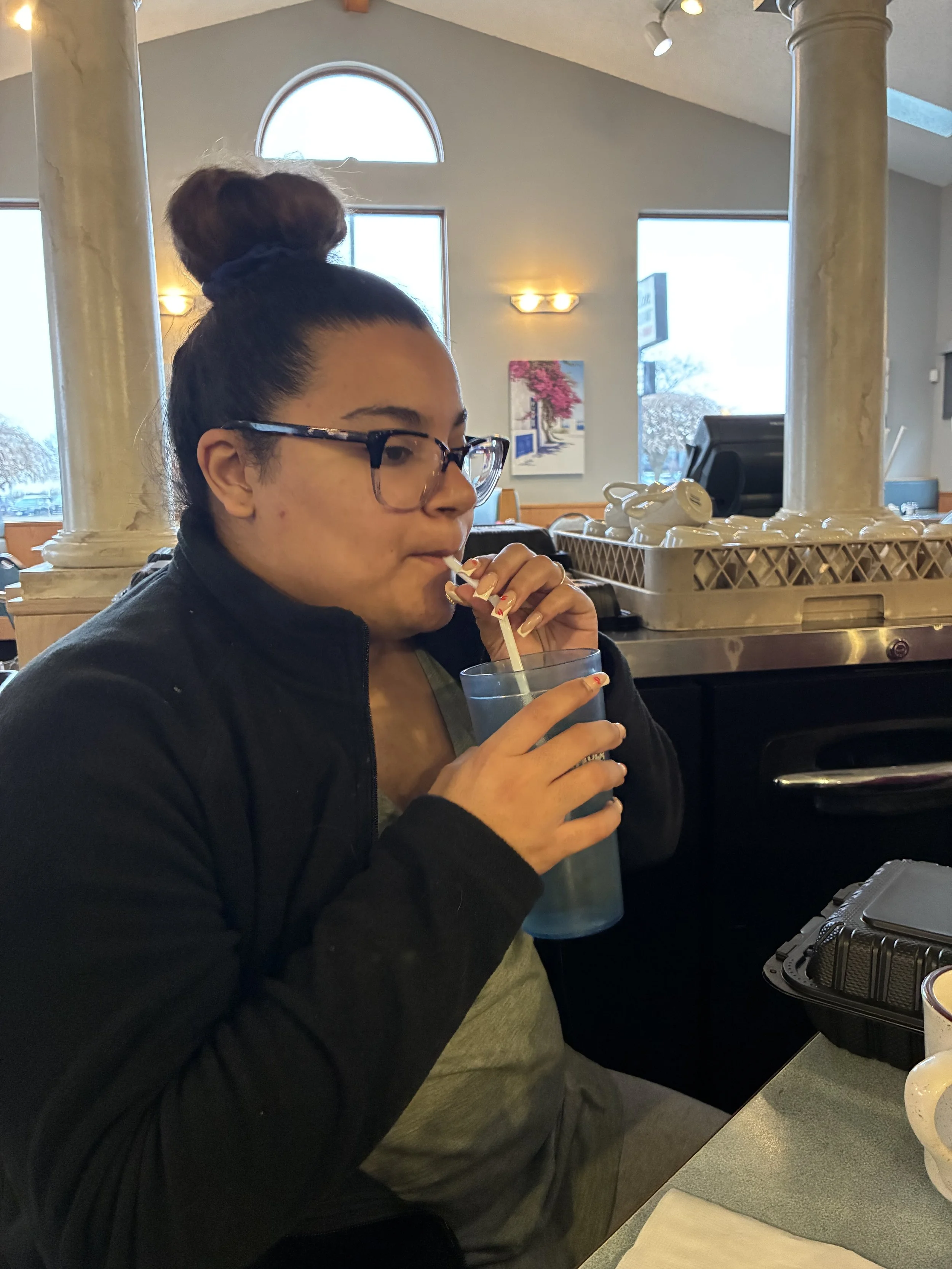
Tai Peraza. (Photo: Steve Peraza)
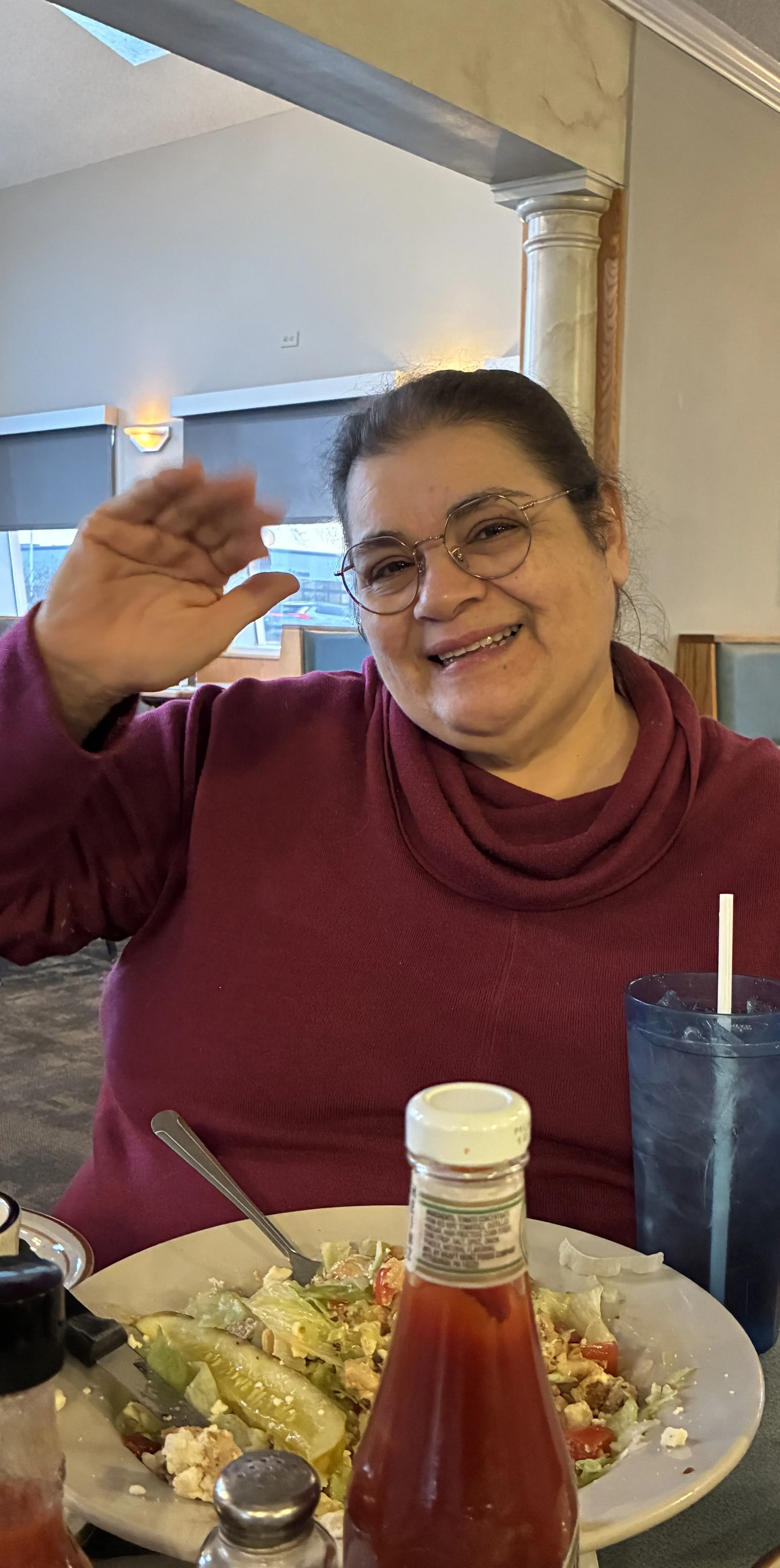
Haydee Peraza. (Photo: Steve Peraza)
Tai has followed her mother Haydee into the family business, working for different home health care agencies and providing care for clients that Haydee recommended to her. Tai does not work for the CDPAP, though she performs nearly identical tasks as her mother. Whereas Tai works with non-relatives for People Inc. as a “direct support professional” and earns between $25 and $30 per hour, Haydee works for Public Partnerships, LLC as a personal care aid and earns minimum wage.
When asked why she would accept minimum wage when she could earn more like her daughter, Haydee responded confidently: “I would not leave my mom in somebody else’s care. She trusts me, and I don’t think she’d do well with a stranger.”
Activities of daily living (ADLs)
There’s a growing literature on consumer directed personal assistance programs across the United States and beyond. Scholars outline the basics of these programs, distinguishing them from “agency directed care.” In “consumer directed” programs, it is the consumer, not the home health care agency, who determines what care they want and who will provide the care.
Scholars also delineate two types of care provided by workers, both based on the condition of the care receivers. For clients who require care but have capacities for exercise, travel, and employment, there are care workers like Tai, who provide support in “instrumental activities of daily living” (IADLs). These can be agency-directed care workers, even though the clients are in a self-direction program, determining the care they want and, not uncommonly, picking their care worker.
“As US citizens enjoy longer lives, the care economy becomes more and more important, because care workers like Tai and Haydee provide positive impacts in the lives of people with disabilities, chronic illness, and advanced age. Scholars are beginning to uncover the ‘subtle’ ways that quality home health care can improve lives for consumers. It remains to be seen if home health care agencies and care economy fiscal intermediaries can prioritize the financial well being of home health care workers in order to keep care accessible to the consumers who benefit so greatly from home care. ”
At the level of care work tasks, the distinction between “self-direction” and “consumer directed care” is somewhat unclear. But at the administrative level, the differences are night and day. “Self-direction” permits home health care agencies to mediate between client and care worker, overseeing the types of care a client warrants and the pool of workers from which the client can select. Clients generally qualify for “self-direction” – in the agency’s eyes - by having the health capacity for “instrumental activities” like exercise, travel, and getting to work.
Consumer directed care does not have agency input or management of care workers options (well, sort of). In New York State’s CDPAP, consumers determine who will care for them and what those care workers do. However, the care receiver only qualifies for CDPAP if they receive New York State Medicaid benefits. Furthermore, Public Partnership LLC (PPL) oversees the CDPAP as a “fiscal intermediary.” This means they document who the care receivers are, how much they can spend with their benefit packages, and how many hours the worker clocks in the provision of care. PPL represents the power of the purse, micromanaging care transactions for low-income consumers.
At the level of care work tasks, PPL’s personal care aids may or may not assist their clients in exercise, travel, and getting to work. They are required to assist in ADLs – dressing, bathing, toileting, grooming, transferring (e.g., bed to wheelchair and back), feeding, and meal preparation.
It should be noted that direct support professionals are also required to help clients with ADLs. Tai explained that she performed both ADLs and IADLs. Haydee Peraza said the same. “We wouldn’t be here for breakfast,” she quipped, “if I didn’t do IADLs.”
At first blush, then, the work of care appears the same in agency-driven self-direction and consumer directed care. But the administration of care distinguishes them, in cost to consumer and in wages to worker.
Consumer directed personal assistance programs and public health
In one 2009 study of consumer directed personal assistance services, researchers noted that there were “subtle positive effects on consumer health and participation.” Initially, these positive effects were attributed to greater time with care workers: “Noninstitutionalized adults receive an average of 31.4 of Pas [personal assistance services] per week.” But study participants suggested there were benefits beyond more time with care. The more ‘subtle effects’ included greater satisfaction with the personal assistance received (when compared to agency-directed care) and greater overall satisfaction with life. Though the authors admitted these effects were “poorly understood,” they advocated for further study of how consumer directed personal assistance services improved health outcomes for consumers of care.
For Haydee, the positive health outcomes to her client, Maria, vastly outweighed the sacrifice she made to her earning potential as a care worker. It begins with assuring Maria’s ADLs are well attended:
“I currently work with my mother as her personal care aide. So I'm in charge of her diet, her eating breakfast, lunch, and dinner. I'm in charge of her clothing. Her clothing must be clean. You know, her environment must be neat and clean, accessible to her. Make sure there are no obstacles that will trip her. I do the grocery shopping. I do everything in the house for her, everything that she normally was able to do when she was completely well and didn't have any disabilities.”
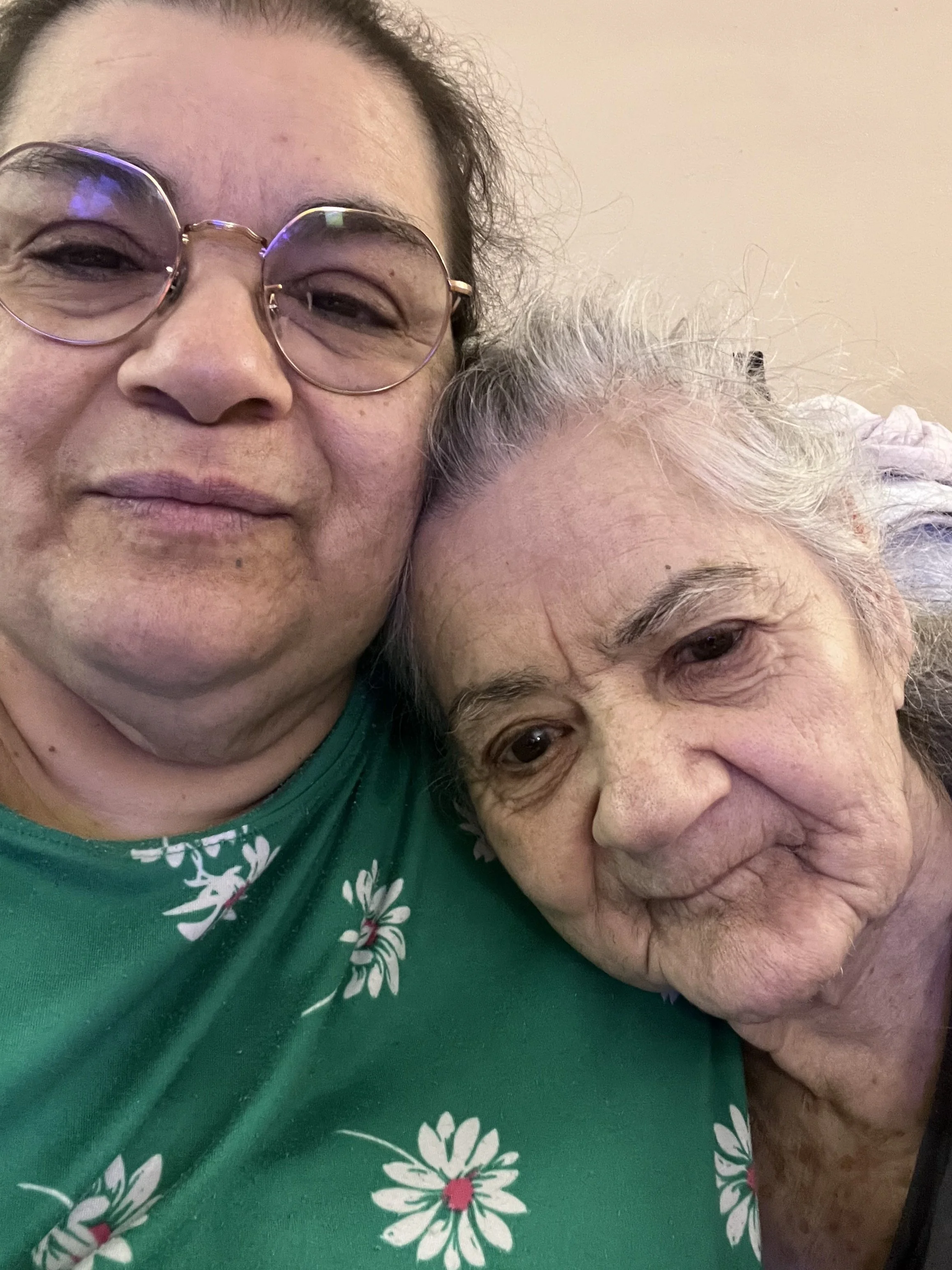
Haydee Peraza with Maria M. Lord. (Photo: Tai Peraza)
Perhaps as importantly, Haydee is someone her client can trust, and she works in a space where her client is comfortable and willing to receive the care she needs:
“…my mother knows who she is. She does forget a lot of things. But she knows her home. She knows the people around her. She knows I'm her daughter...And my mother was one of these funny people, you know? There are times that she didn't mesh with certain people. She wasn't a fighter or anything, but she would stay away from people that she didn't get along with. And I think that if she were to go into a nursing home, she wouldn't be doing as well as she is now. She's 111 pounds and when she got sick, she was 80. It took almost a year to get her back to her normal weight. Now, you know, she's doing great.”
Put another way, Haydee believes that the care she provides at the consumer’s direction has helped preserve and prolong her client’s life, which makes consumer directed personal assistance services an important public health strategy.
As US citizens enjoy longer lives, the care economy becomes more and more important, because care workers like Tai and Haydee provide positive impacts in the lives of people with disabilities, chronic illness, and advanced age. Scholars are beginning to uncover the ‘subtle’ ways that quality home health care can improve lives for consumers. It remains to be seen if home health care agencies and care economy fiscal intermediaries can prioritize the financial well being of home health care workers in order to keep care accessible to the consumers who benefit so greatly from home care.