
Weavers of Life: Sheena - Land and Resistance of the Maya People
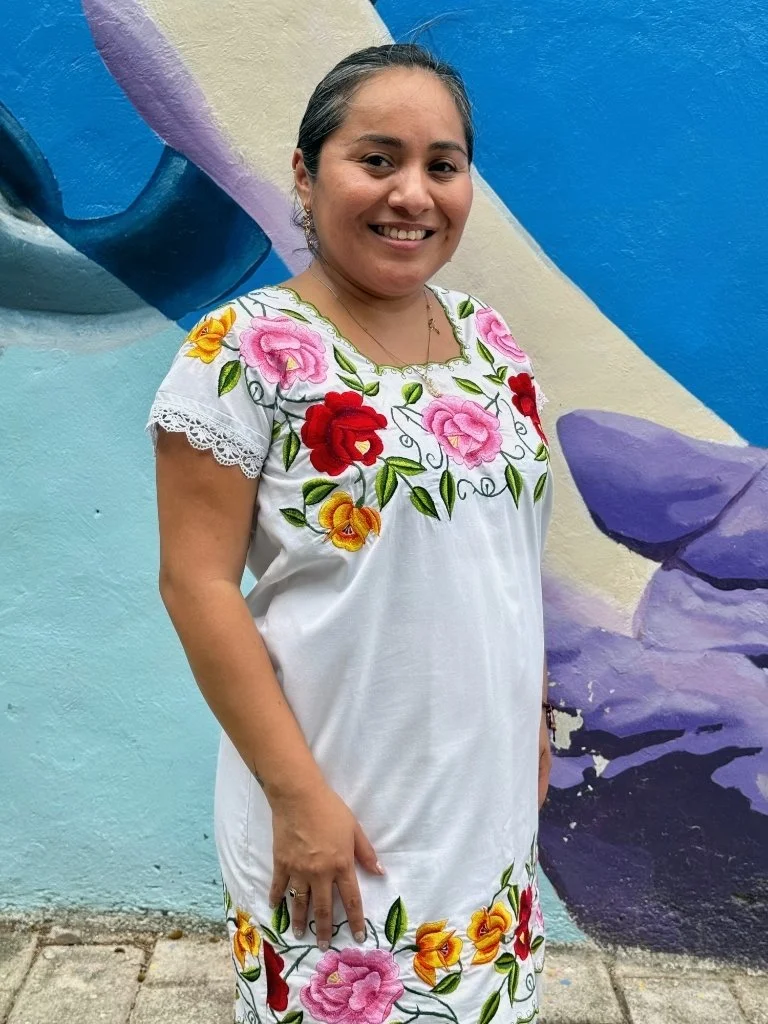
Sheena Merle Ucan Yeh. (Photos courtesy of the interviewee)
Between her responsibilities in Chetumal and the living jungle of Uh-May beats the heart of Sheena Merle Ucan Yeh, a woman whose umbilical cord—following the ancient tradition of her people—was buried far from home to ward off fear and instill courage. At 41 years old, she inhabits an invisible bridge between public administration and ancestral resistance. She is originally from Uh-May, a community in the Maya Zone municipality called Felipe Carrillo Puerto, where she travels on weekends to maintain the bond with her territory and her people. For work reasons, she lives in Chetumal, the capital of Quintana Roo, where she works at the Ministry of Women, focusing particularly on Maya girls and women.
Her relationship with the land is not merely territorial. Her understanding of life led her to weave a relationship of belonging and reciprocity with it, for she comes from the earth and to it she will return. That is why they practice various traditions and rituals. For instance, they bury the umbilical cord of newborns some distance away so that the infants do not feel fear. They also have a Maya baptism: for girls at three months old and for boys at four months old. For the Maya people, those three months represent the three hearthstones of the Maya kitchens and serve to strengthen the role of women. For men, it takes place at four months because it symbolizes the four corners of the milpa (cultivated plot) where they work; this is a ritual of social integration. Yook'ol kab is what the earth is called, and Mother Earth is K na' lu'mil in the Maya language.
Her maternal grandmother taught her to be grateful to the earth, and one way of doing so is la primicia (the first fruits), an offering to thank Mother Earth and the gods of the wind, the rain, and the ch'a'acháak, which is another ceremony for their first harvest. The offering is placed on an altar with food. Similarly, in the month of May, they make offerings through the designated Maya priests so that a tree may bear its first fruit and to ask for the first rain. All of these are ways of giving back to the earth what it gives to them. These ancestral practices are, in themselves, a form of resistance.
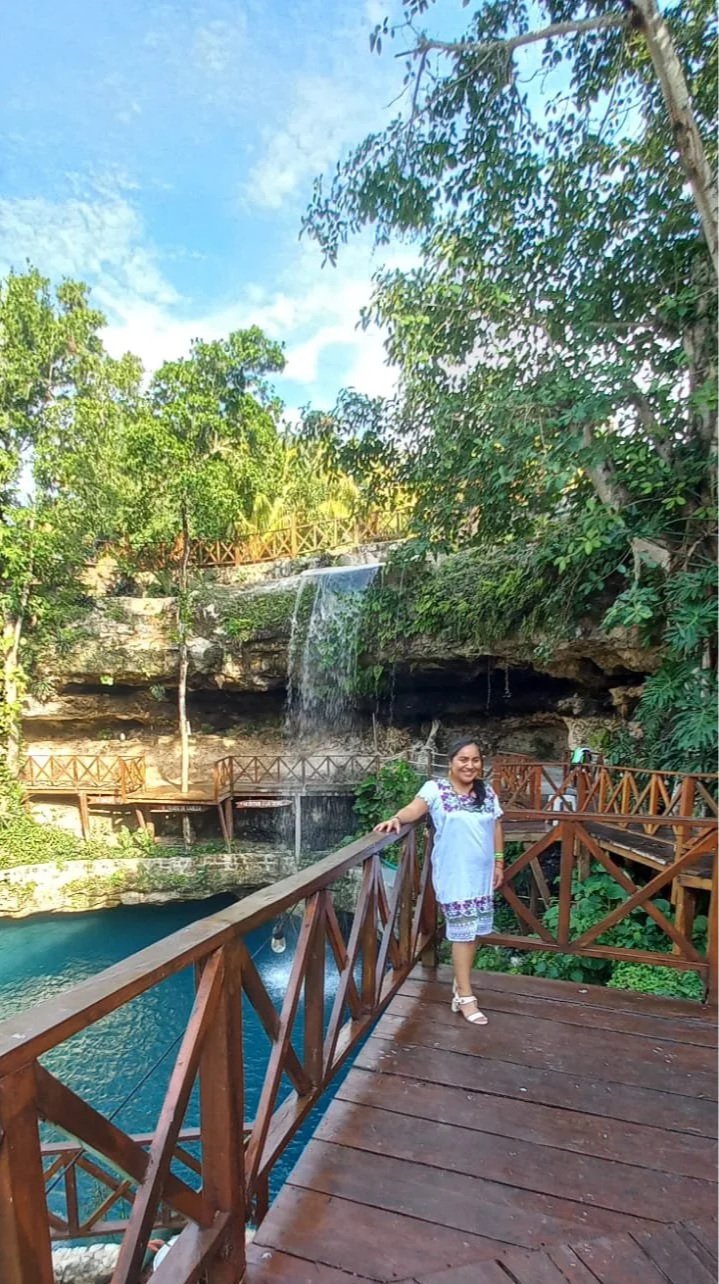
Sheena's life experience shows the tensions that run through land ownership and use. These practices do not appear separate from the defense of the territory. For Sheena, maintaining tradition and culture is another way to resist the threats, such as dispossession, that her people face.
In Quintana Roo, Sheena points out, the northern zone has been transformed by tourism development and transnational corporations seeking higher profits through businesses like Walmart, Starbucks, and McDonald's. At the same time, many young people move to tourist areas to work in the service sector. Added to this is the planting of genetically modified soy by the Mennonites - a practice involving chemicals which, as she relates, kill the melipona bees that are endemic to the region. This is a sensitive issue compounded by the fact that some people sell their land for quick money. As a consequence of these processes, the milpa (plot, or chacra) where they grow their food is being lost, as fewer and fewer people are planting.
Sheena identifies another challenge, though not insurmountable, which is the absence in Quintana Roo of a compact resistance group like the one in Yucatán to confront government projects that lease beaches and lands to the detriment of ancestral territories. To make matters worse, processes of community co-optation weaken her people's mobilization, and organized crime further complicates the population's ability to organize and collectively defend their territory. Faced with this, Sheena and others persevere and travel through their communities to convince people of the importance of not selling their land; this is another example within the repertoire of political actions they deploy to challenge the imposed economic model.
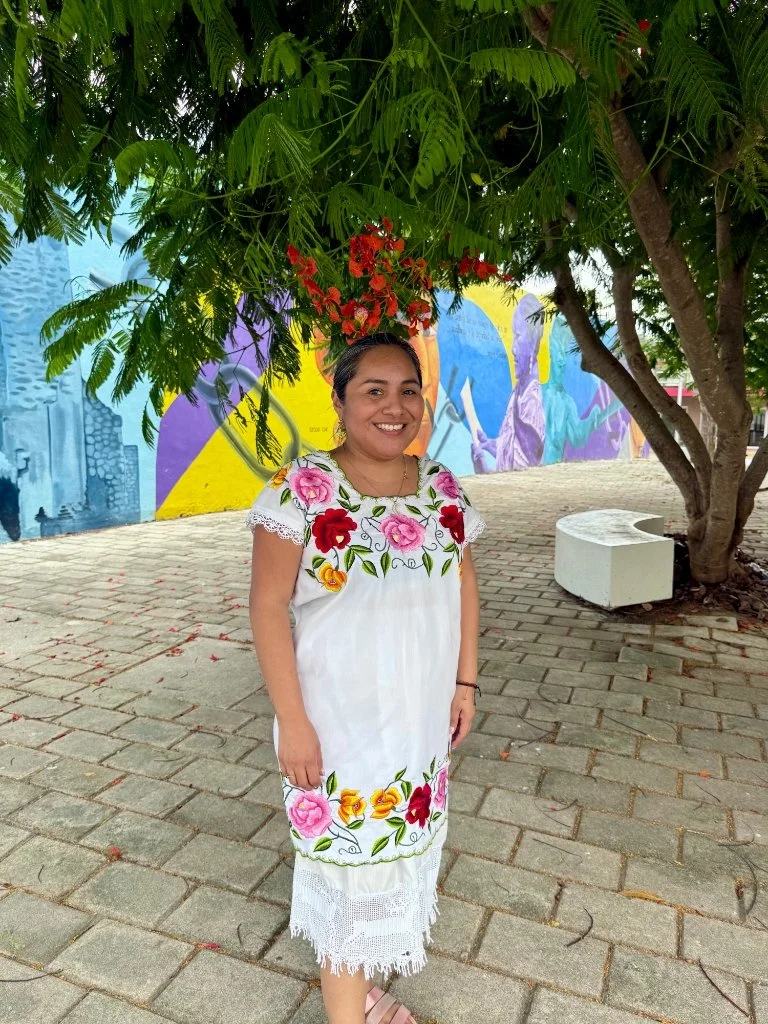
Even her own name reveals a dimension of this history. “Sheena” is not a Maya name; it was chosen by her mother in a context marked by discrimination, which prevented her from bearing a Maya name. Today, however, she participates in language revitalization processes as a way to reclaim her culture, just like her traditional, colorful clothing (trajes típicos), which reminds them of their relationship with the earth and, at the same time, serves as an instrument for the defense of the land.
Furthermore, the defense of the territory is intertwined with the defense of women's rights, as Sheena explains that land remains largely the property of men: they work it, while women remain in the domestic sphere. Additionally, the succession of land—as occurs with ejido nuclei, which are collective lands—is inherited by males, although this practice is evolving so that women can inherit and/or hold property titles through, for example, the transfer of rights (which is the most common method) or by testamentary succession to their daughters.
Therefore, her work incorporates raising awareness regarding women's rights, violence prevention, access to land, and their participation in decision-making. Sheena recognizes that there are some advances in the laws, but also setbacks.
Bearing the name "Sheena"—the fruit of an era where discrimination forced people to hide their identity—is a daily reminder of the ground that assimilation tried to snatch from them. However, wrapped in the pride of her traditional attire and with the Maya language as her shield, she travels through the communities, dismantling the silent dispossession: the quick sale of plots, the chemicals that silence the buzz of the melipona bee, or the loss of the traditional milpa to the prevailing economic model. Sheena's battle is not only against transnational giants; it is also an internal revolution so that women can inherit and own the land they have always cared for. With firm hope placed in the new generations, her life demonstrates that sowing collective memory and defending women's rights is a sacred form of resistance.