
The Rights of Nature in Mexico: From Citizen Activism to Constitutional Reform
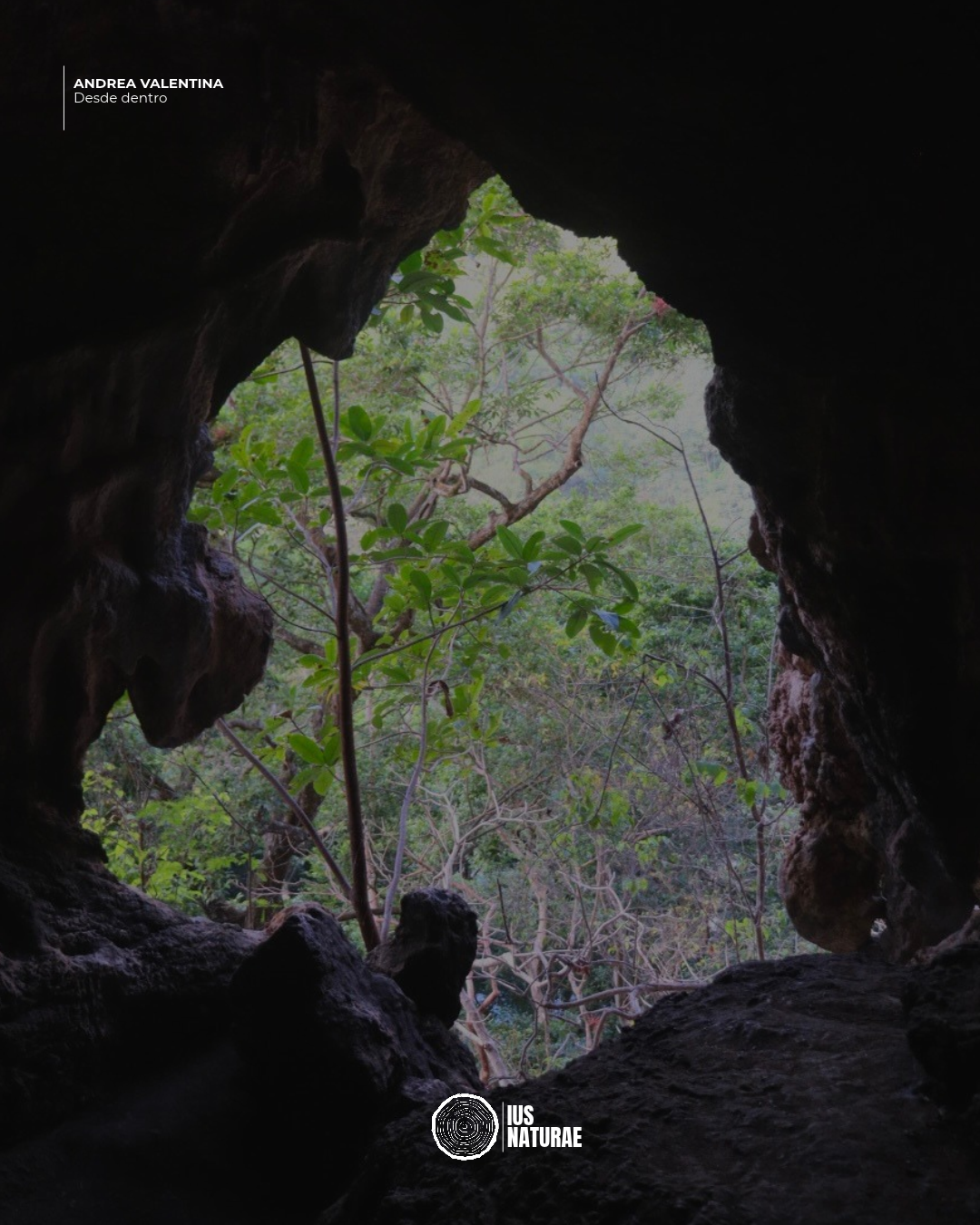
From inside. (Photo: Andrea Valentina)
There are moments when defending Nature ceases to mean merely resisting a threat and begins to mean imagining how we want to live in the future. For us, that moment came when we realized that many of the environmental struggles taking place every day in Mexico have something in common: we are trying to protect Nature with legal tools that, in many cases, were developed under a worldview in which humans occupy the center of everything.
Our experience in defending the land—particularly through the work of the Ius Naturae Center and the “Let’s Restore the Carpintero Lagoon” Collective—has led us to a firm belief that it is not enough to react only after environmental damage has already occurred. We need to transform the laws and regulations prevent such damage before it happens.
This proposal is part of a journey that has already begun: in recent years, at least ten initiatives have been presented to incorporate this recognition into the Constitution. However, none has yet come to fruition. Rather than starting from scratch, this proposal seeks to build on the experiences, progress, and outstanding issues from those previous efforts to chart a renewed path toward the constitutional recognition of the Rights of Nature in Mexico.
Together with Dr. Mateo Castillo Ceja and Francisco Javier Camarena, M.A., of the Mexican Earth Charter Network; journalist Elideth Fernández and Arnold Ricalde of the Conciencia Movement; and Drs. José Gilberto Garza Grimaldo and Hermes Teodoro Gonzáles of the Autonomous University of Guerrero, we have drafted a proposal for constitutional reform that seeks to amend nine articles of our Constitution to lay the groundwork for a new legal paradigm: recognizing Nature as a subject of rights.
The proposal is now in the hands of the President Sheinbaum of Mexico for her consideration.
For us, getting this far has a significance that goes far beyond simply submitting a legal document. It represents the result of a process of citizen advocacy that began long before any reform proposal existed.
It began by observing what is happening in our territories. It began by asking ourselves why a wetland, a forest, a river, or a lagoon must wait for someone to prove that its destruction caused them personal harm before it can be defended. It began when we met communities and groups that have spent years trying to protect ecosystems which, although essential to life, continue to be treated legally as resources available to satisfy human needs.
Is it possible to build a proactive legal model that anticipates and prevents destruction, rather than merely reacting to it? We believe so.
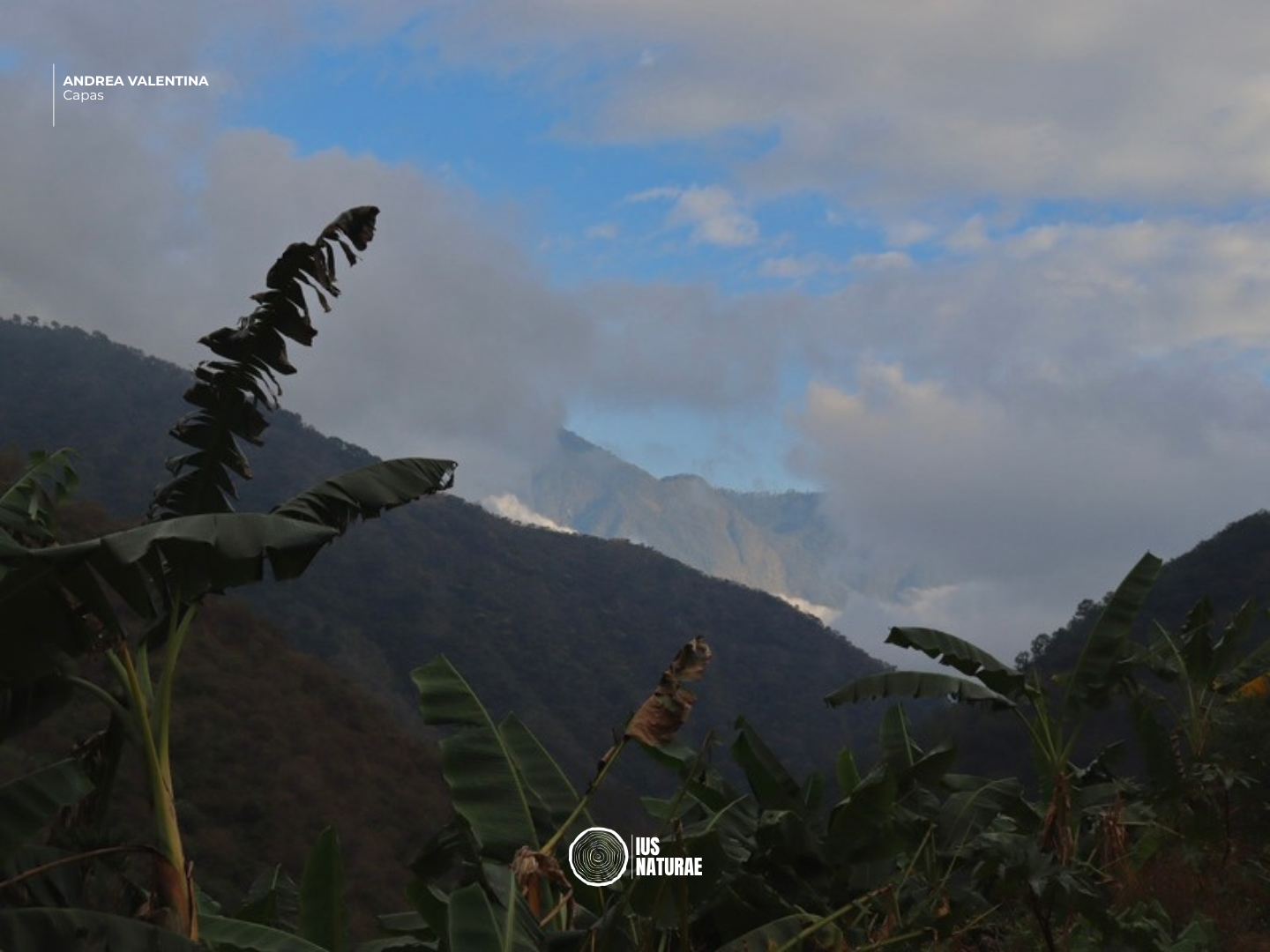
Layers. (Photo: Andrea Valentina)
The Rights of Nature are based on a premise that may seem simple but has profound consequences: Nature should not be protected solely because it is useful to humans. Ecosystems are complex and have their own processes and cycles. Their value is entirely independent of the utility or immediate economic benefit that humans may derive from them. Legally recognizing this value means beginning to shift from a predominantly anthropocentric view toward an ecocentric perspective—or even moving toward a relational vision in which there are no centers.
This alternative emerges as a response to the planetary crisis, in which the safeguarding of our very existence depends on a profound ecological transition that halts the degradation of ecosystems and aims for a true paradigm shift.
That is why we believe this discussion does not belong solely in the legislative sphere. It is an interdisciplinary discussion that encompasses environmental, political, sociocultural, and spiritual dimensions.
Our proposal stems from diverse experiences. Diego and Aranza have worked in the fields of law, legislative advocacy, and the development of the Rights of Nature paradigm; Miriam has worked on the citizen-led defense of Laguna del Carpintero and from the concrete experience of confronting the consequences that a political and economic decision has on a particular ecosystem.
But the initiative gained strength precisely when these experiences began to intersect with others. Mateo and Francisco Javier’s work on the Earth Charter, Elideth’s environmental communication and activism, José and Hermes’ teaching and research, and Arnold’s experience helped us understand that no transformation of this magnitude can be the product of a single discipline. And this is also true with regard to the environmental crisis.
That is why one of the aspects we value most about this process is having seen that citizens can move from criticism to proposing solutions. For a long time, we have understood citizen advocacy as the ability to protest, demand, point out problems, or resist. All of that remains essential. But there is another form of advocacy that we must also champion: the ability to build solutions and propose new rules.
An issue can become research. Research can become arguments. Arguments can become an initiative. And a citizen-led initiative can make its way into the Constitution.
This is what we are attempting right now.
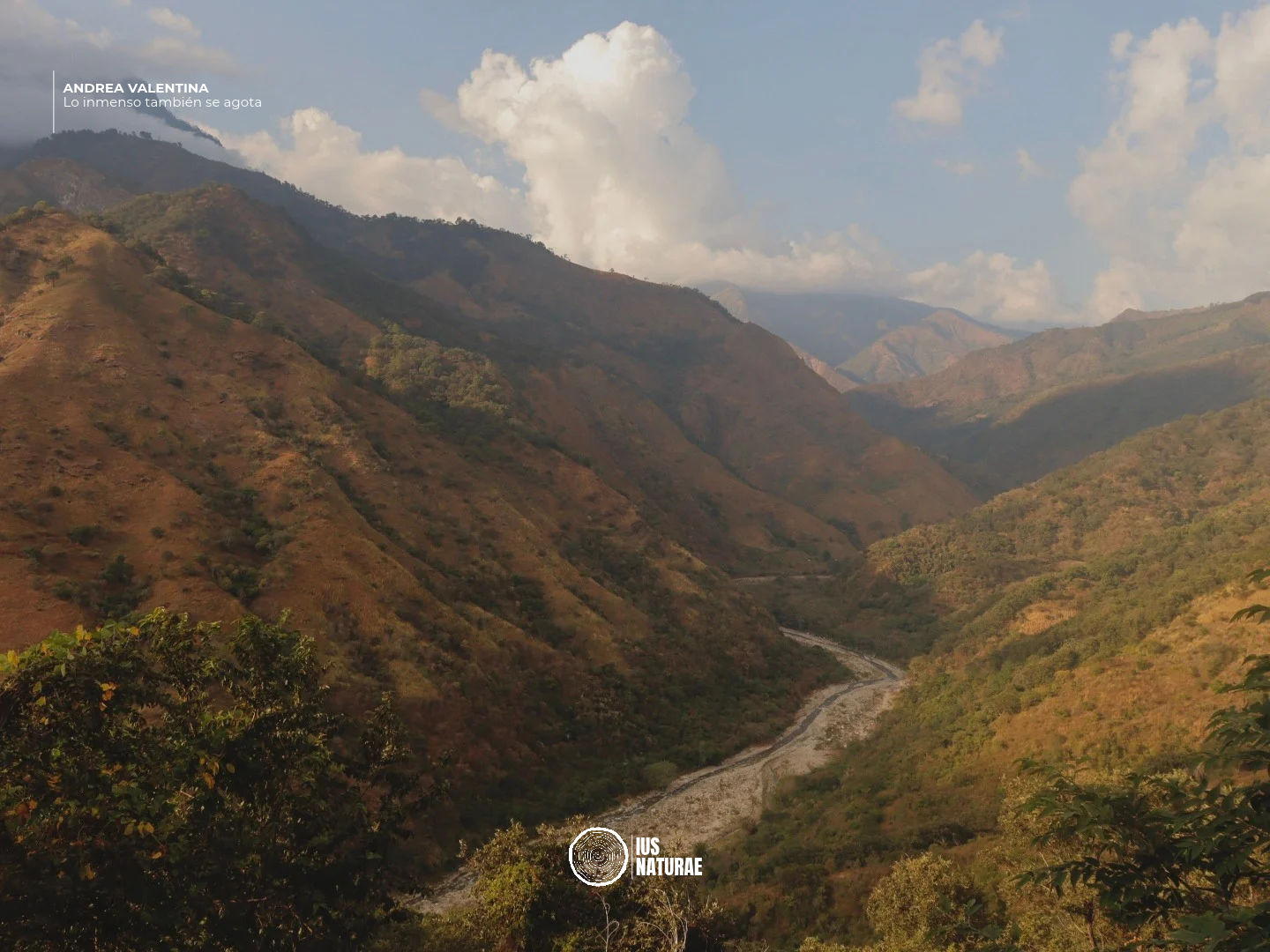
Even the immense can be exhausted. (Foto: Andrea Valentina)
We do not know what the fate of this proposal will be. Nor do we intend to present its arrival at the federal level as a definitive conclusion. A constitutional amendment requires discussion, analysis, deliberation, and participation. We know there is still a long road ahead.
But that is precisely why we believe this moment deserves to be shared—because the proposal is no longer solely in our hands; it is open to public discussion.
We want environmental organizations, communities, universities, lawyers, scientists, young people, and all those who believe that our relationship with Nature needs to change to be aware of our efforts. We want them to be questioned, analyzed, and, above all, enhanced.
The constitutional transformation we envision cannot be built by a single voice; it must be a collective conversation. In times when talking about the environmental crisis can cause more anxiety than hope, we have decided to bet on a different kind of hope: a hope that organizes, studies, proposes, and encourages participation.
The fact that this initiative has reached the President’s desk reminds us that major transformations do not necessarily begin within institutions. Sometimes they begin with citizens who decide that what seems impossible is, at the very least, worth a try. We have decided to give it a try.
We do not know if this will be the reform that ultimately transforms the Constitution. What we do know is that there is already a proposal on the table to discuss a new legal relationship between Mexico and Nature. And perhaps that is one of the first steps toward changing the way we understand the future.
Because defending Nature can no longer mean merely defending what remains. It also means daring to create the necessary legal, social, and cultural conditions so that life can continue to exist.
That is what this journey is about: moving from citizen advocacy to constitutional reform, from defending our territories to defending life, and, finally, from thinking that Nature needs to be protected solely by us to beginning to recognize that we, too, are part of it.
This article was originally published in Spanish in El Tejido, our Spanish-language blog. It was translated to English by Steven F. White, co-author of Sacred Plants of the Americas (Princeton UP, 2026) and the website Microcosms: A Homage to Sacred Plants of the Americas (https://www.microcosmssacredplants.org/ and, in Spanish, https://www.microcosmssacredplants.org/es/).