Grassroots Actions Paving the Way to an Inclusive Hong Kong
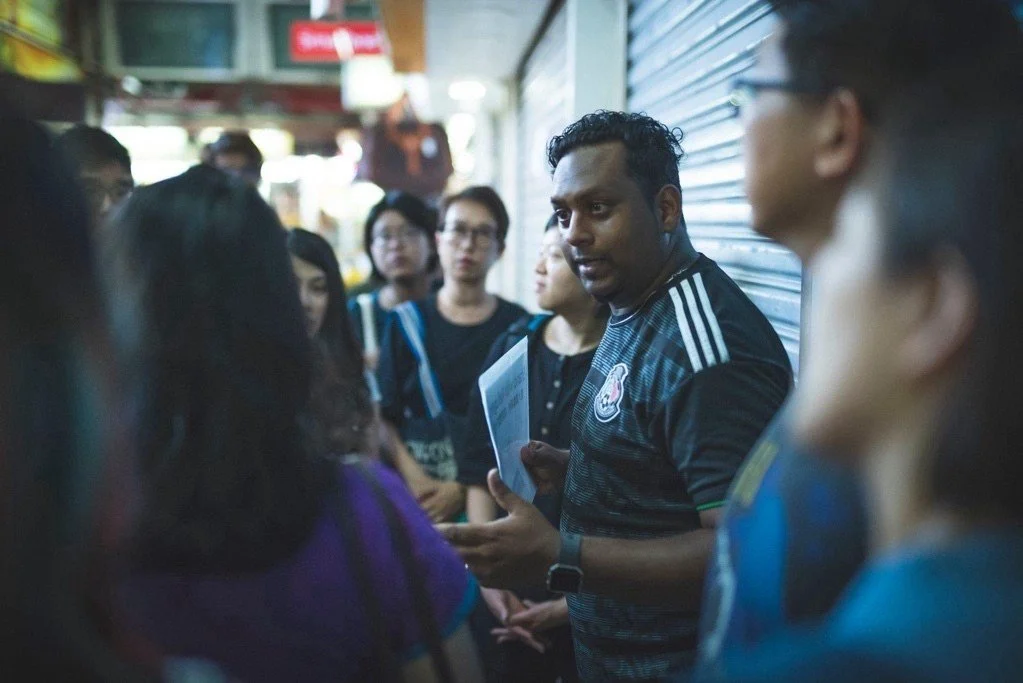
Social worker Jeffery Andrew speaks with young Hong Kongers. (Photo: Jeffery Andrews)
To the world, Hong Kong is often reduced to its political complexities or cultural exports like the Bruce Lee or Wong Kar Wai movies. There is no doubt that Hong Kong is the city of neon lights and an iconic skyline, but the city’s identity is not just built on finance and film. Under this familiar surface lies a quieter history, one that includes the stories of minorities, such as my own Pakistani-Hong Kong community, who have called Hong Kong home since before the 1997 handover from the U.K. to China.
According to the Race Relations Unit of the Home Affairs Department, “Hong Kong is a largely homogenous society, with about 91.6% of its people being Chinese (ethnically speaking, Han Chinese). The 2021 Population Census found (by way of self-identification) that there were about 619,568 non-Chinese people in Hong Kong, or about 8.4% of the population”.
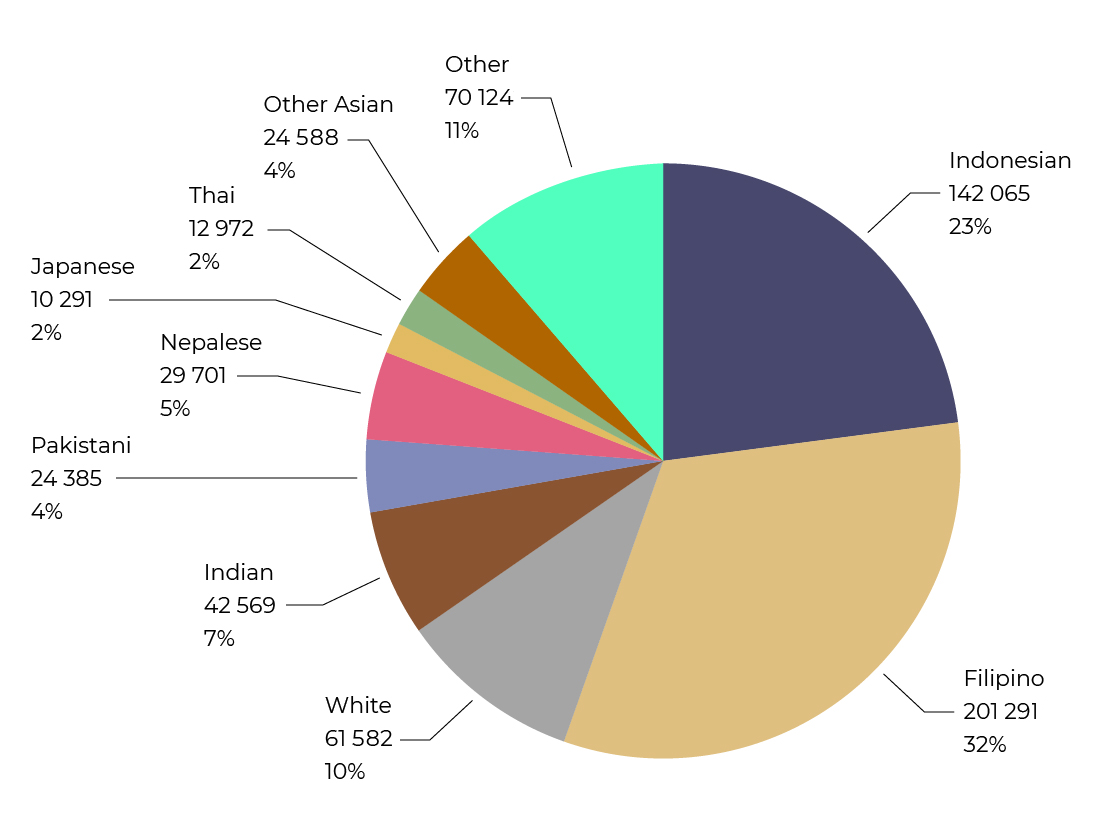
Distribution of Hong Kong’s principal ethnic minority populations. (Race Relations Unit of the Home Affairs Department)
While they comprise a numerical minority, these ethnically diverse communities are a vital part of this city’s multicultural heritage. Unfortunately, they remain sidelined by unhelpful labels and stereotypes that drive systemic exclusion, particularly impacting South and Southeast Asian populations. Change is emerging, however, as grassroots organizations are working to combat these structures and build a truly inclusive city.
Reality on the ground
On 19 May 2026, news of a tragic, fatal motorcycle accident in Kowloon City involving a 23-year-old Pakistani university student quickly circulated across social media platforms.
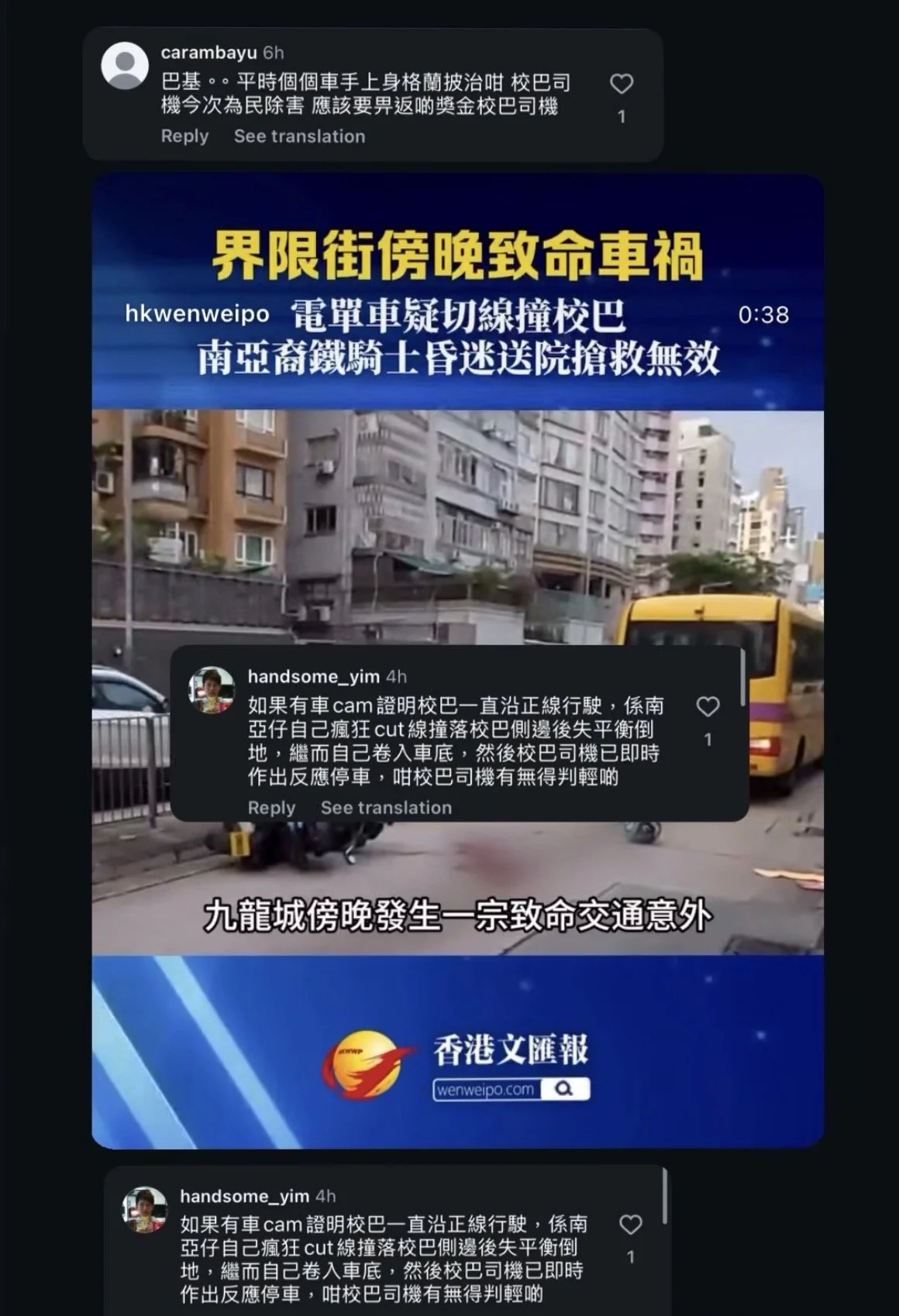
Online commentators immediately rushed to demand dashcam footage. Operating under explicit bias that the “南亞仔” (South Asian Boy) must have been driving “瘋狂” (crazily), these reactions seemed to be aimed at absolving the local Chinese school bus driver of legal blame, even before official police investigations concluded. Other users deployed even more inflammatory language. One comment used a dismissive truncation '巴基...' (Pakistani...) to casually label the victim by his ethnicity before launching into a sweeping generalization, saying that the driver should be given an award “畀返啲獎金” for getting rid of a menace “為民除害”.
This tragedy highlights a broader, pervasive pattern in how local netizens react to South or Southeast Asian minorities in the news. Yet, this hostility extends far beyond digital screens. In their daily lives, ethnically diverse Hong Kongers face constant interpersonal microaggressions, whether during their daily commutes or within their workplaces. It also escalates into blatant, direct discrimination. This is clear from the countless documented accounts of employment discrimination, such as the cases of Hijabi women in the education sector being pressured to remove their headscarves simply to retain their employment, alongside landlords rejecting tenants based on race within an already competitive rental housing market.
Framing linguistic diversity as a barrier
In Hong Kong, dominant discourse frequently places the issue of language at the forefront of why minorities supposedly “cannot assimilate” or why they face job discrimination. It is undeniable that language proficiency is an issue, and various Hong Kong universities and government publications are researching this problem, but we must look at the root of this gap. Why is it that many ethnically diverse Hong Kongers continue to struggle with Cantonese, regardless of how many generations their families have called this city home?
Furthermore, while the “language as barrier” framing is reflected in policy, such as introducing more interpretation and translation services, it raises a critical question: if language were the only barrier, why do fluent, ethnically diverse Cantonese speakers still face passive-aggressive behavior at the interpersonal level and systemic exclusion at the social and political levels?
The “NCS” Label
To understand the complexities of these issues, we must dig deeper into the “language” framing itself.
“EM”, “少數族裔” (Ethnic Minority) is the umbrella term used by the Hong Kong government for all ethnically diverse people, irrespective of their birth status. Similarly, the Cantonese terms 非華裔人士 (non-Chinese people) and 非華語人 (non-Chinese speakers) are used to categorize individuals with non-Chinese heritage in official settings.
Although many ethnically diverse families have roots in Hong Kong that predate the 1997 handover, a critical question remains in 2026: why do so many youths in these communities still lack the ability to speak, read, or write fluent Cantonese, a core skill for survival in the city?
Could the challenge be linked to how the Hong Kong public education system categorizes students by race? Is there a tendency in local public schools, even from primary levels, to segregate students based on their non-Chinese backgrounds? While initiatives like the Non-Chinese Speaking (NCS) program have merit in educational settings, one must ask why, in 2026, this remains the predominant approach to addressing the needs of most minority groups and has remained more or less the same regardless of the generation of immigration.
My own sense of belonging shifted early. I attended a completely local kindergarten, where I was just another child in the classroom. But that feeling of being a ‘local’ vanished the moment I entered Primary School. There, I was branded ‘Non-Chinese Speaking’. Living under this label boxed me in and actively stunted and eroded my actual abilities. It made me feel like an outsider, a feeling that never truly left, eventually causing me to doubt my own Cantonese fluency and affecting my confidence in Cantonese professional and academic settings.
Years later, I found a name for my experience in sociology: labeling theory, the idea that we internalize and become the labels forced upon us. Realizing this showed me I wasn't alone and proved how deeply an institutional word can alter someone’s self-perception.
On a broader scale, this personal hurdle reflects how the NCS program, while providing necessary resources, also serves as an exercise in discursive power, where the very vocabulary used by institutions actively shapes public perception and social hierarchies.
Terminology like ‘EM’ and ‘NCS’ shapes the way locals perceive minorities, often instilling an inherent bias: ‘you are not local.’ As a result, this labels-first approach perpetuates systemic bias in education, the workforce, and public policy. It explains why even ethnically diverse fluent Cantonese speakers face discrimination and why different ethnic communities often keep to themselves. This framing effectively creates a narrative of ‘otherness’ that follows them into their careers.
This segregation is worsened when NCS programs evolve into what are informally known as ‘NCS schools’, where only minorities are enrolled. This structural divide also explains why ethnically diverse students graduate with such vastly varying levels of Cantonese fluency; their language development depends on whether they were placed in a standard curriculum, an “NCS class,” or in an “NCS school”. The worst for Cantonese fluency are the de facto “NCS schools”, where ethnic Chinese and diverse students never truly meet, integrate, or interact during their formative years. Consequently, the system produces an absurd reality where an ethnically diverse individual can grow up in Hong Kong without ever having a local Chinese friend until after graduating from high school/secondary school.
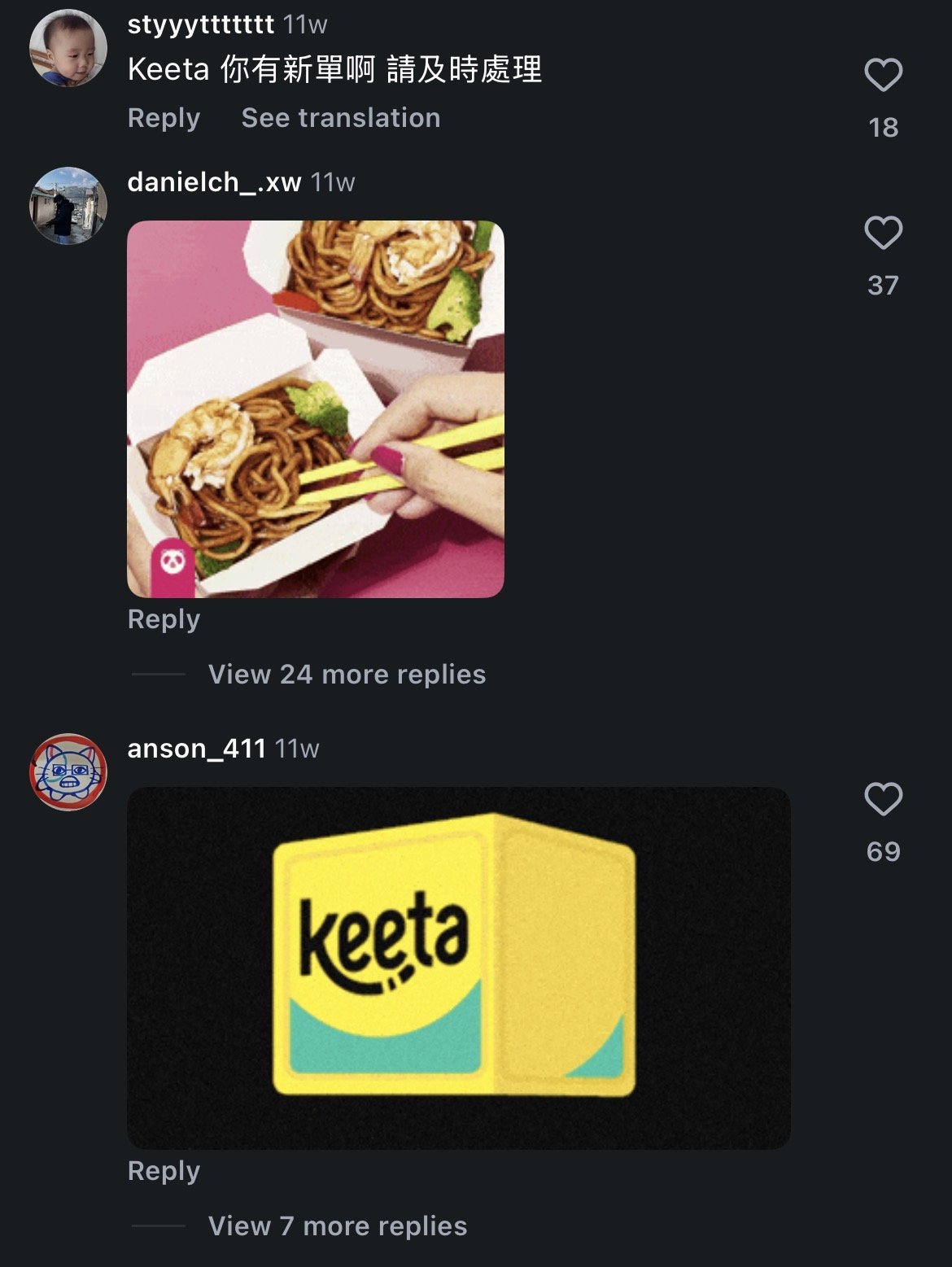
Offensive social media comments in response to a celebratory reel posted by ethnically diverse high school students in Hong Kong.
The systematic labelling of individuals as ‘NCS’ or ‘EM’ carries profound systemic consequences. A stark example of this discursive power in action was a recent social media incident involving a group of ethnically diverse high school seniors from one of the “NCS schools”. To celebrate their graduation, the students posted a transition reel. However, the comment section was quickly flooded with racist imagery and comments from locals. A majority of the remarks insinuated that these graduates were destined only for jobs at Keeta, a local food delivery platform. This incident reveals the cruel reality of the ‘otherness’ narrative: even at the moment of their greatest academic achievement, these students were reduced to a harmful stereotype.
Derogatory terms in the Hong Kong media
Beyond educational settings, unconscious bias in the local media systemically drives the ‘othering’ of diverse communities, validating public biases. By repeatedly framing marginalized groups through a biased linguistic lens, the media has the power to establish a harmful “common sense” framework within society, one that subtly embeds discrimination and inequality into everyday thought.
While Hong Kong media outlets have recently made conscious efforts to be more inclusive of its ethnically diverse population, notably through recent programs in RTHK, the damage from decades of negative minority representation, where TV dramas emphasize criminality in minority communities, harmful stereotypes, and feature dialogue laced with derogatory language, has already been done.
The real-world consequences of this normalized dehumanization become starkly visible whenever minorities are in the news, especially when shared on social media, such as the 19 May traffic incident involving the local Pakistani university student. On accounts reporting the tragedy, public reactions mirrored the toxic assumptions seen in television dramas.
Such comments are at least partly the product of years of media-fed systemic bias, combined with the “NCS school” issue, where interaction between the minorities and Chinese locals during the formative years is little to none. When derogatory stereotypes are normalized, they dehumanize an entire group, making it easy for the public to scapegoat them during a tragedy.
This constant cultural policing has a devastating real-world effect: it forces marginalized communities to shrink themselves instead of advocating for their needs. When society repeatedly tells you that you are either a menace or cheap labor, it creates a self-fulfilling prophecy. It convinces a generation of ethnically diverse Hong Kongers that their existence is limited to “accepted” low-wage roles and the performance of a model minority, inevitably driving them to confine themselves within their own communities and perpetuating the cycle.
Grassroots solidarity in action
These systemic inequalities have prompted many grassroots organizations led by ethnically diverse communities to take action. They are shaping the discourse, taking ownership of their narrative, and fighting for true systemic inclusivity.
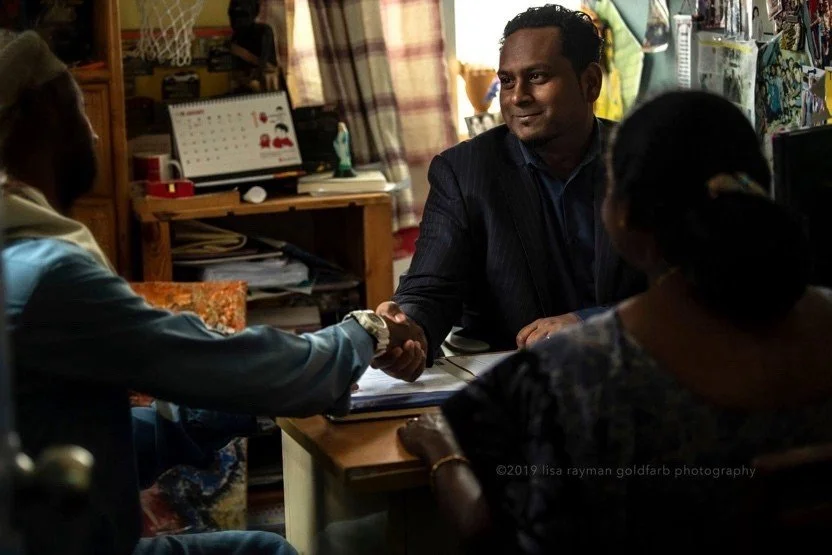
Jeffery Andrews was the first ethnically diverse Hong Konger to run for the Legislative Council. (Photo: Jeffery Andrews)
One prominent example is Jeffery Andrews, a third-generation Hongkonger of Indian descent and Hong Kong’s first ethnically diverse registered social worker at the Christian Action Centre for Refugees. Based in Chungking Mansions, Andrews is also part of the team at the Diversity Hub, a community space dedicated to commemorating the contributions of Hong Kong's diverse ethnic communities. He is known for his advocacy for the city’s shared history and frequently works to bridge cultural divides by leading tours for Chinese-Hongkongers in Cantonese, showcasing the diverse cultures that are part of the city's fabric.
Andrews is also the first ethnically diverse Hongkonger to run for the Legislative Council or Legco (equivalent to a state or provincial legislature). “I don’t really see myself as a politician,” he said in an interview with The Loop, “but it’s necessary to be a politician these days because everything is about policy. You have to challenge the government to make changes”.
In December 2025, I had the opportunity to attend a Community Get-Together Event held at Diversity Hub. The event was hosted by PowerThru, an education program of EmpowerU, a Hong Kong-based non-profit dedicated to uplifting marginalized communities. Sumichhya Gurung, the force behind the PowerThru program, shared the mission:
“At EmpowerU, our curriculum empowers students from marginalised communities to apply practical skills and knowledge learnt in the programmes to real-life situations, and strengthen their network with the community around them. Seeing a gap for the ethnically diverse communities in HK, PowerThru was created to empower secondary school students who often get left behind in the mainstream education system. By bringing in the dedication and insights from community instructors from various industries, our curriculum equips students with the tools and motivation to fulfill their best potential, building a future that they want to see for themselves.”
It was at this event that I experienced real grassroots action firsthand. I saw a room full of ethnically diverse individuals who grew up in this system and recognized the disparity of opportunities. They are now stepping up to ensure the next generation of their community receives the support they once lacked.
Reclaiming the narrative through intersectionality
Instead of accepting passive, state-imposed categories, diverse local communities are reshaping public discourse through empowering terms like “Indian-Hong Konger” or uniting under the collective banner of being “ethnically diverse.”
The future of being a ‘Hongkonger’ lies in expanding the definition of who belongs. True inclusivity means fostering a multi-layered, intersectional identity, one that is no longer gatekept by Chinese ethnicity, but instead opens its doors to a vibrant, multi-ethnic society.
Words and labels are not neutral tools; even when unintentional, they possess an immense capacity to enforce exclusion. Though Hong Kong’s legal frameworks define 'ethnic minority' as anyone of non-Chinese descent, public discourse, institutionalized labeling, and local media have racialized the term to flatten South and Southeast Asians into a singular, monolithic category associated strictly with social barriers. Meanwhile, privileged Western or regional expatriates remain entirely insulated from the label.
This dynamic illustrates how administrative systems utilize seemingly ‘neutral’ classifications to enforce systematic racial hierarchies. In simple terms, classifying individuals by what they lack (e.g., non-Chinese heritage/speaking) is rarely neutral. Even when one group is clearly the numerical majority, these labels accidentally turn a demographic statistic into a social barrier, making majority status the default definition of a ‘local’ while viewing everyone else as a separate category.
This critique of structural labeling is becoming more common. One 2025 academic study, for example, highlights how these institutional categories oversimplify diverse groups and mask systemic inequalities. The authors advocate for “a renaming campaign to promote a new page for embracing multicultural strengths,” urging a shift toward recognizing these communities as assets.
While grassroots and now scholarly resistance to these labels is active and growing, the critical question remains: when will our institutions finally catch up?
Optimism for the future?
The PowerThru event was a rare moment where I didn't feel the need to prove my identity as a Hongkonger. While government initiatives are well-intentioned, they often produce the opposite of their intended effect by entrenching segregation through labels. We must cultivate a truly heterogeneous local identity. This means recognizing ‘Hongkonger’ as an intersectional and diverse social fabric, rather than a homogeneous identity bound by a single ethnicity. By extension, it would mean moving beyond current efforts that treat ethnic diversity as a category to be managed rather than a community to be embraced.
The work being done at Diversity Hub and through programs like PowerThru proves that the desire for a unified ‘We are all Hongkongers’ intersectional identity already exists at the grassroots level. It is now up to the city’s institutions to do their part – to stop labeling us by what we lack, and to start recognizing us for who we are: an inseparable part of this city's past, present, and future.
Note: The views expressed in this piece are intended to initiate a dialogue on public policy and systematic labels. The goal is to provide grassroots insights that can help bridge cultural divides and support the initiatives for a more inclusive and prosperous Hong Kong.