
Weavers of Life: Constanza Carvajal - A Voice from the Territory Facing Large-Scale Mining
Lea la versión en español aquí.
For over 20 years, Constanza Carvajal has worked for human rights as part of her professional career, but also as a volunteer, both with Indigenous peoples and peasant communities.
In Putumayo, one of the departments of the Colombian Amazon, she is part of a social movement that opposes the multinational extractivism of Libero Cooper, one of the companies that has obtained mining concessions since 2006. Libero Copper holds four mining titles - a way to project its operations and prevent social movements from monitoring its harmful intervention in the country.
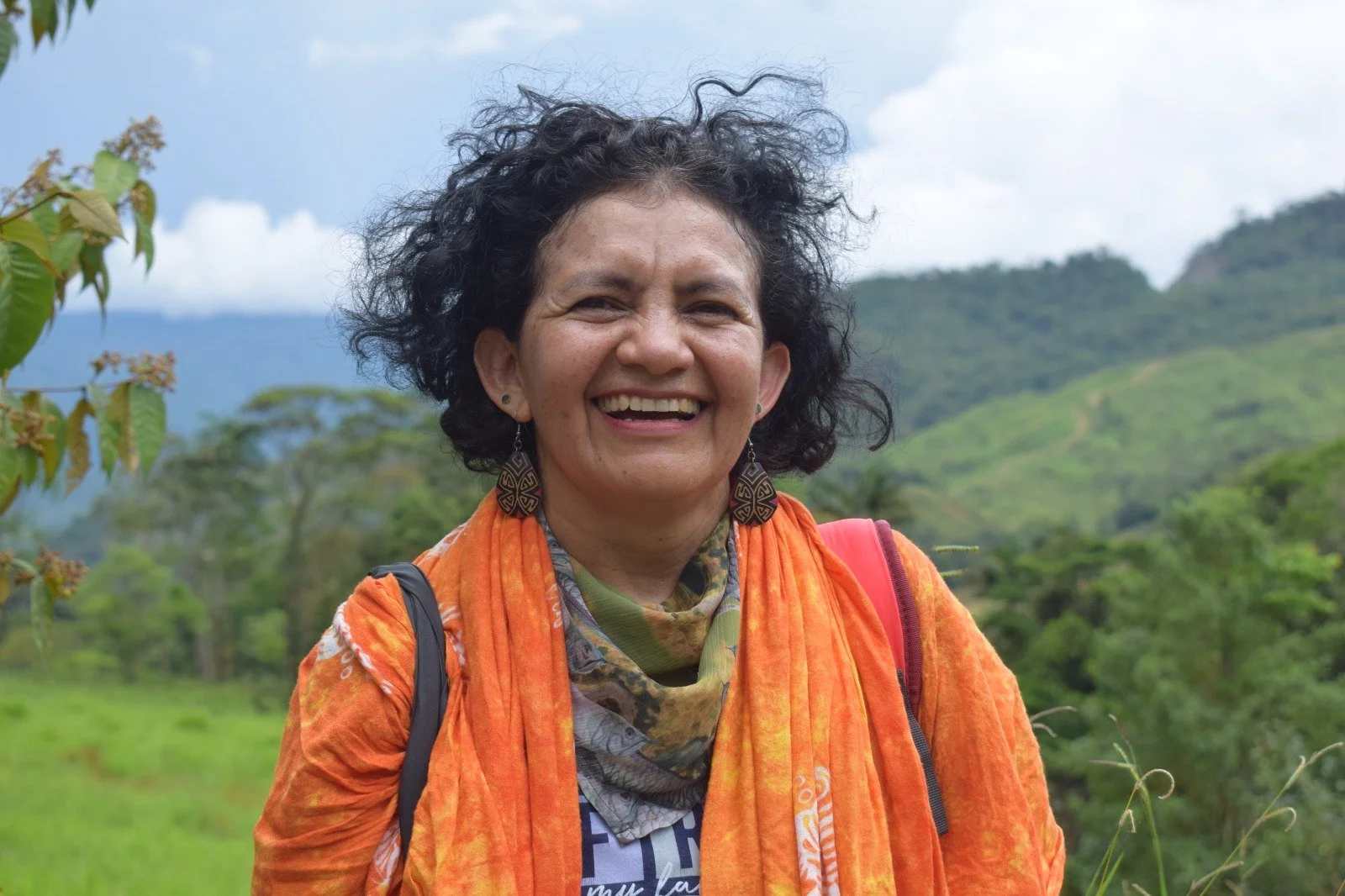
Smiling, in the Vereda Monclart area, within one of the mining titles. (Photo courtesy of the interviewee)
Constanza has been part of this movement for 10 years and is one of the voices from the territories that have long rejected large-scale mining, referred to as “responsible mining” by those who profit from it. They oppose this kind of mining in Colombia due to the harmful effects it has on Mother Earth, human rights, and the agricultural vocations of the different places it reaches to mercilessly exploit the bowels of the earth, paying wages lower than those they would pay in their home countries and generating royalties for Colombia that do not compensate for the damage caused to the land.
The community has included legislative lobbying within its repertoire of political action, and in 2018 it succeeded in enacting Municipal Agreement 020 of 2018, a regulation of lower hierarchy than departmental and national laws, which declared the ecological and cultural protection of this municipality’s heritage. However, it is also vital to recall that in that same year, the Colombian Constitutional Court, through Ruling SU-095 of 2018, clarified that municipalities do not have the authority to prohibit mining, since the subsoil is property of the State and municipalities do not have veto power.
Despite this, Constanza and the rest of the community resist and confront the multinational company, which has attempted to persuade them by offering gifts and handouts to gain social approval through its “good neighbor” strategy aimed at dissuading social resistance to a legal but illegitimate activity and undermining the social fabric that has existed among them.
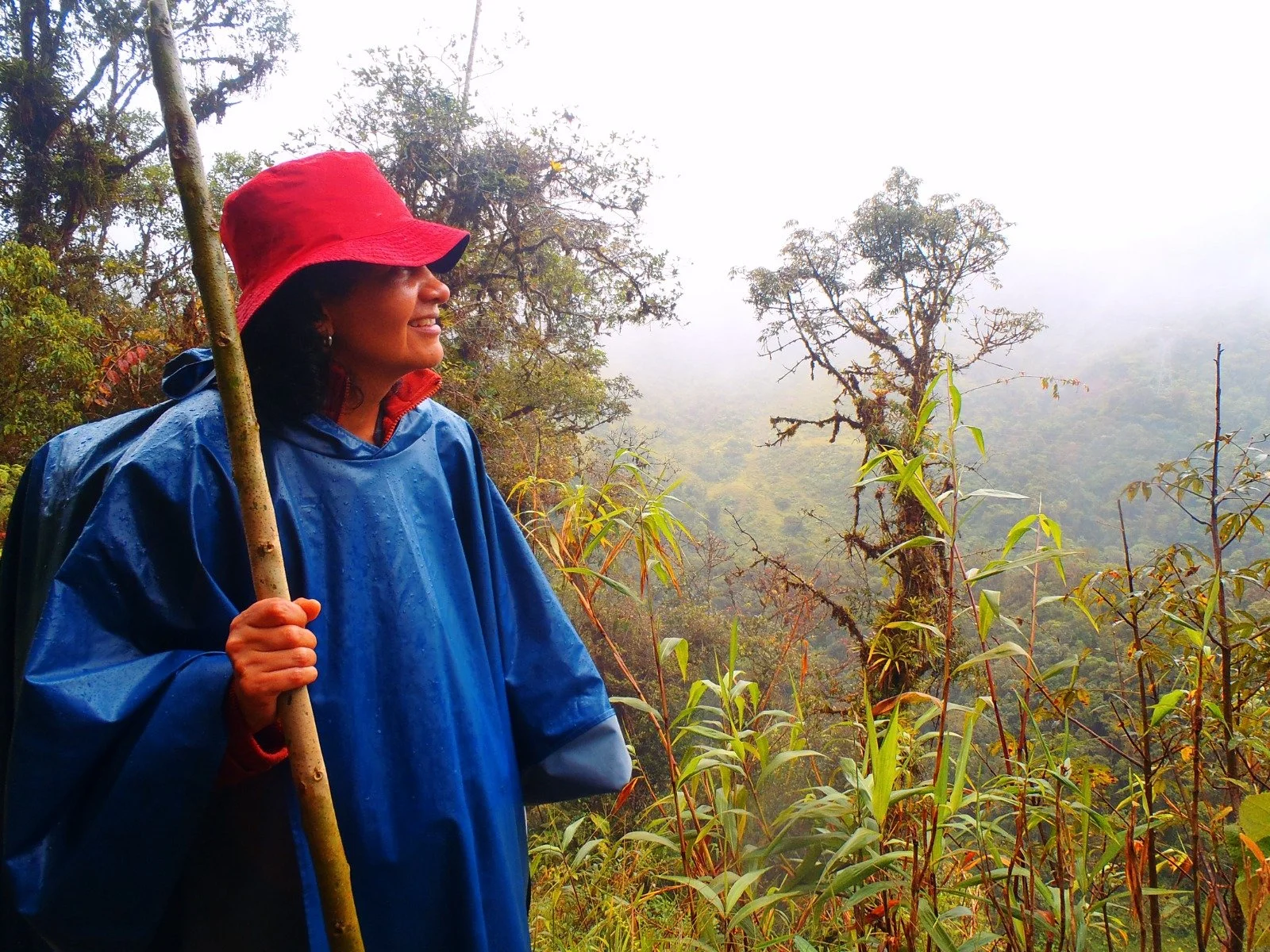
In the upper basin of the Mocoa River, ancestral Sachamates trail. (Photo: Camilo Barrera, courtesy of the interviewee)
From this territory, considered part of Colombia’s estrella hídrica (“water star”) whose exploitation—once an environmental license is obtained—would affect the habitat of different species of birds and butterflies that beautify this region of the country, they continue to await the definitive cancellation of the titles by the government. This will be difficult to achieve now, as the current administration will end in a few months and elections will be held in Colombia, where, unfortunately, a shift to the right or far right is expected, considering the geopolitical panorama in the region and the imperialist actions of US President Donald Trump.
What this leader and her companions want is for the National Mining Agency to return those titles to the territory, which is unlikely in a country that, in order to shield extractivism with the euphemism of “development,” classified mining to be an activity of public utility and social interest according to Article 13 of Law 685 of 2001. But despite this reality, they are not surrendering: they continue to resist so that Mother Earth preserves her integrity, so that there is peace in the mountains and the minerals remain still, buried in their eternal silence, far from the hands that seek to tear them from her belly.