
Global Indigenous Peoples News Bulletin #12 (January 2026)

This bulletin devoted to Global Indigenous Peoples News, part of the Glocal Exchange project of Weave News, seeks to highlight some of the current issues from Indigenous communities in different parts of the world. The focus of the bulletin is aligned with the overall purpose of the Glocal Exchange project, which examines globalization through its impact from the perspective of local communities. It also supports the Weave News mission to “investigate and report about contemporary issues that are either underreported by establishment and other corporate media or reported in a way that excludes essential context, perspectives, and voices.” These are “issues that have a strong justice component and that reveal connections across communities, borders, struggles, and experiences.”
Indigenous land rights
In Ghana’s Atewa forest, the Akan peoples resist against bauxite mining. The Akhan view Atewa as “a living heritage, an ancestral and spiritual site to be protected from destruction to prevent irreversible cultural loss.” Resistance to mining of the Atewa has extended beyond Ghana through transnational advocacy, as environmental groups warned that multinational companies (like BMW, Tetra Pak, and Schüco) should stop purchasing aluminum linked to bauxite extracted from the Atewa forest. “The struggle over Atewa,” writes Samuel Anum, “mirrors Indigenous resistance movements worldwide, where Indigenous and local communities resist extraction against national governments.”
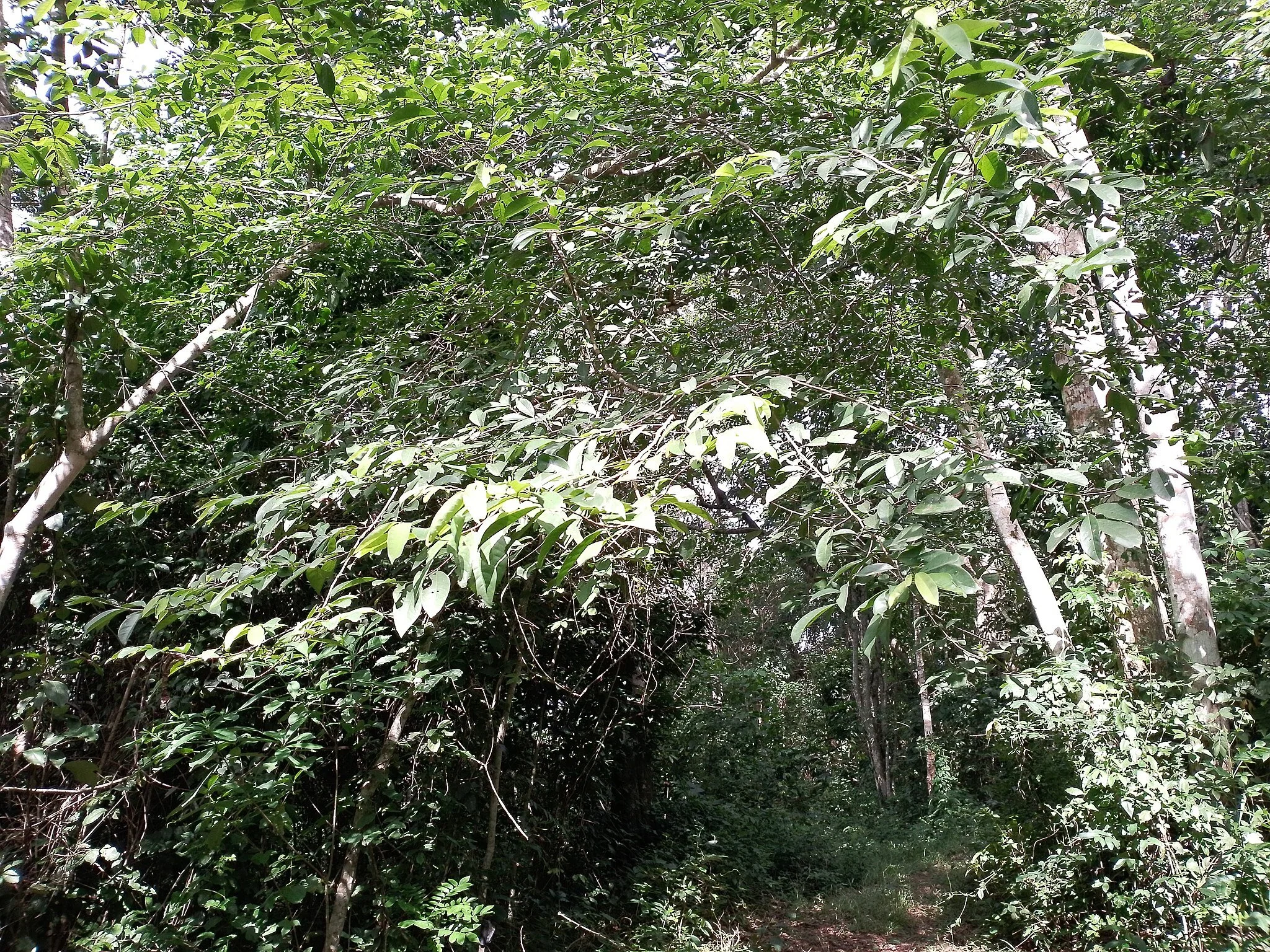
The Atewa Range Forest in Ghana. (Photo: Popezmens, CC BY-SA 4.0, via Wikimedia Commons)
Across Colombia, violence is surging. The Guardian reports that Illegal groups are fighting to control the country’s illicit economies, including key drug-trafficking routes and coca-growing areas. The Sierra Nevada mountain range has become a strategic route for traffickers, with devastating consequences for the Arhuaco people, as the paramilitaries, the guerrillas, the drug traffickers, are taking control of their areas. Their fight is not only against the armed trafficking groups, but also against mining interests (copper mining, gold mining), palm oil farming, and the construction of hydroelectric dams.
Indigenous leaders say they have faced death threats for speaking out against environmental destruction. According to a Global Witness report, Colombia has experienced the highest number of murders of environmental defenders for three years in a row. The United Nations reported in May 2025 that the five Indigenous groups living in the Sierra Nevada de Santa Marta – the Kogui, Wiwa, Kankuamo, Arhuaco and Ette Naka – face “physical and cultural extinction”. Their combined population is approximately 54,700 people.
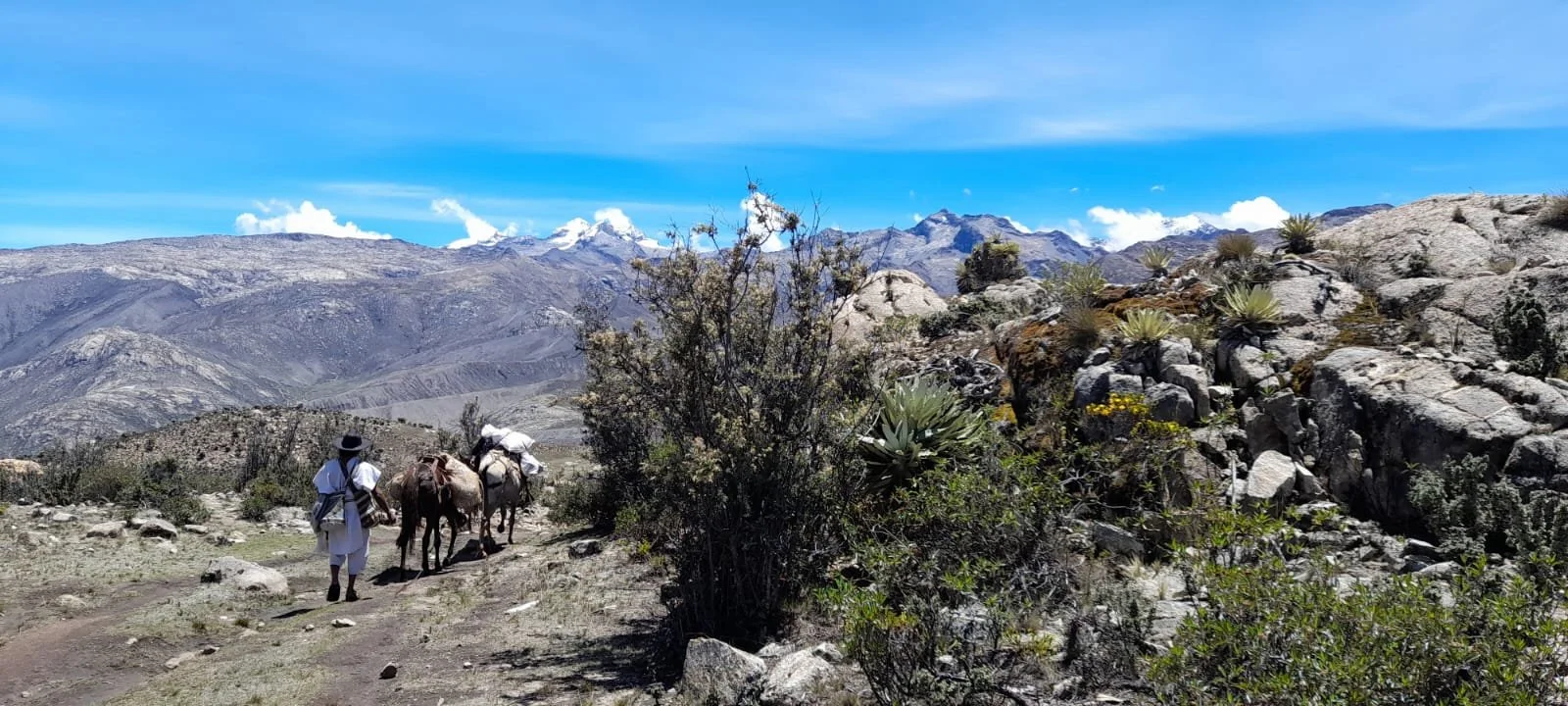
Ancestral path used by the indigenous communities that inhabit the Sierra Nevada. (Photo: Bunkuaney Zarungumu Mejía Izquierdo, CC BY-SA 4.0, via Wikimedia Commons)
Meanwhile, the Philippine government is continuing plans for a multi-billion-dollar “smart city,” the New Clark City, in order to attract foreign investment and ease congestion in Manila. The Indigenous Aeta village of Sapang Kawayan is caught between the rising of this new city and the site of a proposed stadium. Hundreds of Aeta families have been displaced since construction of the city began, and they warn that thousands more could be uprooted as development continues. Al Jazeera reports that “Without a Certificate of Ancestral Domain Title, or CADT — the only legal mechanism that would allow them to assert rights to their territory and its resources — and without genuine recognition from the government, the Aetas will continue to be treated like squatters on their own land.”
The Aetas, who rely on small-scale subsistence farming, are among the most historically disenfranchised Indigenous peoples in the Philippines. A World Bank report last year found that Indigenous peoples in the Philippines “often face insurmountable bureaucratic hurdles in their efforts to process CADTs”. The report called recognizing and protecting Indigenous land rights a “crucial step in addressing poverty and conflict.”
Indigenous self-determination and Greenland
The issue of Indigenous sovereignty has also broken into international news recently thanks to the ongoing controversy over US President Donald Trump’s threats to take over Greenland. Under international law, Greenland’s predominantly Inuit population is recognized as an Indigenous People with a corresponding right to self-determination. “Any external attempt to affect Greenland’s sovereignty – including annexation by the United States – would violate that right,” argues former Danish government official Jørgen Nyberget, “and therefore cannot be lawful without the freely expressed will of the Greenlandic people.”
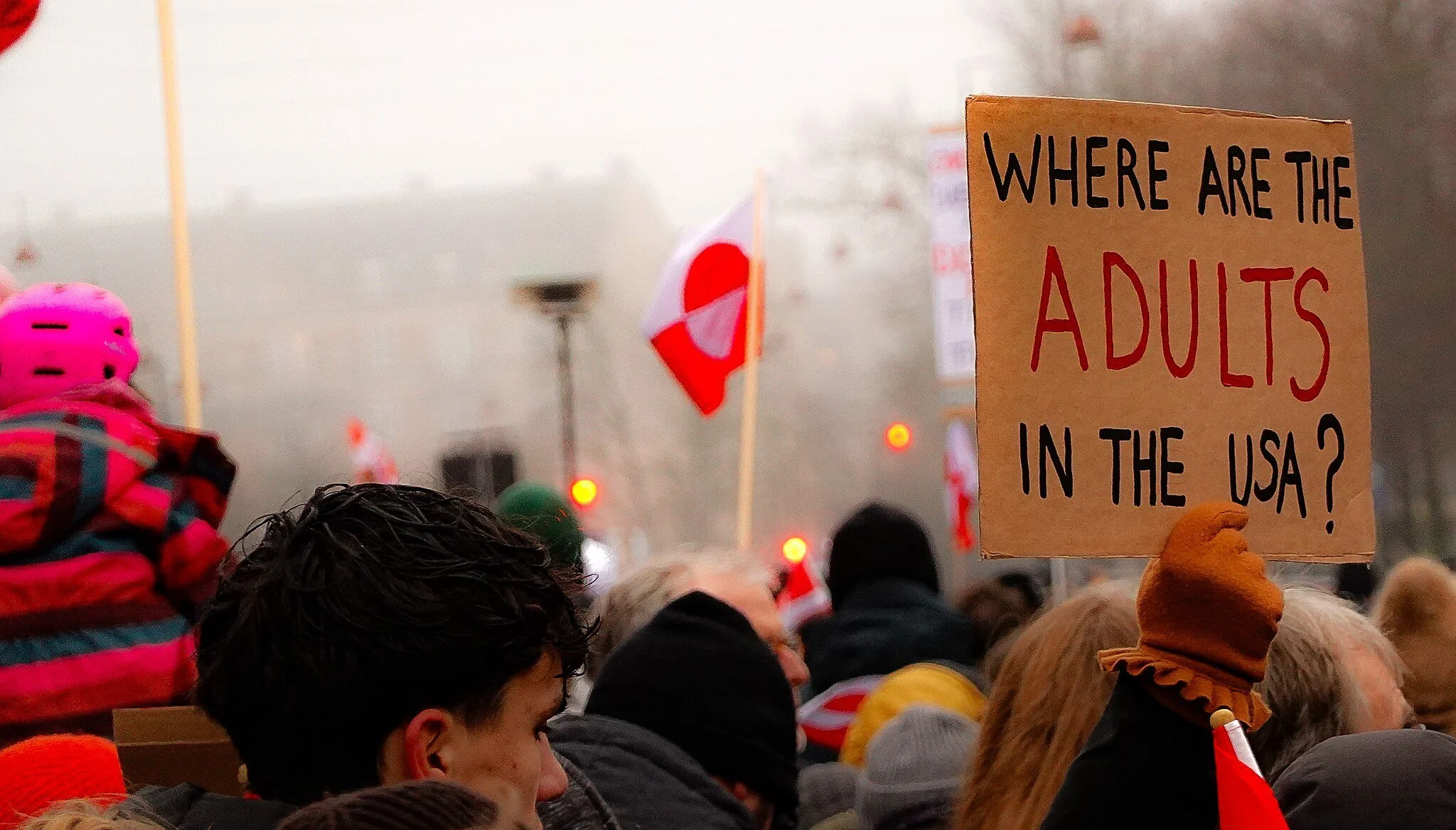
Hands off Greenland protest against Donald Trump in Copenhagen, January 2026. (Photo: Jens Cederskjold, CC BY 4.0, via Wikimedia Commons)
Greenlandic officials quoted in IC Magazine said that US President Trump’s remarks revive colonial assumptions that powerful states can negotiate over Indigenous land without Indigenous participation: “Inuit leaders argue that any discussion of Greenland’s status that treats the island as a strategic asset rather than a living Indigenous homeland undermines those rights.” Legal experts also warned that “any attempt to acquire territory without the consent of its people would violate international law and set a precedent with implications far beyond the Arctic, particularly for Indigenous communities whose lands overlap with areas of strategic or economic interest worldwide.”
Indigenous environmental law
The Colorado River Indian Tribes (a confederation of the Mojave, Chemehuevi, Hopi and Navajo peoples) recently designated the Colorado River as a “living being” with legal rights under tribal law. “The resolution describes the river as an entity with inherent value and rights comparable to those of a person, a legal concept known as the rights of nature,” reports John Ahni Schertow for IC Magazine. “Tribal leaders said the designation gives them a stronger foundation to steward and defend the river for future generations,” and that it makes the tribal sovereignty stronger and fills gaps in state and federal water law, which critics argue have failed to stop environmental degradation in the Southwest.
“While the approach is growing globally,” the report continues, “its practical application in court systems within the U.S. remains mostly untested. As Indigenous nations have been at the forefront of this movement in North America, this designation highlights how Indigenous legal innovation continues to shape environmental policy dialogues in the United States.”
