
Crashing the Truth: Spain Faces an Avalanche of Right-Wing Disinformation Following Rail Disaster
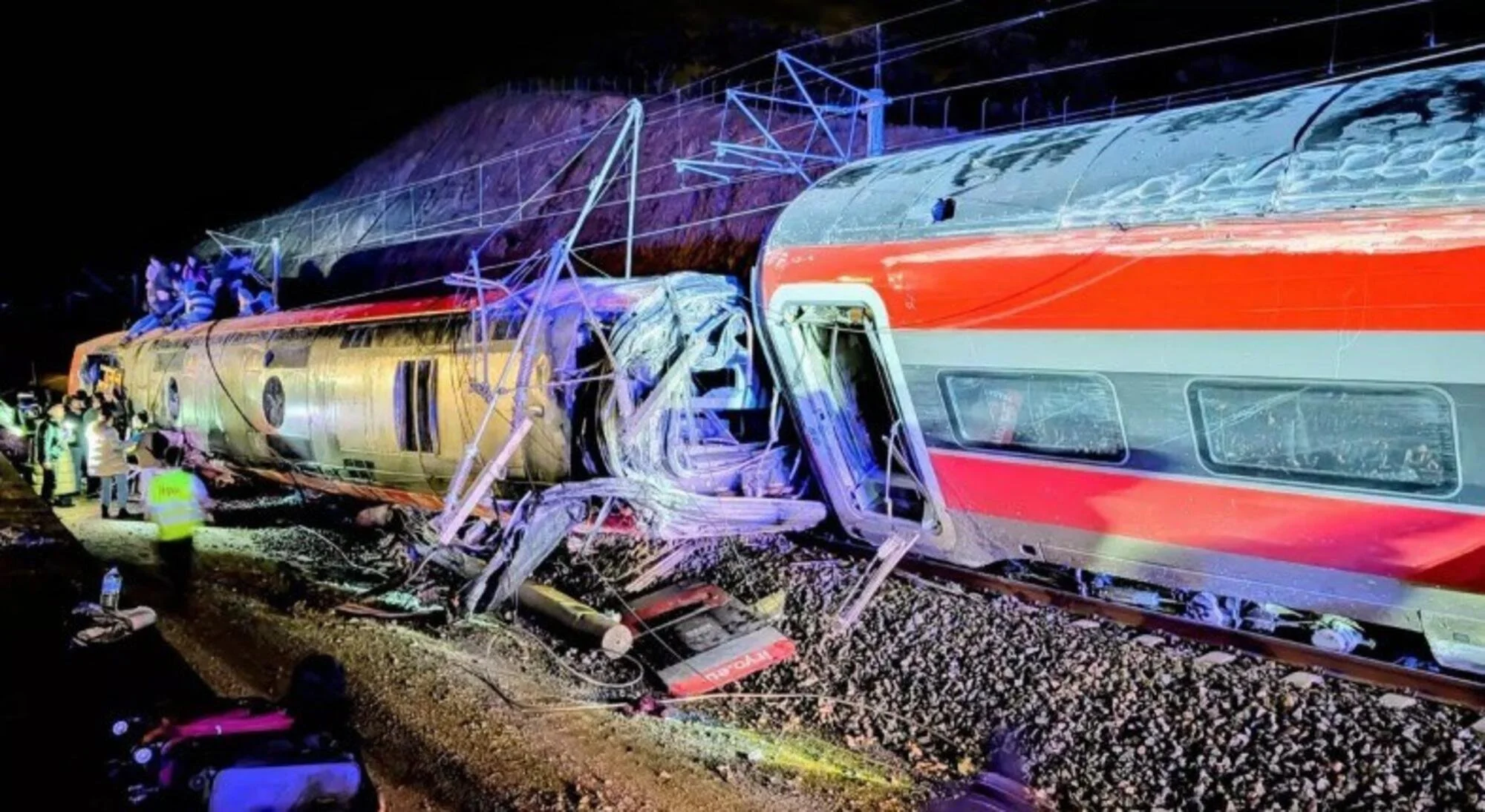
The scene following the train derailment near Amaduz, Spain. (Photo: El Salto)
The news from Spain this week has been dominated by Sunday’s horrific high-speed rail accident that killed at least 42 people and left many dozens injured. While officials try to determine the cause of the derailment of a northbound Iryo train, which was then hit by a southbound Alvia train, rescue workers continue their efforts to locate and identify bodies at the crash site near Adamuz, a small municipality in the province of Cordoba.
Still reeling from the shock of the accident itself, millions of Spaniards are also confronting what is an all-too-common problem in the immediate aftermath of major news events: a troubling situation where increasingly strident political rhetoric begins to bleed into a toxic constellation of demagoguery, disinformation, and social media hoaxes that directly serve far-right interests.
Spanish political theater on display
The derailment is a massive and traumatic story in a country of just under 50 million that prides itself on its reputation as a global leader in rail technology. Alongside the round-the-clock coverage of immediate events, there has been a parallel conversation about how Spain’s political class has responded to the tragedy in ways that superficially diverge from business as usual, yet also replicate patterns seen globally in societies with ascending far-right movements.
Many have commented on the rare sight of the country’s two largest political parties appearing to put aside their differences, at least for a moment, in the interest of prioritizing the needs of victims and their families. Much was made of the conciliatory statement made by Juanma Moreno of the conservative Popular Party (Partido Popular, or PP), who leads the current provincial government in Andalucia, as local, regional, and national officials came together in Adamuz in a show of unity.
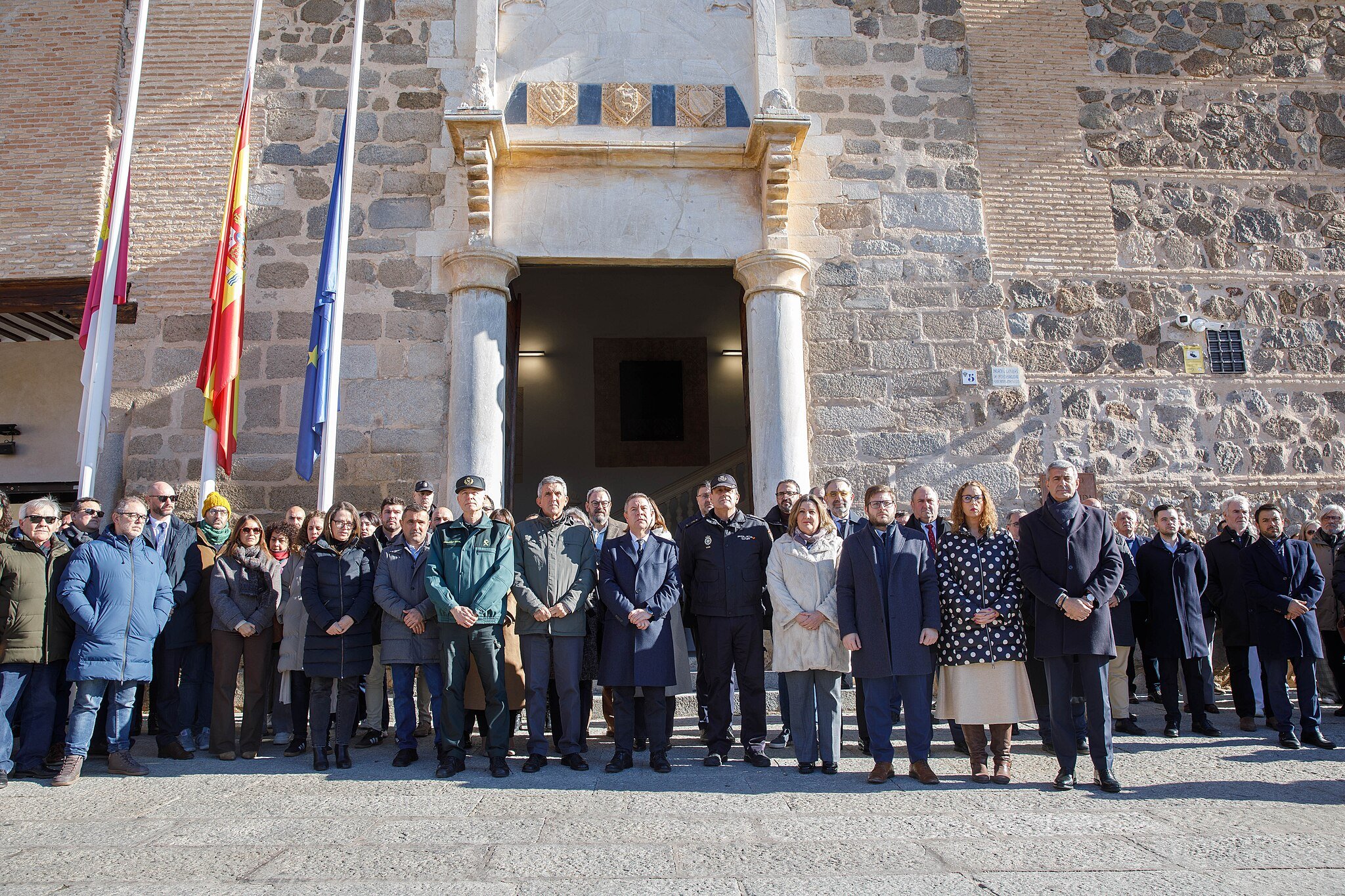
Toledo, January 19, 2026 – The President of Castilla-La Mancha, Emiliano García-Page, participates in the minute of silence held at the Fuensalida Palace in Toledo to remember the victims of the Adamuz train accident. (Photo: Emiliano García-Page Sánchez from Toledo, España, CC BY-SA 4.0, via Wikimedia Commons)
Moreno’s words seemed to stand out given that the PP, led by Alberto Nuñez Feijóo, almost never misses an opportunity to attack President Pedro Sánchez, whose center-left Socialist Party (the PSOE) leads Spain’s current coalition government. Some media outlets have tried to attach broader significance to the agreement of both parties to suspend normal political activities, including a planned Sánchez-Feijóo meeting, and to support a national three-day mourning period.
Yet for Spaniards weary of the country’s endless crispación (political tension), there was ample reason to expect that the PP would quickly return to its longstanding efforts to undermine the current government and bring down Sánchez in particular. Indeed, less than 48 hours after the disaster, Feijóo accused the government of “manipulating” the situation and insisted that the PP was not the kind of party that “calls a politician a murderer when their leadership leads to deaths or insecurity.”
The latter statement was a clear reference to the ongoing public outrage surrounding the catastrophic October 2024 flooding that killed more than 200 people, mostly in the province of Valencia. The provincial president, Carlos Mazón, recently stepped down and remains embroiled in controversy and legal jeopardy for his role in his administration’s failure to activate the public alarm system in a timely manner. As the storm gathered strength throughout the afternoon of October 29 and a public warning was urgently needed, Mazón was at a local restaurant having a lengthy lunch with journalist Maribel Vilaplana in what has been widely interpreted by the public as an extramarital romantic encounter.
Feijóo’s tendentious comparison was a clear attempt to deflect attention from the question of his party’s responsibility for the deaths in Valencia and from the cries of “murderer!” and “coward!” that rained down on Mazón when he appeared at a memorial event marking a year after the flooding. Leftist Catalan politician Gabriel Rufián, who has emerged as a distinctive and influential voice amidst the ongoing PP-PSOE feuds, ridiculed Feijóo on X for “insulting the intelligence” of the Spanish public by equating the two cases.
Hoaxes, lawfare, and the far-right playbook
The PP’s response to the train accident is noteworthy in part because the party continues to play a kind of bad cop/worse cop routine with Vox, the xenophobic, far-right party that has been surging in recent polls as key sections of the electorate sour on politics as usual. Vox is open about its ideological affinity with Donald Trump’s MAGA movement, as well as other far-right projects in Europe and Latin America, as part of a transatlantic “civilizational” alliance. While the PP has sometimes tried to be seen as keeping Vox at arm’s length, it has reportedly been in dialogue with the same Heritage Foundation representatives who have been courting Vox in recent years. It will likely need to continue partnering with Vox to govern in the province of Extremadura after recent elections in which Vox gained seats at the expense of the PSOE.
Unsurprisingly, Vox has made no effort to participate even in symbolic acts of national unity in response to the derailment in Adamuz. On the contrary, writing on X just hours after the accident, Vox leader Santiago Abascal followed a peremptory statement of condolence by accusing the government of “corruption and lies.” In a follow-up post, he claimed that “]t]he collapse of a mafia government is threatening the entire State with collapse, both at the national and international levels.”
Meanwhile, social media networks in Spain have been flooded with AI-generated fake images, unconfirmed rumors, and other hoaxes (in Spanish, bulos) related to the train disaster - a reminder that, as media scholar Bill Yousman recently noted, disinformation is “not the whole problem, but it is a substantial part of the political, social, cultural, economic turmoil that we find ourselves in.” Yousman echoed what many critical researchers have argued, noting that the ubiquitous nature of social media has made disinformation “a more intense problem that we’ve ever had before.”
For example, one bulo insinuated that the Spanish government had provided funds to Morocco and Uzbekistan to help improve their rail systems instead of using those funds for rail maintenance at home. Spanish media outlets moved quickly to debunk the myth. On January 20, El Diario published a piece providing essential context: that Spain had only offered the two countries “repayable and conditional” loans to be used for purchasing equipment from Spanish companies.
The public broadcaster RTVE also took notice, devoting part of its coverage of the train accident to pointing out the growing presence of disinformation in the public sphere and using its verification resources to debunk key examples.
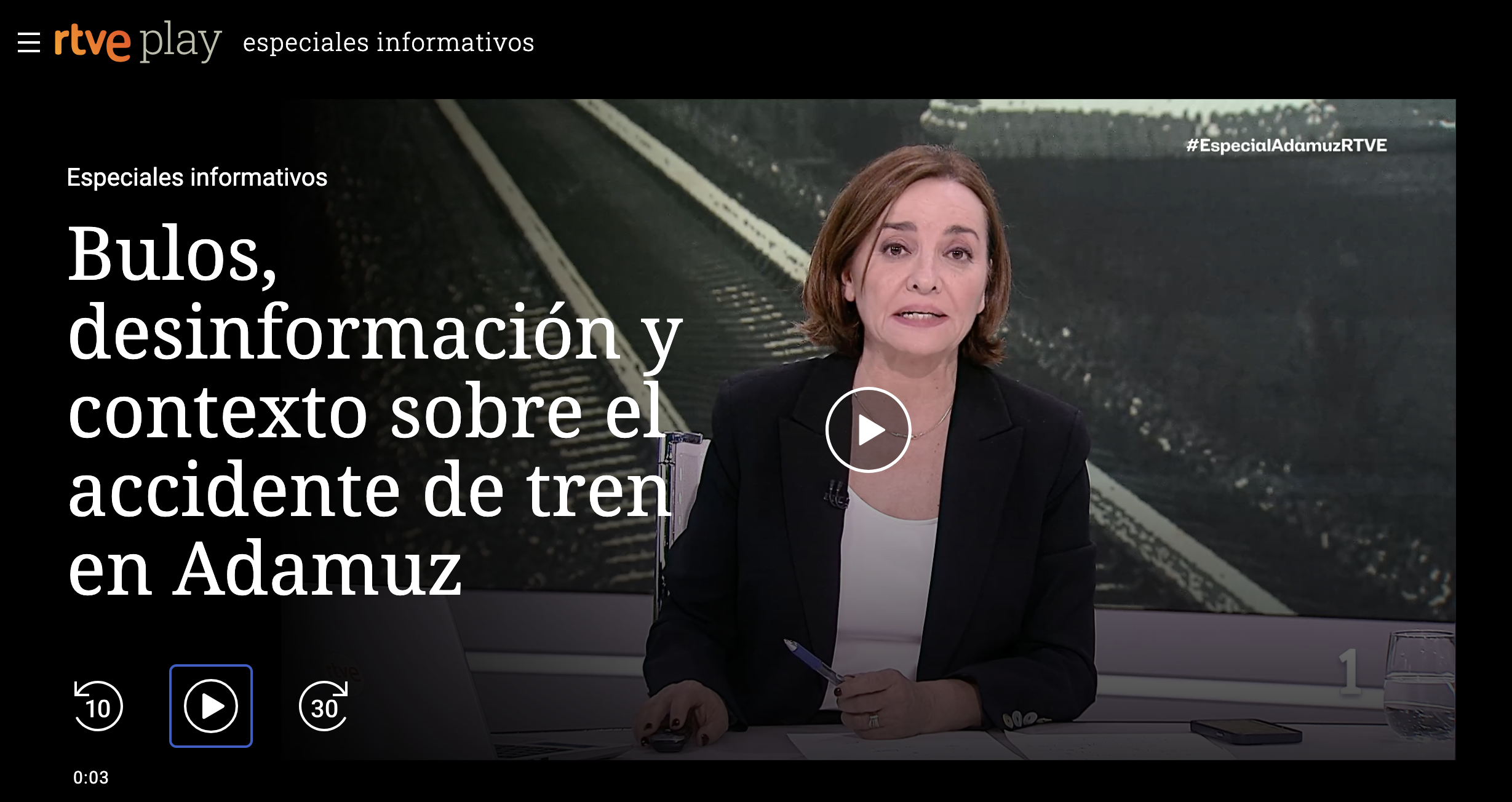
The national public broadcaster RTVE has devoted airtime to debunking various hoaxes in the aftermath of the train derailment.
One reason why such outlets are building their capacity to counter the impact of disinformation is that Spain has been the site of numerous high-profile cases of so-called “lawfare” that work symbiotically with social media-driven disinformation. It didn’t take long for this issue to reappear even as rescue crews were still working at the crash site in Adamuz. According to El Diario, two right-wing groups known for their “lawfare” tactics, Liberium (which has previously been involved in anti-vaccination campaigns) and Manos Limpias (known for turning bulos into legal cases targeting key government figures), have already filed a complaint with a court in Cordoba seeking information about potential “crimes of manslaughter due to gross negligence” in the case of the train derailment.
From Adamuz to Minneapolis
The political dynamics surrounding the January 18 train disaster demonstrate how social media hoaxes, “lawfare” efforts, and far-right provocation mingle comfortably with more traditional forms of right-wing politics to undermine democratic systems - seeking, in effect, to “crash the truth” and build support for neo-fascist movements.
The Morocco/Uzbekistan bulo that has been circulating in Spain in recent days is instructive in this regard. While the hoax functions, on a general level, to sow doubt and chaos, its subject matter is not a random choice. On the contrary, it does clear ideological work for the far right. In this case, with the focus on two Muslim-majority countries, the bulo fits perfectly within Vox’s Islamophobic and anti-immigrant ideology, which claims that Europe is being taken over by Muslims with the complicity of “woke” governments.
As Yousman notes, “disinformation can’t work with an educated populace, or at least it can’t work as well….[it] thrives on ignorance in the same way that mold thrives on moisture,” In this sense, the anti-disinformation efforts of Spanish media outlets are essential to a larger strategy of combating the dangerous work being carried out openly by Vox, and somewhat less openly by the PP.
Of course, there are also other important antidotes to right-wing disinformation. In the face of networked efforts to divide the population and sow fear, grassroots solidarity represents a determined and impactful response.

Blankets piled up in the municipal building of Adamuz, where the people who traveled on the crashed trains spent part of the night. (Photo: El Salto)
In the case of the train accident in Spain, independent outlet El Salto highlighted the “outpouring of solidarity” seen immediately in Adamuz, where ordinary people dropped everything and threw themselves into the rescue and relief effort. The same tools - chiefly WhatsApp and other social media platforms - used to spread disinformation suddenly became ways to organize mutual aid. One neighbor spoke of “400 people bringing blankets, water, working together on everything” and using social networks to share information about what was most urgently needed.
At a time when the people of Minneapolis continue to engage in widespread and courageous efforts to protect their immigrant neighbors under assault by Immigration and Customs Enforcement (ICE) agents, the acts of kindness seen in Adamuz remind us that community struggles to defend life can go hand in hand with struggles to defend the truth.