Silenced, Targeted, Erased: The Struggles of Women Journalists Under the Taliban
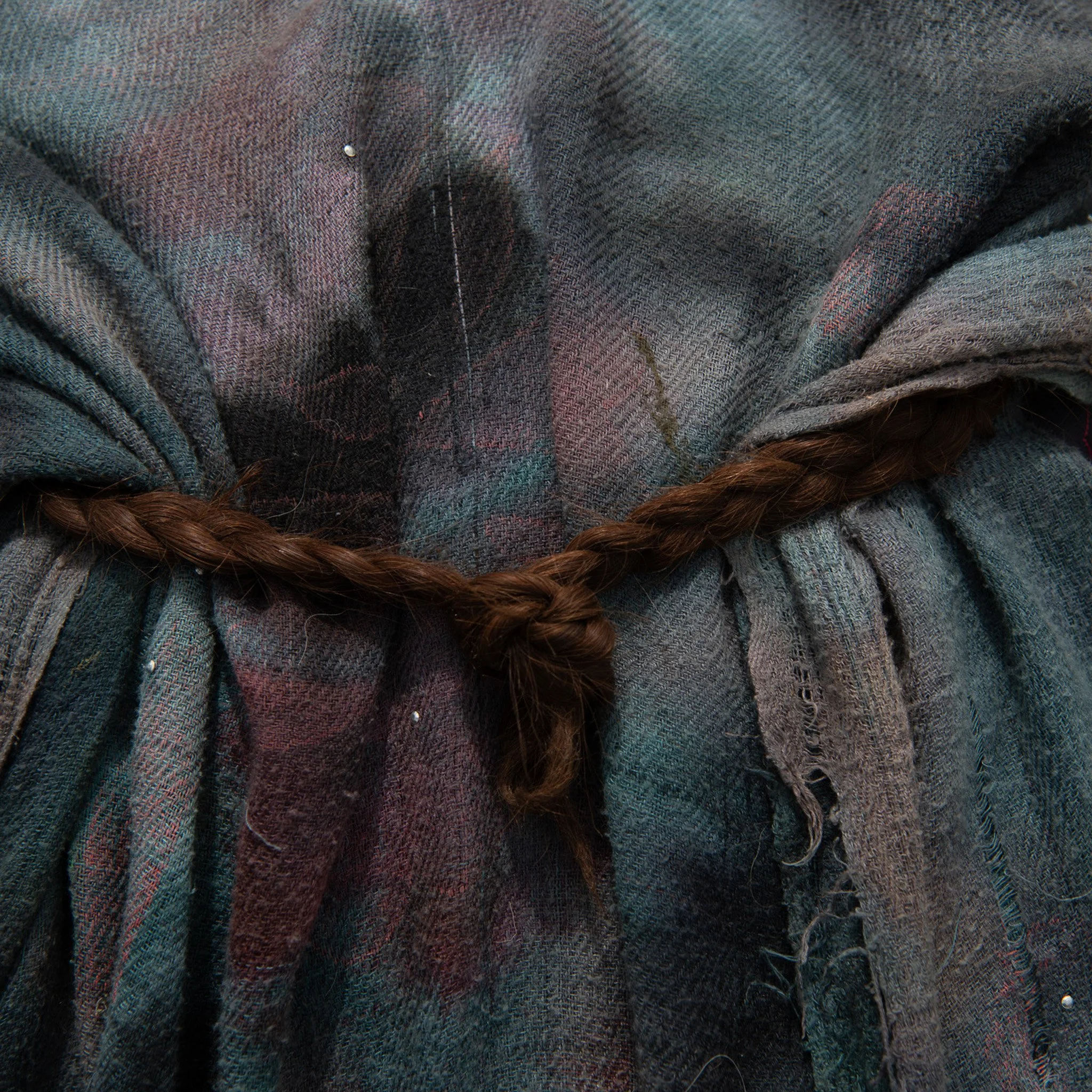
Zibak, Badakhshan, Afghanistan, May 10, 2024. Braided hair, quiet defiance in plain sight. A symbol of care, continuity, and dignity. (Photo: © Kiana Hayeri for Fondation Carmignac)
Since the Taliban returned to power in Afghanistan in 2021, women have been systematically erased from public life. Being a woman there means being denied education beyond the sixth grade and basic freedoms, such as laughing in public, along with dozens of other restrictions. Even more difficult is being a female journalist there. In a country whose political and social turbulence has been fueled for decades by the violent intervention of outside powers, a country that Reporters Without Borders ranks as one of the world’s most repressive media environments, women reporters face compounded discrimination and gender-based violence.
Kiana Hayeri’s story
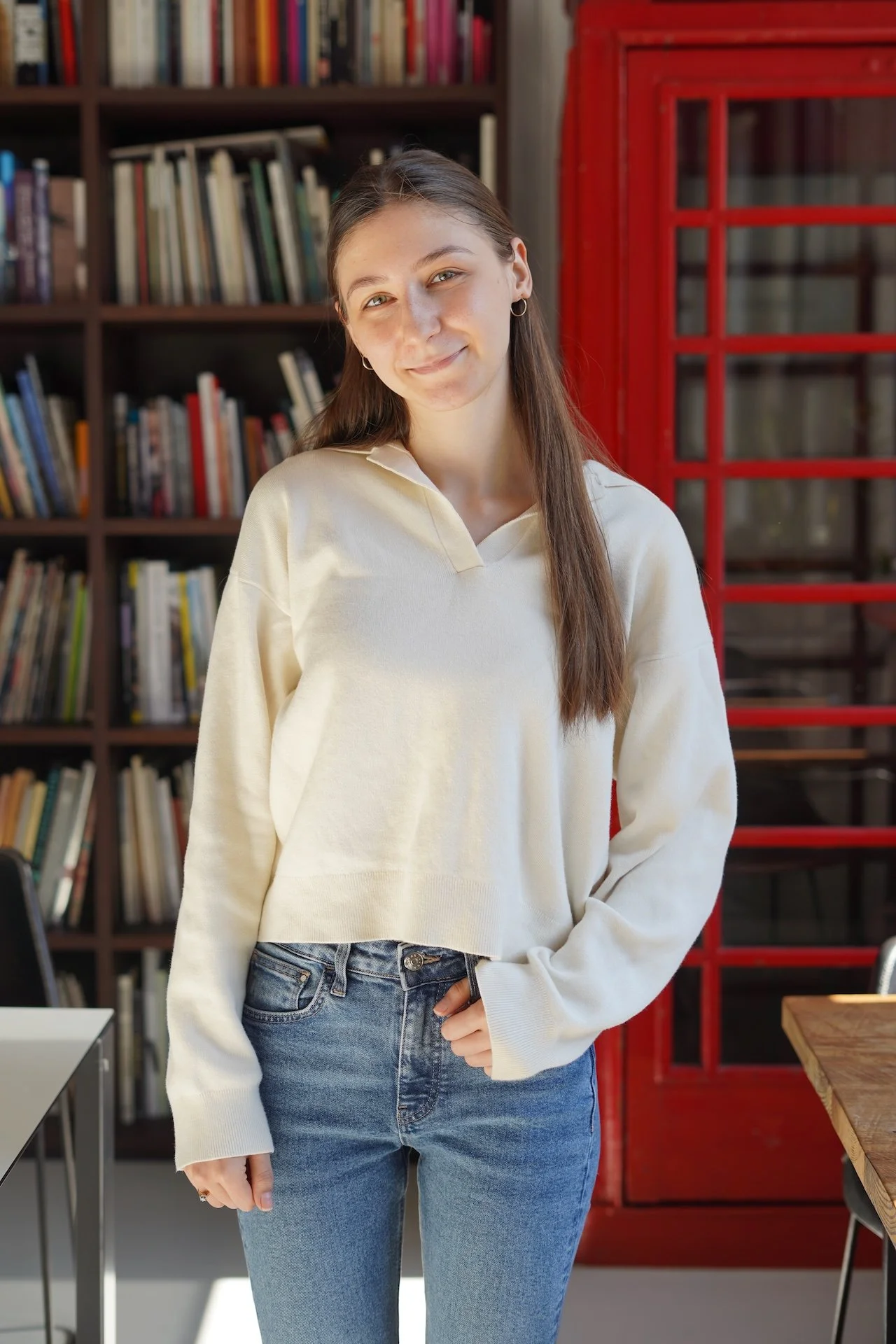
Kiana Hayeri, an award-winning Iranian-Canadian photojournalist, lived and worked in Afghanistan from 2014 to 2022. Before the return of the Taliban, Hayeri remembers those years as “some of the best years” of her life. After they took control, everything changed – most painfully for Afghan women – and eventually she had to leave.
Hayeri kept returning for work, however. Her most recent visits were in 2024. Those trips, undertaken with women’s rights researcher and lawyer Melissa Cornet, became the basis for their collaborative project No Women’s Land, a photographic chronicle of Afghan women’s lives today, culminating in the publication of a book in December 2025.
“We decided to put together our very complementary skills to be able to show for one last time what it means to be a woman in Afghanistan today,” Hayeri says. She understood the risk: after this project, she might not be able to go back. “But it was worth it,” she adds.
On each return, the photographer says, she found her former home less recognizable. “I went back very often, and yet every trip the changes were dramatic – from cosmetic changes to the city, to the way people dress, to the way people even feel on the street,” she recalls. “There was a lot of sadness, a lot of heaviness. And then it seemed to slowly move into people’s homes.”
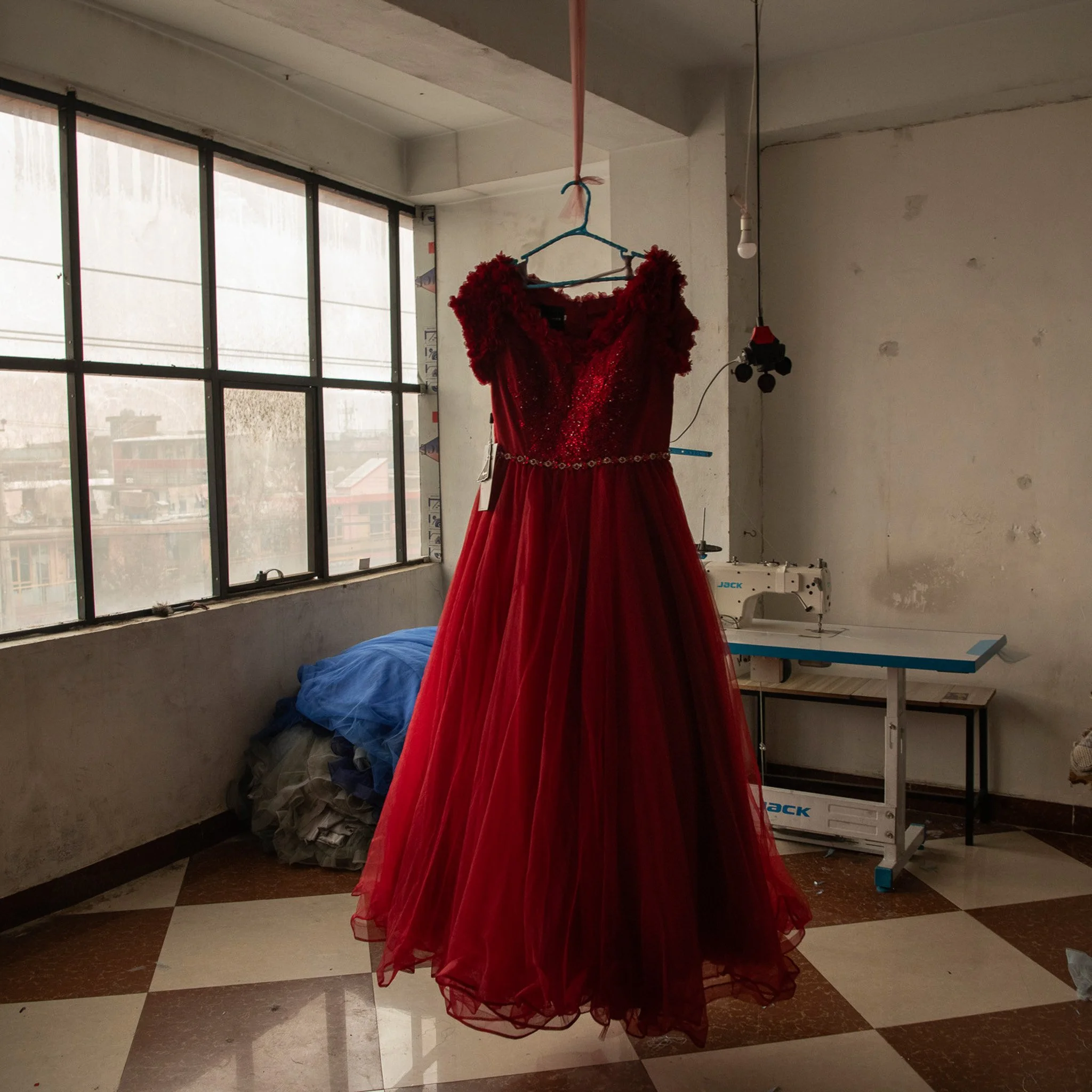
Kabul, Afghanistan, February 28, 2024. A dress hangs inside an empty shop. A quiet metaphor for absence and longing in the city’s new silence. (Photo: © Kiana Hayeri for Fondation Carmignac)
The practice of journalism changed, too. Before the Taliban’s return to power, Hayeri felt that as a woman journalist, she occupied an almost neutral space. She had the access men had, and she had unique entry into women’s spaces and private homes. After 2021, that latitude evaporated. She recalls Taliban officials refusing to sit with her in the same room or to grant interviews solely because she was a woman.
“Entering the country and moving within Kabul was fine, because a lot of women do that,” she acknowledged, reflecting on her most recent trips. “But as soon as we stepped outside the gates of Kabul or flew to another province, that’s when we felt the eyes on our backs. In many places, we weren’t welcome.”
When caution demanded it, Hayeri and Cornet tried to blend in, wearing conservative dress to move unseen. But when they needed to work in public, they wanted to be visible as foreign women – “I refused to cover my face for most of the trip,” Hayeri says – while still adapting clothing choices to local norms. She notes there is sometimes a degree of leniency toward foreigners, but cautions that attitudes vary widely. “It really depends on who you’re dealing with. Some people – and they don’t necessarily have to be Taliban; they could be Pashtun conservatives – have no understanding of you as a foreigner.”
The erosion of access was alarmingly fast. During the project, both Hayeri and Cornet found fewer people willing to speak on record and fewer willing to show their faces. “There were more and more fears,” Hayeri adds. Still, she praises the courage of the Afghan women who agreed to be interviewed and photographed.
Hayeri’s work has carried consequences: arrests, threats, and other dangers both before and after the Taliban’s return. She recalls a moment of acute danger experienced while working on No Women’s Land. “There was a moment when we actually thought the Taliban was at our doorstep, so we had to immediately get rid of evidence or spread it and make phone calls.” The alert turned out to be false. “But compared to what the Afghans are going through, that’s nothing,” she says.
How is the Taliban silencing women journalists?
The situation for female journalists in Afghanistan has long been dire, but it has clearly deteriorated since 2021. Akriti Saraswat, who works on the safety team at Free Press Unlimited (FPU), an international press-freedom organisation that supports media outlets and journalists worldwide, describes the scale of the challenge. After Gaza, Afghanistan is the country where FPU has concentrated the most effort in the last few years, she says, including mass evacuations of journalists, safety trainings, and mental-health support.
The Revolutionary Association of the Women of Afghanistan (RAWA) reports that since seizing power, the Taliban have issued at least 22 directives restricting the media – seven of which directly target women. These rules vary by province and continue to multiply. In Helmand Province, for example, there is a ban on broadcasting women’s voices. “Women journalists are not allowed to attend press conferences, invite male guests, or co-host programmes with men,” reports RAWA. “In some provinces, women have been banned from working in the media altogether.”
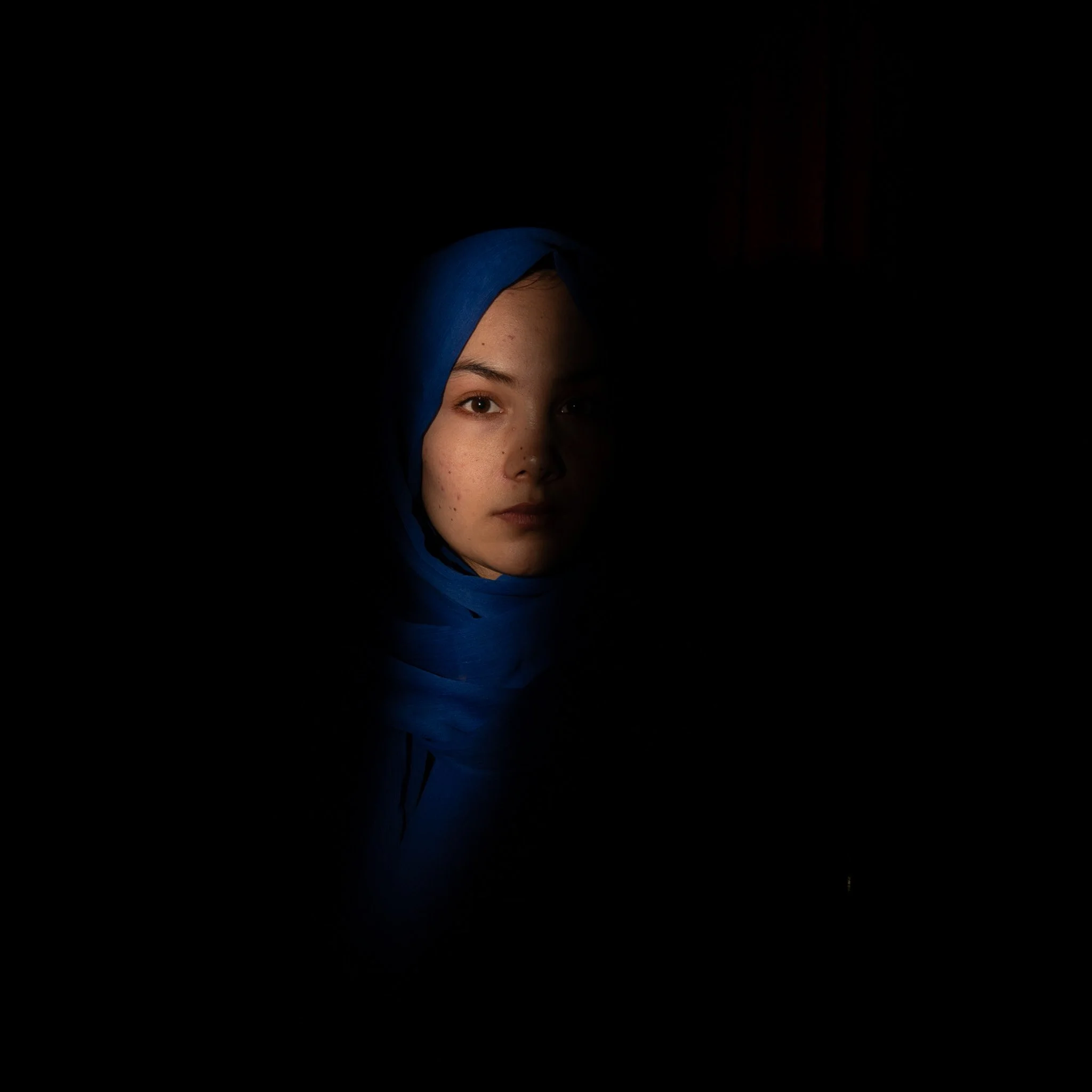
Kabul, Afghanistan, April 22, 2024. Shahla, 21, is a radio host. “Even laughter was banned. But we fight back, girls call us to say we give them hope.” (Photo: © Kiana Hayeri for Fondation Carmignac)
It is impossible to know precisely how many women work as journalists in Afghanistan; reliable data are hard to obtain for obvious reasons. “Who’s doing the surveys? What’s the methodology? Is it even safe?” Saraswat wonders. “Making an official list of women journalists would be incredibly dangerous there - it’s essentially a list of people at risk of being killed.”
However, RAWA still notes that the number of female journalists has fallen sharply since 2021. Most of those who remain are local reporters working anonymously – using false names or aliases, hiding their faces on camera, communicating via encrypted channels – and often for small outlets with very limited freedom. According to the Afghanistan Journalists Support Organization, about 92 percent of female journalists have been forced to alter or censor their work, sharply limiting their ability to reflect the realities of life under Taliban rule.
RAWA claims that many Afghan women journalists now work from exile, particularly in Pakistan, Iran, and Europe. The association cites the example of Fatema Hamnawa, who was living in Islamabad and was arrested by Pakistani authorities when her visa was about to expire. “Working conditions for journalists in exile depend on host-country laws and the priorities of funders,” RAWA emphasizes. “In many cases, editorial constraints limit their ability to present a full and accurate picture of Afghan society.”
Collaborating with foreign media from inside Afghanistan is also unsafe, RAWA adds. Journalists cannot safely share information with foreign outlets and are forced to report secretly through trusted contacts. For example, recently, Taliban-linked accounts released a forced-confession video of Shakib Ahmad Nazari, a journalist arrested in July on allegations of “collaborating with Afghan media abroad.”
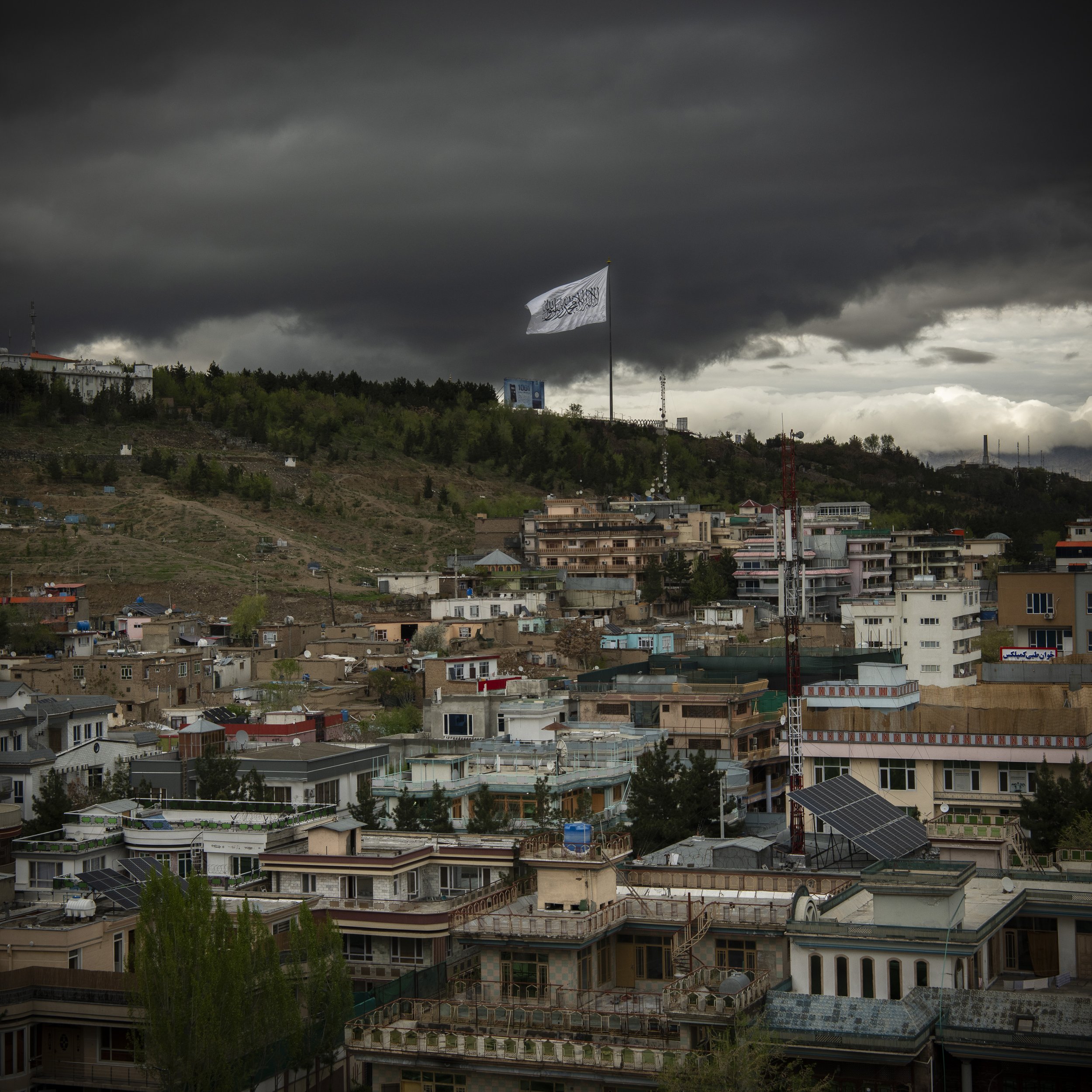
Kabul, Afghanistan, April 20, 2024. Taliban flag flies over Wazir Akbar Khan hill, replacing the Republic’s tricolor flag. (Photo: © Kiana Hayeri for Fondation Carmignac)
The repercussions for journalists who defy Taliban rules differ greatly. “It depends on the topic you cover and your connections in the country,” Saraswat says. Reporting on women’s rights and human-rights abuses is the most dangerous work and frequently leads to arrests, physical assaults, threats, permanent bans from work, or worse. RAWA adds that “many have been summoned for so-called ‘interrogations,’ which usually involve intimidation and orders to stop working. At times, entire media outlets are shut down; for example, Shamshad TV was recently suspended. Even independent voices on Facebook or YouTube have been targeted.”
RAWA also emphasises that female journalists face compounded discrimination – as journalists and as women. They are subjected to harassment, gender-based restrictions, limits on travel, and enforced dress codes. “Only a small number continue to work openly, and they are required to have a male guardian present, avoid interviewing men, and adhere to strict dress codes,” RAWA says. Saraswat describes gender-based violence in Afghanistan as particularly severe: “Being a journalist and a woman in Afghanistan is like being hit from all directions.”
This characterization is borne out by the existing data. The Afghan Journalists Centre reports that, since 2001, 130 journalists and media workers – including 20 women – have been killed. More than 55 percent of women journalists have received personal threats; about 32 percent now work covertly, mostly for online outlets. As a result, 24 percent of women journalists have left the profession, and, according to Reporters Without Borders, 84 percent have lost employment altogether.
Despite the courage of many Afghan journalists, the outlook remains bleak. “There are no signs that restrictions will ease,” RAWA says. “In fact, new rules continue to be imposed. Male journalists must grow beards and follow so-called ‘Islamic’ reporting principles, while women face even harsher limits and frequent harassment.” RAWA also reports instances in which Taliban officials have used personal tactics to intimidate or manipulate journalists, citing cases where Inayatullah Khwarazmi, a Taliban defence ministry spokesperson, allegedly contacted female journalists privately under the pretext of marriage.
Photographer Hayeri frames the systematic suppression of women reporters as part of a broader attempt to erase women from public life. “Journalists are the eyes and ears of society,” she says. “In a country as segregated as Afghanistan, without female journalists, you lose access to half of society. And that’s exactly how women are erased.”
“Existing is a form of resilience”
As RAWA notes, despite these obstacles, many female journalists continue to cover education, women’s health, poverty, and other social issues, “often framing their reports in a way that avoids attracting Taliban attention.”
Moreover, girls in Afghanistan are still drawn to journalism. Hayeri explains that the profession was widely admired before the Taliban takeover. “You know how societies have stereotypical jobs and careers people want for their children,” she says. “In Afghanistan, the top three have been doctors, engineers, and journalists.”
Along her own path in Afghanistan, Hayeri met many girls who wanted to pursue journalism – some of whom she inspired. The photojournalist recalls a third-year journalism student who, at a young age, “saw a reporter on TV covering suicide attacks, and always wanted to become a journalist.” After the Taliban closed universities, the student could not finish her studies. “I helped her where I could – she would come along, assist me, or work for me and learn on the go. She recently left Afghanistan and now wants to pursue journalism abroad.”
Education remains a fraught issue for Afghan women, and Hayeri emphasizes that the Taliban’s approach to this issue is not necessary monolithic: “Within themselves they have a lot of conflict about what rules to apply.” Some members, she adds, believe girls should be educated, while many of the decrees coming from Kandahar – “a very conservative tribal Pashtun society” – seek to strip women from public life, from the workplace to the classroom.
“Still, there are underground schools across Afghanistan where girls and women, sometimes supported by men in their communities, push for education,” Hayeri says. “The scale ranges from a few people studying in a basement, taught by an educated mother, to larger, more organised efforts where former teachers offer classes for free or for very little money.”
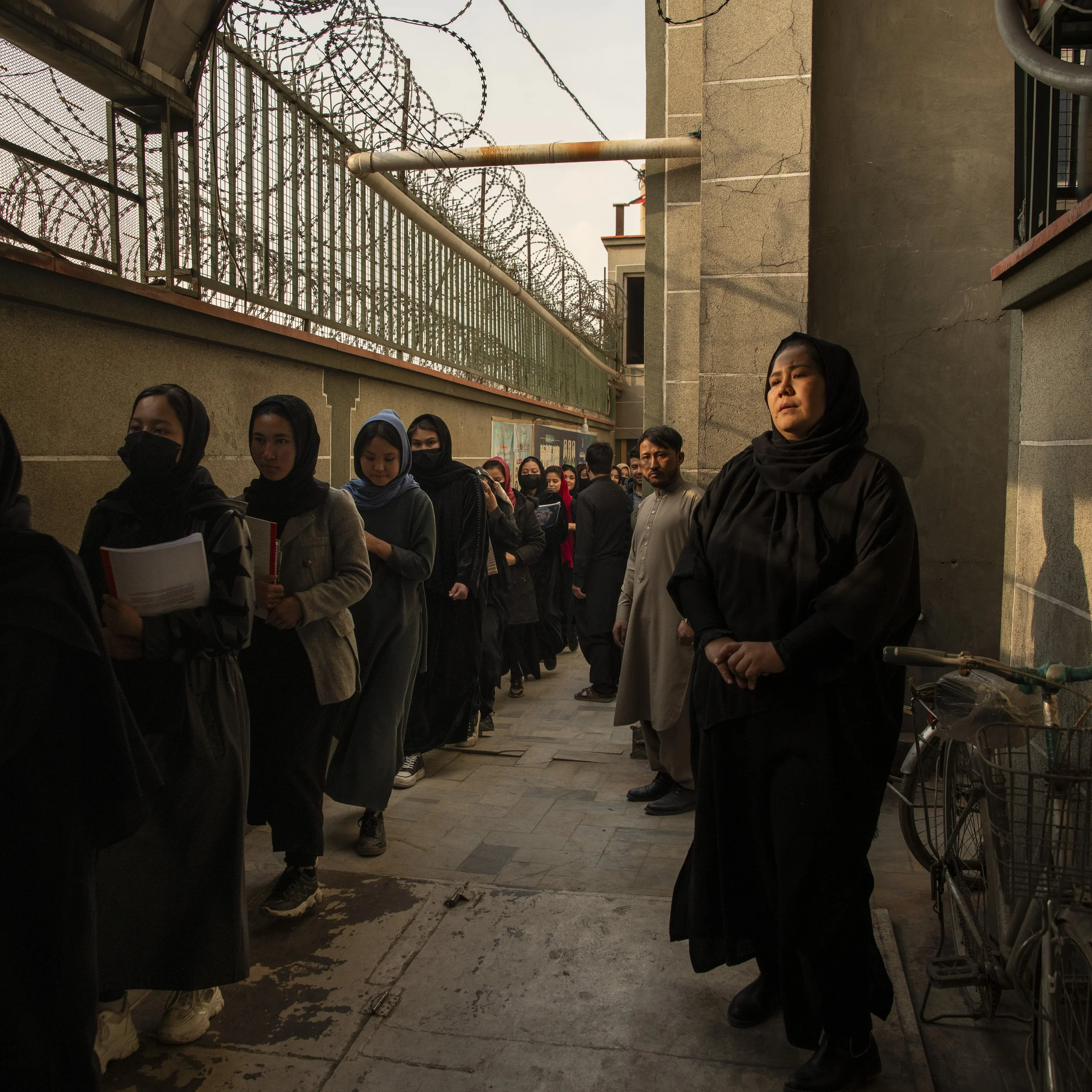
Kabul, Afghanistan, February 17, 2024. Despite the risks, this private school teaches 700 girls daily. They study in silence, leaving their bags at the gate, leaving discreetly, one by one. (Photo: © Kiana Hayeri for Fondation Carmignac)
Saraswat of the FPU also notes that many women are fighting to access education through VPNs and digital tools. But she stresses that formal education is not always the pathway into journalism. “Good journalism grew out of community reporting, not fancy degrees,” she says. “Afghan women have what it takes to be good journalists. They have important stories to tell. They are extremely passionate. And they don’t do this for money – what they seek are rights for their communities.”
She notes that the motivations driving these women are very different from how journalism is often perceived in the West: “Sometimes, people just become journalists out of necessity, because there’s no one to listen to them, no one who understands what they want. So they take a keyboard and write.”
Hayeri describes this resilience as an act of survival. “Women continue to exist not because it’s easy, but because they have no other options,” she affirms. “Resilience must be measured against the environment people come from. For Afghan women, simply existing is a form of resilience.”
What can we do?
According to RAWA, the international community has chosen to ignore the reality facing women in Afghanistan, which means “accepting the erasure of Afghan women and legitimizing the Taliban regime.”
RAWA calls some Western responses “hypocritical.” “Western governments publicly condemn the Taliban but continue to negotiate with them and even invite Taliban representatives to international conferences. Their officials’ articles are published in major Western newspapers, and they still receive indirect funding. This hypocrisy shows that many international actors prioritise their own interests over the rights of Afghan women. Expecting genuine help from them is, unfortunately, unrealistic.”
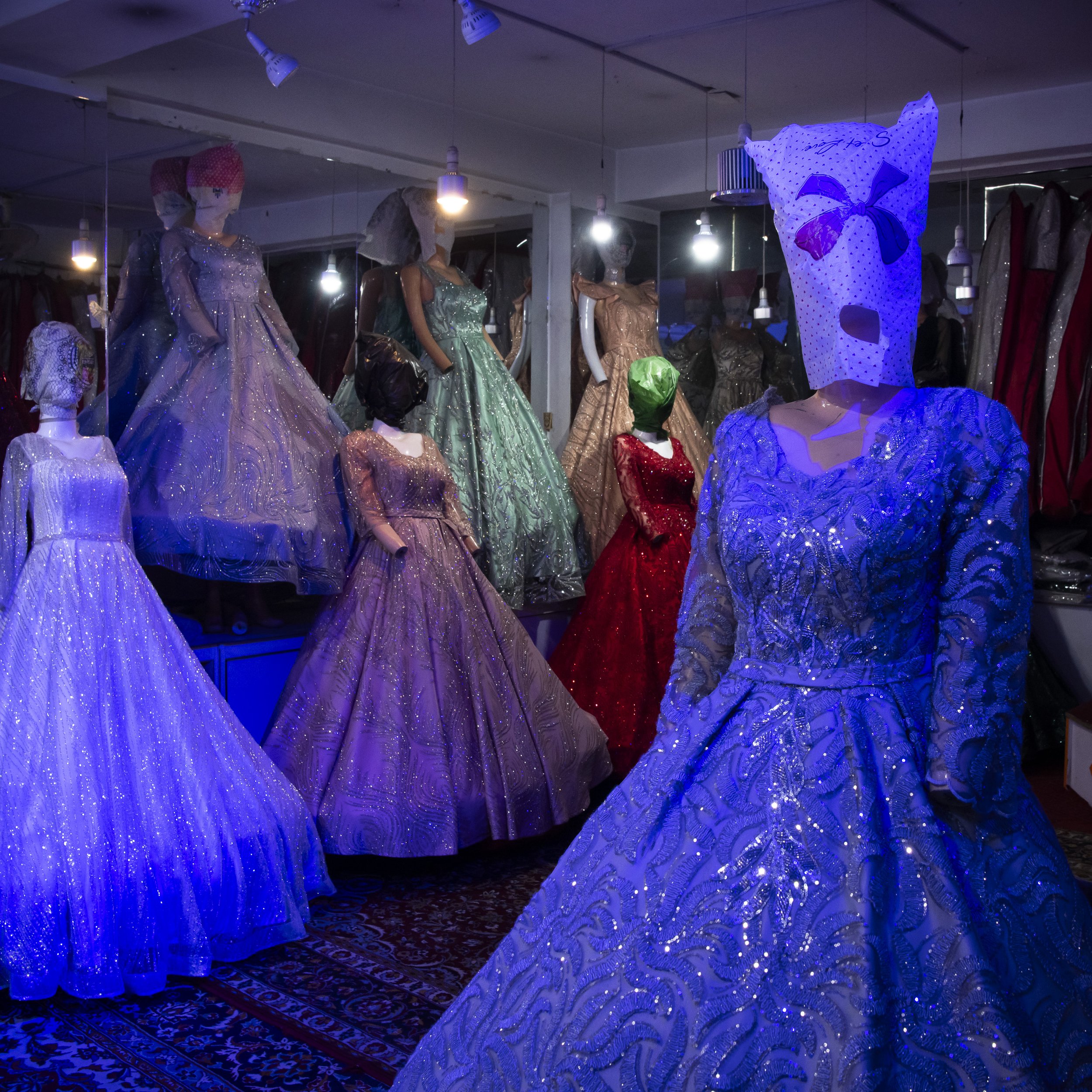
Kabul, Afghanistan. February 6, 2024. Mannequins covered in plastic reflect the ban on showing any representation of women in public. (Photo: © Kiana Hayeri for Fondation Carmignac)
For this reason, RAWA urges freedom-loving people around the world to raise their voices and advocate for the rights of Afghan women. For her part, Saraswat stresses the need to address Afghan women’s issues on a personal level. “The first step is to recognise that an oppression of one is an oppression of all of us,” she says. Saraswat adds that the issue rarely stays on the agenda: politicians quickly shift their focus to other countries, while ordinary people feel overwhelmed by the sheer number of global crises. “It seems like everyone has fully given up on Afghanistan,” she laments.
Saraswat suggests small, practical ways to keep Afghanistan alive in conversations. “Not everyone will sit at a policy table, but no one is too small to speak up,” she insists. “Hire Afghan journalists. Read Afghan writers. Learn their history. Listen to their voices. Amplify their stories. Support Afghan media, both inside the country and in exile. Keep Afghanistan in the conversations.”
Returning to Hayeri’s project No Women’s Land, the photographer issues a stark reminder of the stakes. “It’s important to look at these photos and understand that you need to stand up and do something,” she says. “Otherwise, you’re almost looking at what the future might look like.”
Support resources for journalists
Below is a list of some international and regional organizations that provide support to journalists and media workers facing security risks or professional restrictions. Forms of assistance vary and may include emergency grants, legal advice, temporary relocation, psychosocial support, and other forms of aid.
When seeking assistance, journalists are encouraged to consider digital security and use secure communication channels where possible.