
Weavers of Life: The Mapuche Protectors
Weavers of Life (Tejedores de Vida) is a bilingual series of articles that collect the stories of people and groups who defend beings other than humans. The series is a collaboration between Weave News, Talking Rivers, and author Johana Fernanda Sánchez Jaramillo.
Read the Spanish-language version here.
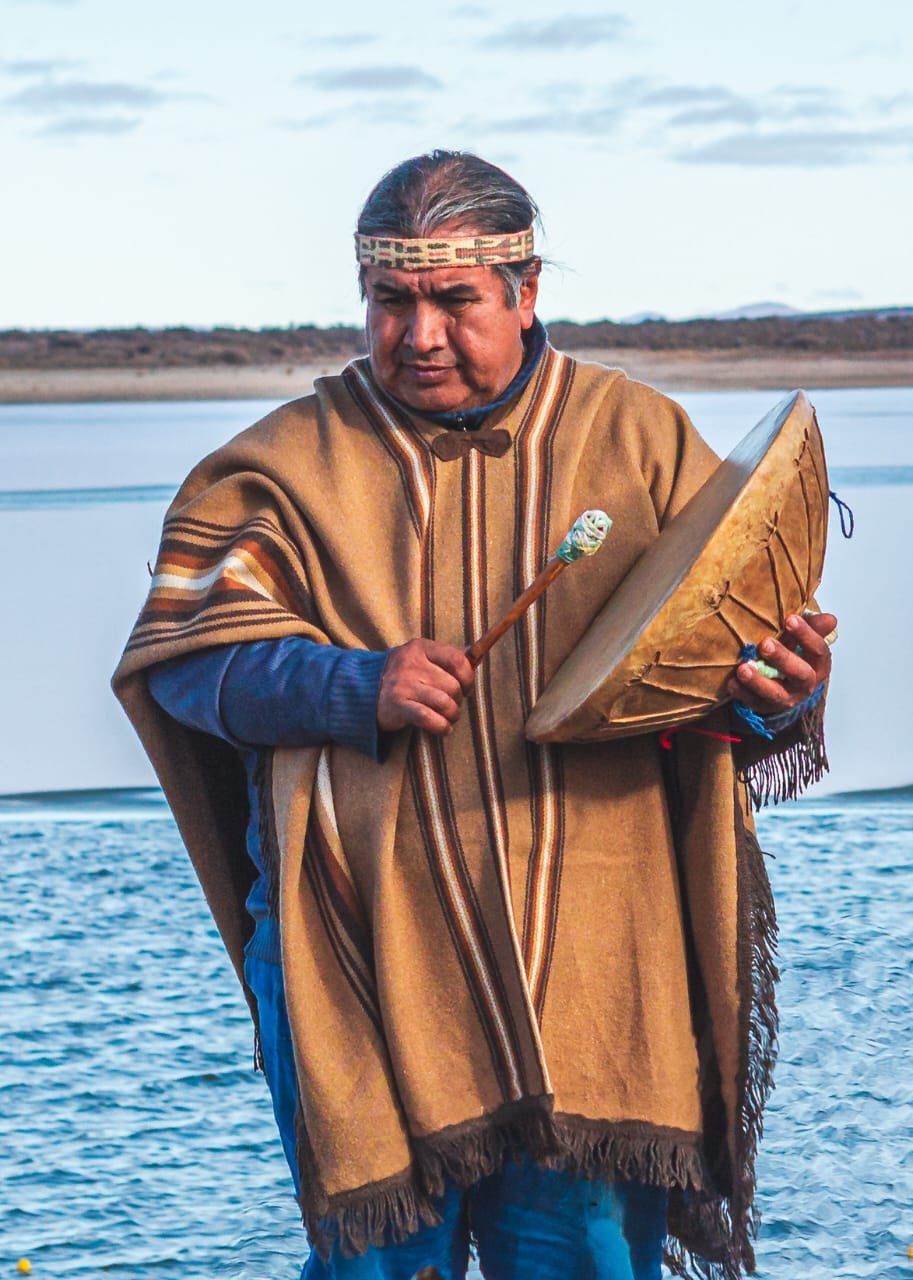
All photos courtesy of the interviewee.
His name, Pvrafilu, means eight snakes in his mother tongue (Mapuchezugvn) and Francisco Ignacio Prafil in Spanish. He is part of the Mapuche people, Mapuchezugvn, and his territorial identity is Wenteche ("people of the heights"), Puelmapu, Eastern territory of Argentina where the sun rises. He is a lonco, the highest legal authority of his community.
“For us, all the power of the universe is one, but there is still diversity within this,” he affirms. “We are diverse, there is a plurality, and so we believe that we must build an intercultural society.”
This conviction is even more powerful coming from a member of the Mapuche people, whom they tried to erase on both sides of the Andes: in Argentina, with the so-called Desert Campaign (1878-1890), and in Chile, with the Araucania Pacification (1862-1883). Yet this man with dark brown hair, striking features, and bushy eyebrows is living proof that the State failed in its efforts.
His slow, sweet, yet firm words bear witness - as his elders taught him - to the fact that oral tradition is the only way to preserve their identity. With a foundation in the word, they confront the challenge of reaffirming and claiming rights such as autonomy and self-determination, which they still do not enjoy despite being a nation that existed before the Argentine state was created.
They are conscious of being a people from both sides of the Andes. This understanding leads them to a commitment in defense of all life - rivers, lakes, mountains - and they will do whatever they can to preserve the mapu, which for the non-Indigenous simply means land but for the Mapuche encompasses the air, the wind, all other animals, and the constellations. “Mapu is all that you see and all that you don’t see,” he emphasizes.
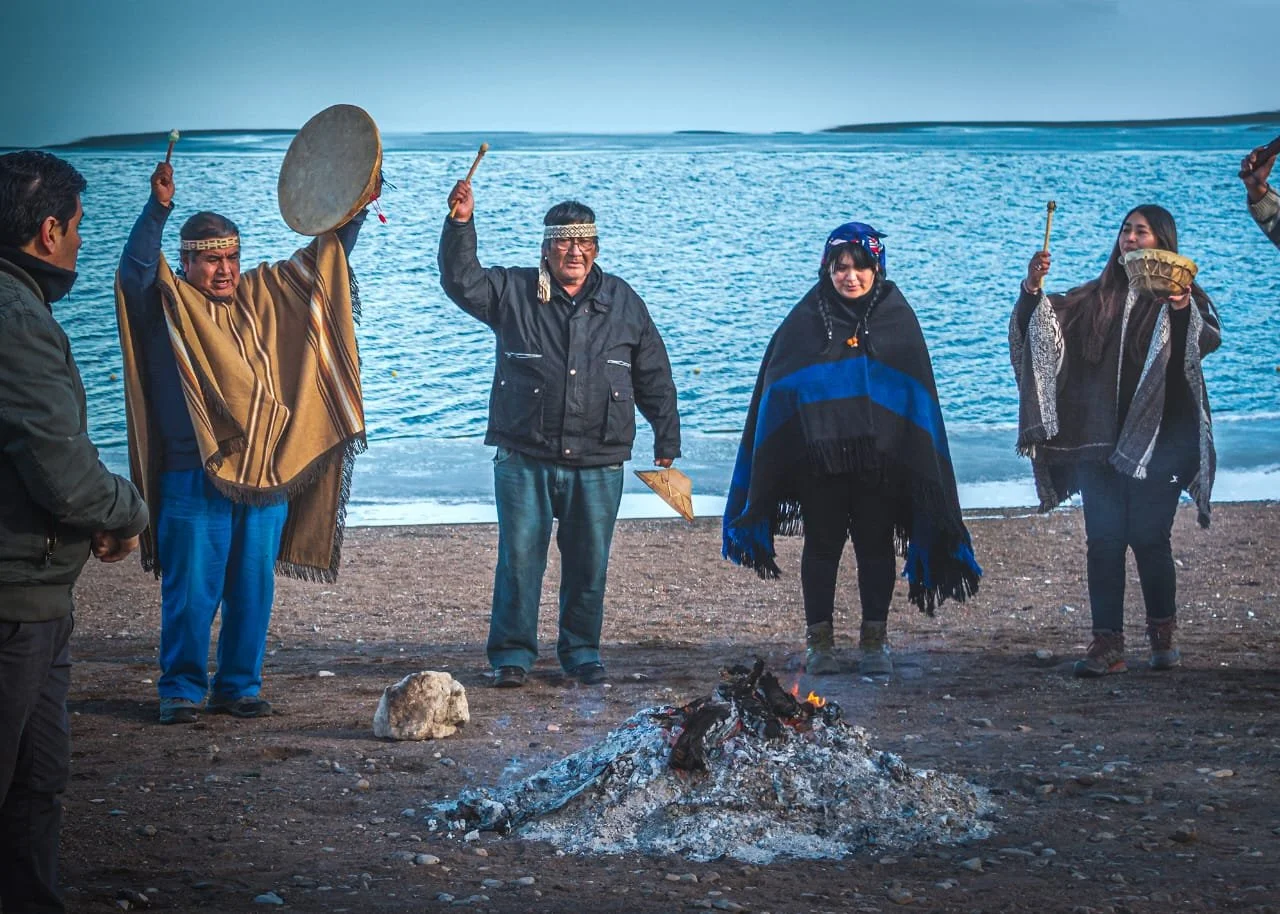
In his culture, women occupy a central place: they are teachers, caregivers, protectors, and transmitters of knowledge; and, above all, the old woman - the kuse - is a guide and living memory. In the Wuelmapu, everyone is family, brothers and sisters, even when they come from different nationalities. Their concept of kinship transcends bloodlines to embrace others in a deeper bond. The women speak, observe, contemplate, and accompany; their constant presence guides, sustains, and influences how the community expresses itself and relates to the world.
Where the mapu breathes: paths to protect it
This community faces challenges: the lack of self-determination, extractive industries, biodiversity agreements that favor the few, and the State’s failure to comply with obligations, protocols, and agreements.
In the face of this, they ask the mapu to give them more wisdom and understanding. They learn to contemplate the night, the stars, the direction of the wind, and also the languages of the land, like what a bird singing at midday wanted to tell them. As custodians of the territory, they protect each element, and their duty is to make sure that nothing is broken or damaged. They care for the mapu that shelters all forms of life.
Consequently, when someone touches a mountain or a lake, or kills animals indiscriminately, or destroys flora and forests, it affects them, because their Mapuche name is connected to those elements: they are part of them, they are neither owners nor guardians of them but rather part of them, and they seek to preserve harmony for present and future generations.
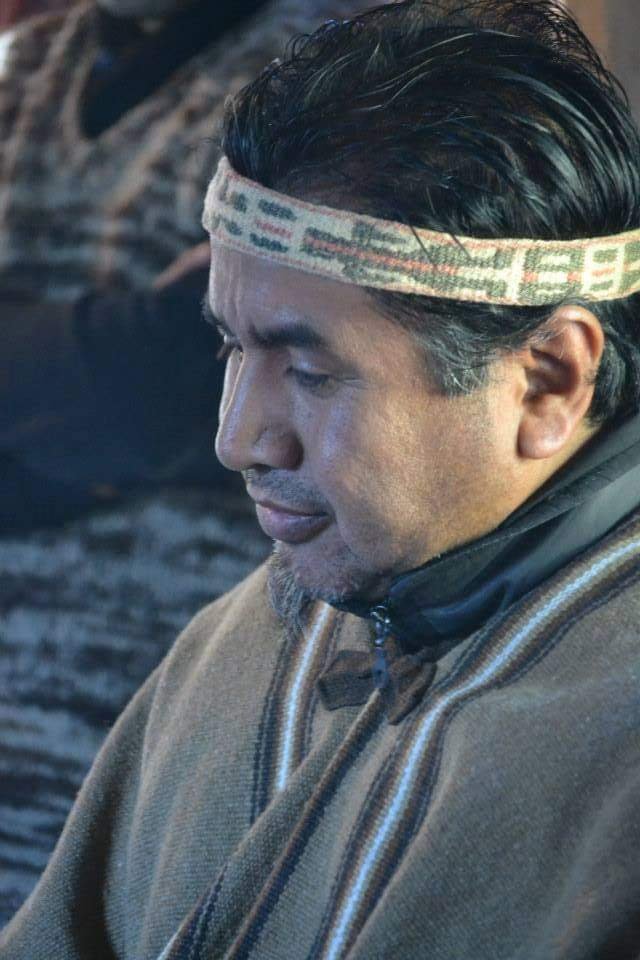
For the Mapuche, their territory is an open school where they discover that the stones are alive; that the animals are brothers and sisters, not enemies; and that living in relation with all of these beings is part of their education. They also gather to do ceremonies and to ask, for example, that the winter not be too harsh. They dance, sing, and kneel before an altar to give thanks, make offerings, and read the signs that show them whether they are acting correctly. In the same way, they are in touch with the strength of their elders, guided by a profound principle: to care for what exists without harming or exhausting it.
This way of learning and connecting with their territory is linked with another profound truth: their ancestry and lineage are not just memory. They are the map that shows them where they come from and how they should relate to the mapu. In each ceremony they talk with her, they ask permission to cross a river or to go into the forest, because, as they say, no one makes decisions alone. Their mother tongue allows them to converse with her, to make an offering in order to end a drought or alleviate a situation. While the State continues violating her as a set of resources, they recognize her as life. They are not separate from the mapu; they are part of her pulse, and because of this, they know that protecting her is not a choice but an ancestral obligation.