Between the Academy and the Root: William and the Defense of Mother Earth from Kamëntsá Bíolugargogía
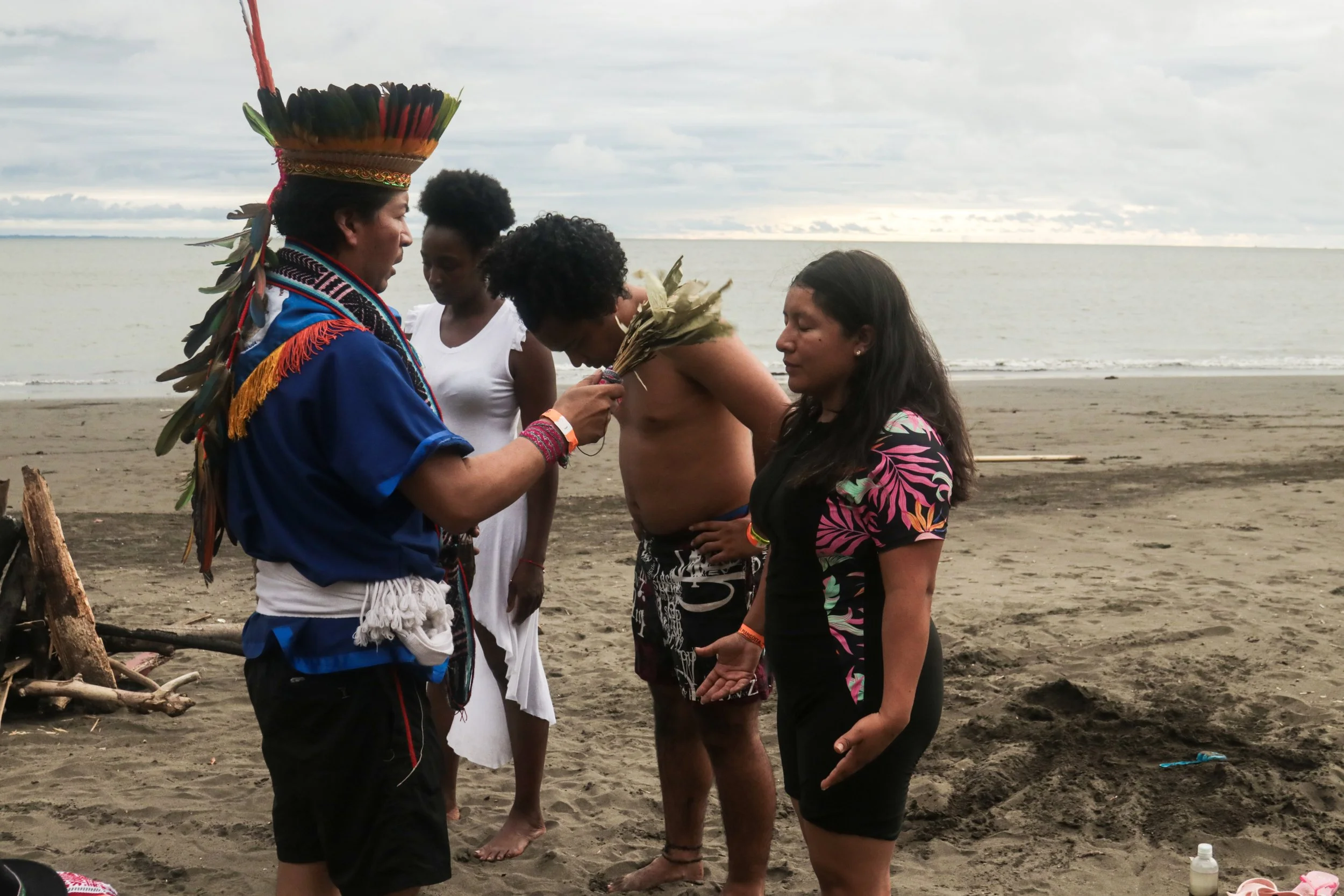
Photos taken by Karent Hoyos and provided by William Mavisoy.
There are teachers who teach content, and there are those who teach us to remember. To remember where life comes from, to whom we owe our breath, and why the earth is not a resource, but a mother who should be listened to, cared for, and defended. In that place dwells the one who educates and heals: not as an academic figure, but as a living bridge between worlds that have been separated for centuries. Where academic discourse meets the word that is sown, where knowledge ceases to impose itself and learns to listen, a different way of teaching is born: one that does not translate ancestral knowledge, but walks alongside it, respects it, and allows it to transform what it means to educate.
William Jairo Mavisoy Muchavisoy is Abuatambayá—Tats̈ëmbuá, which in his Kamëntsá language from Putumayo (Colombia) means “the one who educates and heals.” He arrived more than two decades ago in Popayán from Sibundoy, where his mother, Mercedes Muchavisoy, planted his umbilical cord so he would never forget the path that would lead him back to his roots.
In 2018, while pursuing his doctoral studies in Ethnobiology and Biocultural Studies, between the time he spent in university classrooms and his journeys to the place inhabited by his parents and ancestors, he created what he called biolugargogía (“biolugargogy”). In 2019, he became the first permanent Indigenous professor at the University of Cauca in Popayán (Cauca).
“This word, with its accented ‘i’ (í and ì) in bío- and -gogía, represents the movement of human arms and hands, the modes of bodily interaction inward and outward. It is a political commitment to the intercultural and biocultural recognition of the memories and ancestral wisdom of Indigenous peoples in education,” William explains. Breaking down the word into syllables: bío refers to notions and cycles of life-death-life; lugar (place) to the various ways of inhabiting and perceiving space-time as one, interactions from, with, and for the people of the place; and gogía to the acts of educating.
Bíolugargogía in higher education: knowledge that springs from the territory
In 2020, William established the Biolugargogy Seedbed of Ancestral Memories and Wisdom. In Colombia, “seedbeds” are groups of students who, guided by a professor, mainly carry out research activities. However, this seedbed goes much further. It serves as a channel through which knowledge keepers from each place guide the sense of belonging of each sentient-thinking person, encouraging them to return to family and community memory and thus validate the importance of natural curiosity and learning as part of being human-ancestral.
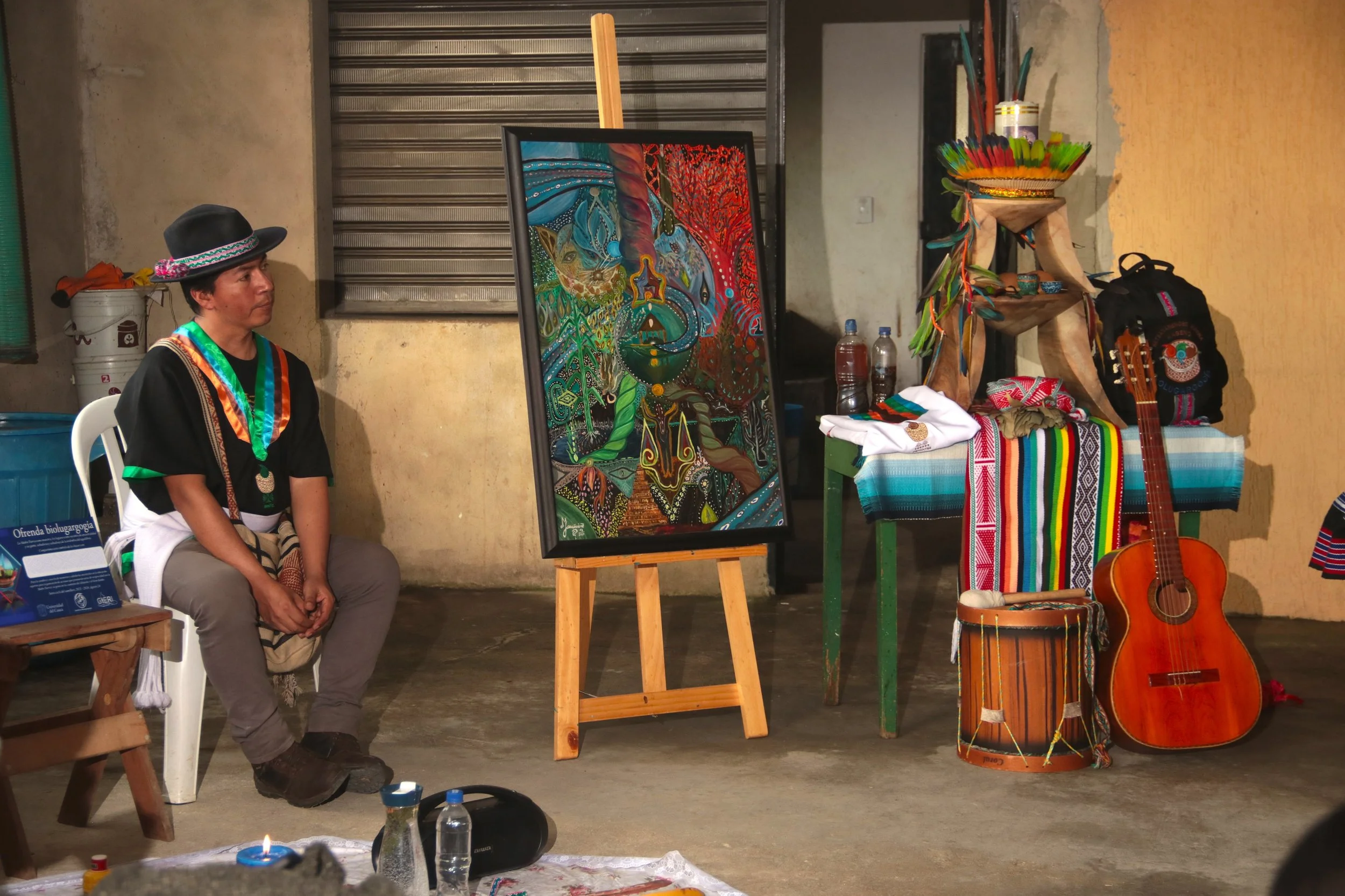
This unconventional initiative has allowed William and his students to “walk the talk.” Memoriandar (a word that combines memory and walking) is the space where knowledge keepers share their experiences and knowledge in close relation to the places inhabited in Abiayala—the name used by the Gunadule people of Colombia and Panama for what Western countries called Latin America —and the Gran Kauka, the department of Cauca. These distinguished community members participate in three ways: Memoriandar in the classroom; Memoriandar at the University; and itinerant Bíolugargogía across different territories.
Memoriandar at the University emerged during the COVID-19 pandemic so that knowledge keepers could participate virtually and share their wisdom on specific topics. Meanwhile, Memoriandar in the schoolroom takes place at the university itself, where they engage students in dialogue about course content that addresses ancestral knowledge. In this space, researchers and academics also participate, fostering a form of “research solidarity” in support of community dynamics and communalities, as the author of this account has done.
Itinerant Bíolugargogía corresponds to visits made by the professor and students to knowledge keepers in their territories of origin to learn from and deepen their understanding of life experiences and how these communities have faced environmental, social, cultural, and educational challenges caused by capitalism and its extractivist economy.
This seedbed has achieved something innovative: enabling students to interweave ancestral memories and wisdom with the epistemic paradigms of university programs— marked by colonial legacies—by placing territory (mountain, sea, or forest) at the center, contributing to the harmonization and healing of humanity and Mother Earth.
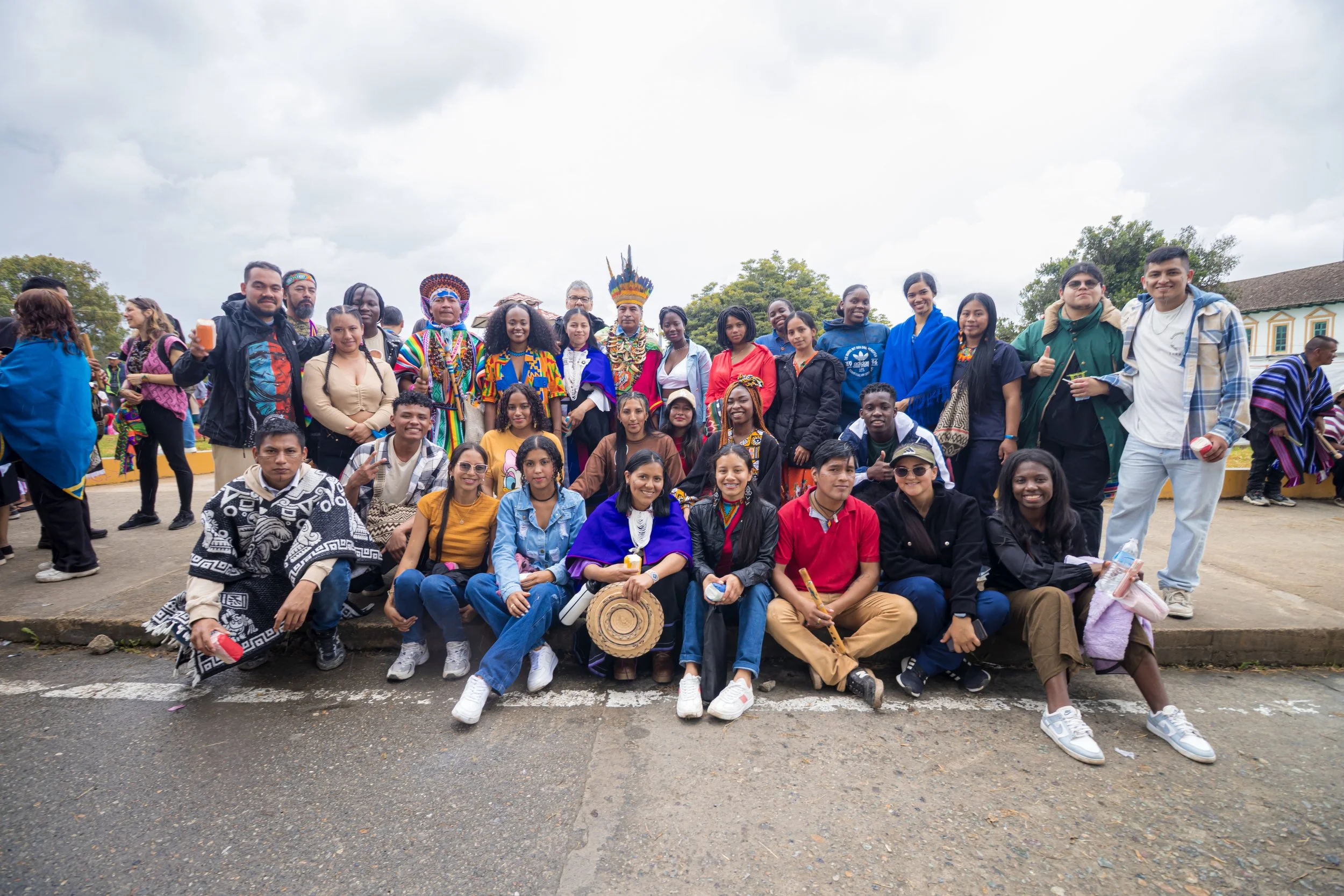
The strength of this initiative lies in remembering that teaching is not about filling minds with content, but about returning to the root. That defending Mother Earth does not happen only inside or outside the classroom, but in every gesture that dignifies memory, in every encounter where one form of knowledge is not subordinated to another, but breathes alongside it. In that “in-between place,” William ceases to be only the one who explains and directs, and becomes the one who cares, weaves, and sustains life with others. And perhaps, in that quiet yet profound act, what is being shaped is not only another way of educating, but another way of continuing to be human and to respect Mother Earth.