
Global Indigenous Peoples News Bulletin #14 (March 2026)

This bulletin devoted to Global Indigenous Peoples News, part of the Glocal Exchange project of Weave News, seeks to highlight some of the current issues from Indigenous communities in different parts of the world. The focus of the bulletin is aligned with the overall purpose of the Glocal Exchange project, which examines globalization through its impact from the perspective of local communities. It also supports the Weave News mission to “investigate and report about contemporary issues that are either underreported by establishment and other corporate media or reported in a way that excludes essential context, perspectives, and voices.” These are “issues that have a strong justice component and that reveal connections across communities, borders, struggles, and experiences.”
Indigenous peoples, water governance and land issues
An analysis of academic research published in Nature revealed that Indigenous peoples are increasingly asserting influence over water governance systems around the world through legal action, resistance, partnerships, and their own forms of engagement. “However, the study also makes it clear that this influence is frequently partial,” notes John Ahni Schertow in IC Magazine, “or constrained by dominant governance structures that are unwilling to meaningfully incorporate Indigenous law and knowledge.”
In the US, across the West, Native American tribes are trying — and in more and more cases succeeding — in getting ancestral lands back. As the LandBack movement advances across the West, more ancestral lands are being returned to tribes, while other important sites remain at risk. “The dramatic political shifts at the federal level over the past year have highlighted the importance of state action in achieving the LandBack movement’s goals,” write Chad Bradley and Anna V. Smith for High Country News. “LandBack is about more than returning land; it’s also about preserving places that have major historical, cultural and spiritual significance to communities.”
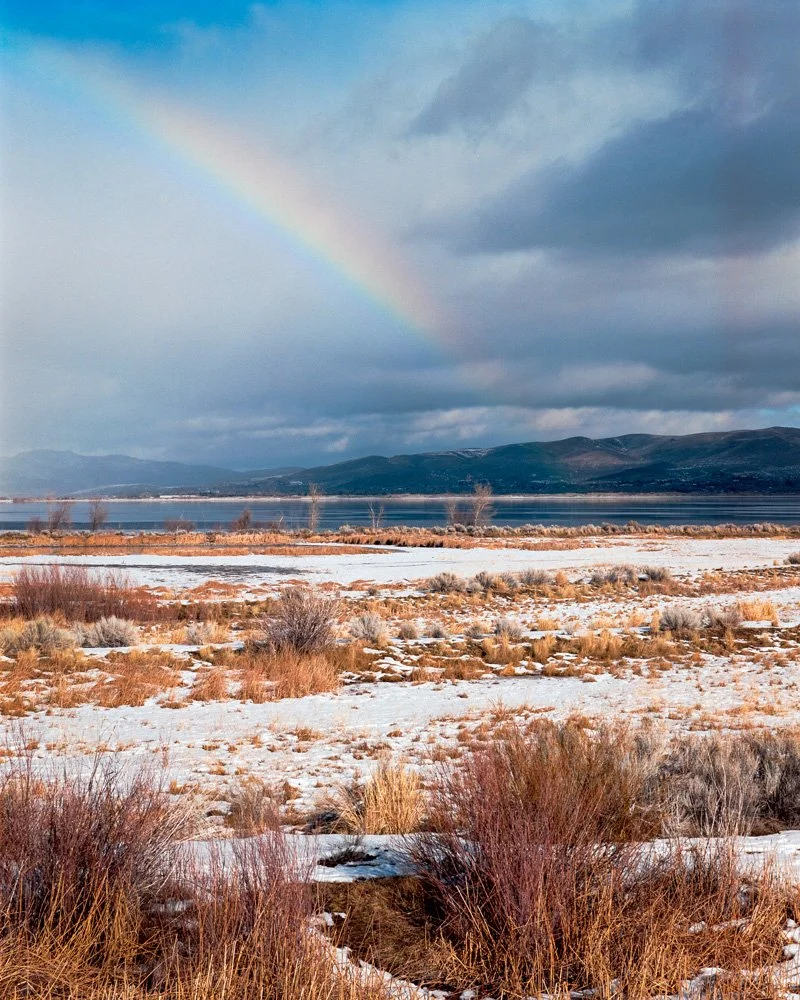
Ancestral homelands of the Washoe Tribe of Nevada and California near Washoe Lake. The tribe will get financial support from California to assist in reacquiring 10,274 acres of former ranchland in the Northern Sierra Nevada. (Photo:Nathaniel Perales via High Country News)
Meanwhile, California unveiled a plan to bring at least 7.5 million acres of land and coastal waters under the care of Indigenous tribes. According to reporter Noah Haggerty, “That number represents roughly 7 percent of the state’s land and waters. It also corresponds with the amount of land the federal government promised it would hold as reservations for Indigenous tribes after California joined the union in 1850. The new policy, set by the California Natural Resources Agency, aims to start healing the harm caused by the state’s actions to bar tribes from their homelands and criminalize their cultural and land management practices.” At the same time, argues Morning Star Gali, executive director and founder of Indigenous Justice and a member of the Ajumawi band of the Pit River Tribe, “until there is a true and sustained commitment to land return, co-management, and meaningful investment for all California tribes, repairing these historic injustices will remain a long-standing effort that will take decades to fully address.”
In Brazil, the Brazilian Supreme Court authorized the possibility of mining exploration and exploitation inside an Indigenous territory for the first time, at the request of an Indigenous Cinta Larga association in the southwestern Amazon. “While the decision does not automatically authorize mining within Cinta Larga land,” writes Aimee Gabay in Mongabay, “it has set a deadline for Congress to regulate mining in Indigenous lands and has established provisional rules in case mining authorization is approved by Congress, such as allowing mining on only 1 percent of the territory. ”
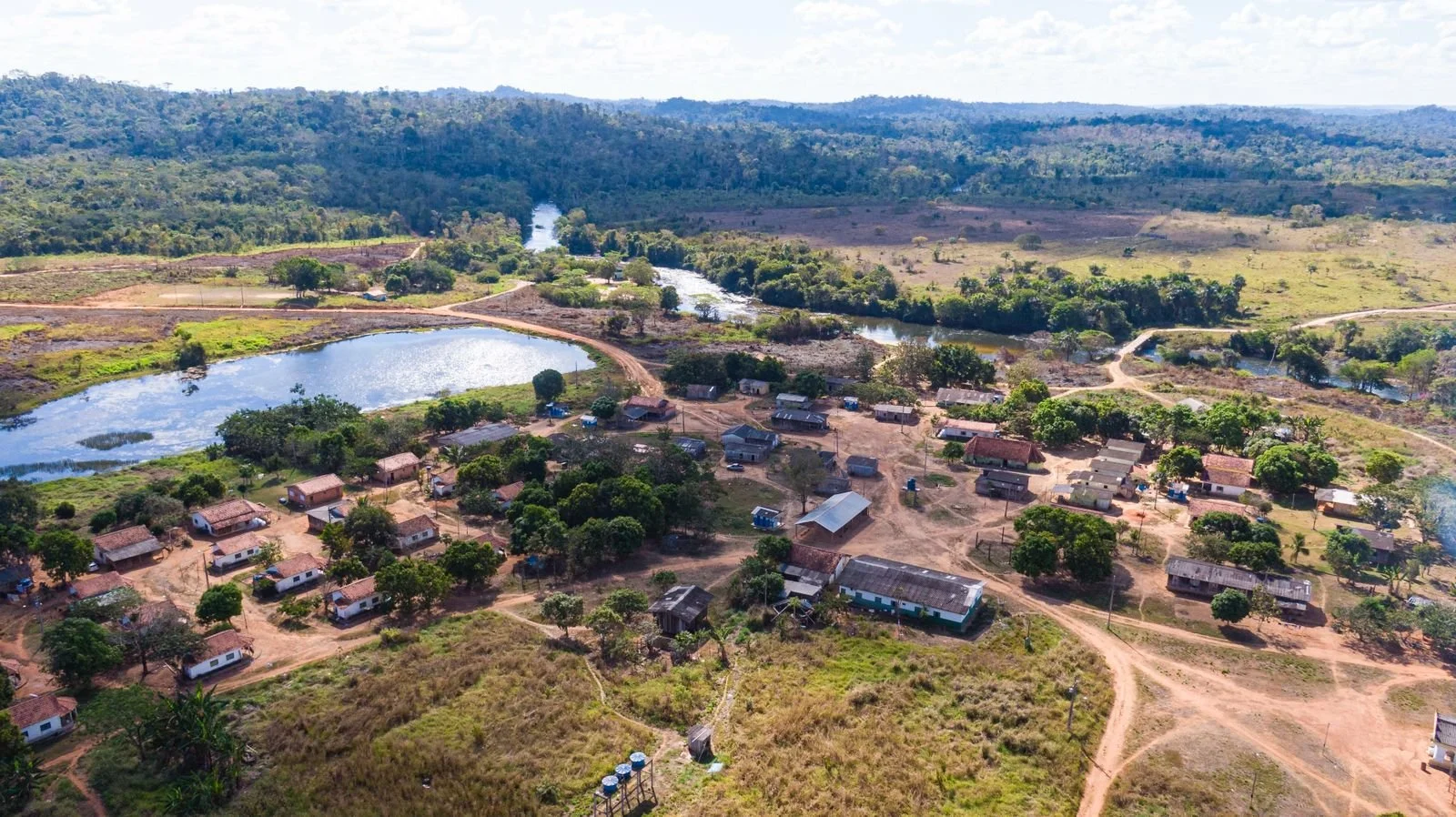
One of several Cinta Larga settlements in the Roosevelt Indigenous Reserve, a 2.7-million-hectare (6.6-million-acre) territory in the southwestern Brazilian Amazon. (Photo: Gilmar Cinta Larga / Patjamaaj via Mongabay)
If approved, this will allow Indigenous peoples to mine in their territories, as well as any company if they receive permission — subject to social and environmental checks. In this case, a portion of the profits must be shared with Indigenous communities for matters of collective interest. But there is the risk that “the opening of Indigenous lands for mining could cause cultural disruptions in communities, as well as environmental damage that could lead to serious impacts to Indigenous peoples’ ways of life, waters and natural resources.”
New initiatives in Indigenous news reporting
In a major step forward for Indigenous journalism, the Associated Press announced the setting up of the Global Indigenous Reporting Network, a collaborative effort connecting newsrooms with dedicated Indigenous coverage. The initiative focuses on expanding the reach of Indigenous reporting through partnerships. As one report notes, “After generations of marginalization in global newsrooms, Indigenous journalism is gaining long-overdue ground with major media organizations and international alliances investing in coverage led by and rooted in Indigenous communities.”
Also, Mongabay recently established an Indigenous Desk to expand independent journalism focused on diverse Indigenous perspectives and sources globally. The Desk engages Indigenous peoples as both journalists and primary sources, addressing gaps in the news industry. In its announcement, the outlet emphasized that the work of the Indigenous Desk “has already contributed to real-world outcomes, including exposing exploitation, supporting community action, and informing official investigations relating to Indigenous communities.”
Another initiative was taken by the Public Media Alliance (PMA) which announced that seven Indigenous leaders for public service media and media organizations united to form the new collective, Indigenous Public Media (IPM). According to their statement, “Spanning the Sámi ancestral lands to Oceania, Aotearoa New Zealand to North America, IPM unites global public media powerhouses, including the ABC, NITV, CBC/Radio-Canada, RNZ, NRK Sápmi, and Swedish Radio, to reclaim Indigenous narratives and ensure Indigenous voices are not just participants in public media, but also its architects.”
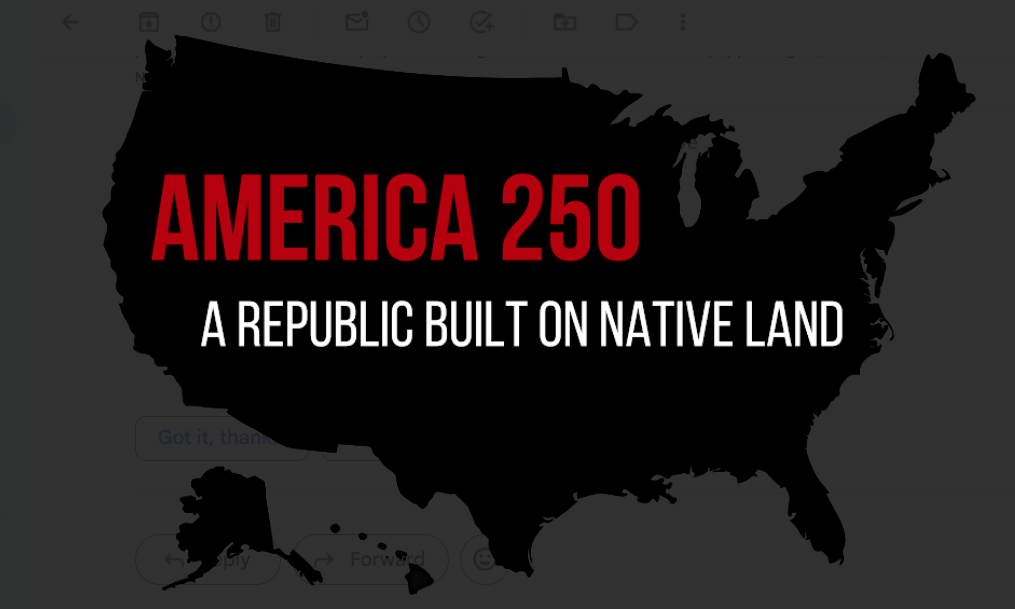
“America 250: A Republic Build on Native Land” is a new editorial initiative from Native News Online.
Also, Native News Online announced a major editorial initiative titled “America 250: A Republic Built on Native Land” that will center Indigenous voices and present a fuller account of the nation’s history— one that includes both the hardships Native Nations endured and the resilience they have demonstrated over the past 250 years. The initiative will also include three podcasts and a livestream.
Indigenous peoples and social media
These efforts for Indigenous news reporting are critical, as a new report by the investigative organization Global Witness details how popular social media platforms including X, Facebook and TikTok are being flooded with thousands of abusive, hateful, defamatory and misleading posts targeting activists and Indigenous leaders in Guatemala. “This surge in digital harassment is unfolding amid Guatemala’s fragile political landscape, marked by entrenched corruption, close links between political elites and organized crime, and a prolonged struggle to shed the legacy of military dictatorship and chronic impunity.” The report highlights how weak regulation and enforcement by global social media companies is enabling these abuses.
